Sphatik Shila rests in the forested stretch of the Mandakini riverbank, a short distance from Janki Kund in Chitrakoot — the region the Ramayana describes as Shri Ram's long forest-home during his fourteen-year vanvas. Tradition holds that on this very rock, smooth and faintly shining like sphatik (crystal), Shri Ram and Sita-mata would sit together in quiet hours, gazing at the Mandakini, listening to the birds, and resting from their forest wanderings. The rock's surface bears small natural indentations that devotees revere as the foot-marks, hand-impressions, and the trace of Sita-mata's ornaments left on the stone during those years.
The shila lies in a peaceful grove of trees with the Mandakini flowing softly beside it, a setting that has changed little from the descriptions found in the Valmiki Ramayana and Tulsidas's Ramcharitmanas. Many Rama-bhakts approach Sphatik Shila as the most intimate of all Chitrakoot darshans — not a grand temple or a busy ghat, but a quiet stone in the forest where the Lord and his consort are held to have sat in simple companionship. Pilgrims often touch the rock with reverent hands, place flowers on it, and sit beside it for a while in silent remembrance.
The katha
The Ramayana describes Chitrakoot as the place where Shri Ram, Sita-mata, and Lakshman lived for many of their vanvas years after leaving Ayodhya. The Mandakini was their daily bathing-river, Kamadgiri their parnashala-hill, and the forests of Chitrakoot their long-walked home. Tradition holds that the divine couple often came to this particular shila on the riverbank to rest and watch the Mandakini flow. Sita-mata is said to have unfastened her ornaments here, dried her hair in the sun, and rested while Shri Ram kept gentle watch.
A beloved local katha tells that Jayanta, the son of Indra, once disguised himself as a crow and pecked at Sita-mata's foot while she rested on this shila. When Shri Ram saw blood drawn from his consort, he plucked a single blade of grass and uttered the Brahmastra-mantra upon it; the grass blade pursued Jayanta across the three worlds until he fell at Shri Ram's feet and begged forgiveness. The Lord, in his mercy, spared his life but took one eye as the cost of his offence. The story is held to have unfolded on this very rock, and devotees see the small reddish marks on the stone as the trace of that ancient katha.
The shila is also held to be where Shri Ram first sensed the deeper unease of the forest years — the long absence from Ayodhya, the wandering ahead, and the trials still to come. For many devotees, sitting beside Sphatik Shila is sitting beside the quiet, ordinary moments of the Lord's vanvas — the moments scripture does not describe but devotion remembers.
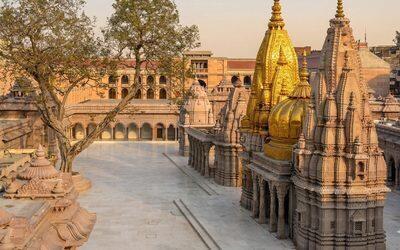
Sphatik Shila is held by Vaishnava and Rama-bhakti tradition to be among the most directly Rama-and-Sita-touched places on earth — a forest-rock where the divine couple sat together during their Chitrakoot years. Devotees approach the shila as a Rama-charana-sparsh-shila, a stone that received the touch of the Lord's feet, and Sita-mata's sparsh upon it is held to make it doubly sacred. Touching the rock with reverent hands, offering flowers, and sitting beside it in silent remembrance are held to draw the same forest-grace that the rishis of Chitrakoot received in those years. The bhav at Sphatik Shila is the gentle, intimate bhakti of vanvas-Ram — the Ram who sat with Sita on a forest rock, not the imperial Ram of Ayodhya's throne. It is the bhav of the everyday, ordinary, deeply human Lord whom devotion alone can recognise.
చరిత్ర
Chitrakoot has been a continuously revered tirtha since the Ramayana period, with references to Sphatik Shila appearing in the Valmiki Ramayana, the Adhyatma Ramayana, and Tulsidas's Ramcharitmanas. The shila itself is a natural rock formation; no stone-work was added to it, in keeping with the local tradition that the rock should remain exactly as the Lord left it. A simple boundary and a small temple-shed were added in the modern period to protect the shila from weather and to allow orderly darshan. The site is managed today by the local Chitrakoot tirtha-trust along with the priests of the adjacent Janki Kund.
The Bundela rulers of the 17th century, the Marathas of the 18th, and successive zamindars and pilgrims have made small contributions to the path leading from Janki Kund to Sphatik Shila — stone-steps, a few resting-platforms, and the boundary wall. The rock itself has been left untouched, as devotion has long insisted.
వాస్తుశిల్పం
Sphatik Shila is a natural, smooth, slightly raised rock on the bank of the Mandakini, set within a quiet grove of trees a short walk from Janki Kund. The rock has a faint crystalline sheen in the morning light, from which it draws its name — sphatik meaning crystal. Small natural indentations on its surface are revered as the foot-marks, hand-impressions, and ornament-traces of Shri Ram and Sita-mata. A simple sheltered enclosure surrounds the shila to protect it from rain and sun, with a small ledge for offerings. A narrow path of stone-steps leads down from the temple-shed to the riverbank, where the Mandakini flows softly past. The setting is intentionally unadorned — the local tradition holds that the rock's sanctity comes from what it received in the vanvas years, not from anything added later.
ఆచారాలు & పూజలు
The principal practices at Sphatik Shila are darshan of the rock with reverent hands and folded palms, flower-offering on the stone-ledge, Ramcharitmanas-paath sitting beside the shila, and quiet dhyan on the bank of the Mandakini. The traditional sequence: arrive from Ram Ghat or Janki Kund, walk the short forest-path to Sphatik Shila, do darshan and offer flowers, sit for a while in remembrance, and then return to the Mandakini for snan or aarti.
Many devotees recite a few chaupais of Tulsidas's Ramcharitmanas at the shila — particularly the verses describing Shri Ram's Chitrakoot vanvas. Some bring small leaves and flowers from the surrounding forest to place on the stone; others simply sit, with eyes closed, and remember the Lord and his consort in their forest years. The site does not have a grand aarti or large rituals — its bhav is quiet, inward, and deeply personal.
పండుగలు & ఉత్సవాలు
| పండుగ | ఎప్పుడు | రద్దీ |
|---|---|---|
| Ram Navami | — | very_high |
| Diwali Mela (Kartik Amavasya) | — | very_high |
| Hanuman Jayanti | — | high |
| Sita Navami | — | high |
Ram Navami: The supreme Rama-bhakti day, marking the appearance of the Lord.
Diwali Mela (Kartik Amavasya): The dipotsav of the Mandakini and the Ramayana-trail.
Hanuman Jayanti: Honours the Lord''s greatest devotee, who served Ram in his forest years.
Sita Navami: Honours the consort of the Lord in her forest-loving form.
Prepare for Your Visit
Practical guidance to help you plan your pilgrimage
| Pilgrim Guidance | How to reachSphatik Shila lies on the Madhya Pradesh side of Chitrakoot, in Satna district, about 2 km from Ram Ghat and a short walk from Janki Kund. The nearest railway station is Chitrakoot Dham Karwi (10 km, well-connected to Jhansi, Allahabad, and Lucknow); the nearest major airport is Khajuraho (175 km) or Prayagraj (140 km). From Ram Ghat, take an auto-rickshaw or e-rickshaw to Janki Kund, then walk the short forested path along the Mandakini to Sphatik Shila. PreparationModest dress; comfortable walking shoes for the short forest-path. Carry a small cloth bag for flowers or offerings, and a water bottle. The shila is in a quiet wooded area — keep voices low and movements gentle. Photography is permitted, but do not climb on the rock. Best time to visitOctober to March most pleasant. Early morning and late afternoon hours are the quietest and most contemplative. Ram Navami (March–April), Diwali Mela (Kartik Amavasya), and Hanuman Jayanti draw additional pilgrims, but the shila retains its quiet bhav even during these days. |
ప్రదేశం
Satna, MP
యాత్రికుల ఫోటోలు
ఇంకా యాత్రికుల ఫోటోలు లేవు.
భక్తుల సవరణలు
ఇంకా సవరణలు లేవు.
సవరణల చరిత్ర
ఇంకా సవరణలు లేవు.
స్ఫటిక శిల, చిత్రకూట్ సందర్శనను ప్లాన్ చేయండి
మీ ప్రయాణానికి ప్రత్యేక ప్రణాళిక, ధరలు పొందండి.
సిఫార్సు చేయబడింది
ఈ క్షేత్రానికి ప్యాకేజీలు
Pilgrim Notes
On-ground observations from fellow pilgrims
No pilgrim notes yet. Be the first to share on-ground observations!
Sign in to share a note.
Pilgrim Reviews
Be the first to share your experience at స్ఫటిక శిల, చిత్రకూట్.
Sign in to write a review.
సమీప పుణ్యక్షేత్రాలు
స్ఫటిక శిల, చిత్రకూట్ దగ్గరున్న ఇతర పుణ్యక్షేత్రాలను చూడండి
MPలోని ఆలయాలు, తీర్థాలు, పుణ్యక్షేత్రాలను చూడండి
సమీపంలో చూడండిఈ యాత్రా మార్గాలలో భాగం
ఈ క్షేత్రం భాగమైన సంప్రదాయ యాత్రా మార్గాలలో నడవండి.