Kedarnath is counted among the twelve Jyotirlingas of Shiva and is the highest-set of them. The temple stands on the bank of the Mandakini river in Rudraprayag district of Uttarakhand, in the Garhwal Himalaya, at an altitude that different sources give variously between 3,580 and 3,584 metres. Here Shiva is not worshipped through a sculpted image. The Shri Badarinath Kedarnath Temple Committee, which administers the shrine, describes the sanctum as holding a conical rock formation revered as the hump of the Lord, and it is this rough natural stone that receives abhishek every morning.
The shrine belongs to three sacred orders at once. It is one of the four dhams of Uttarakhand, travelled together with Yamunotri, Gangotri and Badrinath. It is the first and the highest of the Panch Kedar. And in the traditional enumeration of the Dwadasha Jyotirlingas it is counted as the fifth. For a devotee this layering is not a matter of classification. To arrive at Kedarnath is to stand at the point where the Char Dham yatra, the Panch Kedar circuit and the Jyotirlinga tradition come together in one small stone building under the snow line.
Kedarnath is also among the few great Hindu shrines that no road reaches. The last roadhead is Gaurikund, and from there the temple lies about sixteen kilometres uphill, a walk the Uttarakhand government's own yatra portal reckons at six to eight hours. Helicopter sectors operate through the season from Guptkashi, Phata and Sirsi, and many pilgrims use them, particularly the elderly. Yet the older understanding of the Kedarnath yatra holds that the climb is itself part of the offering, and every season thousands still walk it, taking the name of Baba Kedar the whole way up.
For roughly six months of the year no worship takes place at the temple at all. The kapat are closed, the utsav-doli of Baba Kedarnath is carried down through the valley, and daily puja continues at the Omkareshwar temple in Ukhimath, the winter seat of the Lord. When the doors open again in spring, the doli returns by the same old route and the mountain resumes its season of darshan. Devotees do not experience this as a seasonal schedule. They understand it as Shiva descending to live among the villages in winter and returning to his own height when the snow releases the valley.
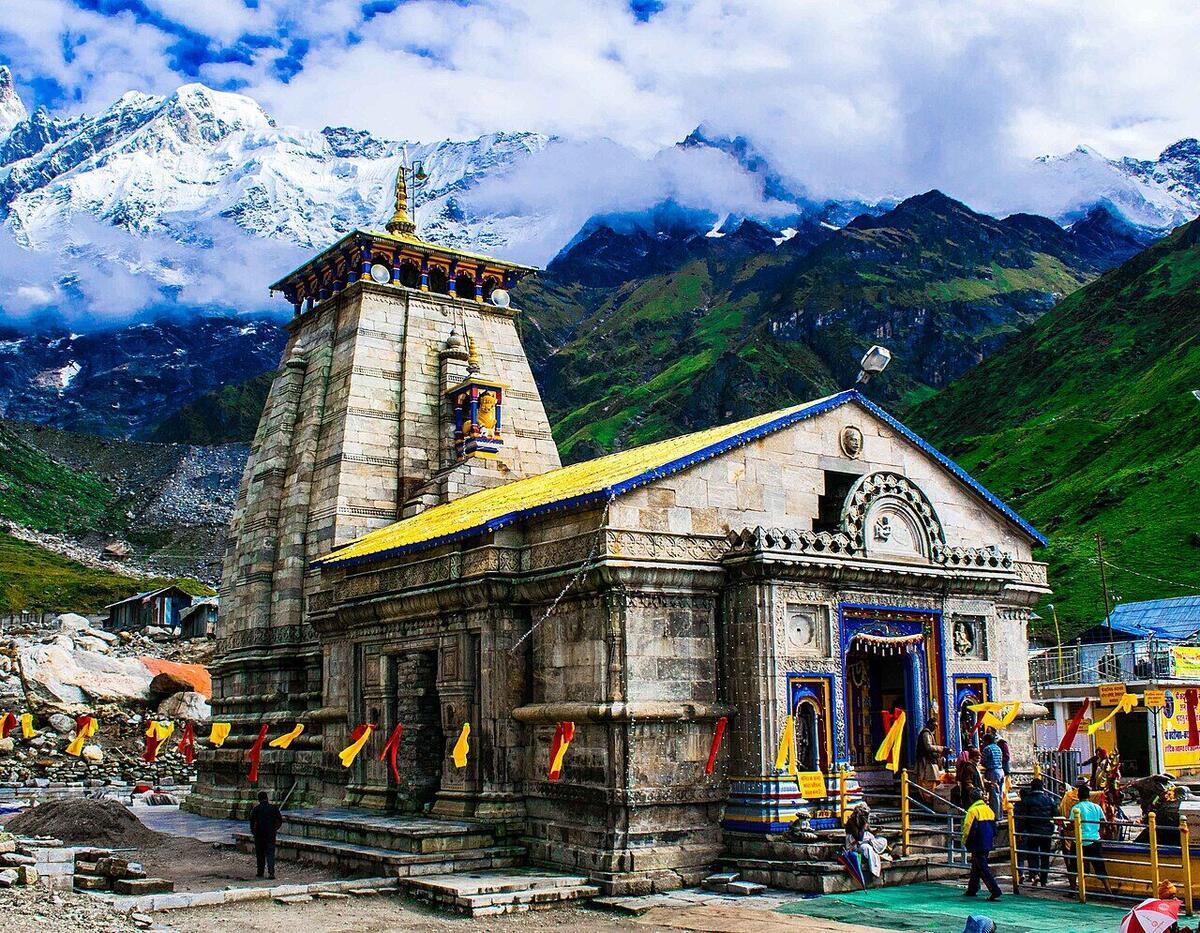
In Shaiva understanding a Jyotirlinga is Shiva present as self-manifest light, not a deity installed by human hands. Kedarnath carries this identity in an unusually bare form. What the devotee bows before is a rough conical rock, and around it there is only the mountain. Devotees hold that darshan here is precious in proportion to its difficulty, and that the cold, the breathlessness, the queue and the long climb are absorbed into the offering rather than standing outside it.
Kedarnath is the head of the Panch Kedar, the five Himalayan shrines where, tradition tells, the parts of Shiva's bull form emerged from the earth: the hump at Kedarnath, the arms at Tungnath, the face at Rudranath, the navel and stomach at Madhyamaheshwar, and the hair at Kalpeshwar. Pilgrims who complete the full circuit speak of Kedarnath as both its beginning and its summit.
Within the Uttarakhand Char Dham, Kedarnath is the Shaiva heart of the journey, and the sequence of the season reflects it: in 2026 the kapat of Kedarnath opened on 22 April, a day before Badrinath. Many families keep this order, taking darshan of Baba Kedar before going on to Badri Vishal.
Katha and local belief
The best-loved katha of Kedarnath belongs to the aftermath of the Mahabharata. Tradition tells that the Pandavas, weighed down by the killing of their own kinsmen, came to the Himalaya seeking Shiva's forgiveness. Unwilling to grant them darshan, Shiva withdrew into these mountains and took the form of a bull among the herds of the valley. The temple committee's own telling describes the form as a buffalo. Bhima recognised him and seized the animal by its tail and hind legs, whereupon the form sank into the ground and rose again in five places. The hump rose at Kedarnath. Tradition holds that the Pandavas then performed yagna here and departed by the path called Mahapanth.
A second katha comes from the Jyotirlinga tradition. Vishnu, in the twin form of Nara and Narayana, is said to have performed long tapasya to Shiva in these mountains; pleased with their devotion, Shiva agreed to remain here in the form of a Jyotirlinga for the welfare of the world.
A third belief is recent, and many pilgrims living today saw the events behind it. In June 2013 the bursting of Chorabari Tal upstream, together with a sudden melting of snow and ice on the mountain above, destroyed most of Kedarnath town. The temple stood. A large boulder had lodged behind the shrine and split the flood of water and debris around it. Local tradition named the rock Bhim Shila, the rock of Bhima, and it is venerated today as a sign of protection. Records of the disaster confirm that the temple and the Shiva linga within it were not damaged, although the base of the structure was inundated with water, mud and boulders and its perimeter was harmed.
History
Worship in this valley is older than any surviving account of the building. Tradition attributes the first shrine to the Pandavas, and the Mahabharata connection remains central to how devotees understand the place. Of the structure itself, the Shri Badarinath Kedarnath Temple Committee states that the temple was originally built in the 8th century CE by Jagadguru Adi Shankaracharya.
Adi Shankara's association with Kedarnath does not end with the building. The ruins of a monument marking the place traditionally held to be where the acharya left his body stand within the Kedarnath precinct, and for centuries pilgrims have paid their respects there after darshan. That samadhi was damaged in the 2013 disaster. It was rebuilt in stone, and the reconstructed samadhi, together with a twelve-foot statue of Adi Shankaracharya, was inaugurated in November 2021.
The deeper historical thread at Kedarnath is not construction but the unbroken line of worship. The head priest, the Rawal, is traditionally drawn from the Veerashaiva Lingayat community of Karnataka, a link commonly traced to Adi Shankara's ordering of the Himalayan shrines. The same tradition attends the Lord at Ukhimath through the winter, so that the priestly lineage moves with the deity between the high shrine and the valley seat, season after season.
The most severe rupture in living memory came on 16 and 17 June 2013, when the flood swept away hotels, rest houses and shops around the temple and took many lives. Kedarnath town was rebuilt over the following years under state reconstruction work, and the yatra resumed. Since then the approach has been reorganised around registration and checkpoints, helicopter sectors have been formalised, and health screening has become part of official yatra guidance. Through all of it the yearly movement of the doli between Ukhimath and Kedarnath has continued, which is how devotees measure the temple's continuity.
Architecture
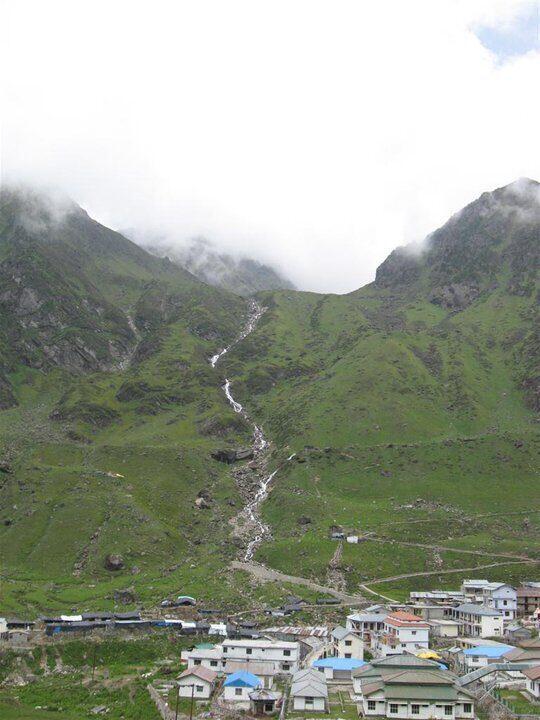
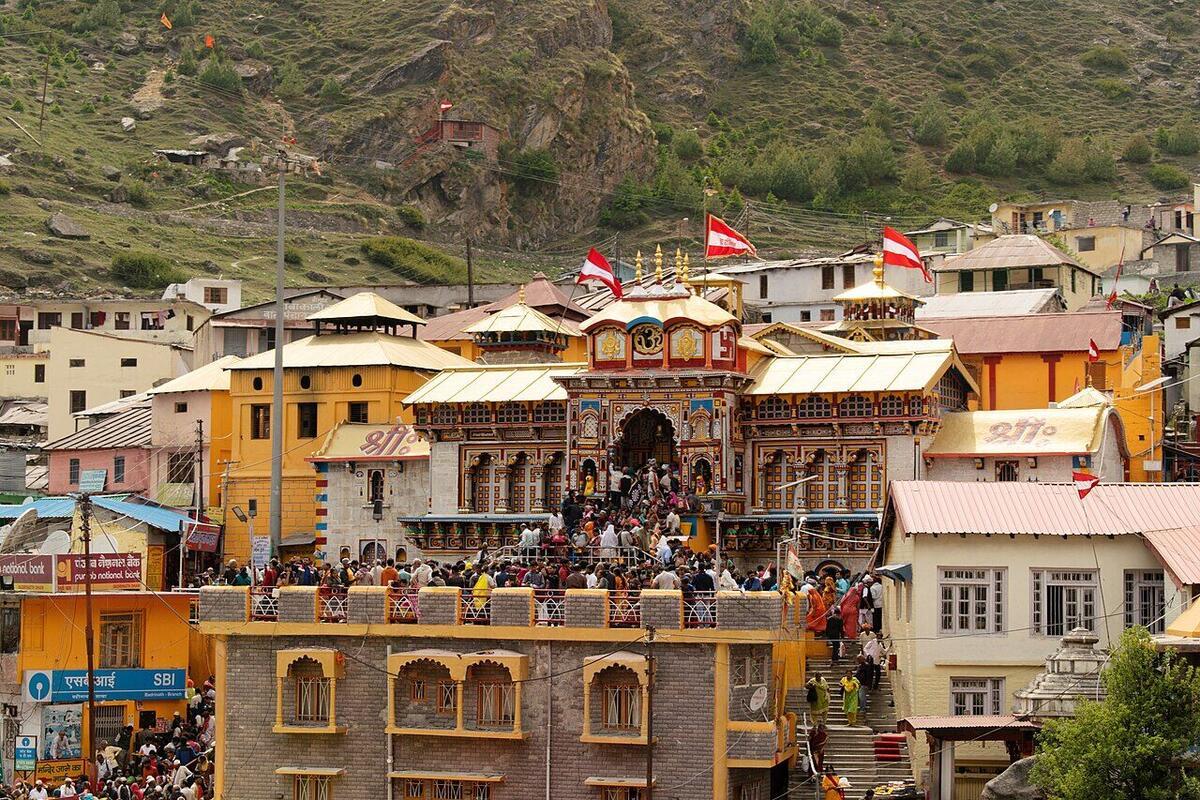
Kedarnath is built in the North Indian Himalayan idiom, and it is a building shaped entirely by where it stands. There is no soaring ornamented tower of the plains, no plaster and almost no exterior carving. The temple committee describes the construction as extremely large, heavy and evenly cut grey slabs of stone, set together so that the mass of the building itself resists snow load, wind and the movement of the mountain.
The temple presents itself plainly to a pilgrim arriving on foot: grey stone against grey mountain, low and square, with the snow peaks directly behind it. Devotees speak of that plainness, and of the fact that the building still stands, as part of its power.
Within the sanctum stands the conical rock formation worshipped as the hump of the Lord. The temple committee also records stone carvings of deities and scenes from the epics within the temple, so that the plainness of the exterior gives way to older work inside. The rock is not shaped or polished into a linga form; the abhishek is offered to the stone as it emerged.
Two features of the precinct matter to pilgrims and both are recent. Behind the temple lies Bhim Shila, the boulder that lodged there in the 2013 flood and diverted the water and debris around the shrine; it is now venerated and visited. Within the precinct stands the rebuilt samadhi of Adi Shankaracharya, raised in stone after the flood and inaugurated in November 2021.
Rituals & Practices
Worship at Kedarnath follows the concentrated rhythm of a shrine that is open only half the year. The temple committee states that abhishek puja is performed every morning from 4:00 AM to 6:30 AM, and that the evening aarti begins around 6:00 PM during the summer season. Timings shift with the season, the weather and crowd conditions, so verify the current schedule with the temple committee before planning a specific puja or aarti.
Sankalp pujas at Kedarnath are booked rather than walked into. The temple committee accepts bookings through its own portal, prior registration is required, an Indian mobile number is needed, and the number of puja seats available each day is limited and published. Pujas commonly offered at Kedarnath include Rudrabhishek, Laghu Rudrabhishek, Shodashopachar puja, Mahamrityunjay path and the evening aarti; check the committee's current list on its booking page before you pay for anything. Where a devotee who has booked cannot reach the temple in person, the ritual is performed in his or her name and gotra.
The offerings themselves are simple, as they are at Shiva shrines everywhere: jal, bilva patra and flowers, given with the name of the Lord. Many pilgrims who have walked up from Gaurikund arrive carrying nothing at all, and offer only the climb and the prayer they made on the way.
The yearly opening and closing are the great rituals of Kedarnath, and they belong as much to the villages of the valley as to the temple. In 2026 the opening date was declared on Mahashivratri, 15 February, at the Omkareshwar temple in Ukhimath by the temple committee. The utsav-doli set out from Ukhimath on 19 April, halted at Phata, reached Gaurikund on 20 April and Kedarnath on 21 April, and the kapat opened at about 8:00 AM on 22 April in the Vrisha lagna. At the close of the season the procession reverses, and the daily worship of Baba Kedarnath continues at Omkareshwar, Ukhimath, through the winter months.
East of the town stands the Bhairavnath temple, whose deity is held by local tradition to guard Kedarnath through the closed months. Many pilgrims pay their respects there before leaving the valley.
Festivals & Celebrations
| Festival | When | Crowd |
|---|---|---|
| Kapat opening (start of the yatra season) | — | Very high |
| Mahashivratri (observed at the winter seat) | — | Moderate |
| Shravan | — | High |
| Observance at the samadhi of Adi Shankaracharya | — | Moderate |
| Kapat-band (closing of the doors) | — | Very high |
Kapat opening (start of the yatra season): Devotees understand the opening as the Lord returning to his own height after wintering in the valley. It marks the start of the six-month darshan season at the shrine itself.
Mahashivratri (observed at the winter seat): The night most sacred to Shiva across Hindu tradition, and at Kedarnath the day on which the coming yatra season is given its date.
Shravan: The month most associated with Shiva in Hindu observance. Devotees who come in Shravan hold the darshan especially dear, though the route demands extra caution.
Observance at the samadhi of Adi Shankaracharya: Honours the acharya to whom the temple committee attributes the building of the 8th-century temple and whose ordering shaped the priestly tradition of the Himalayan shrines.
Kapat-band (closing of the doors): Devotees experience the closing as the Lord coming down to dwell among the villages of the valley through the snow months, and the doli journey is attended by whole villages along the route.
Temple Details
| Timings | season: Temple open only in the yatra season (roughly April/May to October/November); it stays closed in winter, when worship moves to Ukhimath (BKTC; Rudraprayag district calls Ukhimath the winter seat; News On AIR names the winter seat as Omkareshwar Temple, Ukhimath) evening_aarti: Evening Aarti starts around 6:00 PM in the summer season; show the aarti receipt at the puja counter 15-20 minutes before (BKTC) kapat_opening_2026: Kapat opened on 22 April 2026 (8:00 AM per the BKTC announcement made on Maha Shivaratri, 15 Feb 2026, at Omkareshwar Temple, Ukhimath, reported by News On AIR; the Uttarakhand Tourist Care portal's Kedarnath Dham page lists 'Kapat Opening Date 22nd April 2026'; News On AIR reported the portals opened that morning). BKTC's own site publishes no 2026 kapat dates early_morning_abhishek: Early-morning Abhishek pujas: collect the puja slot timing at the temple puja counter one day prior (BKTC Kedarnath puja terms) helicopter_operating_hours: Helicopter shuttles fly 06:00 to 18:00 in three-hour slots (06-09, 09-12, 12-15, 15-18), weather permitting (IRCTC HeliYatra) |
| Darshan Types | General darshan of the Jyotirlinga (Sadashiva form, conical rock in the Garbha Griha) Yatra registration is compulsory and is verified at the Dham; collect the Dham darshan slot token (Queue Token Slot Counter at Kedarnath Temple) for smooth darshan (Uttarakhand Tourist Care portal) Attending pujas (Mahabhishek, Rudrabhishek, Laghurudrabhishek, Shodashopachaar, evening aarti and paths) Booked online through the BKTC portal; carry the puja receipt plus original government photo ID (Voter ID / Aadhaar / Driving licence / Passport / PAN); foreign pilgrims: passport and visa. Amounts are non-refundable and non-transferable to any other name or date |
| Pooja Services | Mahabhishek Puja (morning, attending) - BKTC online bookingRudrabhishek Puja (morning, attending)Laghurudrabhishek Puja (morning, attending)Shodashopachaar Puja (morning, attending)Ashtopachaar Puja / Panchopachaar Puja (morning, attending)Entire Puja of the Day (attending)Shiv Ashtotari Path, Shiv Sahasranaam Path, Shiv Namawali, Shiv Mahimna Stotram, Shiv Tandav Stotram, Shiv Parakshama Stotram (evening, attending)Entire Evening Aarti (attending)Non-attending pujas performed by the chief priest in the pilgrim's name and gotra: early-morning puja, Baal Bhog, Uttam/Special/Simple Bhog, daily Yagya/Hawan, Akhand Jyoti, Deep Batti Daan, Bhairav Pujan Bhet, Sadavart KhichadiAtka Prasad by ordinary or registered postLong-term (multi-year) pujas and special-occasion pujas (Shravani Purnima Annakoot, Prati Somwar Yagya Hawan, Shiv Samadhi Pujan, annual Akhand Jyoti) |
| Management | Shri Badarinath Kedarnath Temple Committee (BKTC), Government of Uttarakhand - constituted under the 1939 Act |
Prepare for Your Visit
Practical guidance to help you plan your pilgrimage
| Rules & Restrictions |
|
| Best Time to Visit | May-June is ideal (pleasant, moderately cold); monsoon July to mid-September brings regular rain and occasional landslides; BKTC says Kedarnath is open to the public from May to October/November, with the shrine generally closing on the first day of Kartik (Oct-Nov). Rudraprayag district lists May to October as the ideal window. Winter (November-April) the temple is closed and blanketed with snow (BKTC). |
| How to Reach | trek: 16 km uphill trek from Gaurikund (BKTC, IRCTC and the Tourist Care portal; Rudraprayag district states 17 km); ponies and porters available (IRCTC; portal lists pony/palki); temple altitude about 3,583 m / 11,755 ft (IRCTC; BKTC 3,584 m and 3,581 m on the same page; district 3,586 m; Tourist Care portal 3,580 m; AIIMS Rishikesh handbook 3,553 m / 11,755 ft) - the highest of the 12 Jyotirlingas (BKTC, IRCTC) by air: Jolly Grant Airport, Dehradun is the nearest airport - about 235 km from Kedarnath per BKTC how-to-reach (BKTC overview says 248 km; district says around 250 km); taxis run from the airport to Gaurikund by road: Gaurikund on NH107 is the road-head where the trek begins; buses to Haridwar, Rishikesh and Srinagar leave ISBT Kashmiri Gate, New Delhi; buses and taxis to Gaurikund from Dehradun, Haridwar, Rishikesh, Pauri, Rudraprayag and Tehri by train: Rishikesh is the nearest railhead - about 210 km from Gaurikund per Rudraprayag district (BKTC gives 228-243 km); taxis and buses to Gaurikund from Rishikesh, Srinagar, Rudraprayag and Tehri (BKTC) by helicopter: Book only on heliyatra.irctc.co.in from Sirsi, Phata or Guptkashi helipads; fares are dynamic per UCADA policy; IRCTC convenience fee Rs 300 + GST two-way / Rs 200 + GST one-way per passenger. (Notice on the IRCTC site as of 3 Sep 2026: bookings for 15-30 Sept 2026 journeys open 7 Sept 2026 at 11:00) |
| Pilgrim Guidance | Reaching KedarnathThe road journey runs through Rishikesh or Haridwar and up the Alaknanda and Mandakini valleys through Rudraprayag and Guptkashi to Sonprayag. The Uttarakhand government's yatra portal lists road travel times of roughly nine to fifteen hours depending on where you start, and there are also routes from Uttarkashi, Gangotri and Badrinath for those already on the Char Dham circuit. Private vehicles stop at Sonprayag. Onward movement to Gaurikund is by the official shuttle service run under the state transport arrangement, for which a fixed per-person fare is charged. From Gaurikund the temple is about sixteen kilometres uphill, reckoned at six to eight hours on foot by the state portal. Ponies, doli and kandi services and porters are available at Gaurikund for those who cannot walk the full distance. Helicopter services run in season from three sectors: Guptkashi, Phata and Sirsi. For 2026 eight operators were selected across these three bases. Bookings are made only through the government-designated IRCTC Heli Yatra portal, and the administration has repeatedly cautioned that no agent or tout is authorised to sell Kedarnath helicopter tickets and that look-alike websites imitating the official portal are a known fraud. Never pay a third party for heli seats, and check the URL character by character. Registration, health and preparationYatra registration is mandatory and free for Kedarnath. It is done on the Uttarakhand government's Tourist Care portal at registrationandtouristcare.uk.gov.in or through the Tourist Care Uttarakhand mobile app. The registration letter carries a QR code and must be kept ready at the verification points, which include Sonprayag and the temple itself. Carry valid personal ID with it. For 2026 the state has asked pilgrims travelling from other states to complete a full medical check-up before setting out, with particular caution for the elderly and for anyone with heart disease, diabetes, hypertension or respiratory illness, since the route crosses 2,700 metres. Official guidance is to let the body acclimatise gradually rather than driving straight up from the plains, and state health advisories suggest spending a day or two at lower altitude before the ascent. Drink at least two litres of fluid daily, carry your prescriptions and enough medicine for the whole trip, and use the Medical Relief Posts along the route rather than pushing through discomfort. Over 1,350 doctors and paramedical staff were deployed along the Char Dham route in 2026, and the emergency numbers are 104 and 108.
Season, kapat dates and the best time to goThe temple is open for roughly six months. For 2026 the kapat opened on 22 April. At the time of writing the closing date for 2026 had not been announced by the temple committee; it is customarily declared around Vijayadashami and traditionally falls on Bhai Dooj, in late October or November. Dates for 2027 have not been announced at all. The opening date is traditionally declared on Mahashivratri, so the 2027 date will become known only then. Do not plan travel, bookings or leave against any date you see quoted before the temple committee announces it. Within the season, May and June and then September and October are the steadier windows. The monsoon weeks of July and August carry real risk of landslide and route closure in this valley, and the walk becomes difficult. Whichever window you choose, keep a spare day in the plan: weather, not schedule, decides movement at this altitude. |
| Weather | summer: May-June: pleasant, moderately cold; ideal for the pilgrimage (BKTC) winter: October to April: chilly days, minimum can touch sub-zero, snowfall very common; BKTC also describes very heavy winter snowfall (up to several metres) with the temple blanketed in snow from November to April; temple closed (BKTC) monsoon: July to mid-September: regular rains, temperature drops, region prone to occasional landslides (BKTC) altitude_effects: Extreme cold, low humidity, extreme UV radiation, low air pressure and low oxygen at all Char Dham shrines (BKTC / Uttarakhand Health Dept); effective oxygen about 17.9-18.6% vs 20.9% at sea level (AIIMS Rishikesh handbook) |
| Pilgrim Tips |
|
Location
Rudraprayag, UK
Pilgrim photos
No pilgrim photos yet.
Official Links
Community corrections
No corrections yet.
Edit history
No revisions yet.
Plan Your Visit to Kedarnath Temple
Get a custom itinerary and pricing for your trip.
Recommended
Packages for this destination
Pilgrim Notes
On-ground observations from fellow pilgrims
No pilgrim notes yet. Be the first to share on-ground observations!
Sign in to share a note.
Pilgrim Reviews
15 reviews
Be the first to share your experience at Kedarnath Temple.
Sign in to write a review.
Nearby sacred places
Discover other sacred places near Kedarnath Temple
Explore temples, tirthas, and pilgrimage sites in UK
Explore nearbyPart of these circuits
Walk the traditional pilgrimage routes this destination belongs to.