Manikarnika is approached in Kashi not as an ordinary ghat but as the Mahashamshan — the Great Cremation Ground. Hindu tradition holds that an antim sanskar (final rite) performed here carries, by Shiva's own promise, the fruit of moksha. Families across India bring their loved ones to this tirtha for the last journey, regarded as one of the most sacred acts that can be offered to a departed soul.
The ghat is also a Shakti Peetha and a Vishnu tirtha. A traditional katha holds that in an early age Vishnu excavated the sacred kund here with his chakra, and that later, while Shiva and Parvati bathed at the kund, Parvati's earring (manikarnika) fell into its waters — giving the ghat its name. The kund itself, a small stone tank behind the cremation area, is still visited by pilgrims who bathe in it before continuing to Vishwanath darshan.
The ghat is an active sacred space where families perform the rites of their own dead. It is not a viewing site. Pilgrims who visit approach from the upper steps, at a respectful distance from the cremation area, and carry with them the understanding that they are present at a tirtha where many other families are completing the most important ritual of a lifetime.
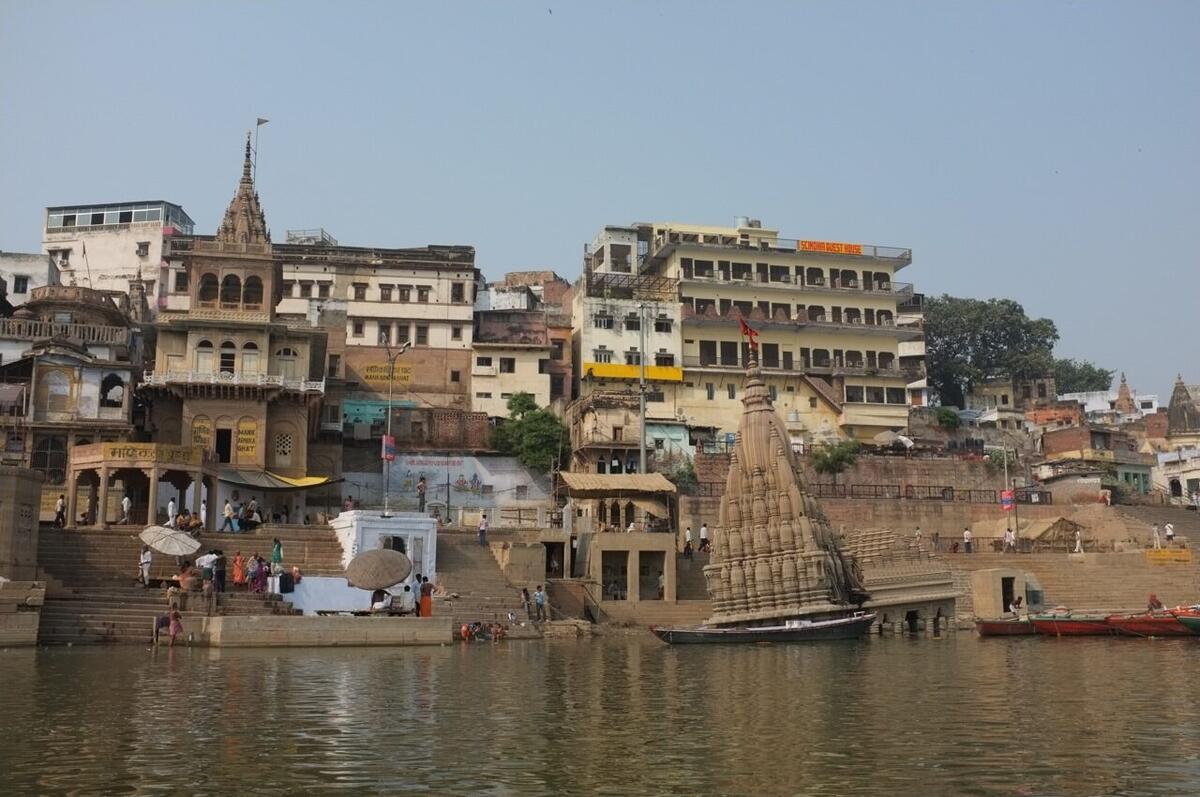
The Kashi Khanda of the Skanda Purana places Manikarnika at the centre of Kashi's moksha tradition. The promise recorded there — that an antim sanskar performed within the kshetra of Manikarnika carries the grace of liberation — has shaped Hindu devotional life for many centuries. It is the ground that gives Kashi its deepest identity as a moksha-puri, a city of release.
Three scriptural beliefs are woven together at this tirtha:
- Taraka Mantra. At the moment of cremation, tradition holds that Shiva whispers the liberating Taraka Mantra into the ear of the departing soul, breaking the cycle of rebirth. This is why, in the devotional understanding of Kashi, the ghat is approached with reverence rather than mourning alone.
- Shakti Peetha. The Pithanirnaya and other classical sources name Manikarnika as one of the Shakti Peethas, where a portion of the Devi's body is said to have fallen. The ground is therefore sacred to Shakti as well as to Shiva.
- Vishnu's Kund. The Chakrapushkarini, the kund said to have been excavated by Vishnu in an earlier age, lies behind the ghat and is visited by pilgrims as a place of great merit. Bathing here is traditionally held to carry the fruit of many tirthas.
Katha and local belief
A Banarasi tradition often repeated at this ghat says: one does not die at Kashi — at Kashi, one attains Kashi. The death that occurs within the city's pancha-krosha is not held as an ending, but as a passage into the grace of Vishwanath. Manikarnika is the particular ground where this grace is visible — the place where families see the rites completed, and carry away the blessing that the tradition has named.
The Dom community is the hereditary caretaker of the sacred fire at Manikarnika — a fire tradition says has burned without interruption for many centuries. Every pyre is kindled from this flame, a ritual link preserved across generations.
History
Cremation at Manikarnika is attested from the early historical period. A fifth-century Gupta inscription from the area references rites at the ghat, making it among the oldest documented cremation sites in continuous practice. The Puranic tradition places its origin far earlier still, in the age when Vishnu is said to have excavated the Chakrapushkarini Kund.
Through successive periods — Gupta, Gahadavala, Sultanate, Mughal, Maratha, and modern — the cremation tradition at the ghat has continued unbroken. Surrounding temples were damaged and rebuilt across the centuries; the cremation area itself remained in use throughout. The custodianship of the sacred fire has been carried forward by the Dom community, whose hereditary role at Manikarnika is recorded in tradition and honoured in practice to the present day.
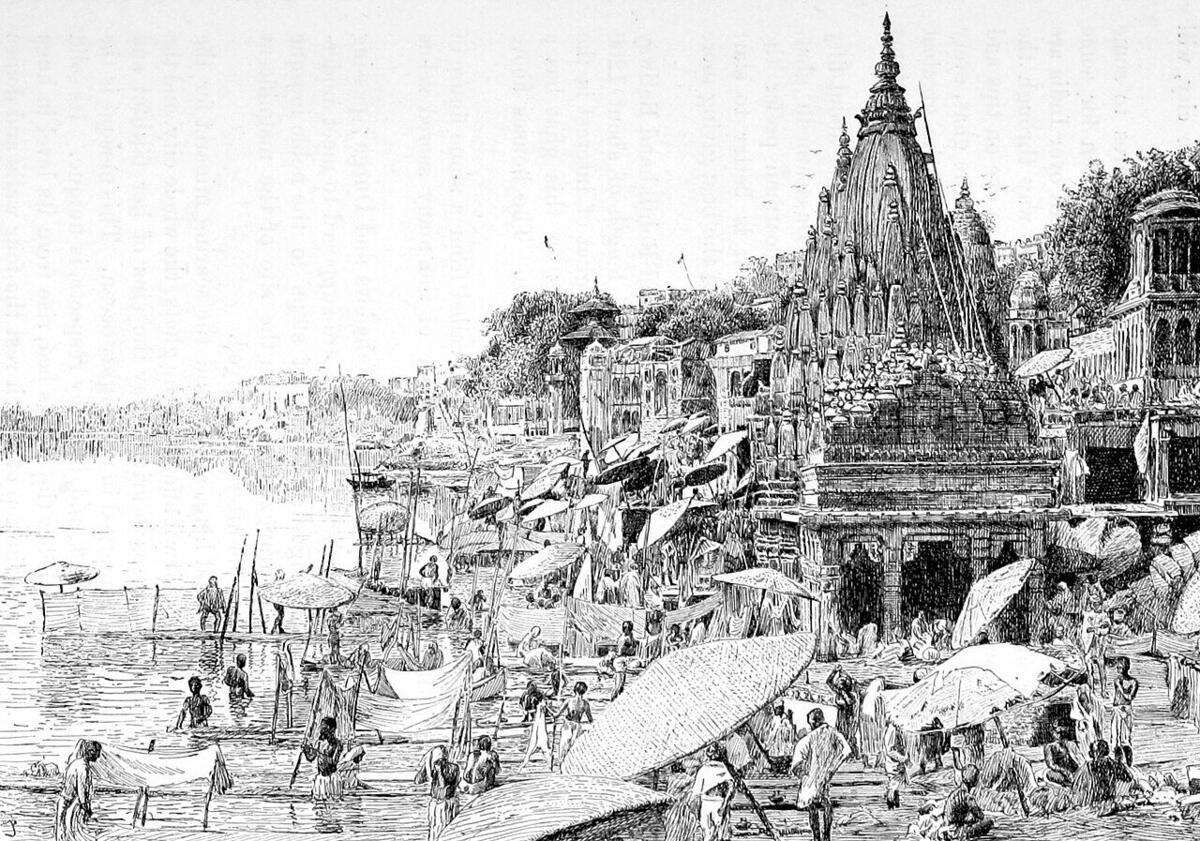
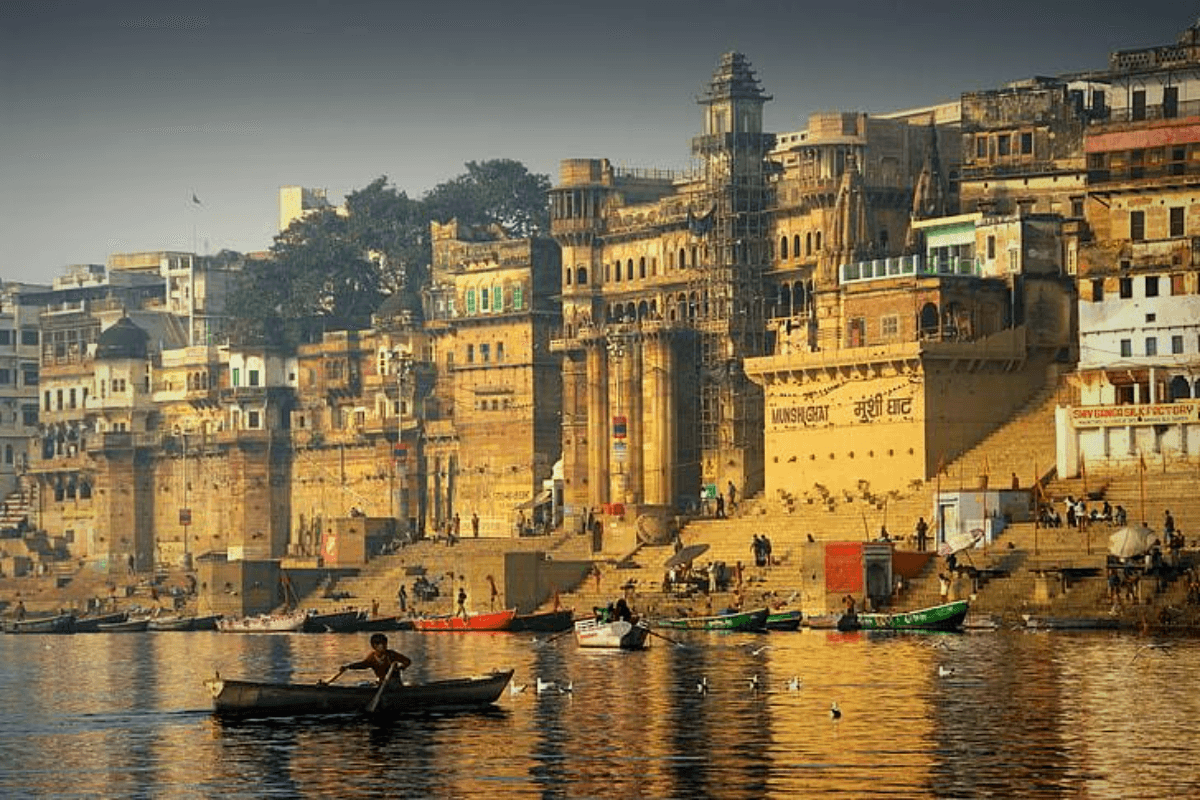
The ghat's stone steps, smoke-darkened by centuries of worship and antim sanskar, have been repaired and extended many times by Maratha and later patrons. The surrounding Tarakeshwar, Ratneshwar, and other temples form the wider Manikarnika precinct; the Chakrapushkarini Kund, though repeatedly renewed, remains on the site it has held for as long as the tirtha has been known.
Architecture
Manikarnika is less an architectural monument than a long flight of stone steps descending steeply from the temples above to the Ganga. The stone is dark — smoke-touched over generations of continuous fire — and the steps are arranged in terraces that separate the cremation area from the upper precincts of the ghat.
Behind the cremation area stands the Chakrapushkarini Kund — a small stone tank traditionally held to have been excavated by Vishnu himself. The kund is enclosed by walls and a modest pavilion; pilgrims still bathe here as part of the traditional Manikarnika yatra.
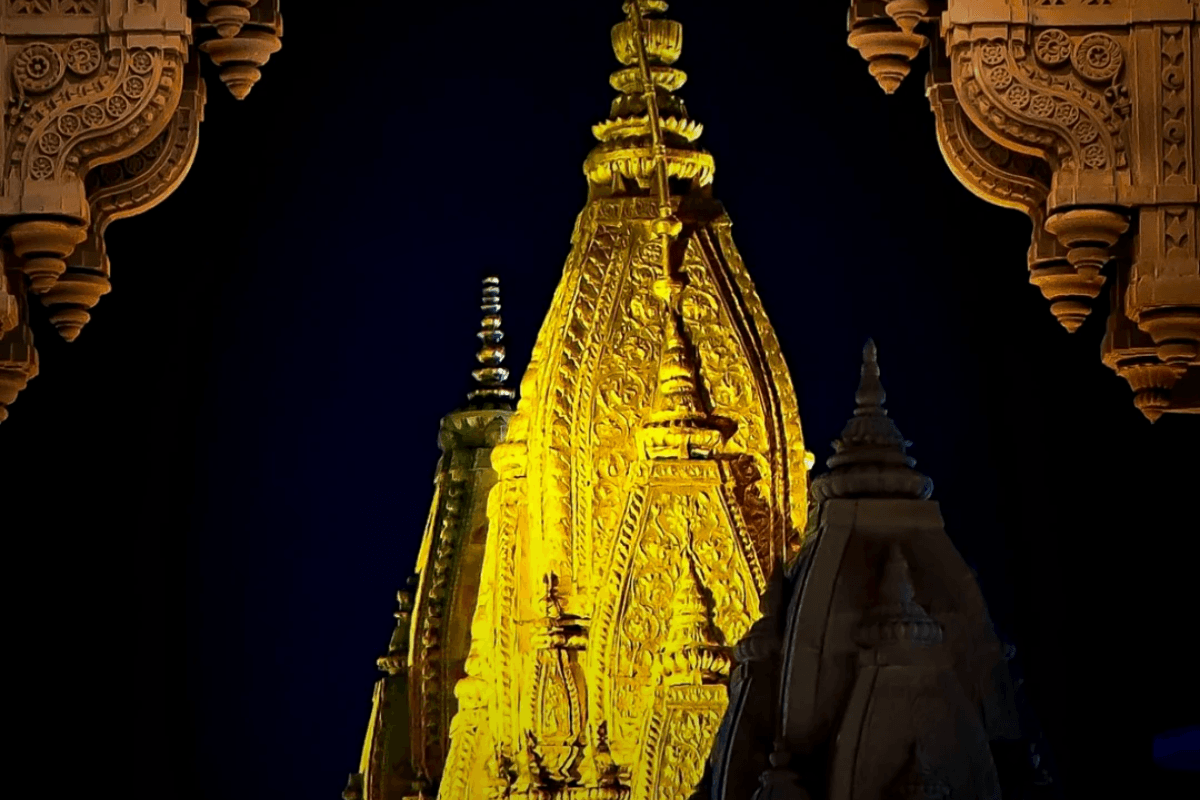
Several small temples surround the ghat. The Tarakeshwar Mahadev shrine, above the cremation steps, is associated with the Taraka Mantra tradition. Nearby stand the Ratneshwar Mahadev and other ancient murtis. The wider precinct includes wood yards, where the timber used for cremation is stored and weighed — sandalwood, mango, and other permitted woods — and the humble buildings of the Dom community who carry the duties of the ghat.
Rituals & Practices
The rituals performed at Manikarnika are the rites of antim sanskar — the final sacraments of a Hindu departure. They follow a sequence that has been maintained for many generations.
The body, bathed and wrapped in white cloth — or red and gold for a married woman — is carried on a bamboo bier through the lanes of old Kashi. The bearers chant "Ram Naam Satya Hai" — "the name of Ram is truth" — as they move. At the ghat, after the family has immersed the body briefly in the Ganga, the pyre is prepared. The eldest son, or the son performing the duty, circumambulates the pyre with a flaming kusha bundle lit from the sacred fire, and offers the mukhagni — the fire to the mouth — completing the central rite. Mantras from the funeral tradition of the family are recited by the acharya. After the pyre has burned, the ashes are gathered for immersion in the Ganga.
Two other practices belong to the tirtha:
- Snana at Chakrapushkarini Kund. Pilgrims bathe in the kund as part of the Manikarnika yatra, not only those attending a cremation.
- Tarpana for ancestors. The upper steps of the ghat are a traditional place for tarpana — the offering of water to ancestors — especially during Pitru Paksha.
Specific rites vary by family tradition and sampradaya; the presence of an acharya is customary for the antim sanskar.
Festivals & Celebrations
| Festival | When | Crowd |
|---|---|---|
| Maha Shivratri | — | Very high |
| Pitru Paksha | — | High |
| Dev Deepawali | — | Very high |
Maha Shivratri: Associated with the Taraka Mantra tradition â the mantra Shiva is said to whisper to the departing at Manikarnika.
Pitru Paksha: Tarpana performed at Manikarnika during Pitru Paksha is held in tradition to carry particular weight, given the ghat's identity as the Mahashamshan of Kashi.
Dev Deepawali: The tradition of the devas descending to Kashi on Kartik Purnima extends to every ghat; pilgrims offer diyas at Manikarnika as part of the wider observance.
Prepare for Your Visit
Practical guidance to help you plan your pilgrimage
| Pilgrim Guidance | ApproachManikarnika is reached on foot through the old lanes of Kashi from the Vishwanath precinct, or by boat along the ghats. It is a short distance from Dashashwamedh. Approaching by boat and disembarking at Manikarnika itself is usually inappropriate; most pilgrims arrive by the river path from neighbouring ghats, or by the gali route from Vishwanath. How to visit with respect
For pilgrims performing the Chakrapushkarini snana
For families performing antim sanskarThe necessary arrangements — wood, priest, and ritual supplies — are handled at the ghat itself by the Dom community and long-established acharyas. Specific costs and protocols are explained on arrival. Those travelling with a bereaved family are encouraged to work with a local arranger familiar with Manikarnika's traditions. |
Location
Varanasi, UP
Gallery
Pilgrim photos
No pilgrim photos yet.
Community corrections
No corrections yet.
Edit history
No revisions yet.
Plan Your Visit to Manikarnika Ghat
Get a custom itinerary and pricing for your trip.
Recommended
Packages for this destination
Pilgrim Notes
On-ground observations from fellow pilgrims
No pilgrim notes yet. Be the first to share on-ground observations!
Sign in to share a note.
Pilgrim Reviews
1420 reviews
Be the first to share your experience at Manikarnika Ghat.
Sign in to write a review.
Nearby sacred places
Discover other sacred places near Manikarnika Ghat
Explore temples, tirthas, and pilgrimage sites in UP
Explore nearbyPart of these circuits
Walk the traditional pilgrimage routes this destination belongs to.