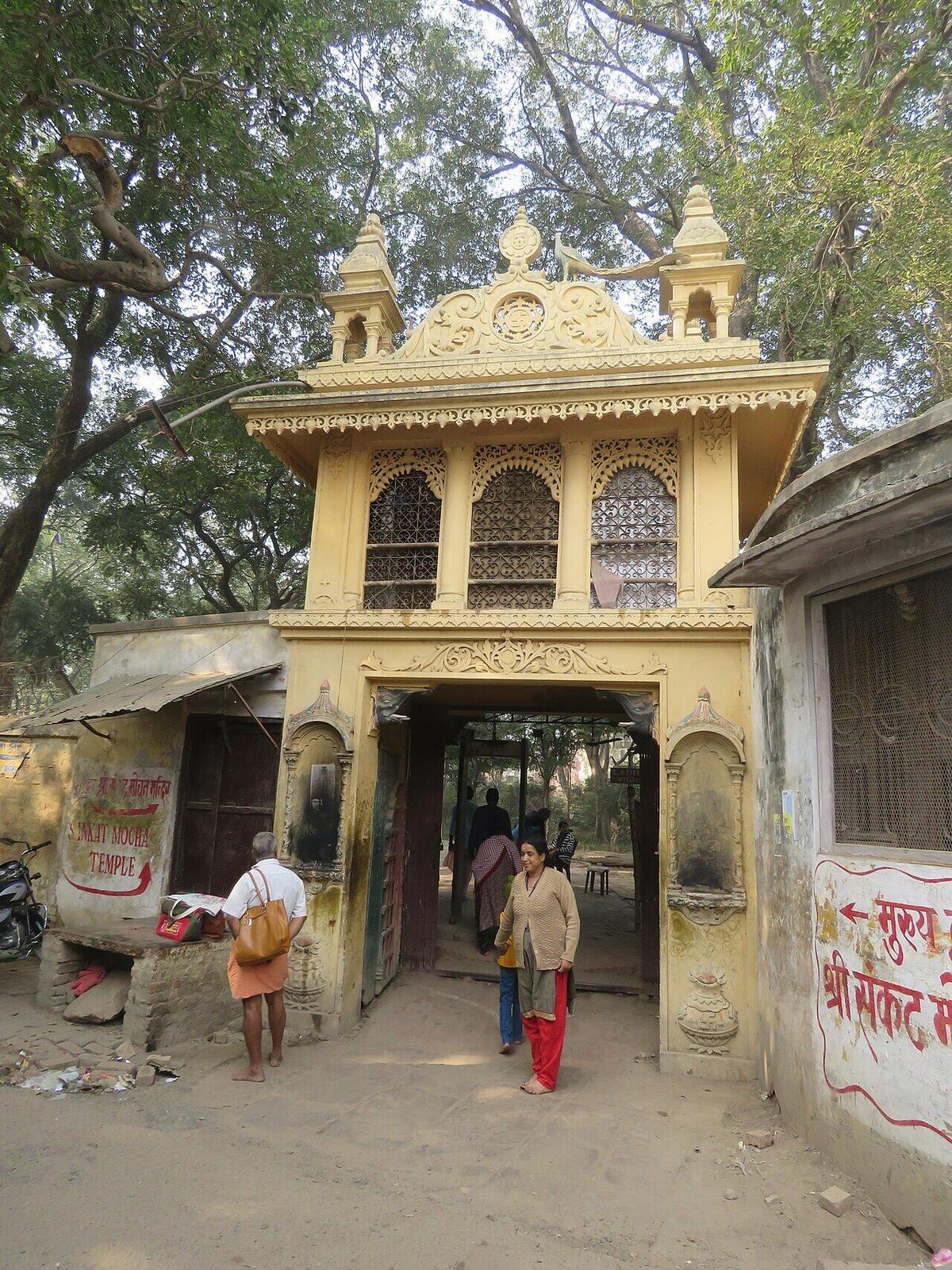
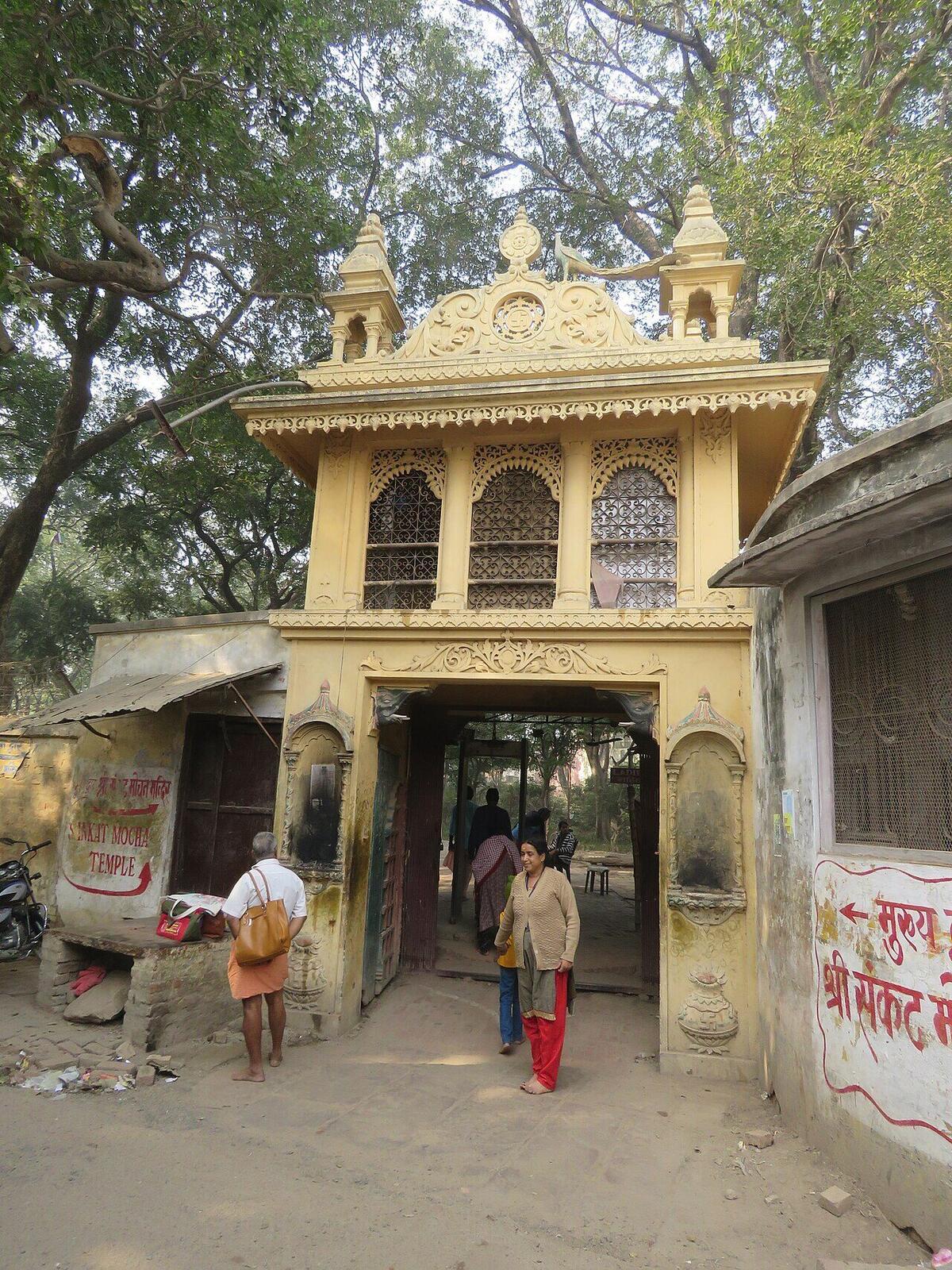
Sankat Mochan is the Hanuman temple of Kashi, founded by Goswami Tulsidas in the sixteenth century at the spot where, according to local tradition, Hanuman appeared to him in darshan. The name Sankat Mochan — "the remover of distress" — names the particular grace for which devotees approach this shrine: relief from difficulty, protection in hard times, and the restoration of inner courage.
The temple sits in the Durgakund–Lanka area of the city, set within a generous open compound of mature peepal and neem trees — a quality rare among the lane-bound shrines of old Kashi. Langurs, treated with respect as kin of Hanuman, move through the canopy. The Hanuman Chalisa is recited continuously here — individually by devotees, and in congregation in the mandapa — and many come as much to sit for a while in the sound of the Chalisa as to receive darshan of the murti.
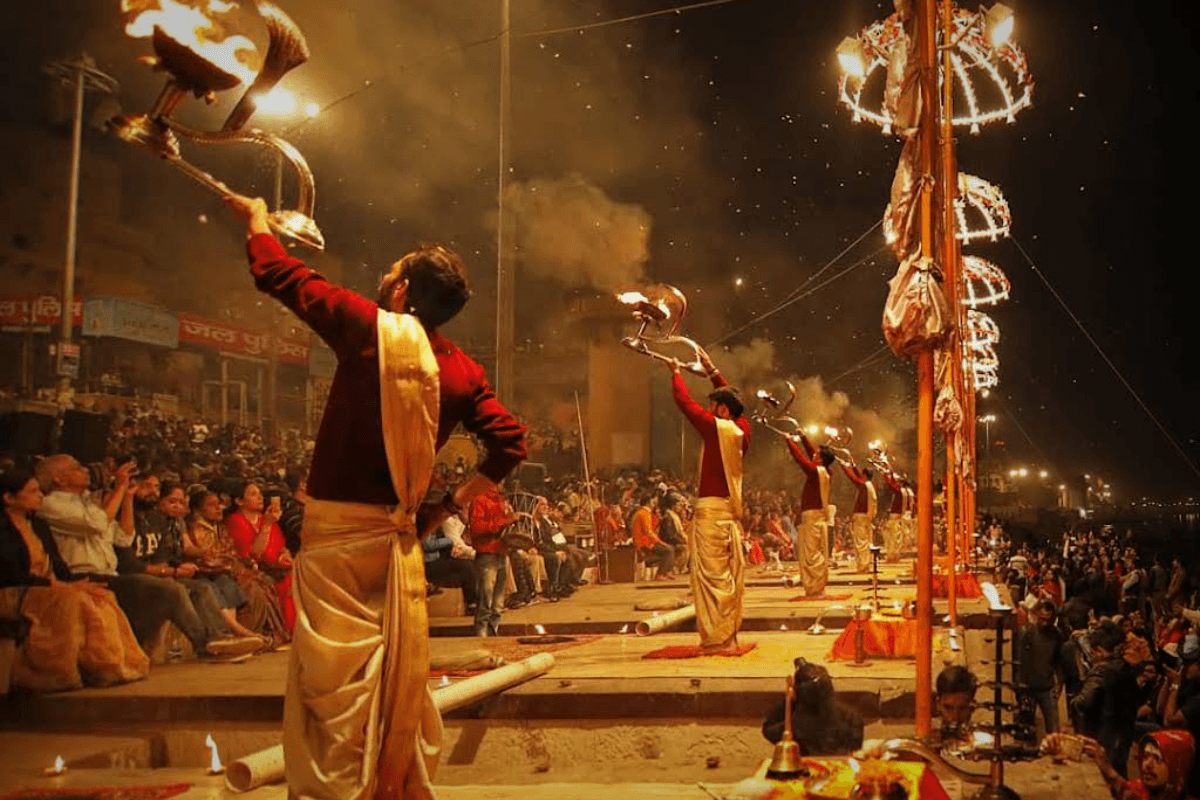
Tuesday and Saturday are the days most closely associated with Hanuman worship. On those evenings, the temple is filled with the collective chanting of the Chalisa, the lamps of aarti, and the offering of besan laddoos — the sweet most dear to the Lord.
Hanuman is worshipped in Hindu tradition as Chiranjivi — ever-living — and as the perfect bhakta of Sri Ram. At Sankat Mochan, the devotee approaches him in his role as protector and remover of obstacles. The very name of the temple is also the name of the grace sought within it: to offer the sankat — the difficulty, illness, or fear — at Hanuman's feet, and to carry away the lightness that comes from having placed it there.
Traditional understanding holds Hanuman to be a form of Shiva born of Vayu, the vital breath. Two currents thus meet in his darshan: the Lord who destroys what obstructs and the breath-giving deva who sustains. The Hanuman Chalisa, composed by Tulsidas himself, states plainly the protection offered by his name — "Bhoot pisach nikat nahi aave, mahabir jab naam sunave" — "no evil spirit comes near when the name of the great hero is heard."
Katha and local belief
The founding katha is beloved in Banaras. Goswami Tulsidas, during his years of residence in Kashi, would each morning offer the remaining water from his own bathing at the foot of a peepal tree near the Assi. Tradition says a spirit within the tree, sustained by this offering, appeared to him and asked for a boon. Tulsidas asked to see Sri Ram. The spirit, unable to grant that directly, whispered a sign: "The aged leper who arrives first and leaves last at your recitations — that is Hanuman in disguise."
At the next recitation, Tulsidas recognised the figure, fell at his feet, and Hanuman is said to have revealed his form. The temple marks the ground on which this darshan took place. The peepal tree that Tulsidas watered still stands in the compound, and verses of the Ramcharitmanas — said to have been composed beneath it — continue to be heard in daily recitation.
A Banarasi tradition holds that no difficulty is too small or too great to be placed at Sankat Mochan's door. Devotees come in illness and before treatment; before examinations and court dates; before marriages and long journeys; and also in seasons of quiet, simply to sit in the Chalisa.
History
Sankat Mochan was established by Goswami Tulsidas in the sixteenth century, during the years in which he lived in Kashi and composed much of his devotional literature. The shrine he founded was small; for centuries, worship at the site was carried forward by Tulsidas's lineage and the Banarasi devotees who kept his tradition.
Around the year 1900, Pandit Madan Mohan Malaviya, the founder of Banaras Hindu University, undertook the expansion of the temple into roughly the scale seen today. Malaviya saw in Sankat Mochan the devotional heart of the Kashi he was helping to renew, and his patronage brought the temple into its present form — an open compound, large mandapa, and surrounding gardens.
On 7 March 2006, an explosion during the evening aarti took the lives of more than twenty devotees. The temple reopened the following day. The aarti was performed on its usual schedule. Pilgrims returned, and the ordinary devotional life of the shrine resumed. Banaras's answer to that day was, simply, the continuation of worship.
Since 1923, the temple has hosted the Sankat Mochan Sangeet Samaroh — an annual classical music festival established by the temple's devotee community, later carried forward with the participation of musicians including Pandit Ravi Shankar and many of India's leading classical performers. The festival continues each year around Hanuman Jayanti as an offering of music at the shrine.
Architecture
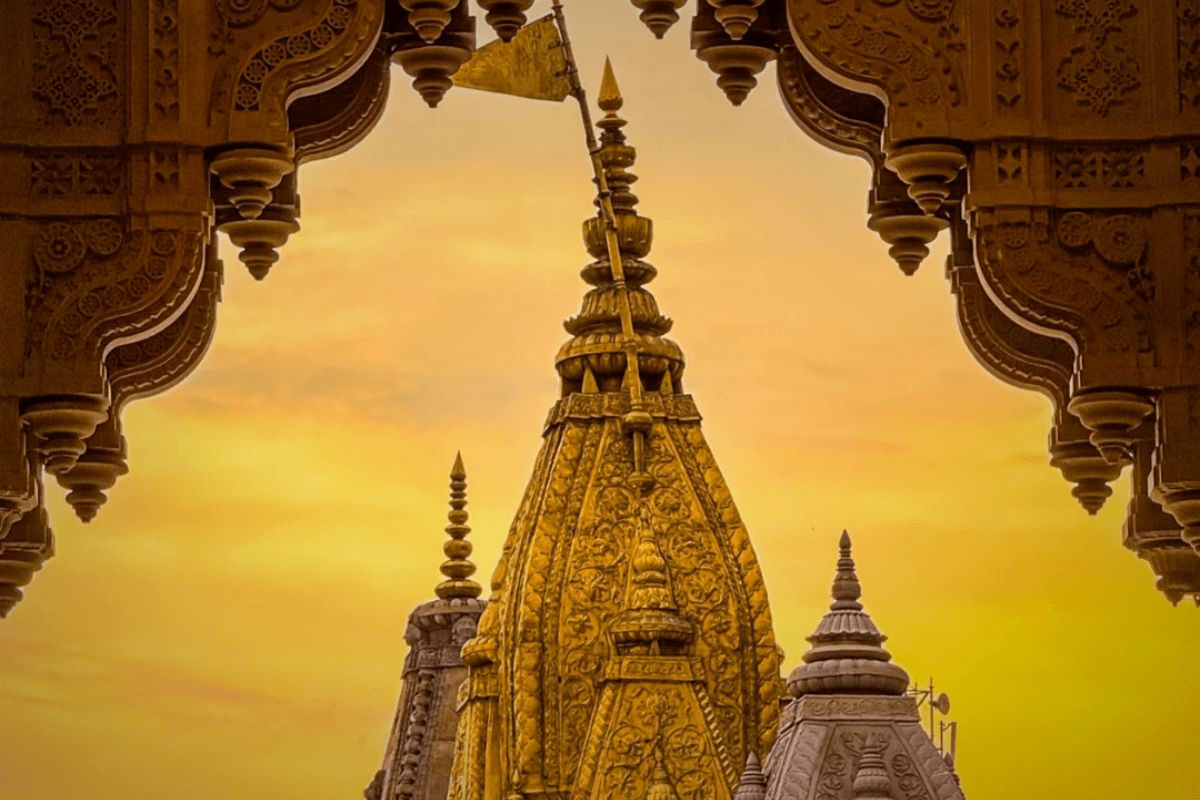
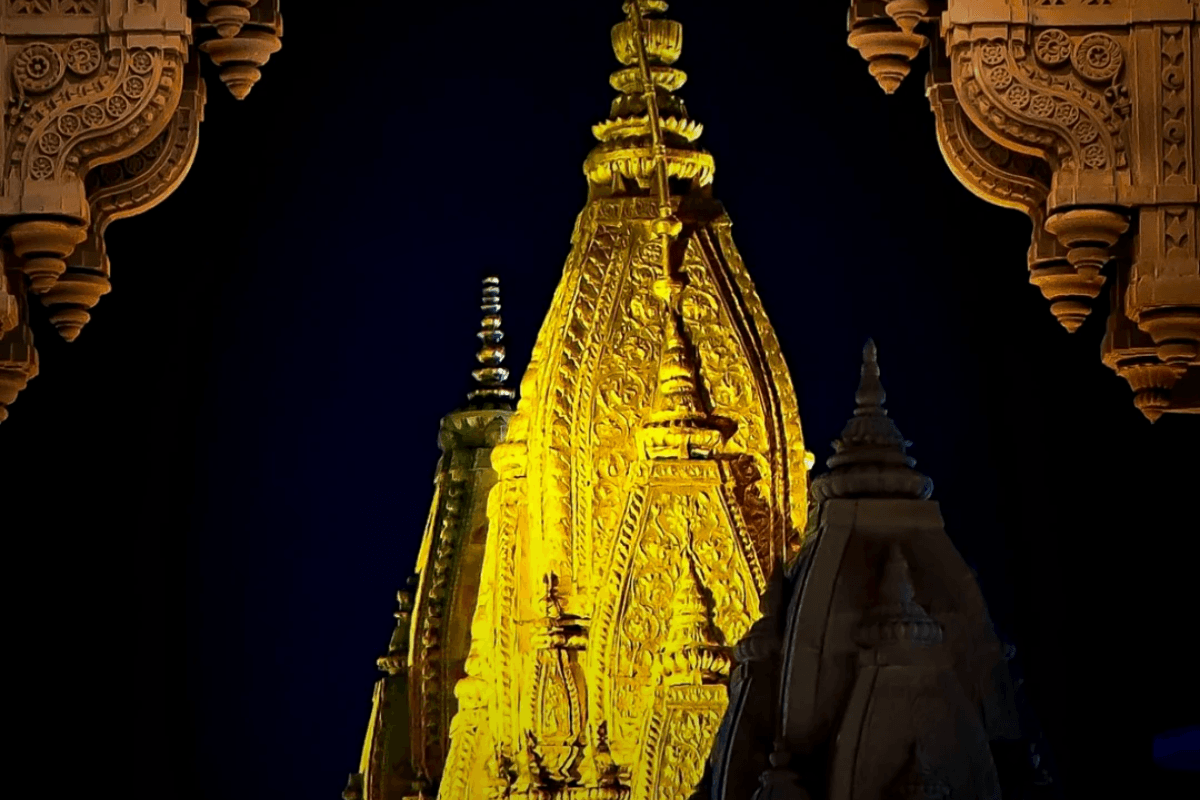
Sankat Mochan is built in the North Indian Nagara style. The main sanctum holds the murti of Hanuman, anointed with sindoor, his folded hands turned in bhakti toward Sri Ram. The compound around the sanctum is generous and open — unusual among Kashi temples, which tend to be hemmed by the old city lanes — and is shaded by mature peepal and neem trees.
The open courtyard is part of the temple's character. It holds the congregational mandapa where the Chalisa is recited in groups, provides space for the evening aartis, and hosts the annual Sangeet Samaroh each April. The peepal tree associated with Tulsidas's daily offering still stands in the compound, and is itself an object of devotional regard.
Langurs — respected in the temple's tradition as members of Hanuman's vanara household — move through the canopy throughout the day and are fed by devotees as part of the shrine's daily life.
Rituals & Practices
The central offering at Sankat Mochan is the besan laddoo, the gram-flour sweet particularly dear to Hanuman. Laddoos are available from shops near the entrance, offered at the sanctum, and received back as prasad — the temple distributes many thousand each day.
The continuous recitation of the Hanuman Chalisa is the shrine's steady devotional sound — both by individual devotees sitting in the compound and by groups gathered in the mandapa. Many devotees observe a weekly vrata on Tuesday or Saturday and break their fast after darshan here.
Offerings commonly brought to the temple:
- Besan laddoos
- Fresh marigold garlands
- Sindoor
- Small sums for dakshina and for the temple's ongoing annadana
The annual Sankat Mochan Sangeet Samaroh, held around Hanuman Jayanti each April, brings classical musicians from across India to perform in the temple compound through the nights — an offering of music to the Lord.
Specific timings may vary; pilgrims are encouraged to verify before a visit.
Festivals & Celebrations
| Festival | When | Crowd |
|---|---|---|
| Hanuman Jayanti | — | Extremely high |
| Sankat Mochan Sangeet Samaroh | — | Very high |
| Tuesday and Saturday worship | — | High |
| Ram Navami | — | Very high |
Hanuman Jayanti: The most important day in the Hanuman devotional calendar. Darshan at Sankat Mochan on Hanuman Jayanti is held to bring particular grace for protection and the removal of difficulty.
Sankat Mochan Sangeet Samaroh: A rare meeting of classical music and temple devotion. The festival is regarded as one of Banaras's most distinguished cultural observances and a devotional offering in its own right.
Tuesday and Saturday worship: Tradition holds Tuesdays and Saturdays as especially favourable for Hanuman worship. The weekly rhythm of the temple is built around these two evenings.
Ram Navami: Sri Ram is the presiding Lord whom Hanuman serves. Celebrating Ram's birth at the temple of his foremost devotee is considered particularly meaningful.
Temple Details
| Timings | note: The temple has no official website publishing timings â these are as reported by Wikipedia and tourism guides; confirm locally, and expect changes on festival days daily: Approx. 4:30 AM â 10:30 PM afternoon break: Darshan closed roughly 12:00 noon â 3:00 PM tuesday and saturday: Open late, until about midnight |
| Darshan Types | General Darshan (free) No tickets; on Tuesdays and Saturdays thousands of devotees queue to offer prayers to Hanuman, so expect long lines on those days. |
| Management | Managed by the temple's Mahant (head priest); the late Mahant Veer Bhadra Mishra was also Head of the Civil Engineering Department at IIT (BHU), Varanasi. |
| Entry Fee | Free entry · No entry fee; there is no ticketed darshan here. |
Prepare for Your Visit
Practical guidance to help you plan your pilgrimage
| Rules & Restrictions |
|
| Best Time to Visit | Tuesdays and Saturdays are the special days for Hanuman worship here and draw the largest crowds; the annual Sankat Mochan Sangeet Samaroh (held since 1923 around Hanuman Jayanti, in April) is the temple's biggest event. |
| How to Reach | setting: The temple stands on the banks of the Assi river locality: SankatmochanâLanka locality in south Varanasi, near Banaras Hindu University (per UP Tourism) |
| Pilgrim Guidance | How to reachThe temple is in the Durgakund–Lanka area of Varanasi, about 3 km from Kashi Vishwanath and a short distance from the BHU campus. An auto-rickshaw from anywhere in the city takes 15 to 30 minutes. For pilgrims also visiting BHU and the New Vishwanath temple, Sankat Mochan is usually combined with those in the same half-day. Preparation for Pilgrims
Best Time to VisitEarly morning (5:00 – 7:00 AM) is the most peaceful time, when the temple is filled with the sound of the Chalisa before the day's crowds arrive. Tuesday and Saturday are Hanuman's particular days and bring the largest gatherings; these are spiritually powerful but expect longer waits. Hanuman Jayanti in April — and the Sangeet Samaroh that surrounds it — is the most atmospheric period of the year. October to March is the most comfortable window for pilgrimage overall. |
| Facilities | lockers |
| Pilgrim Tips |
|
Location
Varanasi, UP
Pilgrim photos
No pilgrim photos yet.
Community corrections
No corrections yet.
Edit history
No revisions yet.
Plan Your Visit to Sankat Mochan Hanuman Temple
Get a custom itinerary and pricing for your trip.
Recommended
Packages for this destination
Pilgrim Notes
On-ground observations from fellow pilgrims
No pilgrim notes yet. Be the first to share on-ground observations!
Sign in to share a note.
Pilgrim Reviews
1650 reviews
Be the first to share your experience at Sankat Mochan Hanuman Temple.
Sign in to write a review.
Nearby sacred places
Discover other sacred places near Sankat Mochan Hanuman Temple
Explore temples, tirthas, and pilgrimage sites in UP
Explore nearbyPart of these circuits
Walk the traditional pilgrimage routes this destination belongs to.