Dashashwamedh is not only the most visited ghat of Varanasi; it is, in devotional understanding, the sacred centre of the Kashi riverfront. The name itself carries a scriptural memory — dasha, ten, and ashwamedha, the great Vedic horse sacrifice. The Puranas tell that Brahma performed ten Ashwamedha yajnas at this very spot to welcome Shiva back to the city. The ground is therefore approached not as an ordinary bathing ghat, but as a place shaped by an act of cosmic invitation.
For many pilgrims, the journey to Kashi begins here. A sankalp is taken, a bath is offered to the Ganga, and tarpan is performed for ancestors. Priests under bamboo umbrellas guide the rites of sastra; bilva, flowers and earthen lamps move through many hands. From dawn until the evening aarti, the ghat remains a living stage of sadhana — not in performance, but in the unbroken rhythm of faith.
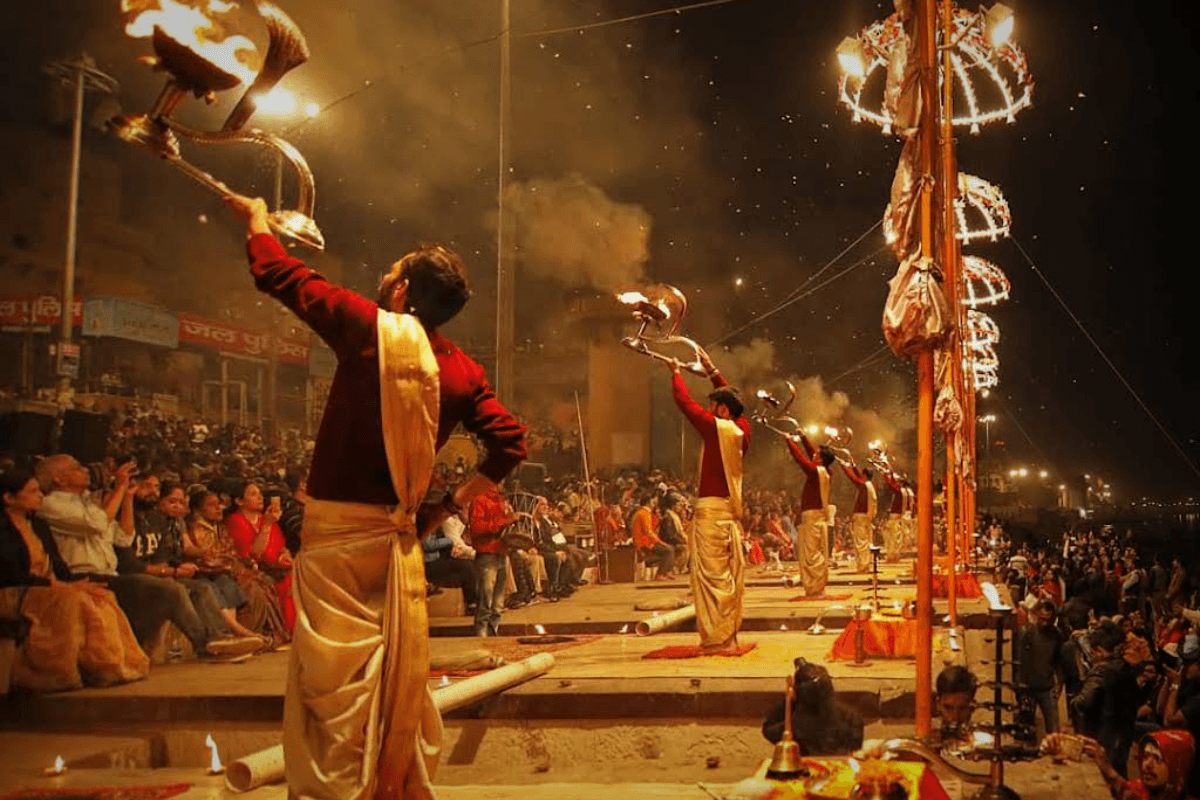
At sunset, seven priests gather on raised platforms by the river for the Ganga Aarti. Lamps of brass rise in unison, conches sound, bells ring, and the chant of Om Jai Gange Mata gathers the crowd into a single voice. The aarti has been offered without a single day's interruption since 1992, through floods and through the pandemic; when the river rises, the platforms rise with it, and the flame does not stop.
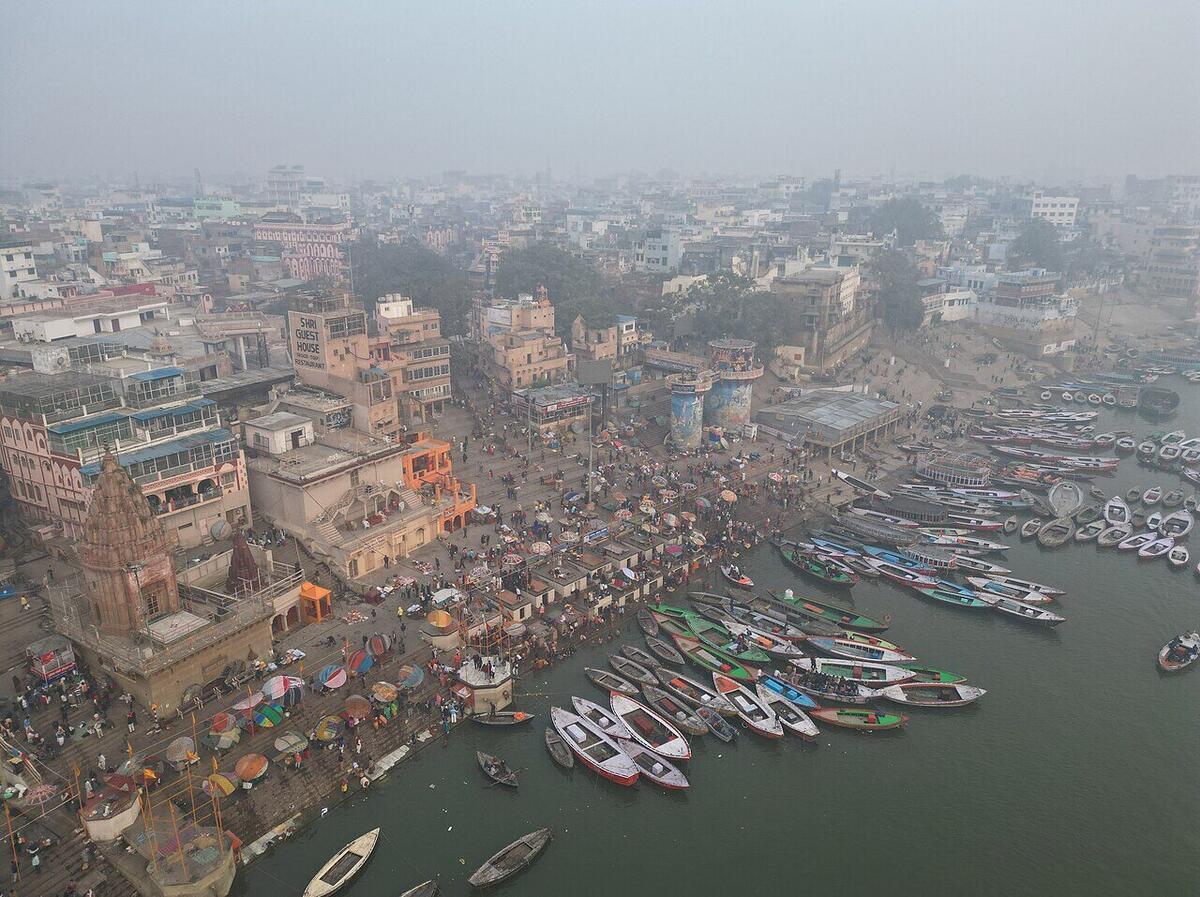
Dashashwamedh is counted among the Panchatirtha — the five sacred ghats whose darshan and snana are held to complete the Kashi pilgrimage. The classical sequence is Asi, Dashashwamedh, Manikarnika, Panchganga and Adi Keshava. Within this sacred order, Dashashwamedh is the central tirtha of the crescent, the ghat most directly associated with daily worship of the Ganga.
The Kashi Khanda of the Skanda Purana praises Dashashwamedh as a tirtha of supreme merit. Tradition holds that a bath offered here carries the devotional fruit of ten Ashwamedha yajnas — the most expensive and difficult of Vedic rites, once the measure of royal spiritual attainment. In this understanding, the ghat offers to every pilgrim what only emperors could once undertake: a great yajna completed in the waters of the Ganga.
The evening Ganga Aarti is, in devotional terms, a daily offering of gratitude to the river. Seven priests trace circles of flame representing the pancha bhutas, the five elements of which creation is made. Conch, bell, drum, chant and lamp move as a single rhythm. For many, the aarti is not a spectacle but a nightly renewal of the bond between Kashi and the Ganga.
Katha and Sacred Memory
The Puranas tell that the demon king Divodasa once ruled Kashi and kept Shiva away from his beloved city. To draw Shiva back, Brahma performed ten Ashwamedha yajnas on the banks of the Ganga, while Shiva's sixty-four Yoginis tested the devotion of the king. The ten yajnas succeeded; Shiva returned; and the ghat came to be known as Dashashwamedh.
The older Puranic name of this tirtha is Rudrasaras — the lake of Rudra — still preserved in temple memory. The name Dashashwamedh itself is a scriptural marker of the ghat's origin, reminding every pilgrim that Kashi's sacred geography is not merely physical, but born of yajna, tapas and divine longing.
History
Dashashwamedh has served as Varanasi's central ghat for many centuries. The Chinese pilgrim Xuanzang, travelling in the 7th century, described great ghats descending to the Ganga at Kashi. Puranic tradition, Sanskrit literature and temple inscriptions all place Dashashwamedh among the oldest and most venerated tirthas of the city.
The pucca stone ghat as seen today owes its shape to Maratha patronage. Peshwa Balaji Bajirao laid the first permanent stone steps in 1738–40. A major renovation followed in 1765 under Maharani Ahilyabai Holkar of Indore, whose masonry still forms the core of the present steps. The final widening of the stair platform was completed by the state administration in 1965.
Through centuries of political change, the ghat's devotional life never broke. Worship continued; the Ganga continued to receive her devotees. The Ganga Aarti in its current formal structure was established in 1992, and has been offered without a single day's interruption since — even during monsoon floods, when the priests ascend to elevated platforms above the risen waters, and during the years of the pandemic. This continuity of daily offering is the real historical thread of Dashashwamedh.
Architecture
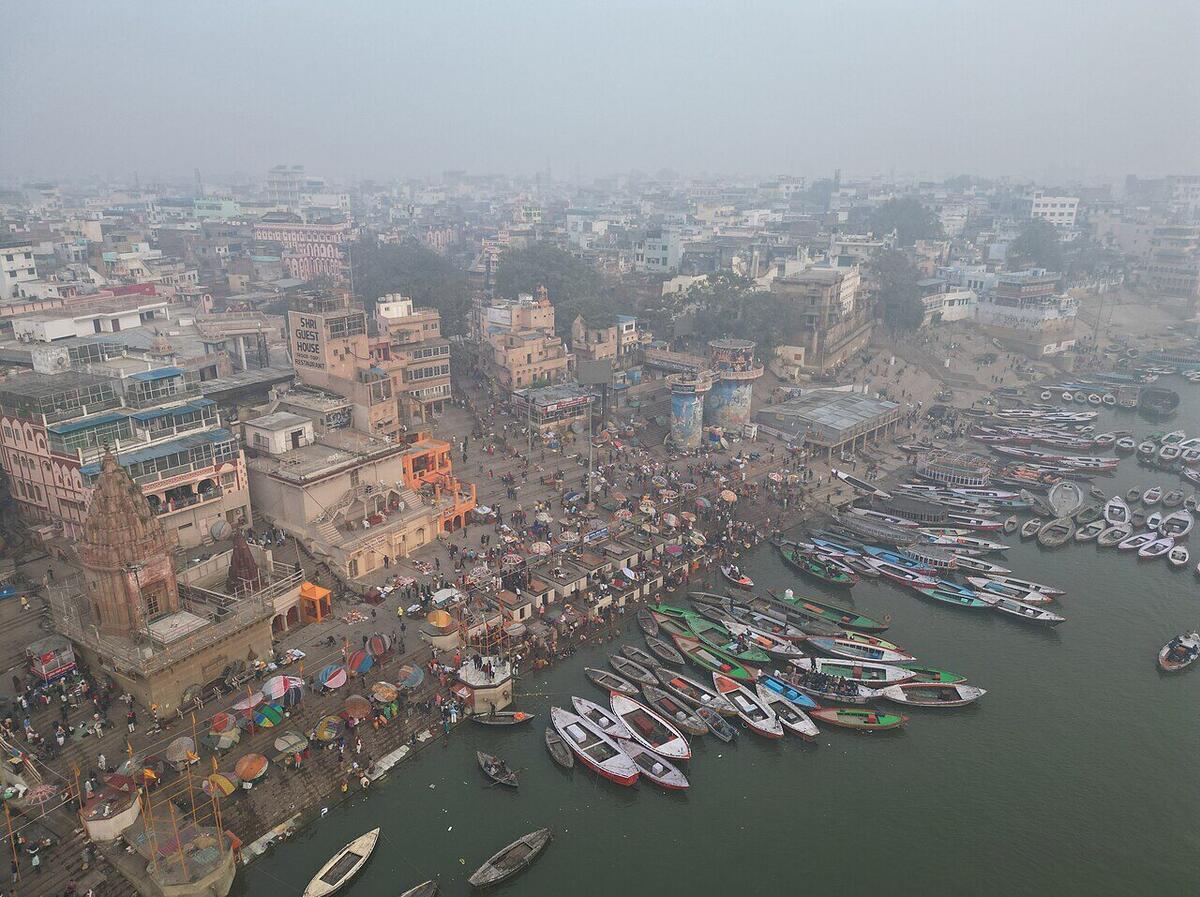
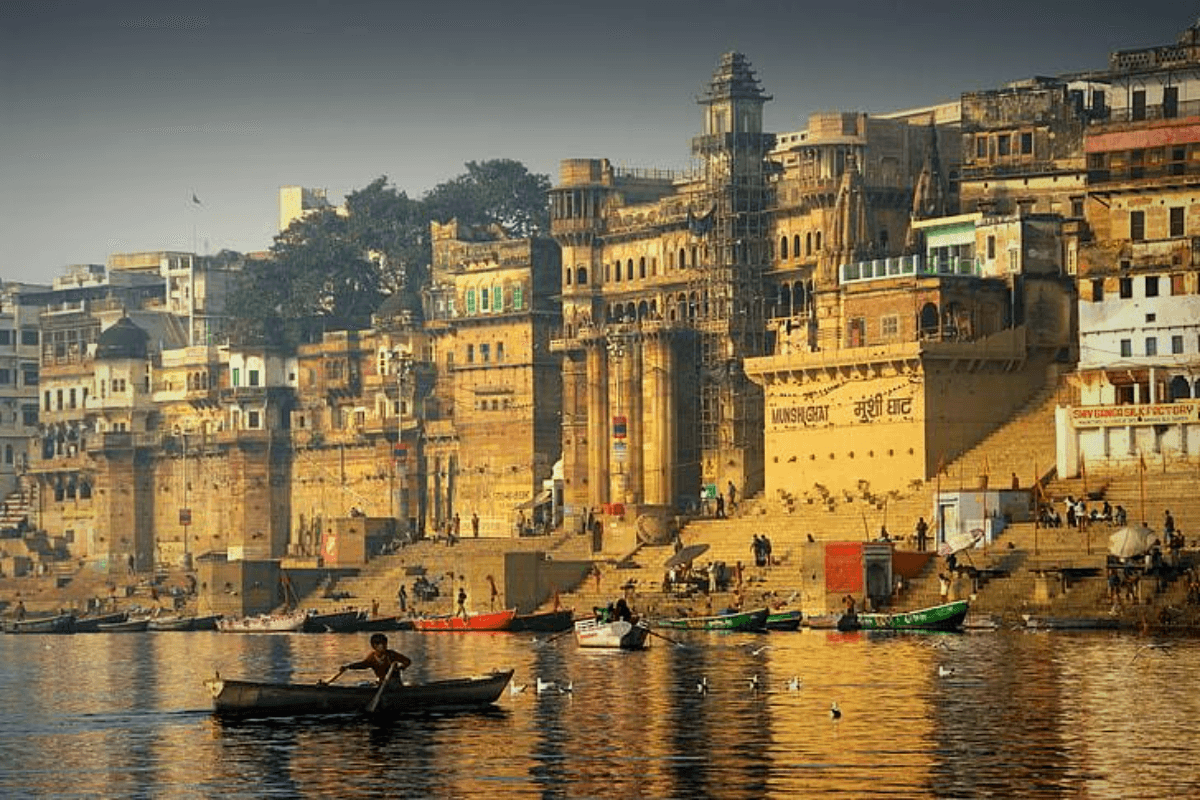
The power of Dashashwamedh is not in a single building but in the spatial shape of the ghat itself — a stone amphitheatre that opens toward the Ganga and holds the devotion of the city. The ghat extends roughly 200 metres along the river, its wide steps sweeping down in a gentle curve from the road above to the waterline below.
The steps are unusually broad, a legacy of the 18th-century Maratha reconstruction, so that thousands of devotees can gather for snana and aarti without the compression of the narrower central ghats. Raised platforms near the water serve as the stage for the evening aarti. Above, small temples, dharamshalas, and the shaded spots of the pandas complete the ghat's devotional setting.
The stone is the warm buff sandstone of Chunar, common to Varanasi's older ghats, polished by centuries of bare feet and river water. The ghat is not grand in the manner of a temple city; its greatness lies in use, in repetition, in the quiet accumulation of prayer that fills its stones.
Rituals & Practices
The day at Dashashwamedh begins long before sunrise. Devotees come for snana, for sankalp, for tarpan, for sraddha rites and for offerings to the Ganga. Priests under their bamboo umbrellas guide the rituals, and the ghat's lower steps fill with pilgrims holding small lotas of water, bilva patra, flowers, and incense.
Through the day, simple pujas and vows continue by the river. Many yatras formally open at Dashashwamedh — a bath here is often the first act of a Kashi pilgrimage, to be followed by darshan at Kashi Vishwanath, Annapurna, Kal Bhairav and Vishalakshi.
The defining evening ritual is the Ganga Aarti, offered daily by the Ganga Seva Nidhi. The ceremony begins around sunset — typically 6:30 PM through most of the year — and lasts about 45 minutes. Seven priests in silk dhotis raise brass lamps in choreographed motion while conches, bells and drums keep the rhythm. The closing chant of Om Jai Gange Mata rises from thousands of voices along the ghat and from boats on the river.
Pilgrims are encouraged to verify current timings, especially during festivals or monsoon, as the exact schedule may shift slightly.
Festivals & Celebrations
| Festival | When | Crowd |
|---|---|---|
| Dev Deepawali | — | Extreme â lakhs of visitors, arrive early in the afternoon for any reasonable position |
| Kartik Purnima Snan | — | Extreme |
| Ganga Dussehra | — | Very high |
| Makar Sankranti | — | Very high |
| Mahashivratri | — | Extremely high |
Dev Deepawali: Tradition holds that Dev Deepawali celebrates Shiva's victory over the demon Tripurasura and the descent of the gods to bathe in the Ganga. Lighting diyas on the ghats is offered as a greeting to the devas.
Kartik Purnima Snan: The Puranas praise snana on Kartik Purnima as bearing the fruit of great yajnas. Bathing at Dashashwamedh on this day is considered especially meritorious.
Ganga Dussehra: Tradition holds that a bath at Dashashwamedh on Ganga Dussehra removes the ten types of sins (dasha-papa).
Makar Sankranti: Marks the sun's transition into Capricorn and the beginning of Uttarayan. Snana and daan at Dashashwamedh on this day are held to bear great devotional fruit.
Mahashivratri: The great night of Shiva. The ghat serves as a spiritual forecourt to Kashi Vishwanath on this holiest night.
Prepare for Your Visit
Practical guidance to help you plan your pilgrimage
| Pilgrim Guidance | Traditional Pilgrim SequenceFor many devotees, Dashashwamedh is the devotional threshold of Kashi. A commonly followed sequence is:
Some pilgrims also complete the Panchatirtha Yatra, taking a bath at Asi, Dashashwamedh, Manikarnika, Panchganga and Adi Keshava in a single day. Others come only for Dashashwamedh snana and the evening aarti; both approaches are rooted in the living pilgrimage culture of Kashi. Preparation for Pilgrims
Best Time to VisitOctober to March is the most comfortable period for most pilgrims. Kartik Purnima, Dev Deepawali, Makar Sankranti and Ganga Dussehra bring extraordinary devotional atmosphere but also large crowds. For a quieter darshan of the river, weekday early mornings are especially peaceful. |
Location
Varanasi, UP
Gallery
Pilgrim photos
No pilgrim photos yet.
Community corrections
No corrections yet.
Edit history
No revisions yet.
Plan Your Visit to Dashashwamedh Ghat
Get a custom itinerary and pricing for your trip.
Recommended
Packages for this destination
Pilgrim Notes
On-ground observations from fellow pilgrims
No pilgrim notes yet. Be the first to share on-ground observations!
Sign in to share a note.
Pilgrim Reviews
1890 reviews
Be the first to share your experience at Dashashwamedh Ghat.
Sign in to write a review.
Nearby sacred places
Discover other sacred places near Dashashwamedh Ghat
Explore temples, tirthas, and pilgrimage sites in UP
Explore nearbyPart of these circuits
Walk the traditional pilgrimage routes this destination belongs to.