Kashi Vishwanath is not simply a temple in Varanasi. It is the living heart of Kashi itself, the city that Hindu tradition holds to be eternally beloved of Mahadev. Here Shiva is worshipped as Vishwanath, the Lord of the Universe, and the temple is approached not merely as a shrine, but as a place where devotion, memory, liberation, and daily worship flow together.
For many pilgrims, the journey begins before the sanctum itself. It begins in the lanes of old Kashi, in the sound of bells from hidden shrines, in the sight of brass plates carrying bilva leaves and flowers, and in the cry of Namo Parvati Pataye, Har Har Mahadev moving through the crowd. Some come through Vishwanath Gali, some from the Ganga side through the Dham Corridor, some after first bowing at Annapurna or Kal Bhairav. But almost every devotee arrives with the same inward feeling: this is not an ordinary darshan.
The temple as seen today is the fruit of centuries of destruction, rebuilding, protection, and unbroken faith. Yet to the pilgrim, its deepest history is not only political or architectural. It is the history of a city that never stopped calling out to Vishwanath, and of Vishwanath never ceasing to receive his devotees.
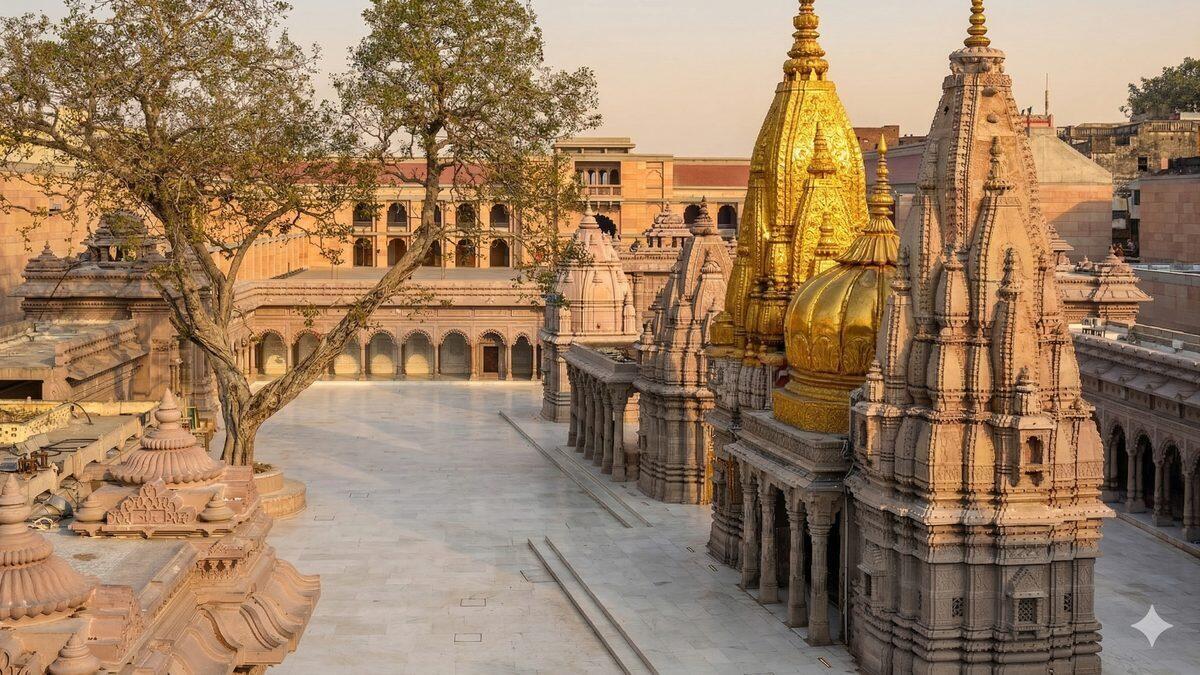
In Hindu sacred tradition, Kashi is praised as Avimukta Kshetra, the sacred ground never abandoned by Shiva. This belief gives Kashi Vishwanath its deepest identity. The temple is revered not only because it is ancient, and not only because it is a Jyotirlinga, but because it stands within a city that is itself understood to be held in Shiva's eternal grace.
Kashi Vishwanath is among the most deeply venerated of the twelve Jyotirlingas. Here the linga is worshipped as Shiva's infinite presence made accessible to human devotion. Pilgrims come to offer Ganga-jal, bilva patra, chandan, flowers, and prayer, but they also come for something less visible: inner quiet, forgiveness, blessing, courage, and the feeling of having reached a place where the burden of life becomes lighter.
A long-cherished belief of Kashi, drawn from the devotional world of the Kashi Khanda and sustained in living faith, is that Shiva grants liberating grace to those who leave the body within the sacred ambit of Kashi. This is why the city has for centuries been approached not only as a tirtha, but as a city of moksha. Even today, devotees come here in old age not out of fear, but out of longing to remain close to Mahadev in life's final chapter.
For many Hindus, darshan at Vishwanath is also felt as the fulfilment of yatra. One may visit many temples and complete many pilgrimages, but Kashi often feels like the place where the journey turns inward and becomes complete.
Katha, Mahatmya, and Sacred Memory
The sacred identity of Kashi Vishwanath is shaped by scripture, temple tradition, and the living memory of Banaras.
The Kashi Khanda of the Skanda Purana praises Kashi as the city chosen by Shiva, the place he never leaves. From this comes the name Avimukta. In devotional understanding, Kashi is not merely a place where Shiva is worshipped; it is a place where Shiva remains present for the upliftment of beings.
A beloved traditional understanding of the Jyotirlinga is that it is Shiva as limitless divine light, made approachable to human devotion. The infinite cannot be grasped by the senses, but in the linga the devotee can bow, offer, touch, and remember.
Another cherished belief of Kashi is connected with the Taraka Mantra. Devotional tradition holds that Shiva grants final liberating grace to those who depart within the sacred boundary of Kashi. This belief has shaped the emotional and spiritual life of the city for centuries.
But Vishwanath is never understood in isolation. Kashi holds a sacred family around him: Annapurna Devi, who nourishes the city; Kal Bhairav, the guardian and kotwal of Kashi; Vishalakshi, the Divine Mother; Manikarnika, where life and death stand face to face; and the ever-flowing Ganga. To know Vishwanath fully is to slowly begin sensing this larger sacred mandala.
History
Kashi's association with Shiva reaches deep into India's sacred memory. Puranic tradition praises the city as a great center of Shaiva worship, and by the early historical period Varanasi was already known as a city of temples, ascetics, and sacred learning.
The temple has undergone repeated destruction and rebuilding over the centuries, yet worship itself never disappeared. This continuity of devotion is the true historical thread of Kashi Vishwanath. Empires changed, structures rose and fell, and political power shifted, but the bond between Kashi and Vishwanath endured.
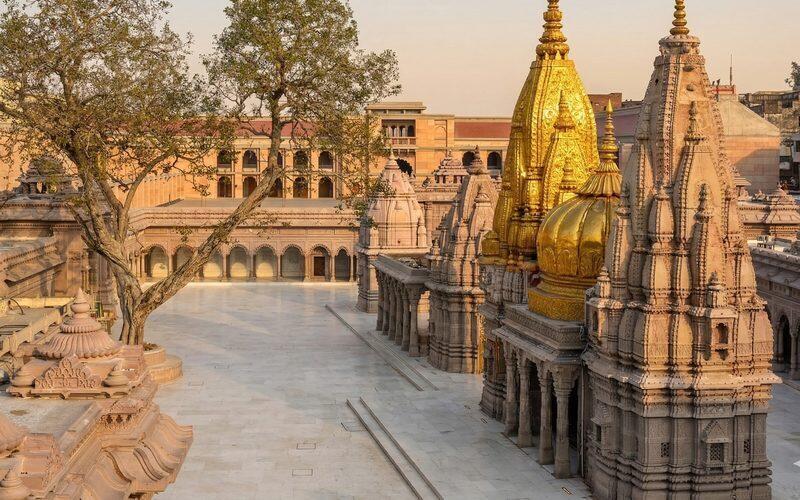
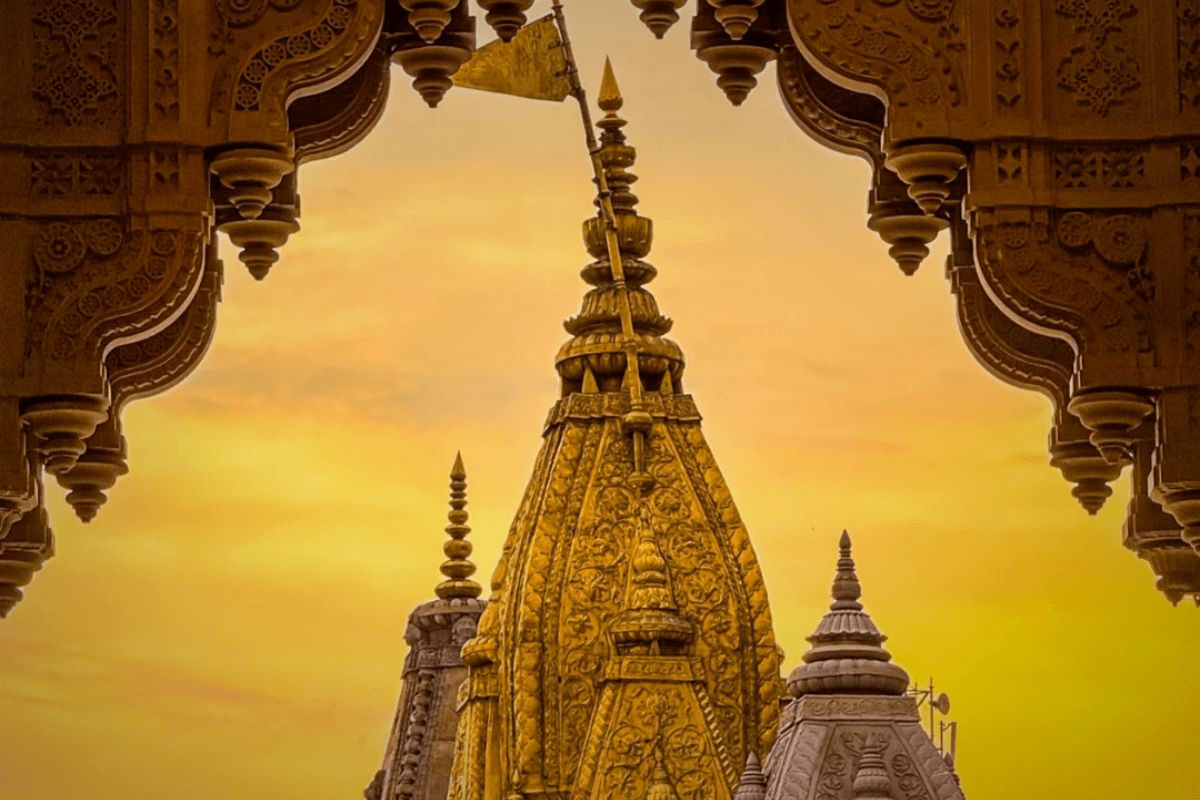
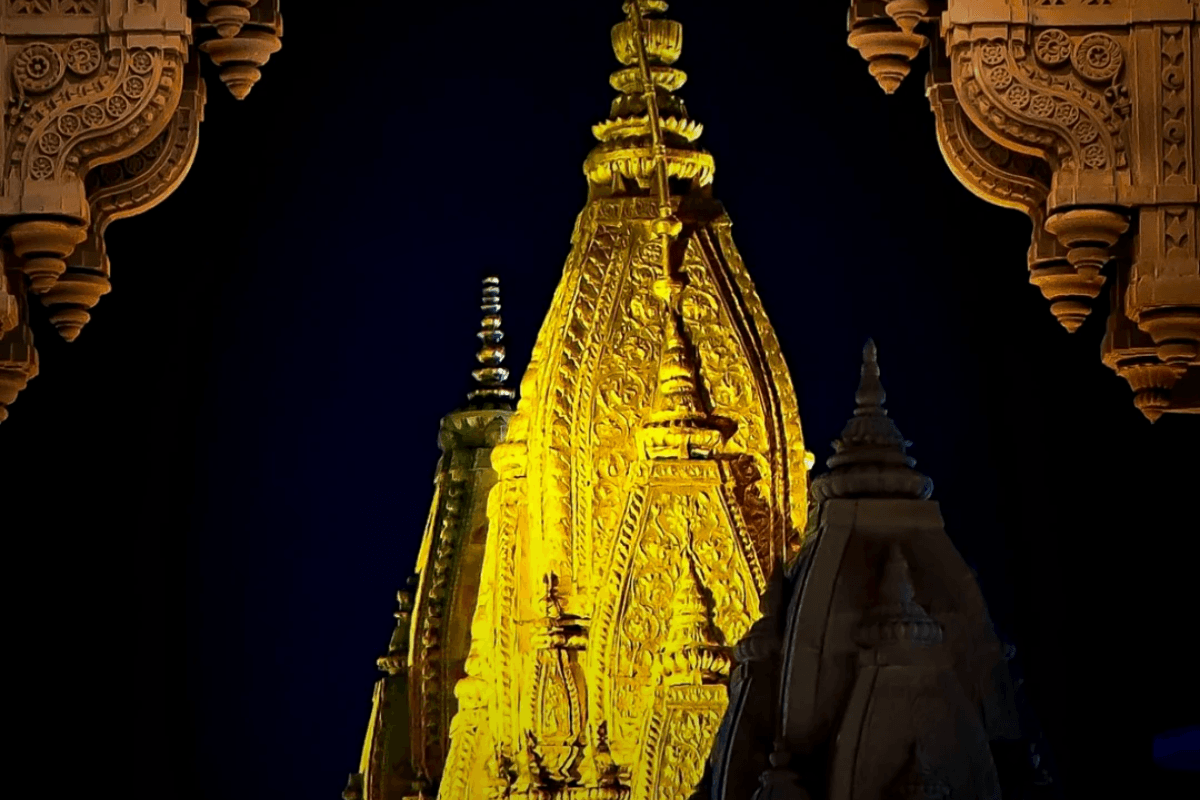
The present temple owes its existence above all to Maharani Ahilyabai Holkar of Indore, who rebuilt it in 1780. Her restoration remains one of the most revered acts of Hindu temple patronage in early modern India. Later, Maharaja Ranjit Singh donated gold for the temple spires, giving the shrine its famous golden crown. That radiant shikhara continues to define the skyline of sacred Kashi.
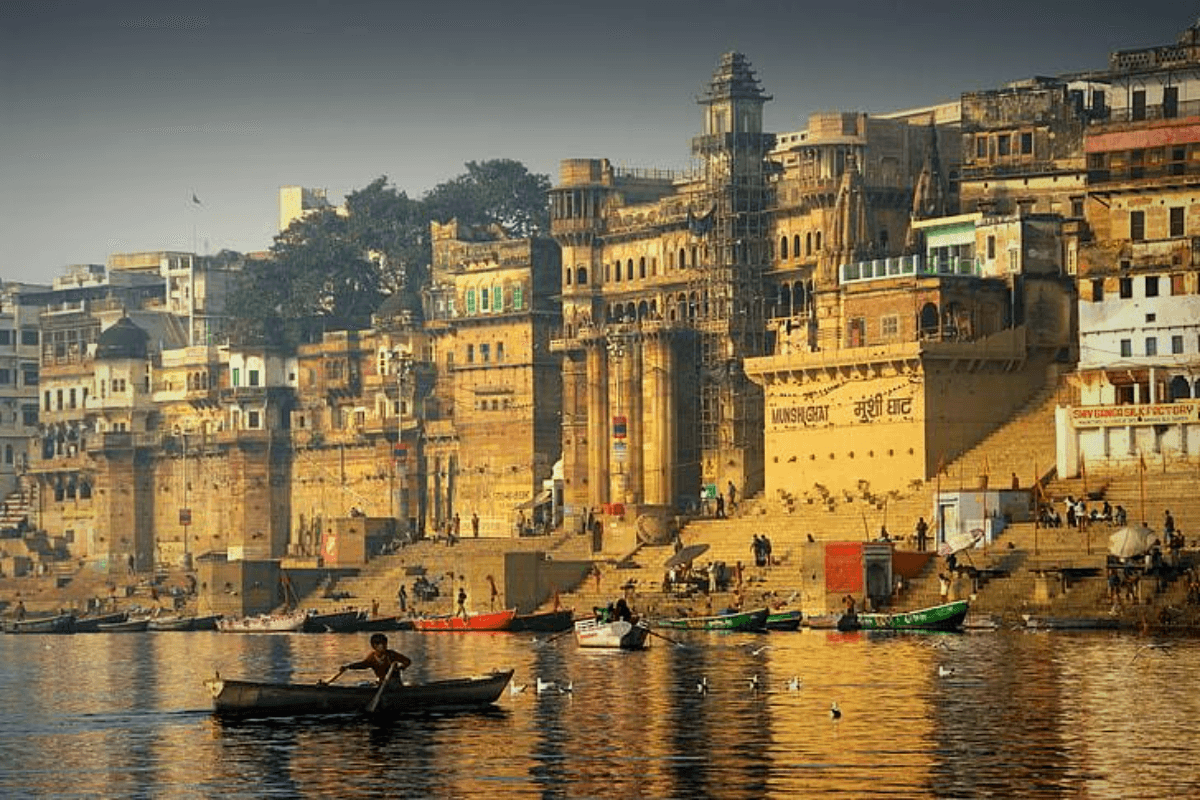
In recent years, the Kashi Vishwanath Dham Corridor has created a broad ritual approach from the Ganga side, easing access for pilgrims and restoring a visual relationship between river and shrine. For some, this is a new doorway into darshan; for others, Vishwanath Gali remains the more intimate and emotionally charged route. Today both belong to the living pilgrimage of Kashi.
Architecture
Kashi Vishwanath is built in the Nagara style of North Indian temple architecture. Its power lies not in vast physical scale, but in sacred intensity. Unlike the expansive temple cities of South India, Vishwanath rises from within the woven devotional life of Kashi itself.
Its most recognizable feature is the golden shikhara, visible from afar and radiant in the light of dawn and dusk. The temple complex includes the main sanctum and associated shrines that deepen the pilgrim's experience beyond a single moment of darshan.
The garbhagriha is intimate. The Jyotirlinga, dark and polished by centuries of abhishek, rests at the center of the sanctum. One does not stand there long. The darshan is brief, but often inwardly immense. The force of the place comes not from architectural scale alone, but from nearness, repetition, prayer, and accumulated devotion.
The newer corridor offers an open approach from the river, while the older galis preserve the emotional texture of traditional entry. Together they reflect the old and new life of Kashi.
Rituals & Practices
The daily worship of Kashi Vishwanath follows a sacred rhythm that shapes the life of the temple from before dawn until late at night. Exact timings may change, so pilgrims should verify current schedules through official sources, but the broad devotional structure remains familiar and deeply loved.
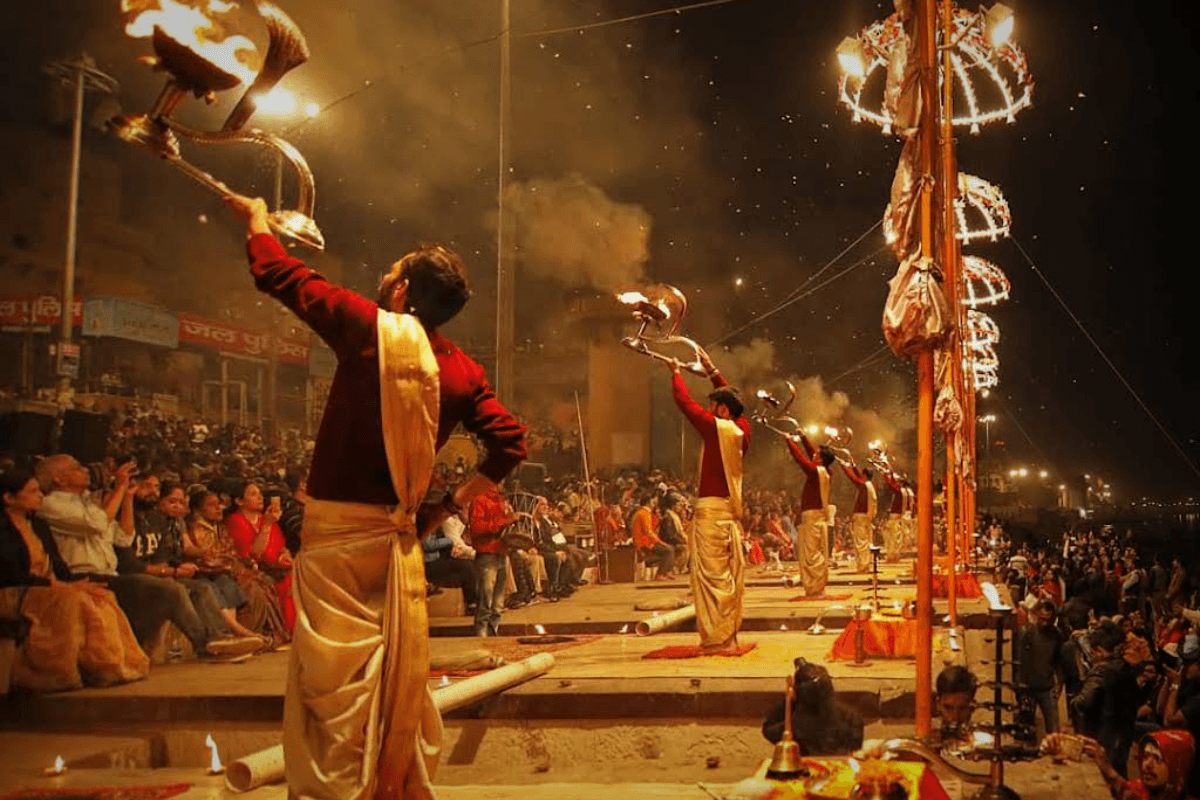
The day begins with Mangala Aarti, one of the most cherished darshans of the temple. Before sunrise, the Lord is awakened and worshipped in the stillness of the early hours. This is followed by abhishek and morning offerings. Through the day come bhoga, evening worship, shringar, and shayan.
Three offerings are especially beloved in the worship of Vishwanath:
- Ganga-jal
- Bilva patra
- Chandan and flowers
Many devotees also seek Rudrabhishek or Mahamrityunjaya japa through authorized arrangements. Yet for countless pilgrims, the most meaningful offering remains simple: a small lota of water, a few bilva leaves, folded hands, and the repeated name of Mahadev.
At peak hours, the queue moves like a river of devotion: brass lotas in hand, flowers pressed carefully together, and the soft murmur of Namo Parvati Pataye, Har Har Mahadev carrying pilgrims toward the sanctum.
Festivals & Celebrations
| Festival | When | Crowd |
|---|---|---|
| Mahashivratri | — | Extremely high â lakhs of devotees, 6-10 hour queues |
| Shravan Mondays | — | Extremely high â city-wide impact on traffic and accommodation |
| Dev Deepawali | — | Very high |
| Annakoot | — | High |
| Rang Bhari Ekadashi | — | High |
Mahashivratri: Celebrates the night when Shiva performed the cosmic dance of creation (Tandava) and manifested as the Jyotirlinga. Devotees who observe the night vigil and fast are believed to receive Shiva's direct grace.
Shravan Mondays: Shravan is Shiva's most sacred month. Offering Ganga water during Shravan Mondays is believed to fulfil wishes and absolve sins accumulated across lifetimes.
Dev Deepawali: Celebrates the victory of Shiva over the demon Tripurasura. The illuminated ghats create one of India's most moving devotional scenes.
Annakoot: Celebrated the day after Diwali, a mountain of food offerings is prepared and offered to the deity. Connected to the adjacent Annapurna Temple.
Rang Bhari Ekadashi: A distinctly Kashi tradition celebrating Shiva's playful nature. Marks the beginning of Holi festivities in Varanasi.
Temple Details
| Timings | note: Timings change on Sawan Mondays, Mahashivratri and other major festival days â confirm on shrikashivishwanath.org before visiting shayan aarti: 10:30 â 11:00 PM (free); temple closes at 11:00 PM temple opens: 2:30 AM daily mangala aarti: 3:00 â 4:00 AM (ticketed; held on normal days only â festival-day schedules differ) general darshan: 4:00 â 11:00 AM and 12:00 noon â 7:00 PM (free) midday bhog aarti: 11:15 AM â 12:20 PM (ticketed) sapta rishi aarti: 7:00 â 8:15 PM (ticketed) shringar bhog aarti: 9:00 â 10:15 PM (ticketed) |
| Darshan Types | General Darshan (free) Open to all during the darshan windows; no ticket needed. Queues are far longer on festival days. Sugam Darshan (paid ticket) Queue-less escorted darshan bookable on the official portal (6:00 AM â 6:00 PM); includes locker access and prasadam. Current fee is listed on the portal at booking. Aarti attendance (ticketed) Mangala, Midday Bhog, Sapta Rishi and Shringar/Bhog aartis can be attended with tickets booked on the official portal; Shayan Aarti is free. |
| Pooja Services | Mangla Aarti â â¹500Mid Day Bhog Aarti â â¹300Sapt Rishi Aarti â â¹300Shringar/Bhog Aarti â â¹300Rudrabhishek (1 Shastri) â â¹450Rudrabhishek (1 Shastri, video conference) â â¹700Rudrabhishek (5 Shastri, video conference) â â¹2,100Akhand Deep â â¹700Satyanarayan Katha â â¹500Sanyasi Bhojan (daily) â â¹3,000Sugam Darshan (fee as listed on official portal) |
| Management | Shri Kashi Vishwanath Temple Trust (SKVT); the present temple was built in 1780 by Maharani Ahilyabai Holkar. |
| Entry Fee | Free entry · General darshan is free for all. Sugam Darshan, aarti attendance and poojas are optional paid tickets â book only via the official portal shrikashivishwanath.org. Prices above are as listed on the official booking portal (Aug 2026) and can change. |
| Dress Code | The temple PRO stated (Oct 2023) that no dress code was in force for general darshan; a proposal requiring dhoti-kurta for men and saree for women for darshan inside the sanctum has been under the Trust's consideration — confirm current rules on shrikashivishwanath.org before visiting. |
Prepare for Your Visit
Practical guidance to help you plan your pilgrimage
| Rules & Restrictions |
|
| How to Reach | entry gate: Gate No. 4 (Godaulia Gate) is the entry referenced in the official FAQ, on the Godowlia side of the corridor from airport: About 18 km from Lal Bahadur Shastri International Airport (Babatpur), per the official temple FAQ from varanasi cantt station: About 3 km from Varanasi Cantt (Junction) railway station, per the official temple FAQ |
| Pilgrim Guidance | Traditional Pilgrim SequenceMany devotees do not approach Kashi Vishwanath as an isolated temple visit. They come within a wider traditional sequence of Kashi darshan. Customs vary across families and sampradayas, but a commonly followed order includes:
Some pilgrims also undertake the broader Panchkroshi Parikrama, the outer sacred circumambulation of Kashi performed over several days. Others come only for Vishwanath darshan, especially when time, age, or health is limited. Both approaches belong to the living pilgrimage culture of the city. Preparation for PilgrimsIf you are visiting Kashi Vishwanath for the first time, a little preparation can deepen the experience.
It also helps to remember that Vishwanath darshan is often brief. The blessing of the place does not depend on how long one stands physically near the sanctum. In Kashi, even a short darshan can remain inwardly alive for years. Best Time to VisitOctober to March is generally the most comfortable period for most pilgrims. Shravan, Mahashivratri, and Dev Deepawali are especially powerful spiritually, but they also bring very large crowds. Those seeking calmer darshan often prefer ordinary weekdays and early mornings. |
| Facilities | lockershelp desklive darshan onlineonline pooja booking |
| Pilgrim Tips |
|
Location
Varanasi, UP
Gallery
Pilgrim photos
No pilgrim photos yet.
Official Links
Community corrections
No corrections yet.
Edit history
No revisions yet.
Plan Your Visit to Kashi Vishwanath Temple
Get a custom itinerary and pricing for your trip.
Recommended
Packages for this destination
Pilgrim Notes
On-ground observations from fellow pilgrims
No pilgrim notes yet. Be the first to share on-ground observations!
Sign in to share a note.
Pilgrim Reviews
2450 reviews
Be the first to share your experience at Kashi Vishwanath Temple.
Sign in to write a review.
Nearby sacred places
Discover other sacred places near Kashi Vishwanath Temple
Explore temples, tirthas, and pilgrimage sites in UP
Explore nearbyPart of these circuits
Walk the traditional pilgrimage routes this destination belongs to.