Mahakaleshwar Jyotirlinga, situated on the banks of the Rudra Sagar lake in the ancient city of Ujjain, Madhya Pradesh, is one of the most revered of the twelve Jyotirlingas of Lord Shiva. Ujjain itself — known in antiquity as Avantika — is counted among the Sapta Puris, the seven sacred cities that bestow moksha, and has been a great centre of learning, astronomy and Shaiva worship for more than two millennia.
The temple is celebrated for its Shivalinga, which is Dakshinamukhi — facing south — a rare feature considered highly auspicious in Tantric tradition. Mahakaleshwar is also famous for the predawn Bhasma Aarti, performed around 4:00 AM daily, in which the linga is bathed and anointed with consecrated vibhuti (sacred ash). The image of Mahakal — Shiva as the lord of time and death — presides over the sanctum, reminding devotees of the transience of life.
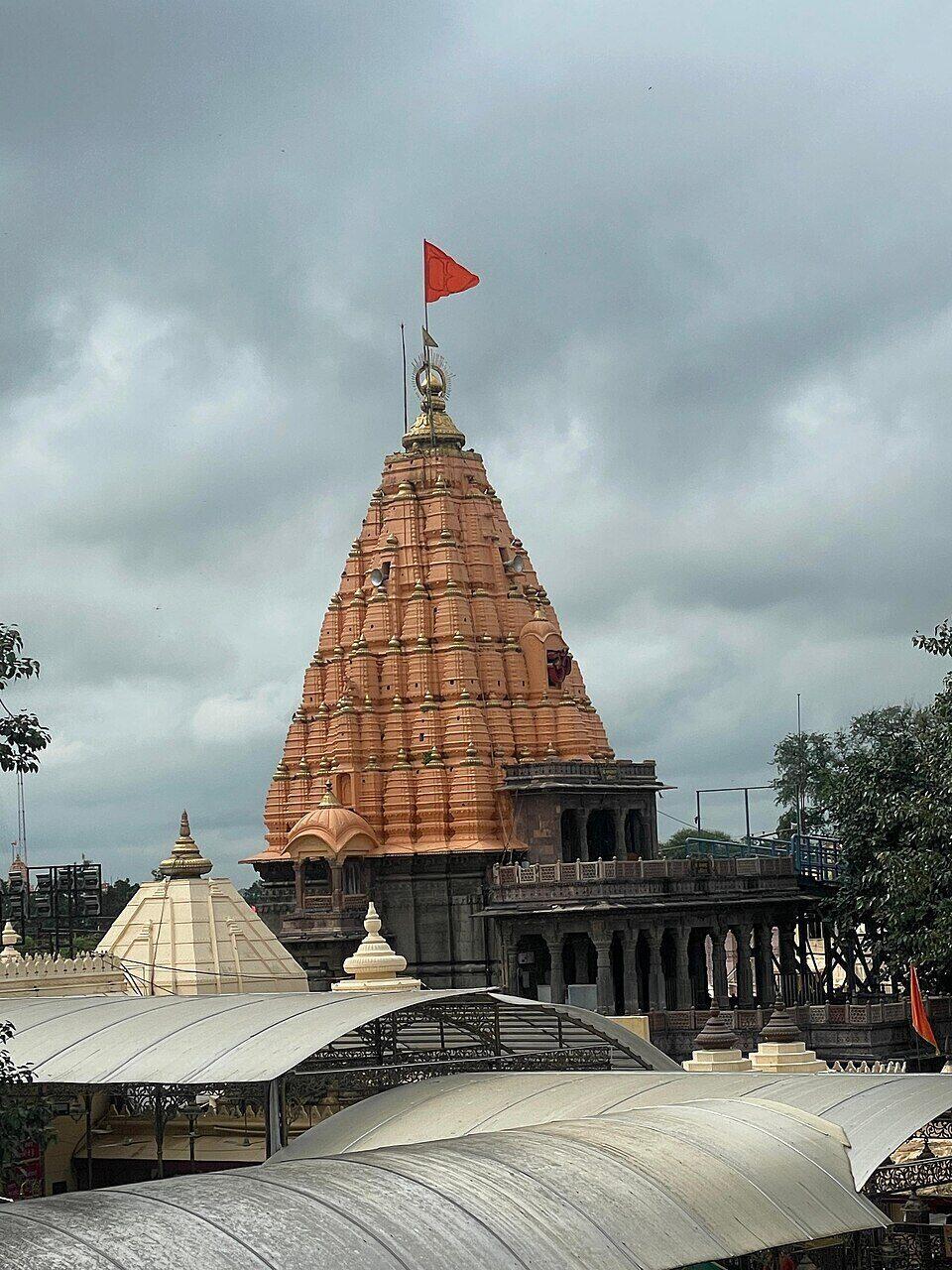
The present temple is a multi-tiered structure of considerable antiquity, rebuilt in the 18th century after earlier damage, and has since been maintained by successive patrons and the Madhya Pradesh temple administration. Every Simhastha Kumbh Mela, held at Ujjain once in twelve years, draws millions of pilgrims who take darshan at Mahakal before bathing in the Shipra.
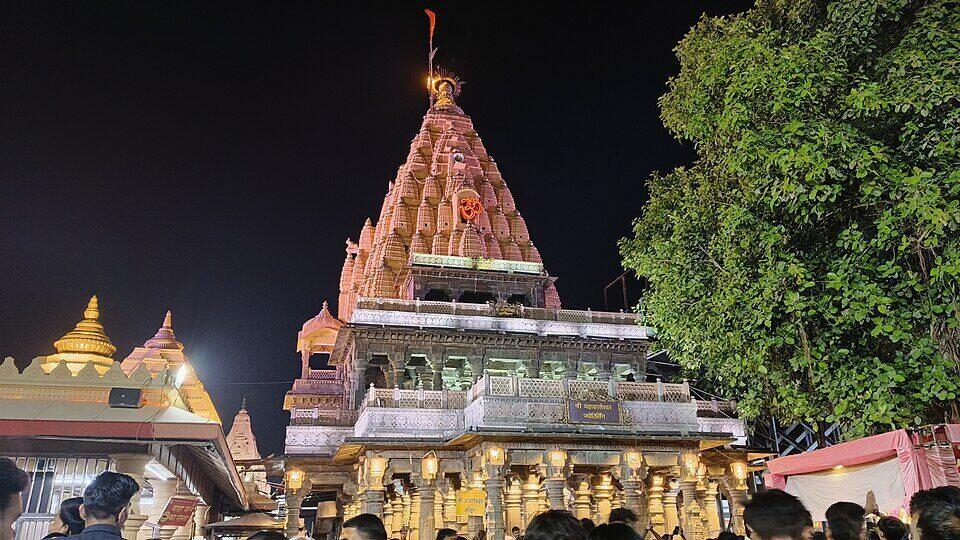
The Shiva Purana narrates that a demon named Dushana tormented a pious Brahmin family of Avanti devoted to Shiva. When the family prayed with complete faith, Lord Shiva burst forth from the earth in a terrifying form, reduced Dushana and his followers to ashes, and at the devotees' request agreed to remain in Avanti forever as Mahakal — the lord of time. The linga is thus believed to be swayambhu (self-manifested) and Dakshinamukhi, facing south, the direction of Yama, which in Shaiva and Tantric thought signifies Shiva's mastery over death itself. Darshan of Mahakal is held to destroy untimely death, karmic burdens and fear, and the very name 'Mahakal' means 'the great lord beyond time'.
History
Architecture
Rituals & Practices
Prepare for Your Visit
Practical guidance to help you plan your pilgrimage
| Pilgrim Guidance | The nearest airport is Indore (Devi Ahilyabai Holkar Airport), about 55 km away; Ujjain Junction is well connected by train. Local autos, e-rickshaws and taxis serve the temple area. The best months are October to March; Shravan (July–August), Mahashivratri and Simhastha years see very heavy footfall. On ordinary days darshan takes 1–2 hours via the general queue; on peak days waits of 4–6 hours are common. Bhasma Aarti requires prior online booking with ID proof; men typically wear dhoti and women saree for the aarti. A wide range of dharamshalas, budget lodges and mid-range hotels are available, many within walking distance of the temple. |
Location
Ujjain, MP
Pilgrim photos
No pilgrim photos yet.
Community corrections
No corrections yet.
Edit history
No revisions yet.
Plan Your Visit to Mahakaleshwar Temple, Ujjain
Get a custom itinerary and pricing for your trip.
Recommended
Packages for this destination
Pilgrim Notes
On-ground observations from fellow pilgrims
No pilgrim notes yet. Be the first to share on-ground observations!
Sign in to share a note.
Pilgrim Reviews
Be the first to share your experience at Mahakaleshwar Temple, Ujjain.
Sign in to write a review.
Nearby sacred places
Discover other sacred places near Mahakaleshwar Temple, Ujjain
Explore temples, tirthas, and pilgrimage sites in MP
Explore nearbyPart of these circuits
Walk the traditional pilgrimage routes this destination belongs to.