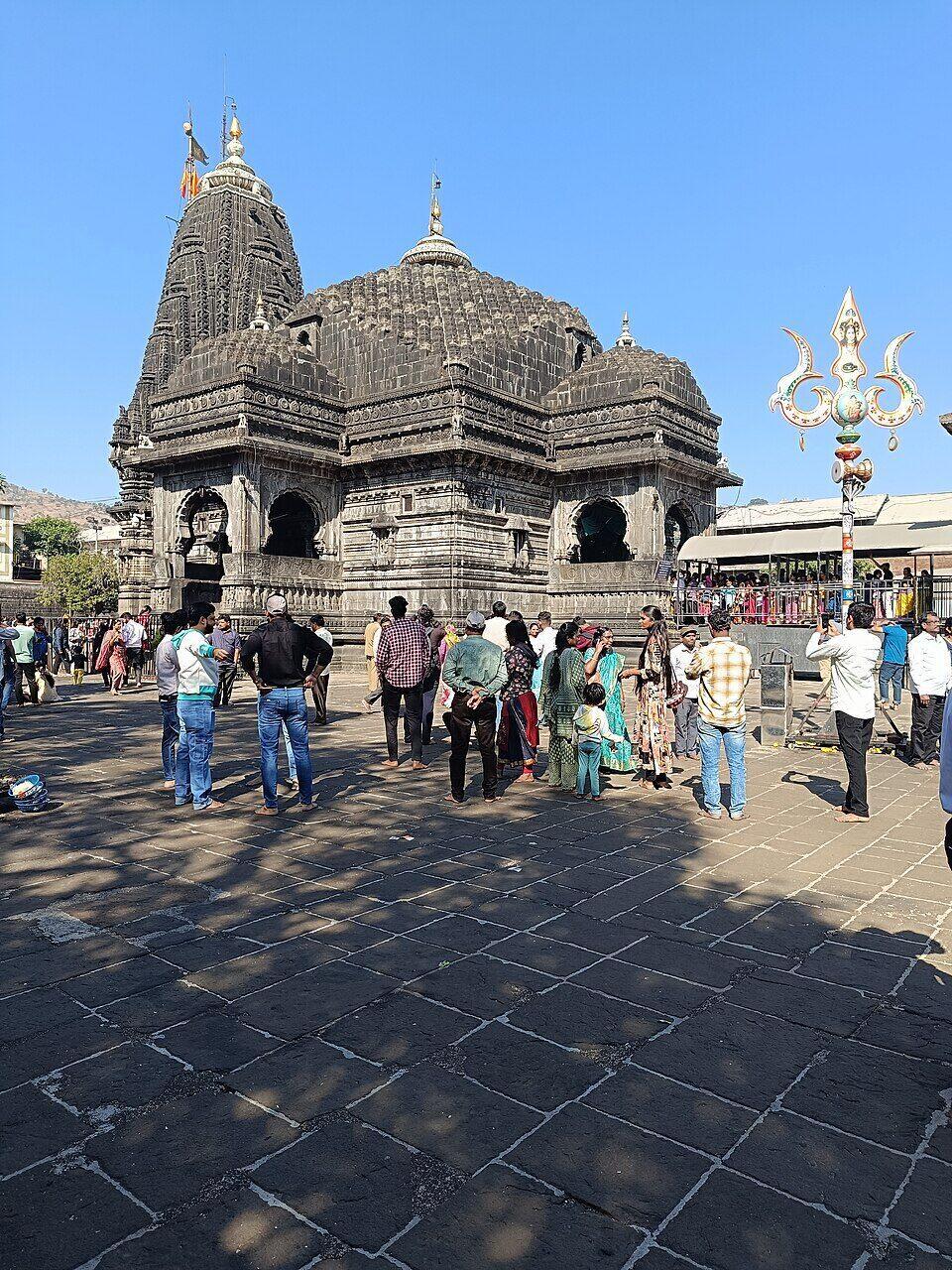
Trimbakeshwar, set in the green basalt hills around Nashik in Maharashtra, is a Jyotirlinga unlike any other. At the foot of Brahmagiri Hill, from whose stone flanks the Godavari River is said to rise, the temple marks the literal source of the Dakshin Ganga — the great river that sustains central and eastern India. The shrine's mystery lies in its linga itself: unusually small, half-submerged in a water-filled hollow, and bearing three tiny faces said to represent Brahma, Vishnu, and Shiva together — a rare depiction of the full Hindu trinity in a single Jyotirlinga. This is a temple of ritual density. It is the preferred site for Narayan Nagbali, Kaalsarp Dosh nivaran, Tripindi Shraddha, and other complex ceremonies for ancestors and planetary afflictions, with specialist priests guiding pilgrims through multi-day rites. Every twelve years the surrounding plain hosts the Nashik Sinhastha Kumbh Mela, one of the four great Kumbhs of India. The temple's discipline — strict dress code, measured access, Brahmin-led Agnihotra fire maintained unbroken for centuries — preserves a rare continuity of Vedic practice in living form.
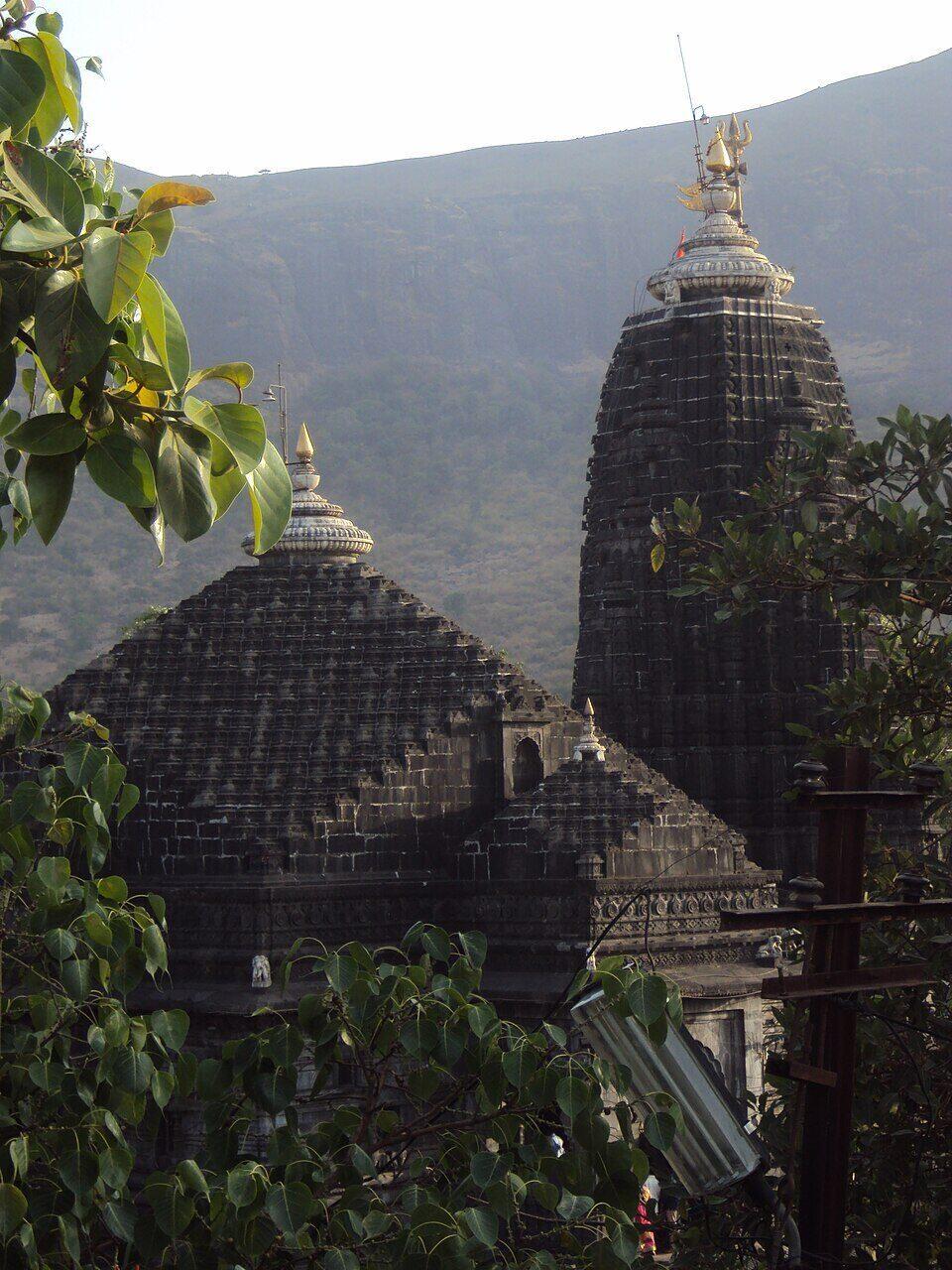
Trimbakeshwar is where the Godavari is born — and in Indian sacred geography, a river's source is a place of cosmic beginning. The linga's three faces make the deity Trimbak-eshwar, "lord of the three" — Brahma, Vishnu, Shiva — a rare unification of the Trimurti at one spot. The shrine's unique ritual specialization is in remedies for ancestral and astrological afflictions: Narayan Nagbali for ancestors who died unnatural deaths, Kaalsarp puja for those born under serpent-yoga, Tripindi Shraddha for multiple generations at once. The continuous Agnihotra tradition — a Vedic fire offered morning and evening without break — makes Trimbakeshwar one of the purest surviving centres of śrauta ritual.
History
Architecture
Rituals & Practices
Prepare for Your Visit
Practical guidance to help you plan your pilgrimage
| Pilgrim Guidance | Trimbakeshwar is about 28 km from Nashik, reached by road in under an hour; Nashik has rail and air links. The best time to visit is October to March. For simple darshan allow half a day; for Narayan Nagbali or Kaalsarp puja plan 2-3 days and book a purohit in advance — prices and procedures vary, so confirm clearly. Mondays, Shravan, and Mahashivaratri see heavy crowds; early morning is easiest. Basic accommodation is available in town; Nashik city offers fuller options. Combine with Panchavati, Kalaram Temple and Anjneri Hill. |
Location
Nashik, MH
Pilgrim photos
No pilgrim photos yet.
Community corrections
No corrections yet.
Edit history
No revisions yet.
Plan Your Visit to Trimbakeshwar Temple, Nashik
Get a custom itinerary and pricing for your trip.
Recommended
Packages for this destination
Pilgrim Notes
On-ground observations from fellow pilgrims
No pilgrim notes yet. Be the first to share on-ground observations!
Sign in to share a note.
Pilgrim Reviews
Be the first to share your experience at Trimbakeshwar Temple, Nashik.
Sign in to write a review.
Nearby sacred places
Discover other sacred places near Trimbakeshwar Temple, Nashik
Explore temples, tirthas, and pilgrimage sites in MH
Explore nearbyPart of these circuits
Walk the traditional pilgrimage routes this destination belongs to.