Baba Baidyanath Dham at Deoghar, Jharkhand — literally "abode of the gods" — is revered across eastern India as one of the twelve Jyotirlingas — an identity also claimed by Parli Vaijnath in Maharashtra and Baijnath in Himachal in their own traditions — and is counted in some traditions as both a Jyotirlinga and a Shakti Pitha, a rare double sanctity. The story is among the most dramatic of Shiva lore: the demon king Ravana, after severe tapasya on Kailash, received from Shiva the Jyotirlinga to carry to Lanka, on the strict condition that he not set it down. Deceived by the gods, he handed the linga to a cowherd boy while he went to purify himself — the boy set it down at Deoghar, and there it remained, immovable. The temple that grew around it became, for eastern India, the Jyotirlinga of the common people: open, accessible, set in a plain temple courtyard rather than guarded by gopurams and rules. Its defining event is the Shravani Mela of July-August, when millions of kanwariya pilgrims — barefoot, dressed in saffron, chanting "Bol Bam" — walk 105 km from Sultanganj on the Ganga carrying kanwars of holy water to pour on the linga. Few Hindu festivals match it in scale, endurance, or raw devotional intensity. Through the rest of the year Deoghar remains a warm, relatively unhurried pilgrimage town, where darshan is easy and the atmosphere deeply domestic in its piety.
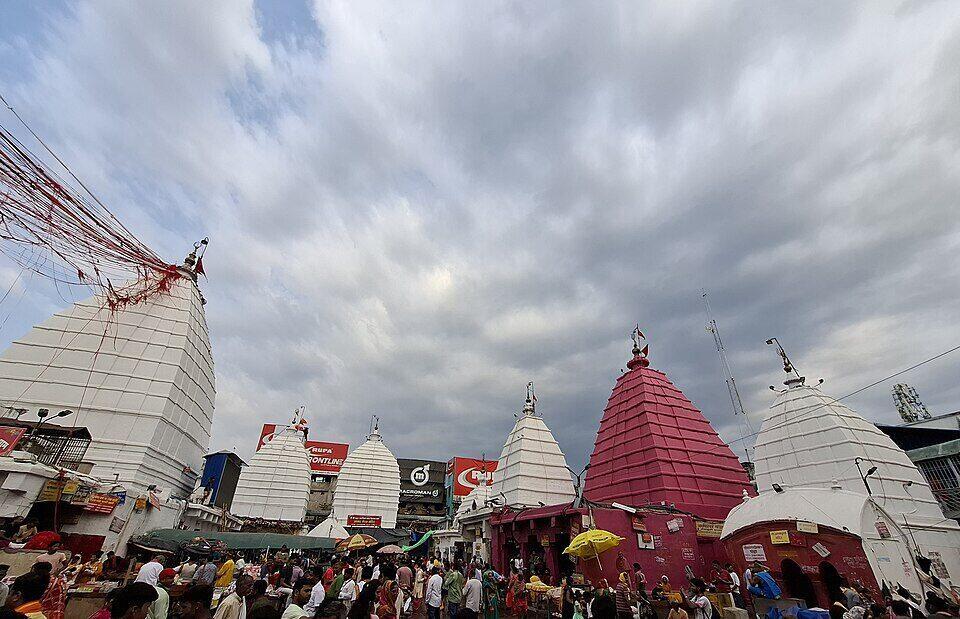
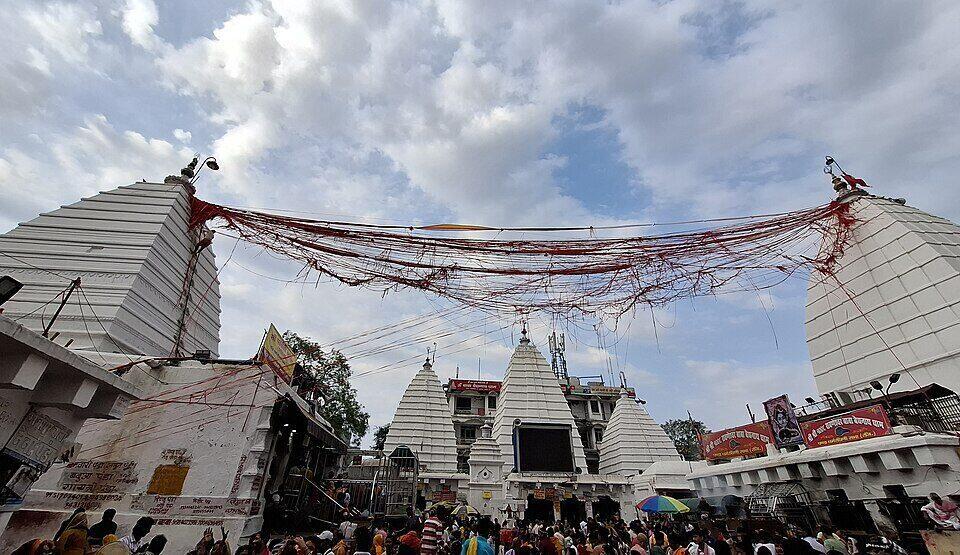
Baidyanath — "lord of physicians" — is the Jyotirlinga of healing. Devotees come seeking cure from illness, from chronic affliction, from the incurable conditions of fate. The Ravana story gives the linga its unique "immovable" power, and makes Deoghar the place where even the greatest devotee's pride was humbled. As a Jyotirlinga it is among Shiva's twelve self-luminous forms; as a Shakti Pitha (where Sati's heart is said to have fallen), it unites Shiva and Shakti in one courtyard — the adjoining Jaya Durga temple is the Shakti shrine, and the knotting of coloured threads between the two temples is a marriage-like vow of faith.
History
Architecture
Rituals & Practices
Prepare for Your Visit
Practical guidance to help you plan your pilgrimage
| Pilgrim Guidance | Deoghar is connected by rail (Baidyanath Dham station and nearby Jasidih Junction) and has an airport with limited flights; Patna and Ranchi serve as larger gateways. Outside Shravan, darshan is straightforward — plan a half day. During Shravani Mela (July-Aug) expect multi-hour queues; arrangements for pilgrims are elaborate but crowds can be overwhelming — go only if you want the full kanwar experience. Accommodation in Deoghar ranges from simple lodges to decent hotels; book well ahead for Shravan. Combine with Basukinath and Tarapith. |
Location
Deoghar, JH
Pilgrim photos
No pilgrim photos yet.
Community corrections
No corrections yet.
Edit history
No revisions yet.
Plan Your Visit to Vaidyanath Temple, Deoghar
Get a custom itinerary and pricing for your trip.
Recommended
Packages for this destination
Pilgrim Notes
On-ground observations from fellow pilgrims
No pilgrim notes yet. Be the first to share on-ground observations!
Sign in to share a note.
Pilgrim Reviews
Be the first to share your experience at Vaidyanath Temple, Deoghar.
Sign in to write a review.
Nearby sacred places
Discover other sacred places near Vaidyanath Temple, Deoghar
Explore temples, tirthas, and pilgrimage sites in JH
Explore nearbyPart of these circuits
Walk the traditional pilgrimage routes this destination belongs to.