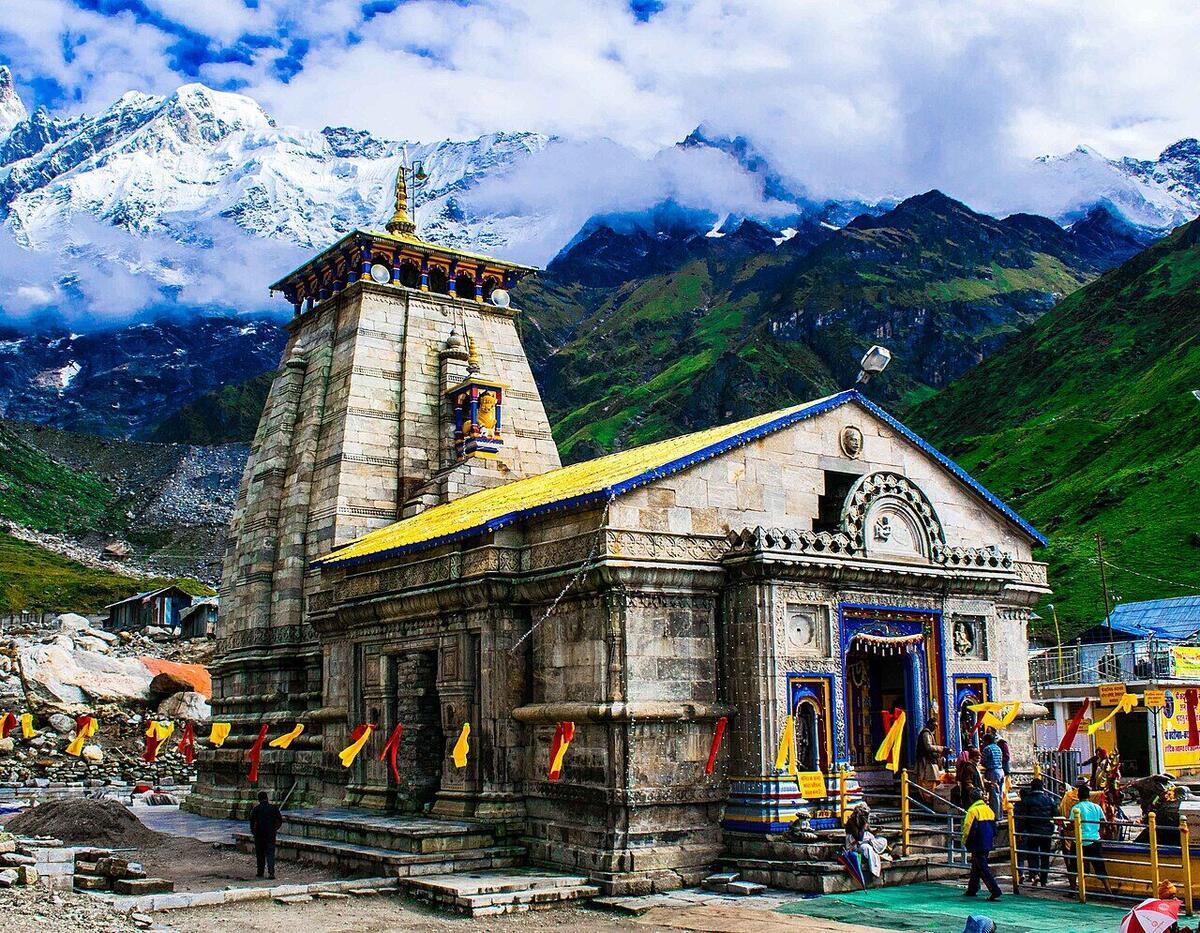
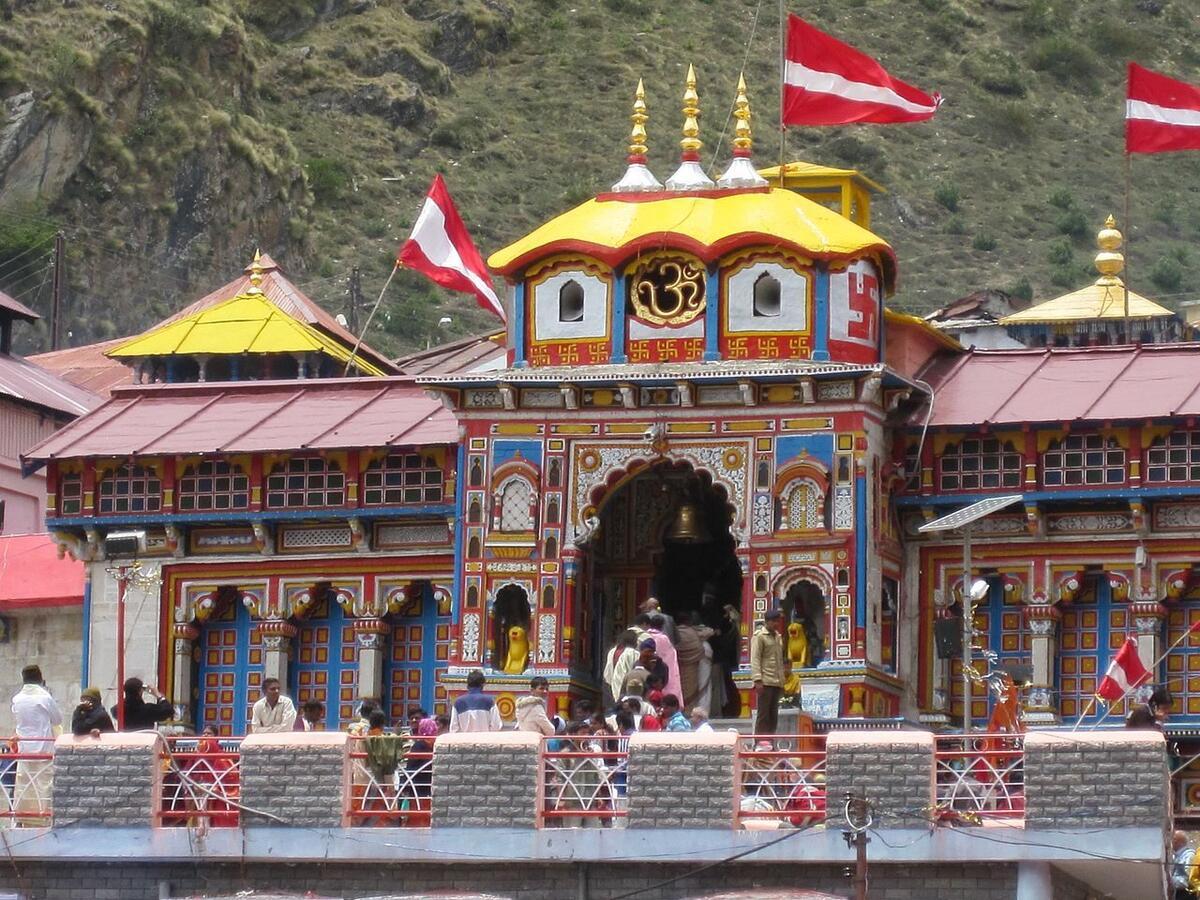
The Uttarakhand Char Dham — Yamunotri, Gangotri, Kedarnath, Badrinath — is the high-Himalayan pilgrimage that countless Hindu families undertake at least once in their lives. The four shrines sit between 3,100 and 3,583 metres in the Garhwal Himalaya, opening in late April or early May — Yamunotri and Gangotri on Akshaya Tritiya itself, Kedarnath and Badrinath within the following days — and closing around Diwali for the winter. Pilgrims travel in the traditional clockwise order beginning with Yamunotri, the source of the Yamuna, and ending at Badrinath, the seat of Vishnu in the north. The full yatra takes 10 to 12 days by road; helicopter packages compress it to 5 to 6 days. (Adi Shankaracharya separately established a pan-India Char Dham — Badrinath, Puri, Rameshwaram, Dwarka — known today as the Adi Char Dham.)
Why this route
Spiritual Significance
The Chota Char Dham yatra is held to grant darshan of two great rivers at their sources (Yamuna and Ganga), darshan of Shiva at Kedarnath as one of the twelve Jyotirlingas, and darshan of Vishnu at Badrinath as one of the 108 Divya Desams of the Vaishnava tradition. Adi Shankaracharya is remembered for reviving the worship at Badrinath and Kedarnath in the 8th century, and the yatra in its present form has been understood as a single sacred circuit for many centuries.
The Journey — 4 Sacred Stops
The path of this pilgrimage
Stop 1 of 4Start
Yamunotri
3,293m
Yamunotri is the sacred seat of goddess Yamuna in the high Garhwal Himalayas and the first dham of the traditional Chota Char Dham yatra. Tradition holds that Yamuna, daughter of Surya and sister of Yama, blesses those who bathe in her waters with freedom from untimely death and with a gentler passage at life's end.
Yamunotri is the sacred seat of goddess Yamuna in the high Garhwal Himalayas and the first dham of the traditional Chota Char Dham yatra. Tradition holds that Yamuna, daughter of Surya and sister of Yama, blesses those who bathe in her waters with freedom from untimely death and with a gentler passage at life's end.
Gangotri is the sacred seat of goddess Ganga in the high Bhagirathi valley and the second dham of the traditional Chota Char Dham yatra. Tradition holds that here King Bhagiratha did tapas for many years to bring Ganga down from the heavens, and Shiva received her on his matted hair so that the earth might bear her descent.
Gangotri is the sacred seat of goddess Ganga in the high Bhagirathi valley and the second dham of the traditional Chota Char Dham yatra. Tradition holds that here King Bhagiratha did tapas for many years to bring Ganga down from the heavens, and Shiva received her on his matted hair so that the earth might bear her descent.
Kedarnath is worshipped as one of the twelve Jyotirlingas of Shiva and stands highest among them, on the bank of the Mandakini in the Garhwal Himalaya of Rudraprayag district. It is one of the four dhams of Uttarakhand and the first of the Panch Kedar, where tradition tells that the hump of Shiva's bull form rose from the earth. Snowbound for half the year, the shrine receives pilgrims only between the kapat opening in spring and the kapat-band in late autumn, and it is reached on foot from Gaurikund or by helicopter.
Kedarnath is worshipped as one of the twelve Jyotirlingas of Shiva and stands highest among them, on the bank of the Mandakini in the Garhwal Himalaya of Rudraprayag district. It is one of the four dhams of Uttarakhand and the first of the Panch Kedar, where tradition tells that the hump of Shiva's bull form rose from the earth. Snowbound for half the year, the shrine receives pilgrims only between the kapat opening in spring and the kapat-band in late autumn, and it is reached on foot from Gaurikund or by helicopter.
Badrinath is the Himalayan dham of Vishnu, where the Lord is worshipped as Badrinarayan, seated in the meditative posture of padmasana in a black stone image, between the ranges named for Nar and Narayan on the bank of the Alaknanda. It is one of the four Char Dham of Uttarakhand and one of the 108 Divya Desams of the Vaishnava tradition, and Adi Shankaracharya is remembered as the acharya who recovered the image and re-enshrined it here. Snow holds the valley for half the year, so darshan is given only between the opening and the closing of the kapat.
Badrinath is the Himalayan dham of Vishnu, where the Lord is worshipped as Badrinarayan, seated in the meditative posture of padmasana in a black stone image, between the ranges named for Nar and Narayan on the bank of the Alaknanda. It is one of the four Char Dham of Uttarakhand and one of the 108 Divya Desams of the Vaishnava tradition, and Adi Shankaracharya is remembered as the acharya who recovered the image and re-enshrined it here. Snow holds the valley for half the year, so darshan is given only between the opening and the closing of the kapat.