Yamunotri is not approached as a temple alone. It is approached as the sacred origin of the Yamuna, the river of mercy who flows down from the snows of Bandarpunch to nourish the plains of north India. In the traditional clockwise sequence of the Uttarakhand Chota Char Dham — Yamunotri, Gangotri, Kedarnath, Badrinath — Yamunotri is the first dham, the place where the pilgrim bows before beginning the great Himalayan yatra.
The shrine sits at 3,293 metres above the road head at Janki Chatti, reached by a six-kilometre trek up the valley of the young Yamuna. The path winds past deodar forests, prayer flags, halting tea-stalls, and small wayside shrines. Pilgrims walk, ride ponies, or are carried in palanquins. The trek is not long by Himalayan standards, but the air thins and the climb is steady, and most pilgrims feel the journey itself as part of the darshan.
Katha and local belief
Tradition holds that Yamuna is the daughter of Surya, the sun, and Sanjana. She is the sister of Yama, lord of dharma and death. A beloved katha of Banaras and the Yamuna valley remembers that on Bhai Dooj, the second day after Diwali, Yamuna welcomed her brother Yama for a meal, and Yama in turn blessed every brother and sister who bathe together in Yamuna's waters that day. From this comes the long-cherished belief that a bath at Yamunotri, especially on Bhai Dooj, eases the fear of untimely death and softens the final passage of life.
The Surya Kund, the steaming hot spring near the temple, is held to be a gift of Yamuna's father Surya, kept warm so that pilgrims who arrived shivering from the high snows could find comfort. Even today devotees cook rice and potatoes in muslin cloth in this kund and offer the cooked prasad at the goddess's feet.
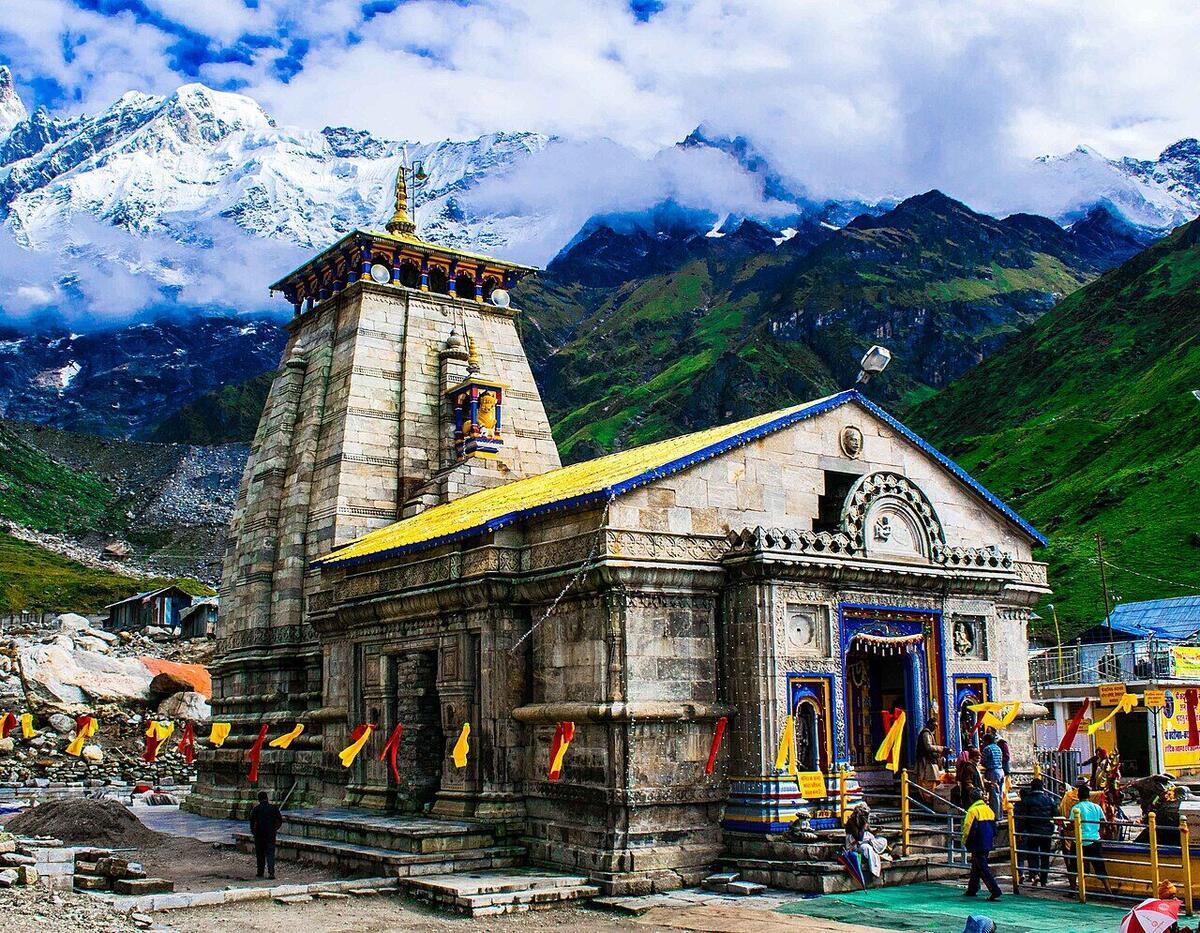
In Hindu sacred tradition, Yamunotri is revered as the spiritual source of the Yamuna, even though the glacial source at Champasar lies higher still. The shrine marks the place where pilgrims first meet the goddess as a clear, swift river, and where her grace is understood to begin reaching the world.
Yamuna is worshipped as Yamuna Devi, daughter of Surya and Sanjana, sister of Yama, and beloved consort of Sri Krishna in the Vraja tradition. The Puranas praise her as Kalindi, the dark-flowing river of the Kalinda mountain, and as Surya-putri, the sun's daughter. She is among the seven sacred rivers of Bharat, and her waters are held to carry the gentleness of a sister's love and the freedom from fear of yama-bhaya — the dread of an untimely or unwelcomed death.
A long-cherished belief of the Chota Char Dham pilgrim is that Yamunotri must be visited first, before Gangotri, Kedarnath, and Badrinath. The reason offered in tradition is that the pilgrim approaches the divine as a child approaches the elder sister — softly, with humility, and in the trust that she will speak to her brother Yama on the pilgrim's behalf. To begin the yatra at Yamunotri is to ask first for mercy, before asking for moksha at Badrinath.
Bhagiratha, Bhai Dooj, and the river of mercy
Devotional understanding remembers Yamuna as the sister who softened her brother Yama's strict justice with her affection. On Yama Dwitiya, the day after Diwali, brothers and sisters across north India bathe together in Yamuna's waters and exchange the tilak of long life and protection. Yamunotri is the deepest seat of this devotion, and on the day the temple closes for winter, before Bhai Dooj, the murti is taken in procession down to Kharsali where she is worshipped through the cold months.
For many pilgrims, Yamunotri is also approached as the goddess who teaches patience. The young river here is not yet the wide, dark Yamuna of Mathura and Vrindavan. She is hurried, white, almost shy. Devotees often speak of feeling that they have come to meet the goddess in her own home, before she set out to bless the plains.
History
Yamunotri's identity as a sacred source reaches deep into India's devotional memory. The Mahabharata, the Puranas, and many medieval pilgrim-guides praise the source of the Yamuna as one of the great tirthas of the northern Himalaya, and the valley has drawn ascetics, sadhakas, and pilgrim families for many centuries.
The temple structure as seen today is generally attributed to Maharani Guleria of Jaipur, who is remembered for rebuilding the shrine in the nineteenth century after earlier wooden structures were damaged by earthquakes and avalanches common to the high Garhwal. Local tradition also remembers Tehri-Garhwal patronage and ongoing care by the priestly families of Kharsali village, who serve as the hereditary acharyas of Yamunotri and who carry the murti down to Kharsali each winter.
Through repeated rebuildings, the bond between the pilgrim and the goddess has been the unbroken thread. Empires changed, paths were re-cut after landslides, and the road head shifted up the valley over the decades, but the climb to Yamunotri and the offering of cooked prasad from the Surya Kund have continued, generation after generation.
Architecture
The Yamunotri temple is a small Himalayan shrine in the regional Garhwali style, built of dressed stone with a pitched roof designed to shed heavy snow. The structure is modest in scale, reverent in feeling, and shaped by the climate as much as by tradition. Pilgrims come not for grandeur but for intimacy of darshan in the high mountains.
The inner sanctum holds the murti of Yamuna Devi, traditionally described as carved of black stone. She is worshipped seated, with serene composure, garlanded by devotees and dressed afresh each morning by the priests of Kharsali. Before her, the pilgrim bows after first venerating the Divya Shila, the sacred rock just outside the sanctum that is honoured before the goddess herself.
Near the temple flow the Surya Kund and Gauri Kund, hot springs that have made Yamunotri remarkable for centuries. The Surya Kund is the more sacred of the two, and devotees lower small muslin pouches of rice and potatoes into its near-boiling water; the cooked food is offered first to the goddess and then carried home as prasad. The springs are understood as the warmth of Surya keeping watch over his daughter and her pilgrims.
Rituals & Practices
The daily worship of Yamunotri follows the traditional rhythm of a Himalayan shrine. The temple opens shortly after sunrise with the morning aarti, and closes at dusk after sandhya aarti. Through the day pilgrims offer flowers, vermilion, chunari (red cloth), and the cooked prasad of Surya Kund. Verify exact timings with the temple authorities on the day of darshan, as they shift slightly with the seasons.
The customary sequence of worship begins with bathing in the Surya Kund or Jamunabai Kund, followed by the cooking and offering of rice-potato prasad, darshan of the Divya Shila, and finally darshan of Yamuna Devi in the sanctum. Many families also offer water from the kund at small wayside shrines along the trek down.
Special pujas at Yamunotri include the Yamuna abhishek with milk and water, recitation of the Yamuna Ashtakam by Sri Vallabhacharya, and Bhai Dooj worship around the kapat-closing day, when the goddess prepares to leave the high shrine for her winter home at Kharsali. Devotees seeking relief from fears of untimely death traditionally offer a yellow chunari and oil-lamp at the kund.
Festivals & Celebrations
| Festival | When | Crowd |
|---|---|---|
| Akshaya Tritiya â Kapat Opening | — | very_high |
| Yamuna Jayanti | — | moderate |
| Bhai Dooj â Kapat Closing | — | very_high |
Akshaya Tritiya â Kapat Opening: Marks the beginning of the Chota Char Dham yatra season.
Yamuna Jayanti: Honours Yamuna's descent for the welfare of beings.
Bhai Dooj â Kapat Closing: Honours the bond of Yamuna and her brother Yama; freedom from yama-bhaya.
Temple Details
| Darshan Types | Darshan of Maa Yamuna with offerings at Surya Kund and Divya Shila Tourist Care Uttarakhand lists a Queue Token Slot Counter at Janki Chatti ('Collect Dham darshan slot token'); Barkot is the Registration Check Point for Yamunotri â keep your yatra registration letter/QR ready. Pilgrims cook rice and potatoes in Surya Kund (boiling hot spring) as an offering to the Goddess and pray at Divya Shila, the reddish-brown rock near Surya Kund, before entering the shrine. Gauri Kund next to it is tepid and used for bathing. |
| Management | Yamunotri Temple Committee (name as used in press — ETV Bharat quotes its spokesperson Purushottam Uniyal and treasurer Pradeep Uniyal; formal registered name not verified), with the Uniyal family serving as pujaris (Wikipedia); winter seat Kharsali village. Not listed among the temples of the Shri Badarinath Kedarnath Temple Committee (badrinath-kedarnath.gov.in). |
Prepare for Your Visit
Practical guidance to help you plan your pilgrimage
| Rules & Restrictions |
|
| Best Time to Visit | Uttarakhand Tourism: April to June and September to November (yatra season runs Akshaya Tritiya to Bhai Dooj; Uttarakhand Tourism gives the season as May to October). |
| How to Reach | trek: Motorable road ends at Janki Chatti; from there it is a steep trek of about 6 km (Tourist Care: 6 km, 2-3 hours; Uttarakhand Tourism: 5-6 km) to the temple, on foot, pony or palanquin. The older 13 km trek route starts at Hanuman Chatti (2,400 m). by air: Jolly Grant Airport, Dehradun is the nearest airport by rail: Dehradun is the nearest railhead; regular trains also to Haridwar. Hire a taxi or take a bus onward. by road: Tourist Care Uttarakhand routes all run via Barkot: Dehradun â Barkot â Janki Chatti (~180 km road + 6 km trek, ~7-8 hours road + 2-3 hours trek); Haridwar ~220 km / Rishikesh ~210 km road + 6 km trek (~9-10 hours road); Uttarkashi â Barkot â Janki Chatti ~125 km. Uttarkashi district gives ~200 km from Dehradun and 130 km from Uttarkashi HQ. State transport buses ply regularly between Uttarkashi/Barkot and Rishikesh/Dehradun; Yamunotri is on NH-94 (Uttarkashi district). Dehradun-Uttarkashi road options: via Mussoorie approx. 150 km, via Rishikesh approx. 240 km, via Vikasnagar-Barkot approx. 230 km (Uttarkashi district). altitude: About 3,290 m (Tourist Care and Uttarkashi district pages quote 3,292-3,293 m; Uttarakhand Tourism body text gives 3,233 m) winter seat: Kharsali village, about 8 km from Yamunotri, where Maa Yamuna is worshipped from Bhai Dooj until Akshaya Tritiya |
| Pilgrim Guidance | How to reach YamunotriYamunotri is reached by road and trek. The nearest major railhead is Dehradun (around 175 km by road), and the nearest airport is Jolly Grant near Dehradun. From Dehradun, pilgrims travel by road via Mussoorie, Barkot, and Hanuman Chatti to Janki Chatti, which is the present road head for Yamunotri (about 9–10 hours of mountain driving). From Janki Chatti a six-kilometre trek leads up the valley to the temple itself; ponies, porters, and palanquin services are available for those who cannot walk the full distance. The traditional Chota Char Dham clockwise sequence begins at Yamunotri and continues to Gangotri, Kedarnath, and Badrinath. Many pilgrim families now combine the yatra with helicopter darshan, where licensed operators fly devotees from Dehradun (Sahastradhara) to Kharsali helipad and then trek the final short stretch. Helicopter operators change each season; book early with reputable operators and verify Uttarakhand civil aviation clearance. Preparation for pilgrimsThe Government of Uttarakhand requires online registration for every Char Dham pilgrim before darshan. Carry a printed copy of the registration along with a government photo ID. Pilgrims travelling by helicopter or with helicopter operators must also complete this registration. The shrine sits above 3,200 metres, and the six-kilometre trek climbs about 800 metres in altitude. Older pilgrims, those with cardiac or respiratory conditions, and pregnant women should consult a doctor before the yatra and consider helicopter or palanquin options. Carry warm woollens (temperatures can fall below 5°C even in summer), rain protection, sturdy walking shoes, a light torch, basic medicines, and personal toiletries. ATM and mobile network coverage is unreliable above Barkot — carry sufficient cash and download offline maps in advance. Best time to visitThe Yamunotri shrine traditionally opens on Akshaya Tritiya, in late April or early May, and closes for the winter around Bhai Dooj, in late October or early November. The most settled weather windows are May to mid-June and mid-September to October. Avoid July and August where possible — the Garhwal monsoon brings heavy rain, landslides, and frequent road closures. The opening and closing days are crowded and high in devotional feeling; for darshan with more space, the second half of June and the first half of October are gentler. |
| Facilities | medical emergency 108tourist care helpline 1364pony palki doli from janki chattiregistration check point at barkotsurya kund hot spring and gauri kundgmvn tourist rest house at janki chattiqueue token slot counter at janki chattimedical relief posts and screening kiosks on routeoffline registration counters at barkot janki chatti yamunotri |
| Pilgrim Tips |
|
Location
Uttarkashi, UK
Pilgrim photos
No pilgrim photos yet.
Official Links
Community corrections
No corrections yet.
Edit history
No revisions yet.
Plan Your Visit to Yamunotri
Get a custom itinerary and pricing for your trip.
Recommended
Packages for this destination
Pilgrim Notes
On-ground observations from fellow pilgrims
No pilgrim notes yet. Be the first to share on-ground observations!
Sign in to share a note.
Pilgrim Reviews
Be the first to share your experience at Yamunotri.
Sign in to write a review.
Nearby sacred places
Discover other sacred places near Yamunotri
Explore temples, tirthas, and pilgrimage sites in UK
Explore nearbyPart of these circuits
Walk the traditional pilgrimage routes this destination belongs to.