Adi Keshava Temple stands at the confluence (sangam) of the Varana and the Ganga, at the northern boundary of the sacred kshetra of Kashi. Tradition holds it to be the adi — first, primordial — Vishnu shrine of the city, the place where the Lord is said to have set foot on Kashi's soil when he came at Shiva's invitation to help uphold the sacred city.
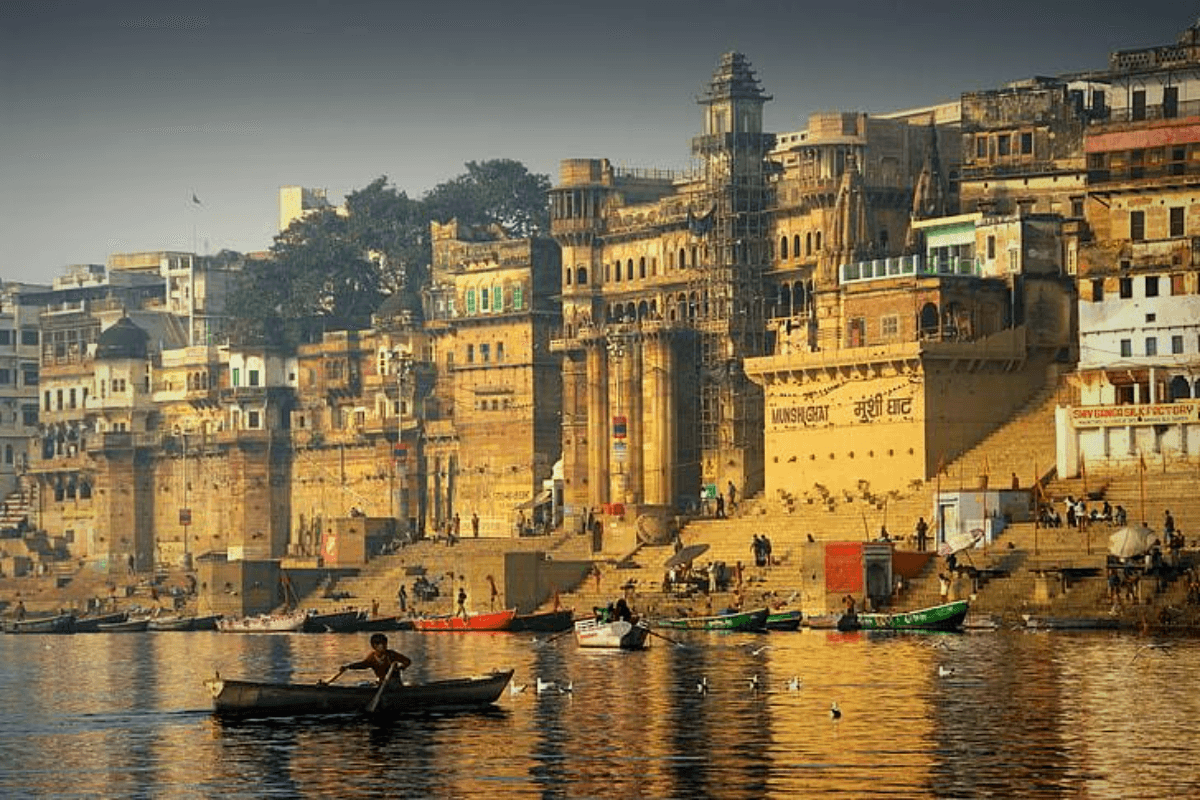
The temple sits in the Rajghat area, at the northernmost bathing point of the classical Kashi tirtha circuit. It is counted in the panchatirtha — the five sacred ghat-side snana stations of Kashi, in the sequence Asi, Dashashwamedh, Manikarnika, Panchganga, and Adi Keshava. A traditional yatra that begins at Assi Ghat in the south concludes here at the Varana–Ganga confluence in the north.
Though Kashi is primarily a Shaiva kshetra, Adi Keshava is a reminder that the city's sacred geography is shared. The temple is particularly dear to Vaishnava pilgrims, and draws devotees of both traditions on the traditional yatra days.
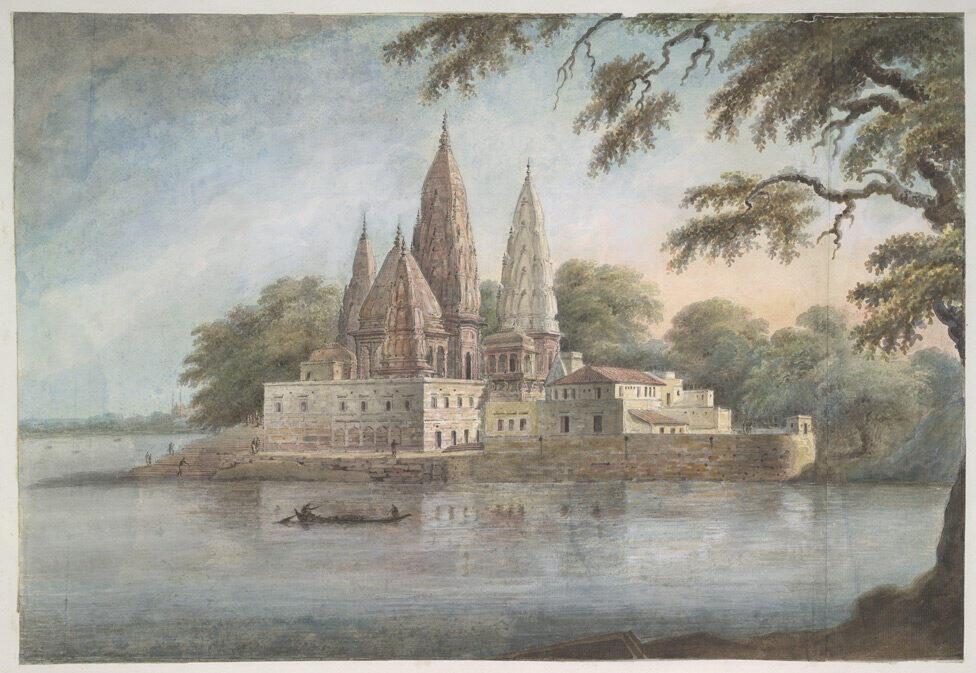
The Kashi Khanda of the Skanda Purana treats the Varana–Ganga confluence as one of the most potent tirthas of the city. A ritual bath at this sangam, followed by darshan at Adi Keshava, carries in tradition particular merit — greater still during Kartik month and on full moon days.
The temple's name, Adi Keshava — "the original Keshava" — carries a clear theological claim: that Vishnu's presence in Kashi is not a later addition but part of the founding of the city itself. Classical Puranic narrative describes Vishnu coming to Kashi in response to Shiva's invitation, to help make the ground ready for the establishment of the sacred order. His first foot-step, according to tradition, fell at this spot, and his paduka (sacred footprint) is worshipped here.
Katha and local belief
A Puranic katha carried in the Kashi Khanda tells that King Divodasa once ruled Kashi in such dharmic perfection that Shiva himself could not enter his own city. At Shiva's request, Vishnu descended to Kashi from the north, and the first ground his feet touched became the site of the Adi Keshava shrine. This katha ties Adi Keshava into the founding story of Dashashwamedh — the ten Ashwamedha yajnas that Brahma performed to complete the same work — and places the Vaishnava shrine at the beginning of Kashi's sacred geography rather than at its periphery.
Local tradition in Kashi holds that a pilgrim who has completed the panchatirtha snana in the full classical order — Asi, Dashashwamedh, Manikarnika, Panchganga, Adi Keshava — has completed the ritual bathing circuit of the city. Many pilgrims carry a small vessel of Ganga-jal drawn from the Adi Keshava sangam home with them.
History
The ground at Rajghat is among the oldest continuously inhabited parts of Varanasi. Archaeological excavations have documented settlement at this site going back to at least the 8th century BCE, and Vaishnava artefacts from the early historical period confirm that Vishnu worship at this tirtha has deep antiquity.
The seventh-century Chinese pilgrim Xuanzang described Varanasi's temple culture in detail, and his account accords with a well-established shrine tradition at the Varana–Ganga confluence. The earlier temple structures were destroyed and rebuilt several times over the centuries; the present structure dates primarily from the 18th century, when Maratha patronage brought a wider reconstruction of Kashi's temples.
Through every period the site itself continued in use as a tirtha — pilgrims bathing at the sangam, offering prayers at the Vishnu paduka, and completing the northern terminus of the panchatirtha sequence. The modest scale of the present building belies the stature the place holds in Kashi's devotional geography.
Architecture
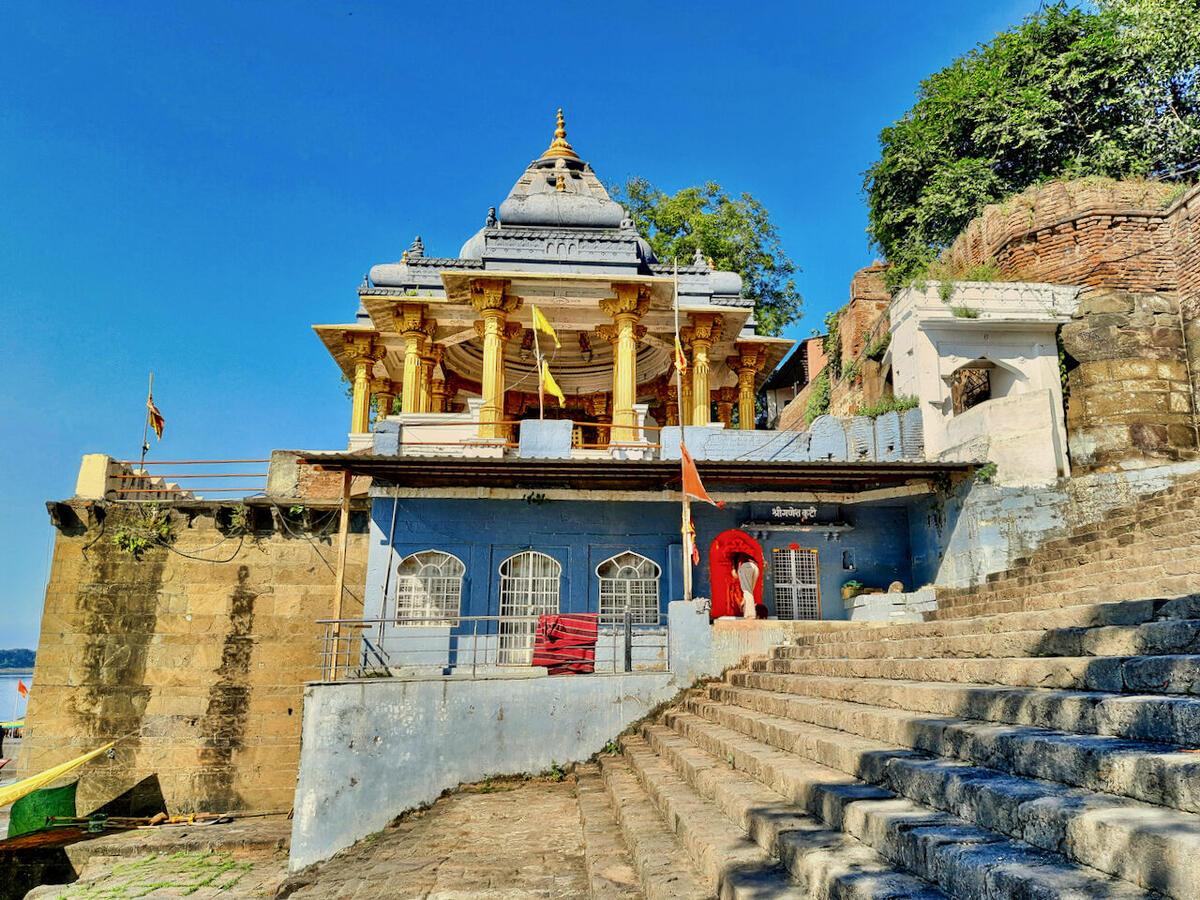
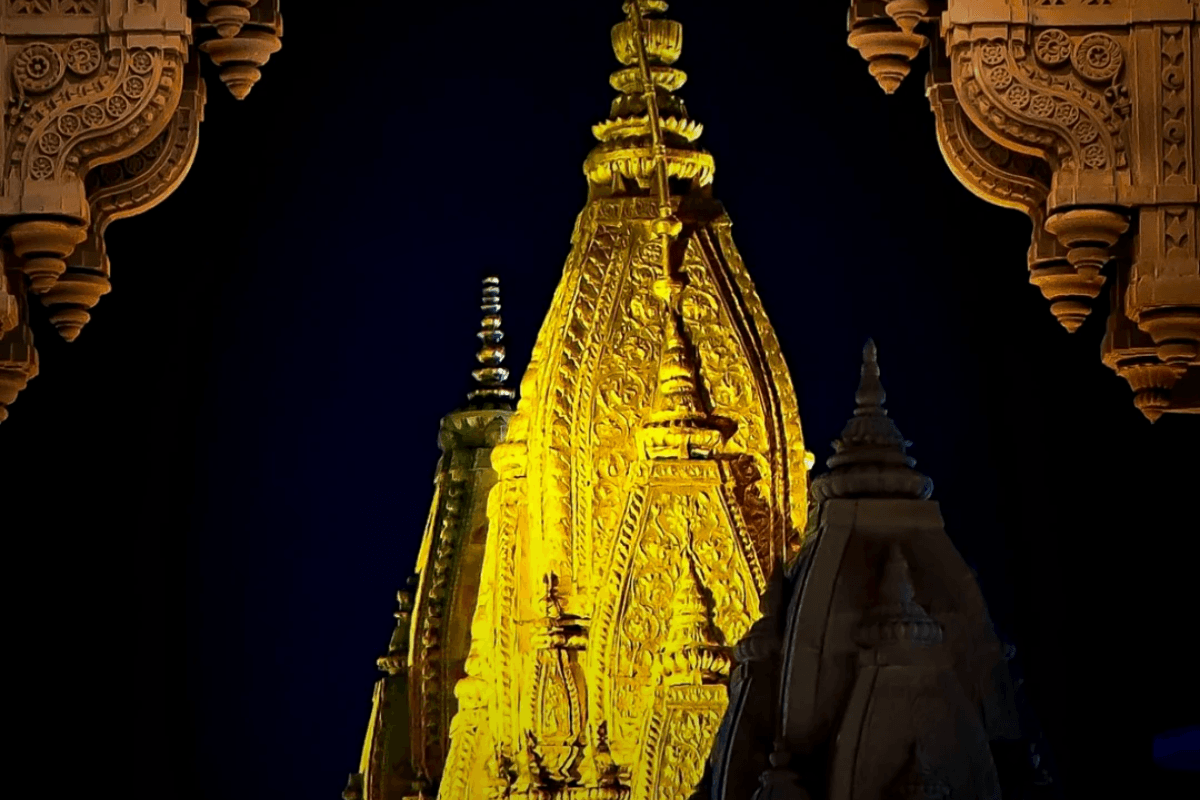
The present Adi Keshava Temple is a modest Nagara-style shrine built in the eighteenth-century Maratha idiom. The structure is compact — a single sanctum with a small mandapa — and the surrounding precinct includes smaller Vaishnava shrines, a modest ghat descending to the sangam, and the open approach from Rajghat.
The garbhagriha holds an ancient murti of Keshava (Vishnu), together with the paduka — the sacred footprint — worshipped as the sign of his first touching of Kashi's soil. Offerings of tulsi patra, chandan, and fresh flowers are placed before the murti through the day.
The Varana–Ganga sangam, a short walk from the temple, is itself part of the darshan. Pilgrims descend to the water, take a ritual bath, and bring the sangam water to the sanctum as arpana. The setting is quieter and less visited than the central ghats — the northern end of the city opens to wider skies, and the confluence has a distinct character.
Rituals & Practices
The daily worship at Adi Keshava follows the Vaishnava tradition. The day begins with the Mangala Aarti before dawn, when the murti is awakened and offered the first puja. Through the day, offerings of tulsi patra (holy basil, dear to Vishnu), chandan, and pushpa are placed before the Lord, and the conch is blown at the turning hours of worship.
Two practices belong to this tirtha:
- Snana at the sangam. A ritual bath at the Varana–Ganga confluence, ideally before darshan, is the traditional observance of pilgrims completing the panchatirtha.
- Paduka darshan. The paduka within the sanctum is worshipped as the sign of Vishnu's first touch of Kashi. Devotees offer tulsi patra and a short prayer at this spot before moving on.
Kartik month (October–November) brings additional observances to Adi Keshava, as do Ekadashi days and Vaishnava festival dates through the year. Specific timings may vary; pilgrims are encouraged to verify before a visit.
Festivals & Celebrations
| Festival | When | Crowd |
|---|---|---|
| Kartik Purnima | — | Very high |
| Dev Deepawali | — | High |
| Ganga Dussehra | — | High |
| Vaikuntha Ekadashi | — | High |
Kartik Purnima: Kartik Purnima is the closing day of the Kartik month's devotional observances. Snana at the sangam on this day is held in high regard in the Vaishnava tradition.
Dev Deepawali: The evening of Kartik Purnima when the devas are traditionally said to descend to Kashi. The northern end of the city shares in this celebration.
Ganga Dussehra: A snana here on Ganga Dussehra is held to carry the merit of many tirthas, especially for Vaishnava pilgrims.
Vaikuntha Ekadashi: Tradition holds that darshan of Vishnu on Vaikuntha Ekadashi carries the devotional fruit of many years of practice.
Prepare for Your Visit
Practical guidance to help you plan your pilgrimage
| Pilgrim Guidance | How to reachAdi Keshava stands at the northern boundary of Kashi, at the Varana–Ganga confluence near Rajghat. It is reached by auto-rickshaw from central Varanasi in about 15–20 minutes, or by a boat journey along the ghats from the south — a classical way to complete the full panchatirtha circuit. Panchatirtha sequence (for the complete yatra)
Those who cannot complete the full circuit in one day often divide it across two mornings, or take the boat along the river. Preparation for Pilgrims
Best Time to VisitKartik Purnima (November) and the Ekadashi days of Kartik month are especially powerful for Vaishnava darshan at Adi Keshava. Ganga Dussehra (May–June) and Dev Deepawali bring larger gatherings to the sangam. For a quiet pilgrimage, ordinary weekday mornings through October to March offer the most comfortable conditions. |
Location
Varanasi, UP
Pilgrim photos
No pilgrim photos yet.
Community corrections
No corrections yet.
Edit history
No revisions yet.
Plan Your Visit to Adi Keshava Temple
Get a custom itinerary and pricing for your trip.
Recommended
Packages for this destination
Pilgrim Notes
On-ground observations from fellow pilgrims
No pilgrim notes yet. Be the first to share on-ground observations!
Sign in to share a note.
Pilgrim Reviews
Be the first to share your experience at Adi Keshava Temple.
Sign in to write a review.
Nearby sacred places
Discover other sacred places near Adi Keshava Temple
Explore temples, tirthas, and pilgrimage sites in UP
Explore nearbyPart of these circuits
Walk the traditional pilgrimage routes this destination belongs to.