Pilgrimage Package
Varanasi 3-Day Spiritual Immersion
Three unhurried days in Kashi — the Ganga at dawn, the yatra in its traditional order, and the evening Ganga Aarti experienced with care.
Traditional order
Priority bookings
Gentle pacing
Briefing included
The full Kashi Yatra spread across three unhurried days — a dawn boat ride on the Ganga, the temple sequence in its traditional order, Sarnath, and reserved front-row seating at the evening Ganga Aarti. Walking-distance hotels, key arrangements handled before you arrive, and a printed briefing in your hand on day one.
Day-by-day
Itinerary
3 days · click to expand
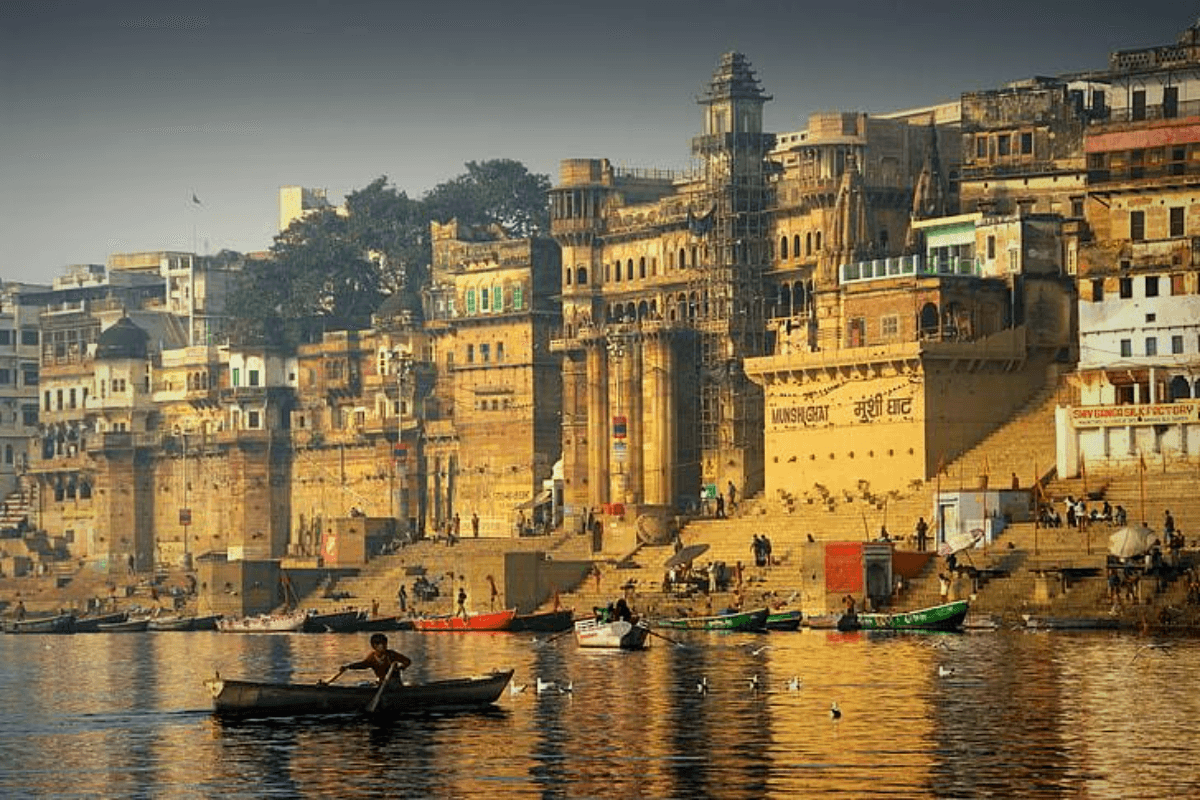
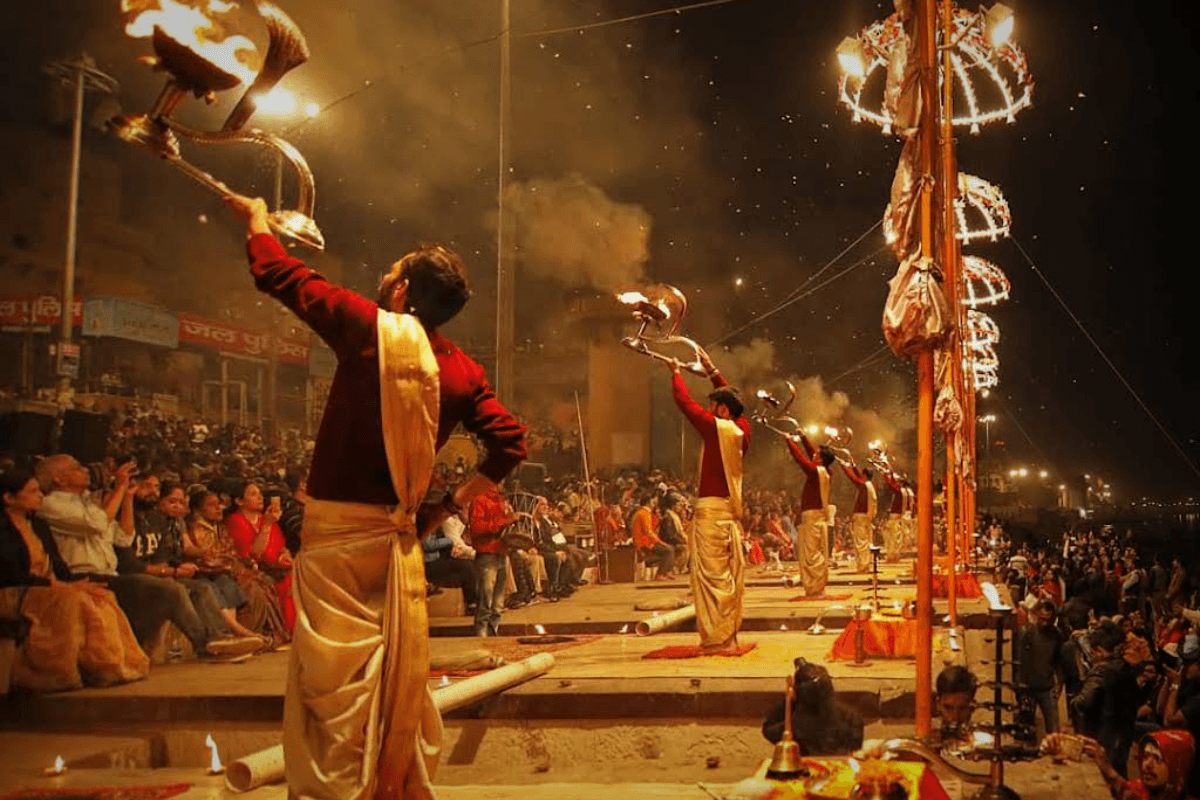
Your first day in Kashi is the day the city begins to introduce itself. You meet the Ganga before anything else — at dawn, from a boat, when the ghats are just beginning to stir and the first diyas are floating. By evening you return to the river for the aarti that happens nowhere else. The aarti begins around sunset — about 6:00–6:30 PM in winter, 6:45–7:00 PM in summer; we confirm the day's time. Between the two, the city slowly reveals its own rhythm.
Dawn pickup from hotel
Subah-e-Banaras at Assi Ghat
Sunrise boat ride — Assi to Panchganga
Kachori-sabzi at Ram Bhandar
Sakshi Vinayak and Kal Bhairav darshan
Afternoon rest at hotel
Golden hour ghat walk — Dashashwamedh side
Ganga Aarti — front-row at Dashashwamedh
Dinner at Kashi Chat Bhandar
Note Heavy walking day on uneven ghat steps. Wear closed-toe shoes with good grip.
Day 2 belongs to the temples. This is the heart of the Kashi Yatra — the sequence walked in the traditional order Kashi custom prescribes. We enter on foot through Vishwanath Gali, the surviving traditional market approach, rather than the new corridor gates. By afternoon we move south to Sankat Mochan and Durga Temple — corners of the city where the older Banaras of the Ramayana feels close.
Breakfast at hotel
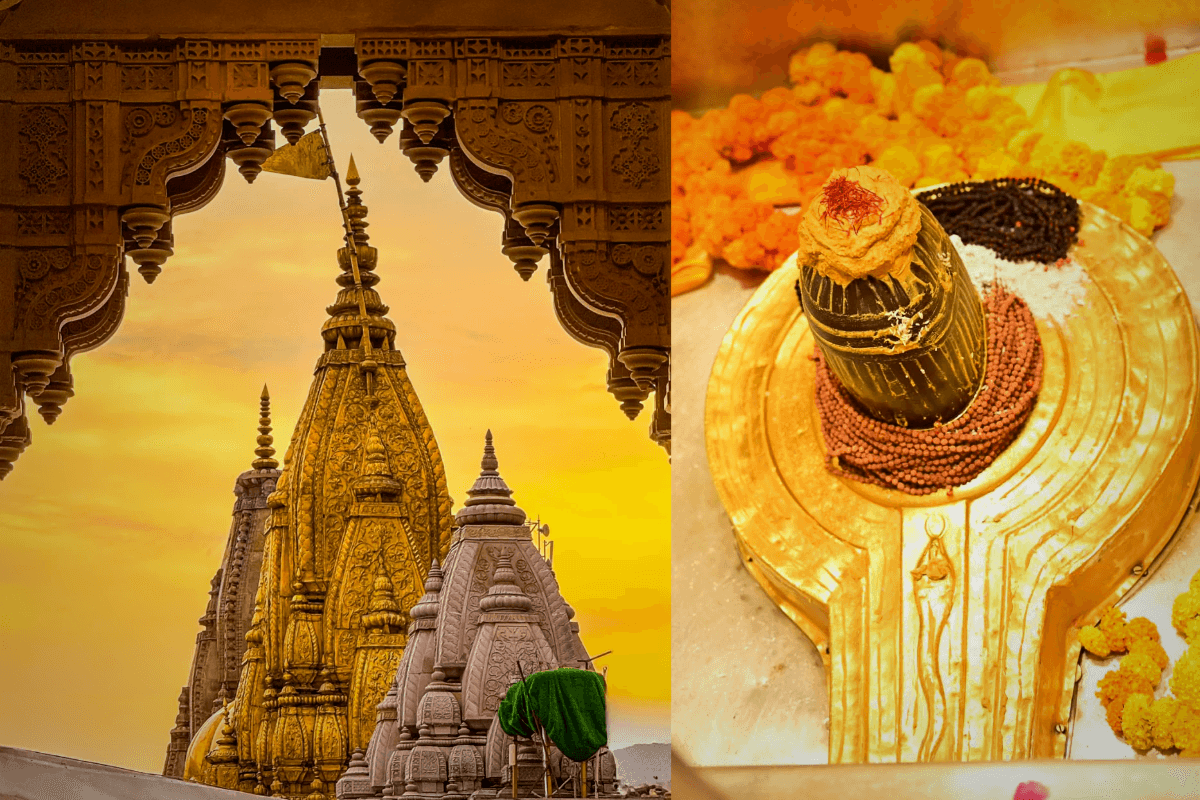
Kashi Vishwanath darshan — traditional route
Annapurna Devi Temple
Heritage walk — Vishwanath Gali & Thatheri Bazaar
Banarasi thali at a family-run dhaba
Sankat Mochan Hanuman Temple
Durga Temple ("Monkey Temple")
Sunset boat ride — Assi to Harishchandra
Dinner — Banarasi paan and thandai finale
Note Mobile phones, belts, and leather items are not permitted inside Kashi Vishwanath. Locker available at temple entrance; faster to leave them at the hotel.
Day 3 broadens the experience. Kashi is Shiva's city, but 13 km north, the Buddha gave his first sermon in a deer park twenty-five centuries ago. We visit Sarnath in the cool of the morning, the BHU campus and the Bharat Mata Temple at midday, and end the trip with a quiet farewell at Assi Ghat before your departure. The pace eases so the days before have room to settle.
Breakfast at hotel
AC cab to Sarnath
Sarnath — Dhamek Stupa, Mulagandha Kuti, Deer Park, Museum
Return to Varanasi
Lunch near BHU
BHU campus — Bharat Mata Temple & New Vishwanath
Optional: priest-led abhishek at Vishwanath (add-on)
Farewell chai at Assi Ghat
Drop to airport or station
Note Sarnath museum is closed on Fridays. We adjust if your day falls on one.
Through the lens
Photos
10 photos
The story
About this package
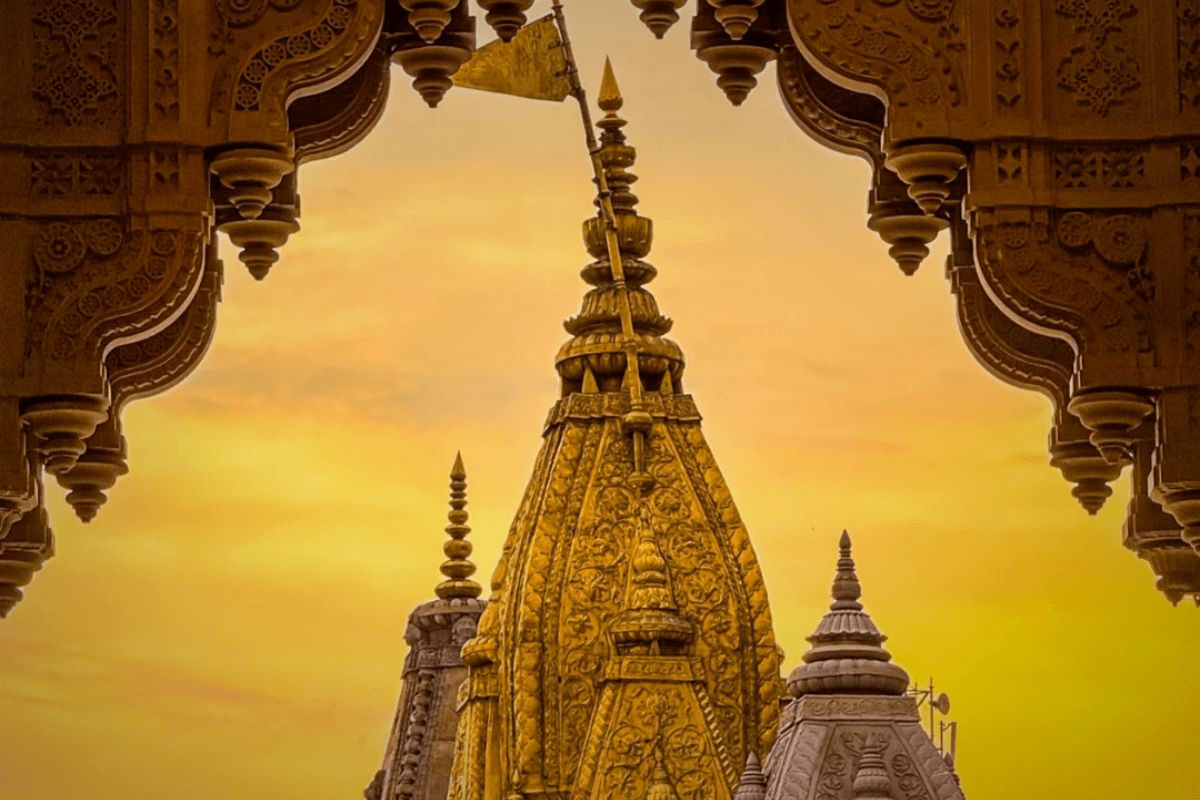
4:47 AM. A conch sounds at Assi Ghat. One long note, then three short. Within seconds, the first diyas are on the water. Within minutes, the first light reaches the temple spires. Your three days in Kashi begin here, before the city is fully awake.
This journey is designed to unfold at a gentler pace — temple by temple, ghat by ghat, with the time and context to make sense of what you are seeing.
The Kashi Yatra, in its traditional order
The itinerary follows the classical Kashi Yatra sequence — the order in which a pilgrim has long approached the Lord of Kashi, as Kashi custom prescribes. Sakshi Vinayak first. Then Kal Bhairav, whose blessing is said to mark the start of the yatra. Then Annapurna, the Mother who feeds Kashi. And only then, Vishwanath.
This order is not incidental — it is part of the yatra's meaning, and we hold to it in full on Day 2.
How we look after this journey for you
- The sequence is honoured. The full traditional yatra, in its proper order, on Day 2.
- The bookings are made early. Front-row seating at the Dashashwamedh Aarti. Dawn boats reserved the previous evening so you are on the water before the queues form. Sarnath cab arranged the day before.
- The pacing is gentle. Three unhurried days, with afternoon rest built in. The pace is planned so the journey feels full, not rushed.
- You arrive prepared. A printed briefing reaches you before Day 1 — the meaning of the mantras you will hear, what to look for at each temple, the small customs and practical courtesies of the city, and a map of the ghats.
Who this is for
Book this if:
- You want the complete Kashi Yatra, not a highlight reel of three temples
- You want to understand why each ritual exists, not only watch it happen
- You are comfortable walking 6–8 km a day on uneven stone
- You like to sit quietly in temples at your own pace
What you will carry home
The smell of marigolds and fresh agarbatti. The sound of the Hanuman Chalisa sung by a hundred voices in the courtyard Tulsidas himself built. The taste of Banarasi tamatar chaat, and the first warm kachori of the day at Ram Bhandar. The quiet of standing before the Jyotirlinga at Vishwanath on a slow morning, with space to take in the moment.
The briefing maps help you find your way around. The bookings are arranged so the key moments of the journey are planned with care. And you leave with the cultural context to make sense of what you saw.
When to go
| Window | Weather | Notes |
|---|---|---|
| Oct 15 – Dec 15 | 15–28°C | The peak season. Book 2 months ahead. Dev Deepawali (November) books 3+ months ahead. |
| Dec 15 – Feb 15 | 8–22°C, foggy mornings | Quiet and atmospheric. Some boat disruptions from fog. |
| Feb 15 – Mar 31 | 18–32°C | Excellent weather and lighter crowds. Holi in March brings energy. |
| Apr – Jun | 26–42°C | Warm afternoons. The schedule leans on dawn and evening, with AC rest in between. |
| Jul – Sep | Monsoon | The river is full and dramatic, but boats may be cancelled. We substitute a ghat walk and refund the boat cost. |
A few things to know before you arrive
- Wear cotton. Even in winter the afternoons can be warm, and synthetics are uncomfortable inside crowded temples.
- Carry ₹2,000 in small notes — ₹10s and ₹50s for dakshina, small offerings, and chai at roadside stalls.
- No leather inside Kashi Vishwanath. Belts, wallets, leather watch straps and handbags are all restricted. A locker is available at the temple, but it is easier to leave them at the hotel on Day 2.
- Shoes with grip. Ghat steps are stone, often wet, sometimes slippery from flower offerings.
- A small ziplock for your phone. It will travel with you on the boat, and water happens.
- Modest dress inside temples. Shoulders and knees covered. A dupatta or light scarf is useful.
- Photography. Allowed at most ghats. Restricted or not permitted inside Kashi Vishwanath, the Sankat Mochan sanctum, and at certain ritual moments. Your briefing lists what is allowed where.
Add-ons available on request
The core package is complete on its own. These additions are available if you would like them, priced separately in your quote:
- Priest-led abhishek at Kashi Vishwanath on Day 3 — a private ceremony with milk, gangajal and bilva leaves, with the Mahamrityunjaya mantra chanted
- English–Hindi temple interpreter for one day — the meaning of each ritual translated as it unfolds
- Heritage walk with a local historian — three hours through the old galis with a Banaras-born scholar
- Private classical music baithak — an evening sitting in a traditional haveli
- Luxury hotel upgrade — BrijRama Palace, Taj Ganges or Suryauday Haveli at a supplemental rate
Mention what interests you in your enquiry and we will include it in the quote.
Frequently asked
Is a guide included?
The core package includes a printed pre-arrival briefing — meanings, maps, mantras and cultural protocol — and most pilgrims find this enough. A temple interpreter, a priest for abhishek, or an academic host for the heritage walk are available as paid options. Mention what you would like in your enquiry.
Do I need to be Hindu to do this trip?
Not at all. This package is for anyone drawn to Kashi — Hindu, Buddhist, Jain, Sikh, of any faith, or of none. We ask only for respect for the rituals and the people performing them. The briefing explains the meaning of every ceremony in plain language.
Which is the best month?
October 15 – March 15 is the most comfortable window — temperatures of 15–28°C, low humidity, and the river at its most beautiful. November is the busiest because Dev Deepawali falls then, and hotels book out 2–3 months ahead. April and May are warm (35–42°C in the afternoons) but the early mornings are still pleasant. The monsoon (July–September) is dramatic, though rain can interrupt boat plans.
Can we travel with an 8-year-old?
Yes, comfortably. Many children handle the walking surprisingly well. The darshan queue at Vishwanath can feel long, so we plan it for early morning on Day 2 to keep the wait short. For children under 5, our Family package is a gentler fit — about 30% less walking.
How strict is vegetarian? Can we have eggs at breakfast?
Meals included with the package are pure-vegetarian (no onion or garlic at temple-adjacent meals, in keeping with Varanasi Brahmin tradition). Eggs at breakfast can be arranged at the hotel. Non-vegetarian dinners are available at select restaurants in the city if you would like — we can recommend places.
What are the hotels like?
Heritage boutique — typically 10–30 rooms, restored havelis or ghat-side buildings with rooftop views of the Ganga. Clean, A/C, hot water, Wi-Fi. Not luxury (no spa, no pool), but close to the ghats and full of character. If you would prefer a 5-star stay (BrijRama, Taj Ganges, Suryauday Haveli), we can upgrade for a supplemental rate — please mention in your enquiry.
Are the front-row Aarti seats worth it?
The front row lets you see the small details that carry the meaning — the rotation of the conch, the choreography of the 21 offerings, the moment the smoke from the main lamp is offered to the river. From further back, the same details are difficult to follow.
Is there festival surge pricing?
All prices are quoted on enquiry. Peak windows — Dev Deepawali (November), Kartik Purnima, Mahashivratri (February or March), Ganga Dussehra (May or June) — book out 2–3 months ahead, and hotel rates are higher in those weeks. We are upfront about it in the quote, with no hidden surcharges.
How quickly do you reply to enquiries?
Within 6 working hours on weekdays (Mon–Sat, 9 AM – 7 PM IST). Within 24 hours on Sundays and public holidays. Every enquiry receives a named reply from a member of our team.
Related packages
- Short on time? See Kashi Darshan — One Day Complete.
- Travelling with family? See Varanasi Family Tour — 4 Days.
- Want a wider circuit? See Varanasi + Ayodhya + Prayagraj — 5 Days.
- Coming for a festival? See Dev Deepawali — Festival of the Gods.
What you get
Highlights
Logistics
What's included
Inclusions
- 2 nights hotel within 10 minutes' walk of the ghats
- All meals — pure-veg, local cuisine
- Two boat rides (sunrise + sunset, reserved the evening before)
- Sarnath half-day excursion with AC cab
- Dashashwamedh Aarti reserved front-row seating
- Printed pre-arrival briefing document (meanings, maps, protocol)
- All temple entry where applicable
- Airport or station transfers
- Bottled water and chai throughout
- 24/7 local contact number for support
Not included
- Travel to/from Varanasi (train/flight)
- Personal shopping at Thatheri Bazaar and Vishwanath Gali
- Helicopter darshan upgrade
- Photography fees at restricted sites
- Temple offerings (dakshina, flowers, diya) — small cash, bring ₹500–1,000
- Travel insurance
- Optional add-ons (guide, priest-led abhishek, interpreter, historian-led walk, private music) — priced separately
Send an Enquiry
Leave your name and number — our team will call you.
Starting price
₹6,499
per person
Replies in minutes on WhatsApp · 7 AM–10 PM
Trusted by Pilgrims
“We came for my mother's 75th birthday darshan. Satmarg arranged wheelchair access, a pandit who spoke her dialect, and a private boat for her Ganga aarti.”
“Third time using Satmarg. The cab service is top-notch — AC Innova, polite driver, no surprise charges.”
Udyam-registered MSME · UDYAM-UP-75-0177698
Varanasi-based operator · local guides & pandits
Hindi & English support · 7 AM–10 PM
The fine print
Cancellation policy
The fine print
Cancellation policy
Booking & payment • 25% advance to confirm dates; balance 14 days before arrival. • All prices on enquiry — we quote based on dates, group size, hotel tier, and any add-ons. • Payment via direct transfer or UPI; card via secure link on request. Cancellation • Free cancellation up to 14 days before arrival — full refund. • 7 to 14 days before arrival — 50% refund. • Within 7 days — no refund, but the package may be rescheduled within 6 months at no additional cost for documented medical or weather emergencies. Weather disruption • If the Ganga is in high flood and boat rides are cancelled by authorities, we substitute a guided ghat walk and refund ₹2,500/person for the missed boat. Substitutions we may make • Hotel: if your preferred hotel is sold out, we substitute an equivalent heritage property within walking distance of the ghats — subject to your approval before booking confirms. • Itinerary: if a specific temple is closed for renovation or a festival blackout, we substitute a comparable temple from the same region, communicated in writing 48+ hours in advance.