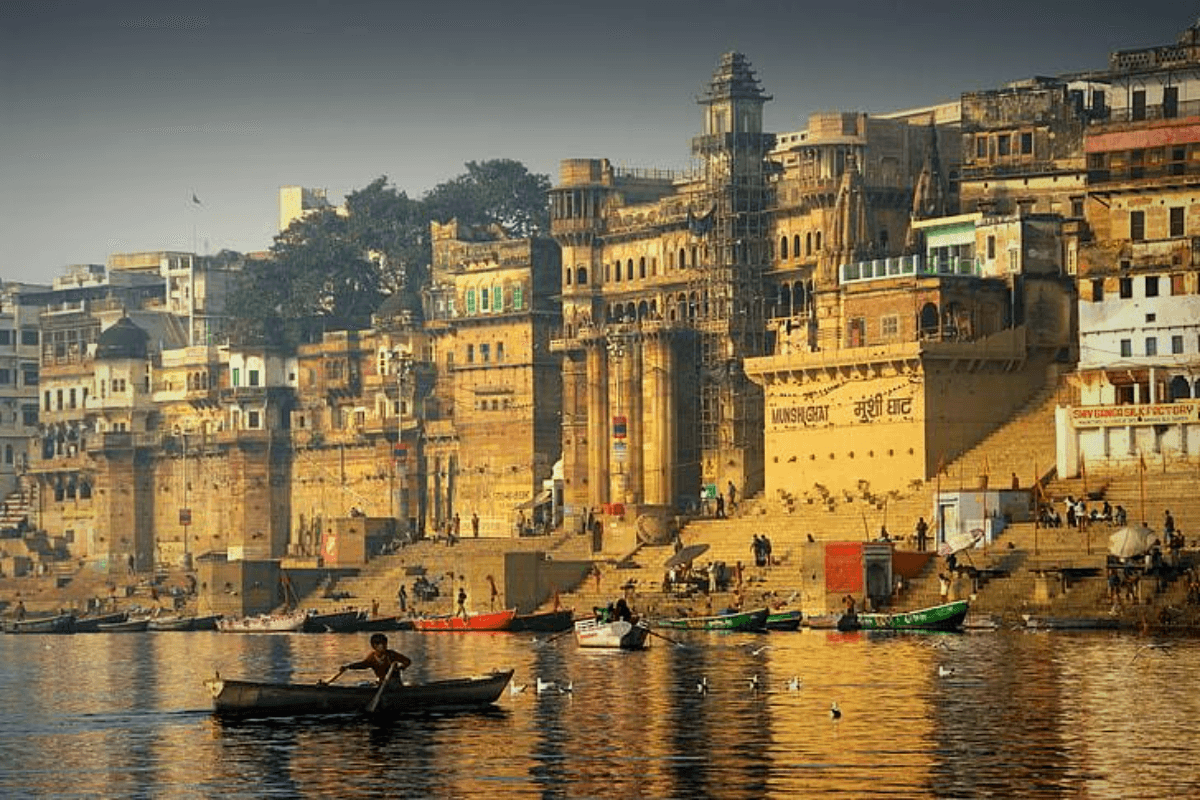
Ahilyabai Ghat is a bathing ghat on the central crescent of the Kashi riverfront, counted thirty-ninth in the traditional sequence of eighty-four ghats. It lies between Munshi Ghat above and Sitala Ghat below, which places it a short walk upstream from Dashashwamedh, close enough to share that ghat's pilgrim flow.
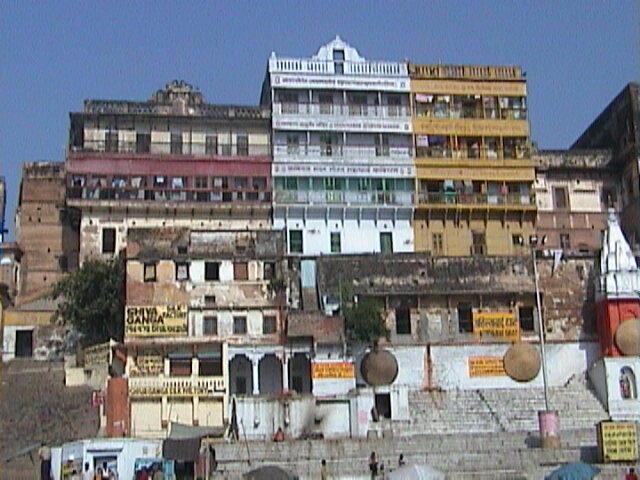
The ghat carries the name of Maharani Ahilyabai Holkar of Indore (1725–1795). Heritage documentation of the Varanasi riverfront records that the ghat was extended and completely rebuilt under her patronage between 1778 and 1785, and that its earlier name was Kevalagiri Ghat. Above the steps stands the Indore Estate palace she raised; the Uttar Pradesh tourism department's ghat record credits the Hanuman temple and two Shiva temples in the compound to her as well — the same devotional impulse that, in 1780, restored the Kashi Vishwanath temple a few lanes inland.
What happens here is the ordinary, unbroken life of a Kashi ghat. Pilgrims descend at first light for snan, take sankalp before entering the water, offer tarpan for their ancestors, and perform Ganga pujan at the waterline. In the evening the steps gather small circles for kirtan. There is no great shrine to queue for and no ceremonial spectacle to attend; what this ghat offers is the river itself.
The name and what it remembers
Most of the Banaras waterfront as we see it today took its present stone form in the eighteenth century, when Maratha houses — Peshwas, Holkars, Scindias and Bhonsles — rebuilt ghat after ghat in dressed masonry. Ahilyabai Ghat is one of the places on the river where the Holkar queen's Kashi seva is plainly visible. In Banaras she is remembered less as a ruler than as a patron of dharma, and for many pilgrims a bath at the ghat that bears her name is also an acknowledgement of that lineage of service.
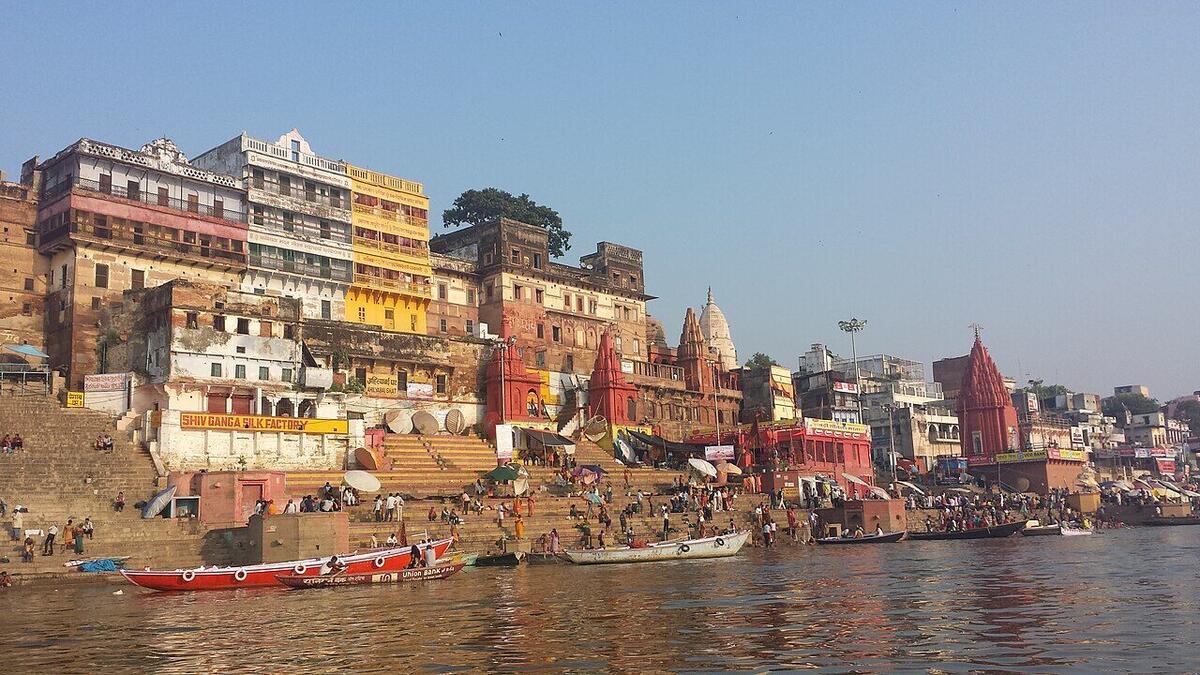
Ahilyabai Ghat does not carry a separate Puranic mahatmya under its present name, and honest guidance should say so plainly. Its sanctity is the sanctity of the Ganga at Kashi — the same river, the same kshetra, the same merit that tradition attaches to snan anywhere along the crescent between Asi and Adi Keshava.
Devotees hold that within the Kashi kshetra the Ganga does not divide her grace ghat by ghat. In Kashi's devotional understanding the whole northward-flowing stretch of the river here is tirtha; the named ghats are doors into one water. For pilgrims who find the steps at Dashashwamedh too crowded for a settled sankalp, this ghat gives the same river with room to sit.
Seva as a form of worship
There is a second significance here, and it is a human one. In Hindu understanding, the building and upkeep of a tirtha — steps, shrines, dharamshalas, wells — is itself an act of worship. Ahilyabai Holkar's endowments reached across the pilgrimage geography of India: the Kashi Vishwanath temple in 1780, work at Manikarnika and Dashashwamedh, rest houses for pilgrims, and temples, ghats and charities at the Sapta Puri, at Badrinath and Puri, and at the twelve Jyotirlingas. Pilgrims who stand on these steps are standing on the fruit of that seva. Tradition holds that such patronage yields punya not once but continuously, for as long as the tirtha remains in use — and these steps remain in daily use.
History
The ghat is older than the name it now carries. Heritage documentation of the Varanasi riverfront records its earlier name as Kevalagiri Ghat, and states that it was extended and completely rebuilt under the patronage of Maharani Ahilyabai Holkar of Indore between 1778 and 1785. The Uttar Pradesh tourism department's ghat records place the work in 1785, when the queen of Indore established the ghat together with a large mahal on its bank. The two accounts differ only in how they date a single building campaign.
Ahilyabai Holkar (born 1725; ruler of Malwa from 1767 until her death in 1795) is remembered across the Hindu pilgrimage map for her building and restoration. In Kashi her works include the reconstruction of the Kashi Vishwanath temple in 1780, patronage at Manikarnika and Dashashwamedh ghats, temples on the riverfront, and dharamshalas for pilgrims. Beyond Kashi she endowed at the Sapta Puri, at Badrinath and Jagannath Puri, and at the twelve Jyotirlingas. Government records of this ghat also credit her with the Hanuman temple and two Shiva temples that stand within its precinct.
The same heritage documentation notes that James Prinsep still recorded the name Kevalgiri Ghat in 1831, and that Sherring gave the name Ahilyabai Ghat in 1868 — the change of name falling between them. The ghat has stayed in ordinary devotional use since; the state tourism record notes that large numbers still come here for their bath. Its stewardship today is divided: the palace and its associated properties are held by the Ahilyabai Indore Estate Trust, while the ghat itself is maintained by the Municipal Corporation. Heritage surveys note that beyond routine repair there is no dedicated conservation programme for these steps, and that some of the riverside verandas and porches have been encroached upon — a plain fact worth knowing for anyone who cares about how this ghat is passed on.
Architecture
Ahilyabai Ghat is pucca throughout; the Uttar Pradesh tourism record describes it simply as clean and paved. Heritage survey records give 0.23 hectare for the block that holds the palace and the ghat together.
The presiding structure above the steps is the Indore Estate palace with its service court, entered from the city side through a gateway crowned by a naubat, the kettledrum that guarded the compound. Beside it stands a Brahmapuri of ten houses — built together, which is why their facades are so regular — where the Brahmins and the pujaris serving the queen's temples lived; and an akhara, the wrestling ground that many Banaras ghats still keep.
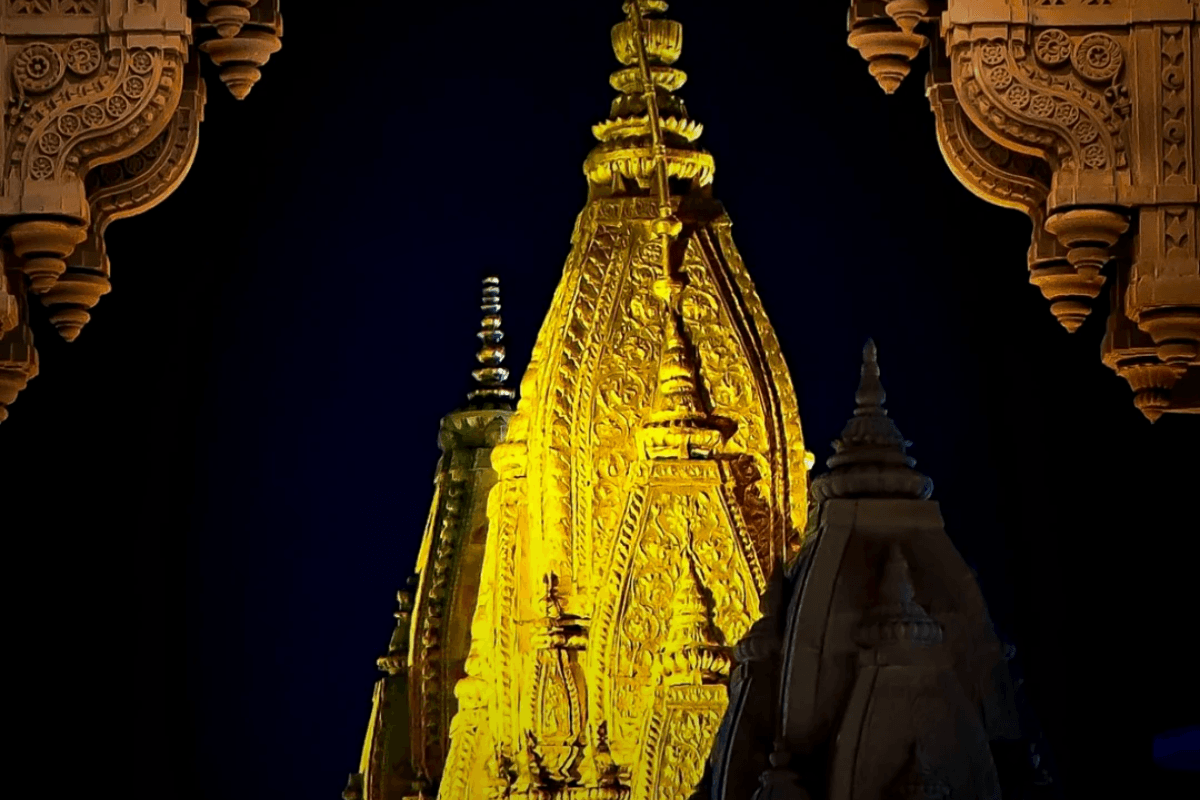
Within the precinct stand two Shiva temples and a Hanuman temple endowed by the Maharani; heritage documentation describes one Shiva shrine as built on a twelve-pillared plan and notes the images installed in the Hanuman temple. These are small buildings, and darshan at them is part of the ordinary daily use of the ghat rather than an occasion of its own.
Rituals & Practices
This is a bathing ghat, and its practice is the practice of the river. Pilgrims come at first light for snan, take sankalp before entering the water, and offer tarpan for their ancestors. Ganga pujan at the waterline — a clay diya, flowers, a little milk, a red thread — continues through the day, often with the help of the pandas seated on the upper steps.
After the bath many climb a few steps for darshan at the Hanuman temple and the Shiva shrines within the ghat precinct, and some continue inland to Kashi Vishwanath. In the evening the steps gather small kirtan circles; the Uttar Pradesh tourism department's notes on this ghat record the singing of Bengali women as a regular part of its evening life.
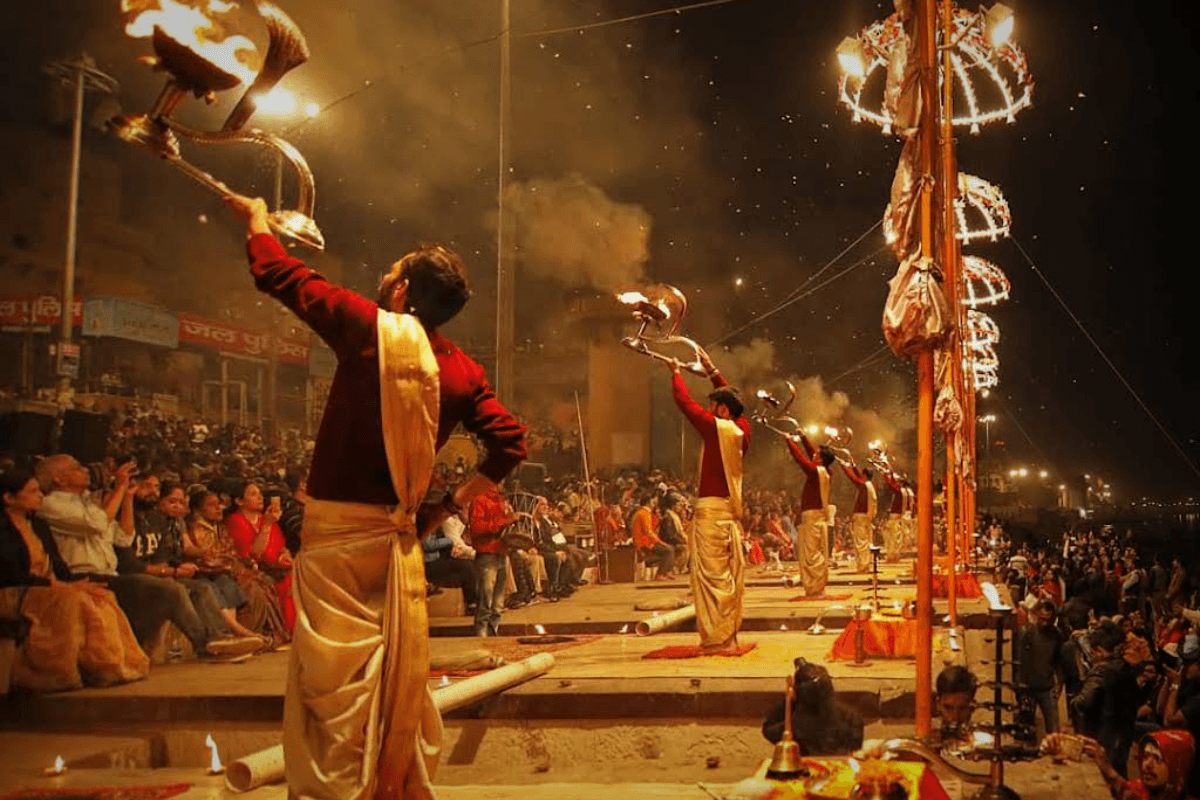
There is no formal ceremonial Ganga Aarti on these steps — the great evening aarti is a short walk downstream at Dashashwamedh. The small shrines here keep informal hours, so ask on the ghat rather than relying on any printed schedule.
Festivals & Celebrations
| Festival | When | Crowd |
|---|---|---|
| Dev Deepawali | — | Extreme across the riverfront |
| Kartik Purnima snan | — | Very high |
| Ganga Dussehra | — | High |
| Makar Sankranti | — | High |
| Daily Ganga snan | — | Steady from first light |
Dev Deepawali: Tradition holds that on this night the devas descend to bathe in the Ganga at Kashi, and the lamps on the ghats are lit to welcome them.
Kartik Purnima snan: The Puranas praise snan in the month of Kartik, and Kartik Purnima above all, as bearing great devotional fruit. Many families keep the whole month as a Kartik vrat of daily Ganga snan.
Ganga Dussehra: Devotees hold that a bath in the Ganga on this day carries particular purifying merit, and it is one of the year's principal days of Ganga worship in Kashi.
Makar Sankranti: Marks the sun's turn into Makara and the beginning of Uttarayan; snan and daan on this day are held to be especially meritorious.
Daily Ganga snan: This daily use, rather than any single festival, is what the ghat was built for and what has kept it alive since the eighteenth century.
Prepare for Your Visit
Practical guidance to help you plan your pilgrimage
| Pilgrim Guidance | How to reachThe ghat sits between Munshi Ghat and Sitala Ghat on the central riverfront. On foot it is a short walk upstream along the riverside from Dashashwamedh — to your left as you face the river. From above, the approach is through the lanes running off Dashashwamedh Ghat Road; the nearest vehicle drop is at Godowlia, and the last stretch must be walked. By water, any shared or hired boat working the central ghats will set you down here on request. Preparation for pilgrims
Best time to visitEarly morning, between first light and about nine, is when the ghat is most devotional and least crowded. October to March is the most comfortable season. Kartik — and above all Kartik Purnima and Dev Deepawali — brings the whole riverfront alive with lamps and very large crowds. During the monsoon the river rises over the lower steps and the usable ghat shrinks considerably; take local advice before entering the water at that time. |
Location
Varanasi, UP
Gallery
Pilgrim photos
No pilgrim photos yet.
Community corrections
No corrections yet.
Edit history
No revisions yet.
Plan Your Visit to Ahilyabai Ghat
Get a custom itinerary and pricing for your trip.
Recommended
Packages for this destination
Pilgrim Notes
On-ground observations from fellow pilgrims
No pilgrim notes yet. Be the first to share on-ground observations!
Sign in to share a note.
Pilgrim Reviews
Be the first to share your experience at Ahilyabai Ghat.
Sign in to write a review.
Nearby sacred places
Discover other sacred places near Ahilyabai Ghat
Explore temples, tirthas, and pilgrimage sites in UP
Explore nearbyPart of these circuits
Walk the traditional pilgrimage routes this destination belongs to.