Assi Ghat is the southernmost principal ghat of Kashi and, in the traditional understanding of the city's sacred geography, a marker of its southern boundary. The river Assi — now mostly a small stream — once met the Ganga here, and it is this confluence that gives the ghat its name and its place in the classical yatra tradition.
In the Kashi Khanda and the Matsya and Agni Puranas, Assi is named among the tirthas where a ritual bath carries particular merit. It is counted in the classical panchatirtha — the five ghats whose snana completes the Kashi pilgrimage — in the sequence Asi, Dashashwamedh, Manikarnika, Panchganga, and Adi Keshava. Many pilgrims begin the traditional yatra here at dawn.
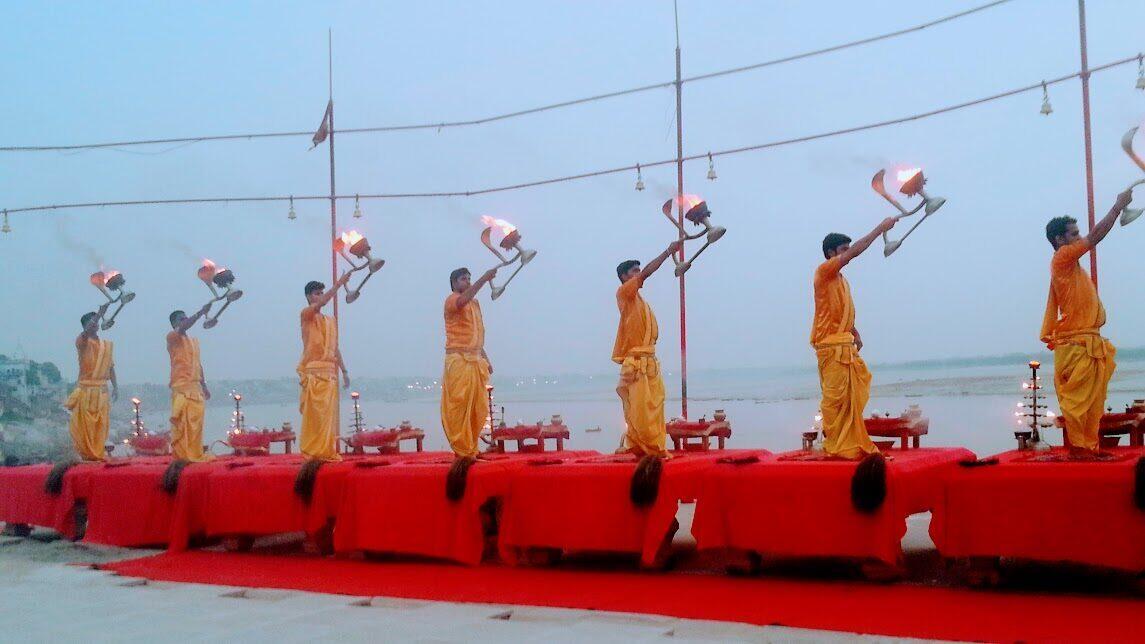
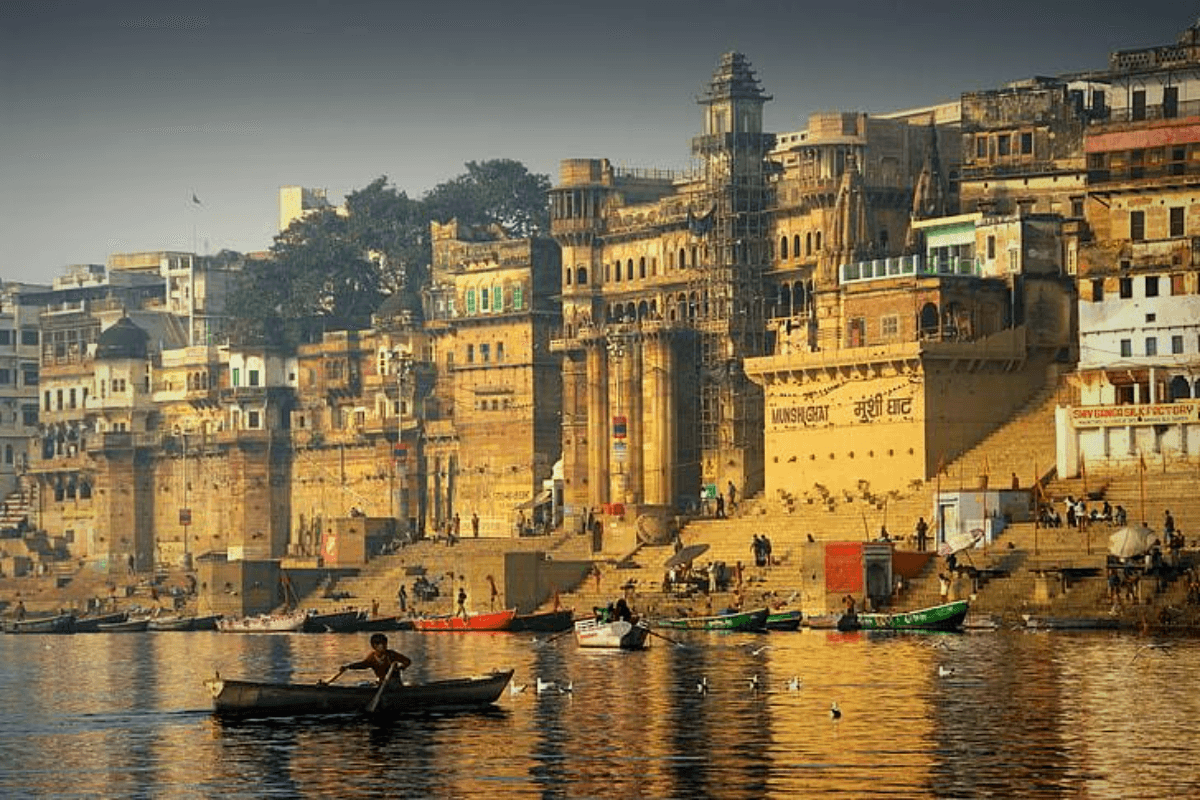
The wide stone steps sweep down to the water in a broad curve. At the water's edge stands the Assi Sangameshwar Shiva linga, worshipped at the confluence. Above the ghat, the daily Subah-e-Banaras programme — yoga, classical music, and a morning aarti — is held in the first hours of the day, drawing pilgrims and residents alike.
Two rivers mark the traditional boundaries of Kashi's Avimukta Kshetra — the ground that Shiva never forsakes. The Varana flows at the northern edge of the old city; the Assi meets the Ganga at the southern edge. Between them, the kshetra of Kashi is held in the Puranas to be Shiva's particular ground. Stepping between these two rivers is traditionally understood as entering the sacred field of the city.
The Matsya Purana holds that a bath at the Assi–Ganga confluence carries the merit of many tirthas. Though the river Assi has largely retreated underground in modern times, the sanctity of the confluence point remains in tradition, and pilgrims continue the classical snana here.
Katha and local belief
The river Assi takes its name from asi, the Sanskrit word for sword. A Puranic tradition tells that after the Devi Durga slew the asuras Shumbha and Nishumbha, she cast her sword aside at this place, and from the earth where it fell rose a stream of water — the river Assi. The ghat thus carries, along with its reputation for quiet mornings, a memory of fierce Devi-shakti at its origin.
Assi is also the ghat most associated with Goswami Tulsidas, who lived his final years on its adjoining steps. His house, preserved nearby as Tulsidas Bhavan, and the Tulsi Ghat that adjoins Assi, mark the long relationship between this part of Kashi and the Ramcharitmanas tradition. Banarasi pilgrims often speak of Assi and Tulsi Ghat in the same breath.
History
Assi is named in the Matsya Purana, the Agni Purana, and the Kashi Khanda — not as a later addition but as one of Kashi's foundational tirthas. The river Assi served as the visible southern boundary of the city; archaeological evidence places continuous use at this site for at least fifteen hundred years.
The present stone steps date mostly to the 18th and 19th centuries, raised through the patronage of various Banarasi families and trusts. Three more recent dates shape the ghat's modern form: in 1902, the royal family of Bihar acquired the southern end and built the riverfront palace that today serves as the Hotel Ganges View. In 1988, the state irrigation department paved the long cascade of stone steps that now define the ghat's face. In 2014, the district administration laid out the southern pavilion with its permanent yagnashala, where the daily Subah-e-Banaras programme and many annual festival rituals are now staged.
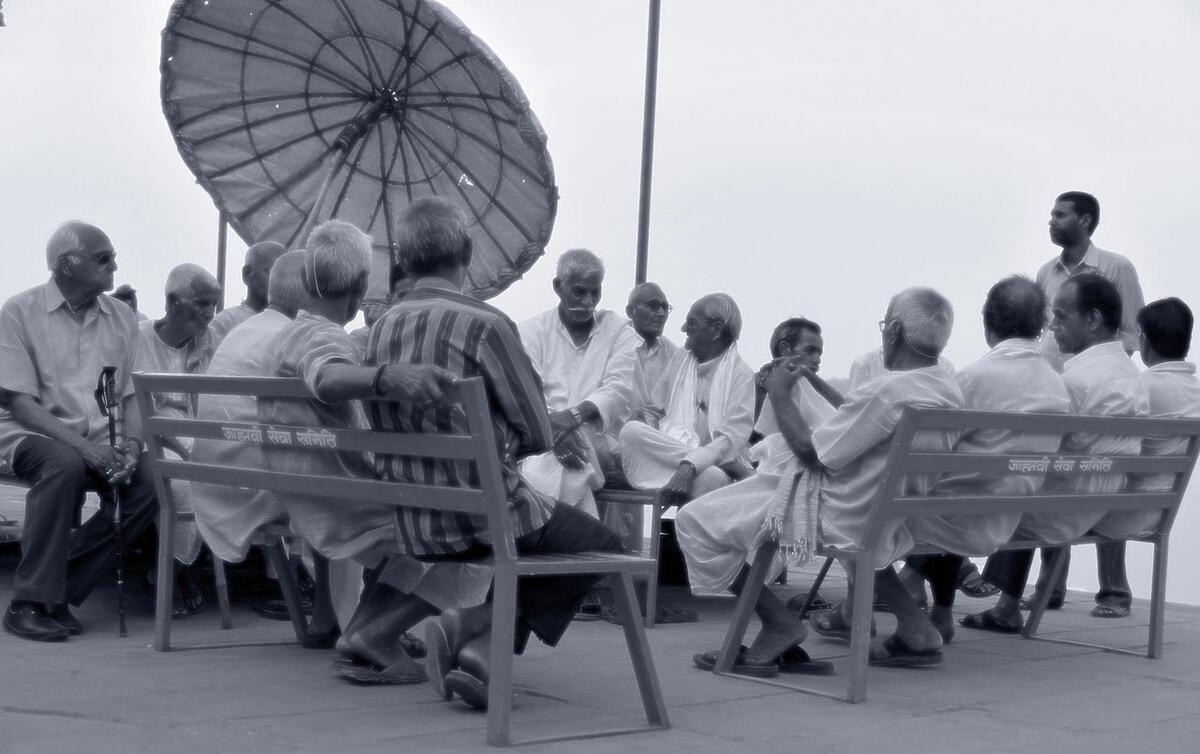
Assi's proximity to Banaras Hindu University brought, through the twentieth century, a gathering of scholars, musicians, and writers to its upper terraces. It remains a ghat where the devotional rhythm of the Ganga and the wider cultural life of the city meet.
Architecture
Assi is a wide, open ghat shaped in a broad curve from the road level to the water's edge. The steps are generous and the platform is unusually spacious — a legacy of the 1988 paving work and the more recent 2014 pavilion — and accommodate the large morning gatherings that come for the Subah-e-Banaras programme.
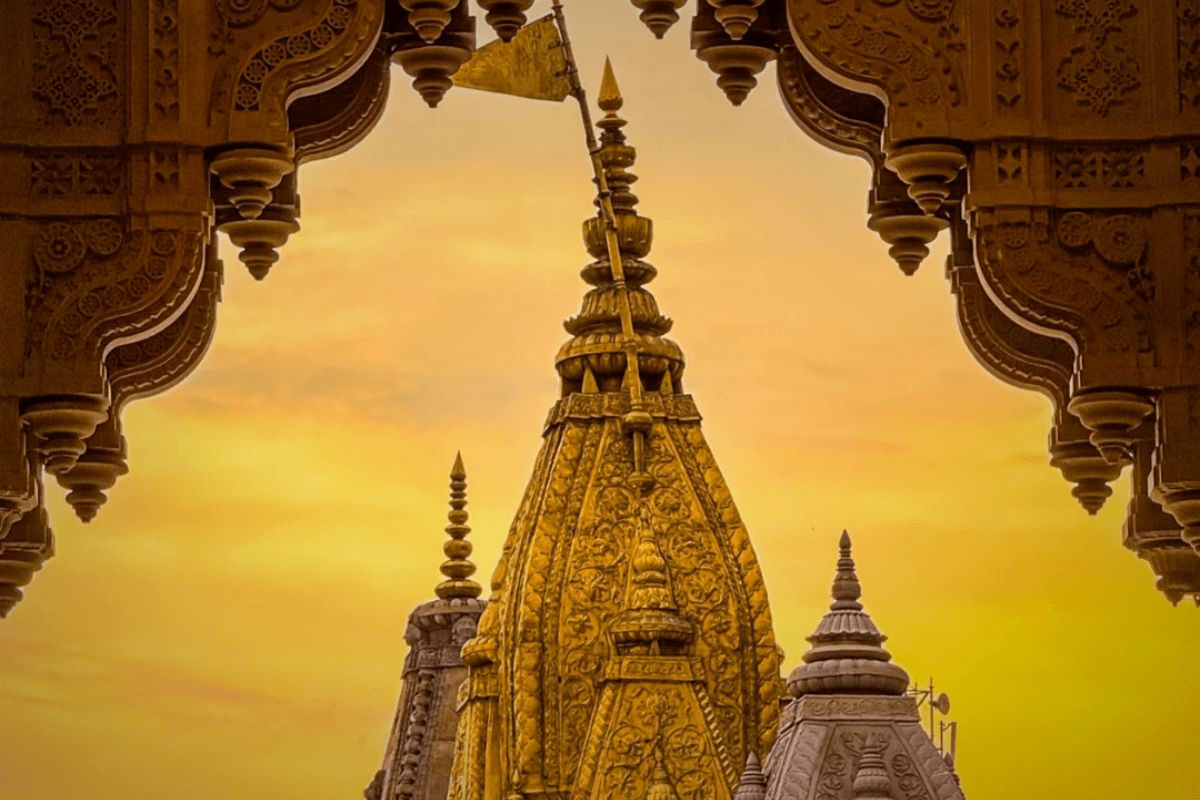
At the confluence point stands the Assi Sangameshwar Shiva linga, worshipped by pilgrims as part of the morning snana ritual. A small shrine houses the linga at the water's edge. Above the steps are the southern pavilion with its yagnashala, a cluster of small temples, and the Hotel Ganges View building — once the riverfront palace of the Queen of Bihar — which now forms a familiar part of the Assi skyline.
To the north, Assi is continuous with Tulsi Ghat, the older ghat associated with Goswami Tulsidas. The two are approached together by many pilgrims, and from the upper steps the long sweep of the Kashi ghats extending toward Manikarnika and Dashashwamedh opens into view.
Rituals & Practices
The daily devotional life at Assi is centred on the morning hours.
- Morning snana. A ritual bath at the Assi–Ganga confluence — traditionally the first act of the classical panchatirtha yatra of Kashi.
- Darshan at Assi Sangameshwar. The Shiva linga at the confluence is offered Ganga-jal and bilva patra after the bath.
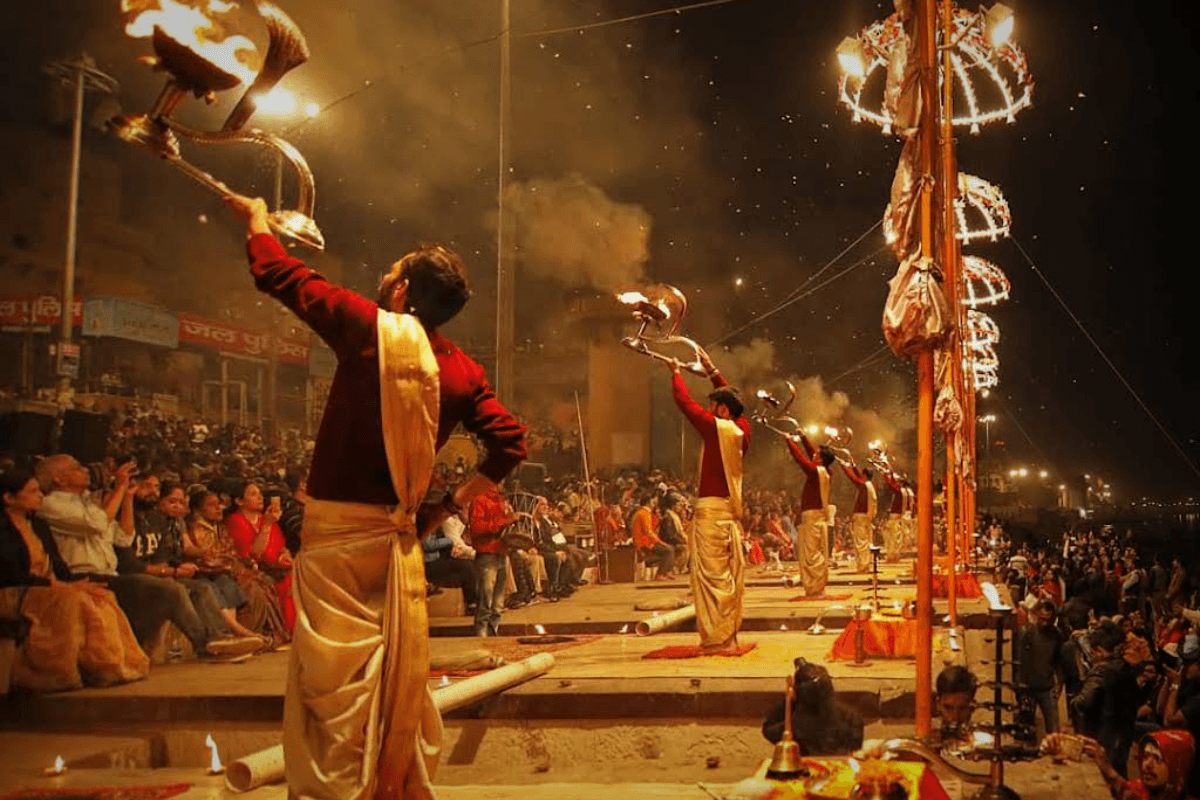
- Subah-e-Banaras. The morning programme held on the upper terrace — yoga, classical music, and aarti — in the first hours of each day. It is a quieter, more participatory observance than the evening Ganga Aarti at Dashashwamedh.
- Evening aarti. A smaller evening Ganga Aarti is performed at Assi, less attended than the principal aarti at Dashashwamedh but offered by the same devotional tradition.
Many pilgrims continue from Assi along the ghats toward Tulsi Ghat and the Tulsi Manas Temple in the Durga Kund precinct; others take a boat from Assi to Dashashwamedh and onward to Manikarnika and Panchganga, completing the ghat-side yatra.
Specific timings for Subah-e-Banaras and the evening aarti may vary by season; pilgrims are encouraged to verify on the day of visit.
Festivals & Celebrations
| Festival | When | Crowd |
|---|---|---|
| Makar Sankranti | — | Very high |
| Ganga Dussehra | — | High |
| Dev Deepawali | — | Extreme |
| Mahashivratri | — | Very high |
| Subah-e-Banaras (daily) | — | Moderate, steady |
Makar Sankranti: Marks the sun's transition into Capricorn and the beginning of the Uttarayan. Snana and daan at Assi on this day are traditionally held in high regard.
Ganga Dussehra: A bath at Assi on Ganga Dussehra is held to carry the merit of many tirthas, in keeping with the ghat's place in the classical panchatirtha.
Dev Deepawali: Celebrates the tradition of the devas descending to Kashi and bathing in the Ganga on Kartik Purnima. Lighting diyas at Assi is held to bring great devotional merit.
Mahashivratri: The Assi Sangameshwar Shiva linga holds particular significance on Shivratri as the Shaiva presence at the confluence of the two rivers.
Subah-e-Banaras (daily): Embodies the morning devotional rhythm of the city â a gentle beginning of the day in music and prayer.
Prepare for Your Visit
Practical guidance to help you plan your pilgrimage
| Pilgrim Guidance | How to reachAssi Ghat sits at the southern end of the Kashi waterfront. By road it is about 15 minutes from Godowlia; auto-rickshaws are available from every part of the city. By boat, Assi is the southern terminus — a boat ride from Dashashwamedh or Manikarnika to Assi, following the ghats in the classical sequence, is one of the most meaningful ways to take in the river. If you wish to begin the panchatirtha yatra
Preparation for Pilgrims
Best Time to VisitSunrise is the defining time at Assi — the Subah-e-Banaras programme, the morning snana, and the boat traffic all converge in the first hours. Makar Sankranti (January), Ganga Dussehra (May–June), Dev Deepawali (November), and Mahashivratri bring the largest gatherings of the year. October to March is the most comfortable season for an extended riverside morning. |
Location
Varanasi, UP
Gallery
Pilgrim photos
No pilgrim photos yet.
Community corrections
No corrections yet.
Edit history
No revisions yet.
Plan Your Visit to Assi Ghat
Get a custom itinerary and pricing for your trip.
Recommended
Packages for this destination
Pilgrim Notes
On-ground observations from fellow pilgrims
No pilgrim notes yet. Be the first to share on-ground observations!
Sign in to share a note.
Pilgrim Reviews
650 reviews
Be the first to share your experience at Assi Ghat.
Sign in to write a review.
Nearby sacred places
Discover other sacred places near Assi Ghat
Explore temples, tirthas, and pilgrimage sites in UP
Explore nearbyPart of these circuits
Walk the traditional pilgrimage routes this destination belongs to.