Bachraj Ghat, written Vachchharaja Ghat in the older lists, stands eighth in the sequence of Kashi's ghats counting north from Assi — after Mata Anandamayi Ghat and before Jain Ghat. The two are often spoken of together, and much published description treats them as one; in the standard numbered list they are two adjoining ghats, and the record of how they came apart is precise. Until 1931 Jain Ghat was part of Vachchharaja Ghat. In that year Babu Shekhar Chanda developed that portion separately, with the support of Jain monks, and it took the name Jain Ghat.
The heritage record of the riverfront states that a rich merchant of Varanasi is believed to have built this ghat in 1790, and that it is named Vachchharaja in his memory; the Government of Uttar Pradesh records the same in the form that a merchant named Vaccharaja made the ghat pucca during the latter half of the eighteenth century. The structure a visitor stands on today is later still — the present ghat was built by the Government of Uttar Pradesh in 1965.
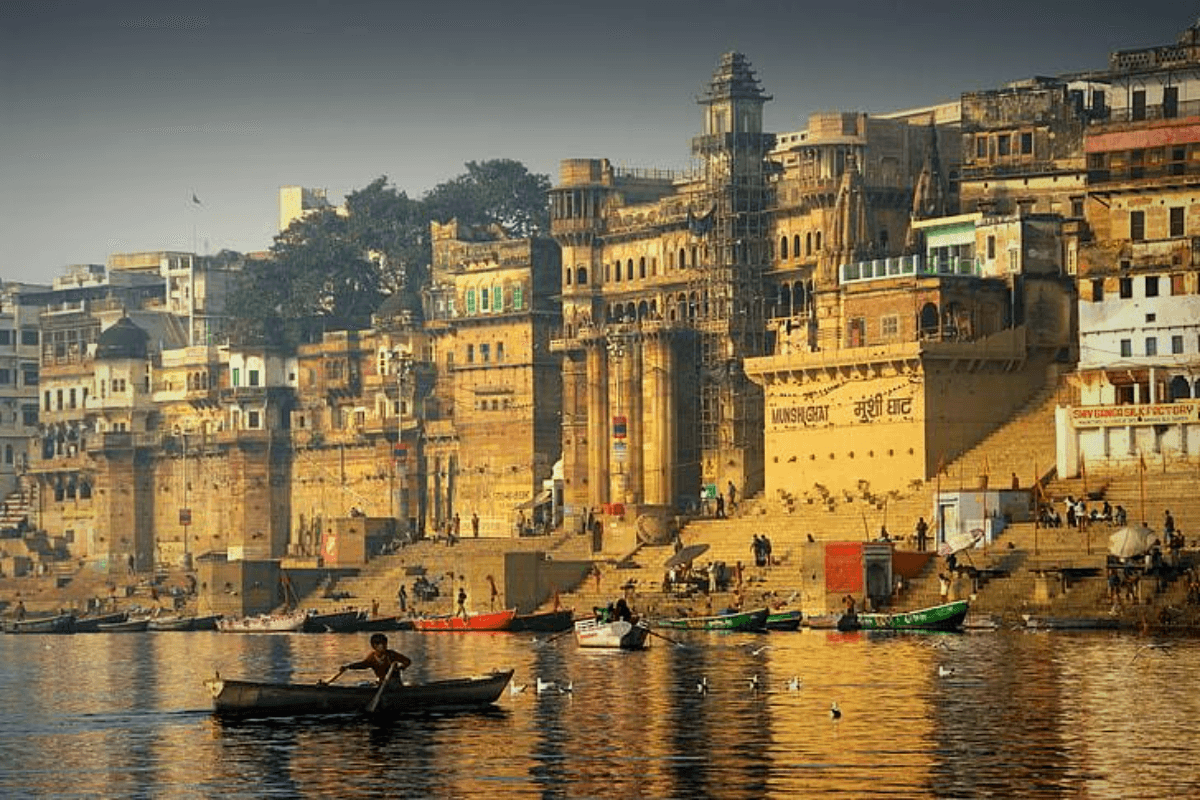
What stands on the bank is worth stating carefully, because popular description gets it wrong. Between the upper part and the water lie layers of platforms carrying temples of Shiva and Ganesha; a shrine of the goddess Ganga was built here in 1931 by Babu Shekhar Chanda when he repaired the ghat; and on the upper part stand the Gopal Mandir, built in 1968 by Anandamayi Ma, and the Akrureshvara Shiva temple. Government listings of the ghats also place a Svetambara Suparshvanatha Jain temple on this ghat. The often-repeated line that Bachraj carries three Jain temples and a very ancient shrine of Suparshvanatha appears in general descriptions of the riverfront without a source, and the detailed heritage and government records do not bear it out.
A Jain neighbourhood on a Hindu-templed ghat
The Jain association of this stretch is real, and it is a matter of people and of the ground behind the steps. The Government of Uttar Pradesh records that most of the families living at this ghat are of the Jain community, and that the belief here is that Suparshvanatha, the seventh Tirthankara, was born close by. The Jain temple proper is next door: the Suparshvanatha temple in the upper part of Jain Ghat, built in 1885, and the shrines of Shri Bhadaini Tirth a little upstream. On an ordinary day Bachraj itself is quiet — daily bathing, residents taking their exercise on the steps, and occasional bhajan and kirtan. There is no organised Ganga aarti here.
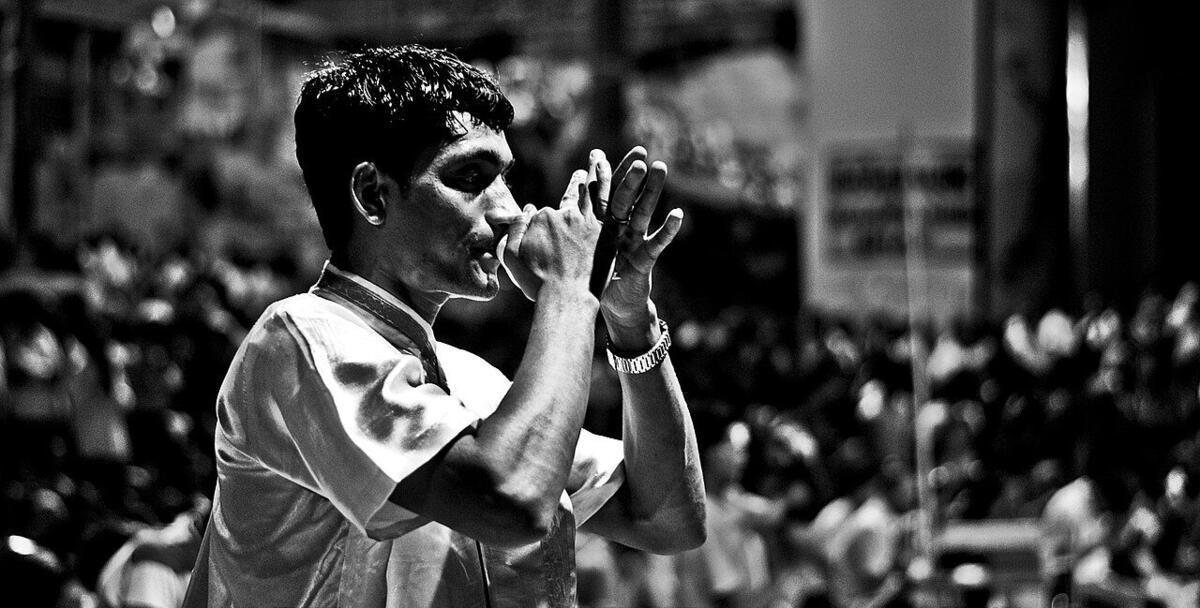
For Hindu pilgrims, Bachraj is one ghat on the sacred crescent from Asi to Adi Keshava, and the Ganga at its steps is the same Ganga. Tradition praises snan anywhere along this arc, and a quiet ghat's water is not held to be lesser than a famous one's. Bachraj is not counted among the five Panchatirtha ghats and makes no claim to be. Its own shrines give it a plainly Hindu devotional life — Shiva and Ganesha on the platforms above the water, the Ganga shrine of 1931, Akrureshvara Shiva and the Gopal Mandir of 1968 on the upper part.
The Jain ground behind the steps
The Jain meaning of this neighbourhood is drawn from the ground rather than from the water. In Jain understanding the life of a Tirthankara is marked by five kalyanakas — the auspicious events of conception, birth, renunciation, enlightenment and final liberation — and the places where these occurred are honoured as tirthas for that reason. Jain tradition counts Kashi among the great birth-places of the Tirthankaras: Parshvanatha, Suparshvanatha, Chandraprabha and Shreyansanatha are all held to have been born in this city or in the country immediately around it — Parshvanatha at Bhelupur, Suparshvanatha in the Bhadaini neighbourhood a little upstream, Shreyansanatha at Simhapuri, the present Singhpuri village near Sarnath. The belief recorded at this ghat is that Suparshvanatha was born close to it, and the temple that commemorates that birth stands in the upper part of the adjoining Jain Ghat, built in 1885.
The Jain yatra to Kashi is old and documented. The Vividha Tirtha Kalpa, composed by Jinaprabha Suri in the fourteenth century, gives a detailed description of the Parshvanatha temple of this city — which means Jain pilgrims were being guided to Banaras as a tirtha at least seven hundred years ago. The old Digambara image of Parshvanatha at Bhelupur is dated to the ninth to eleventh centuries. The devotional line running through this quarter is therefore not a recent settlement of merchants; it is a pilgrimage that has kept returning to the same city for a very long time.
Two traditions on one short stretch
What is worth noticing here is the arrangement itself. The shrines on Bachraj's own platforms are Hindu and are used as such; the families who live above the ghat are largely Jain; the Jain temple and the Jain bathing place are at Jain Ghat immediately downstream, where the community is recorded as performing its religious activity and bathing at the southern end. Neither displaces the other. In a city whose sacred geography is usually described in Shaiva terms, this short stretch is a reminder that Kashi's holiness has been claimed, and honoured, by more than one tradition.
History
The heritage documentation of the riverfront records that a rich merchant of Varanasi is believed to have built this ghat in 1790, and that it carries the name Vachchharaja in his memory; the Government of Uttar Pradesh gives the same in the form that a merchant named Vaccharaja made the ghat pucca during the latter half of the eighteenth century. No consulted source states his community or gives more of his life than the name, and this page does not fill that in. Popular accounts describe him as a Jain banker; that is not in the documentary record and is not asserted here.
The next fixed dates belong to the twentieth century. In 1931 Babu Shekhar Chanda repaired the ghat and built a shrine of the goddess Ganga on it; in the same year he developed a portion of Vachchharaja Ghat separately, with the support of Jain monks, and that portion became Jain Ghat. The Suparshvanatha temple in the upper part of Jain Ghat, commemorating the tradition that the Tirthankara was born in this neighbourhood, was built in 1885. In 1965 the Government of Uttar Pradesh built the present structure of Vachchharaja Ghat, and in 1968 Anandamayi Ma built the Gopal Mandir on its upper part. Jain Ghat next door was renovated and reconstructed by the Irrigation Department of the Government of Uttar Pradesh in 1988. The heritage record notes that the individual properties along the ghat belong to their respective temple trusts while the ghat area itself belongs to the Municipal Corporation.
Behind all of it lies the far older story of Jain Kashi. Jain sources place the birth of four Tirthankaras in this city and its immediate region, and the fourteenth-century pilgrimage manual of Jinaprabha Suri describes the Parshvanatha temple of Banaras in detail. Between that literary record and the temples standing on this bank today runs a long line of Jain pilgrims arriving in a city better known for Shiva — merchants, mendicants and families who came for a birth-place and stayed.
Architecture
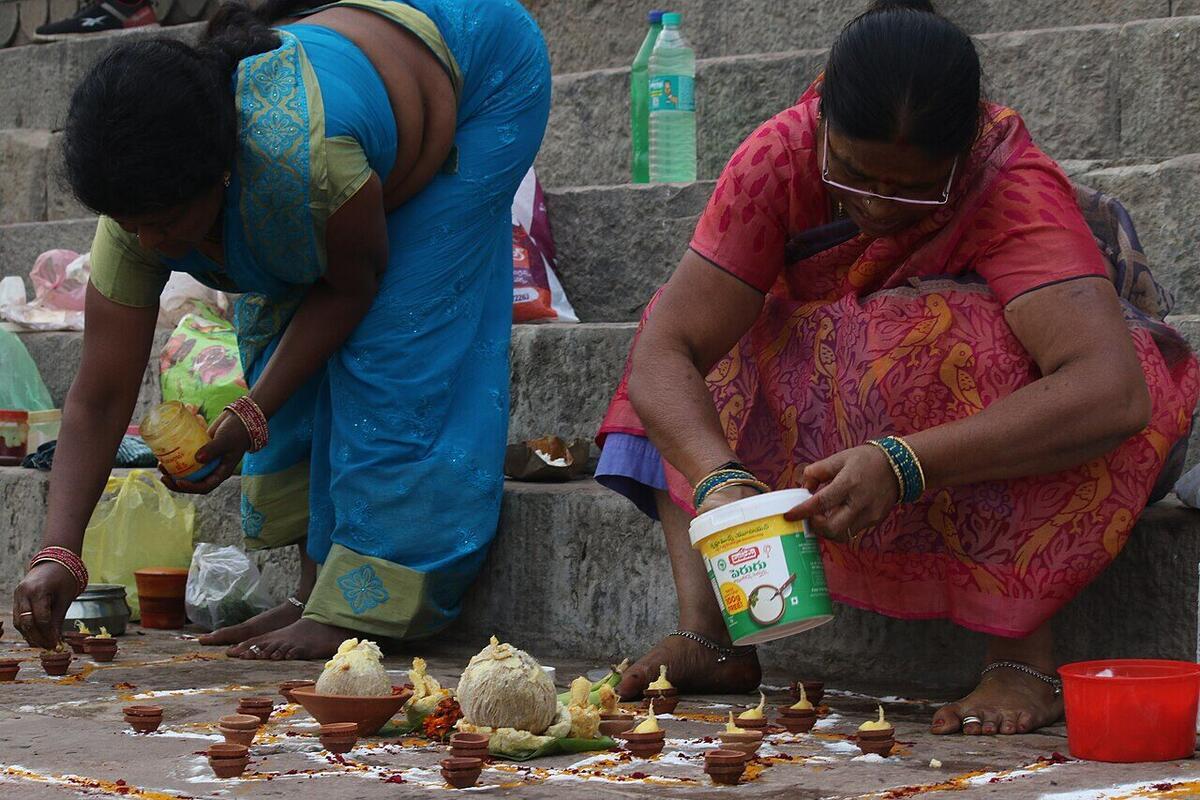
The heritage record describes Bachraj plainly: from the bank of the Ganga towards the upper side there are stone steps, and between the upper part and the bank lie layers of platforms carrying the temples of Shiva and Ganesha. It is the terraced platform arrangement, rather than any single monument, that gives the ghat its shape. The present structure is not old stone — it was built by the Government of Uttar Pradesh in 1965 — and, like every ghat on this crescent, it is governed by the river's year: through the monsoon the lower flights go under and the usable ghat retreats upward; when the water falls, the silt is cleared and the same stones return to use.
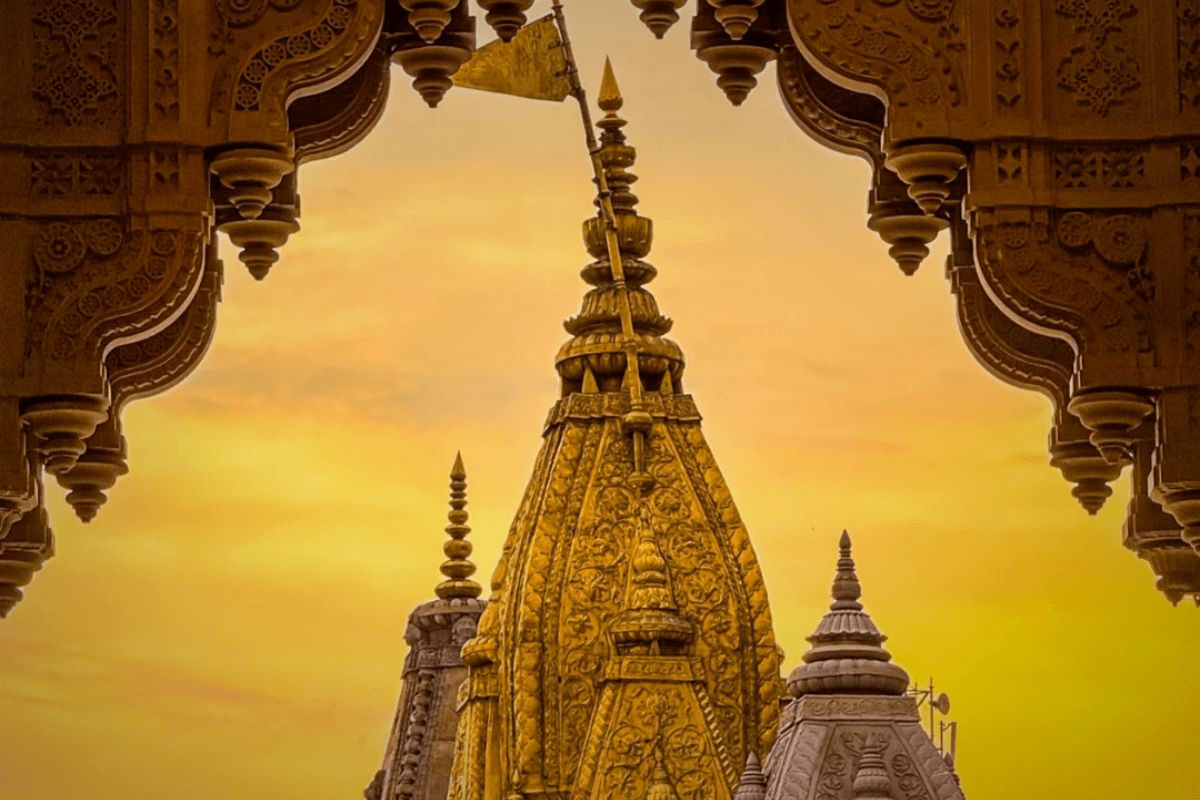
The upper part carries the Gopal Mandir of 1968 and the Akrureshvara Shiva temple, and the Ganga shrine built in 1931 stands on the ghat itself. There is no patron's haveli crowning these steps and no ornamental river gate; this is a working ghat with its shrines set into it rather than a palace front.
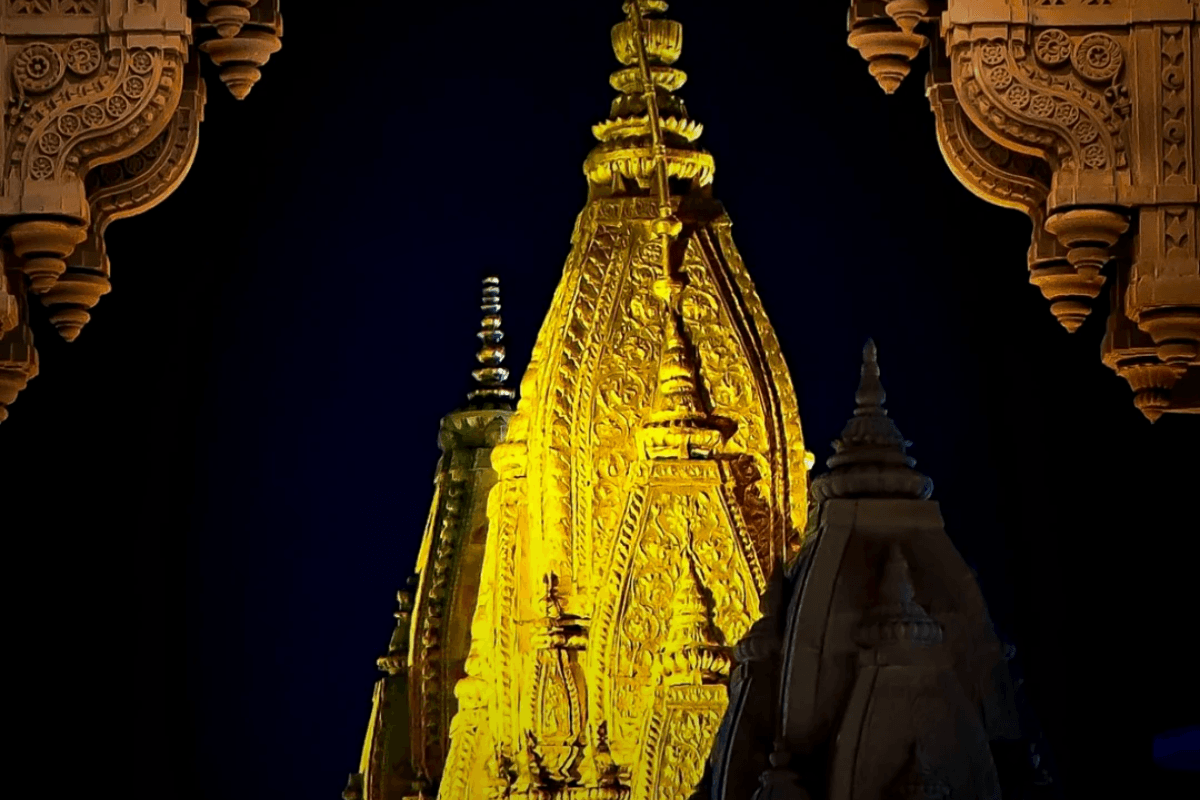
Jain shrine architecture is what a visitor sees next door, in the upper part of Jain Ghat: a garbhagriha holding the Tirthankara image seated in meditation, a mandapa before it, and the scrupulous cleanliness that Jain temple practice requires. In Jain iconography every Tirthankara is identified by a lanchana, an emblem carved below the image; Suparshvanatha's is given as the nandyavarta in the Digambara tradition and the svastika in the Svetambara. It is worth knowing before darshan, because it is what tells a visitor which Tirthankara is enshrined before them.
Rituals & Practices
The devotional life at Bachraj is quieter than its reputation suggests, and the records are consistent about it. The heritage dossier says that special festivities are rarely performed at this ghat, apart from daily bathing; the Government of Uttar Pradesh adds that cultural events, bhajans and kirtans are occasionally organised here, and that the people who live nearby take their exercise on the steps and bathe in the river. That is the ghat's day.
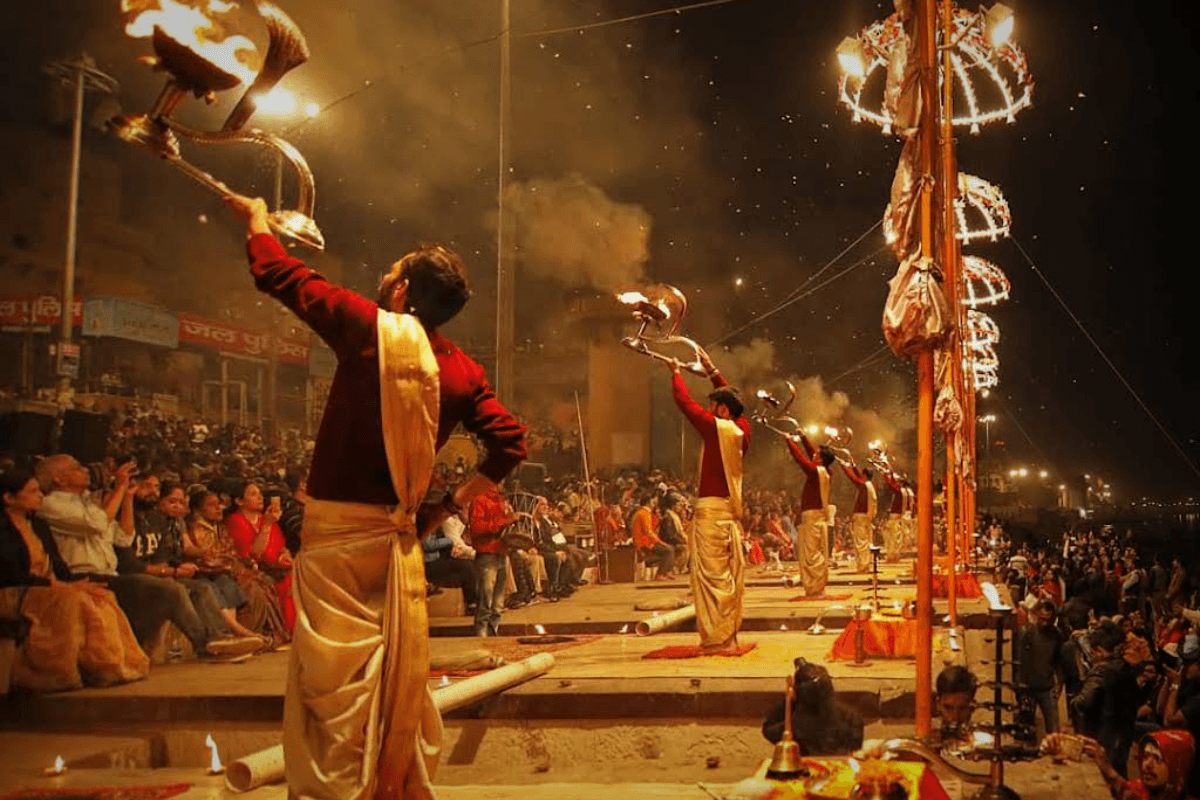
Devotees who come to the shrines here come for darshan at the Shiva and Ganesha temples on the platforms, at the Ganga shrine, and at Akrureshvara Shiva and the Gopal Mandir above. There is no organised Ganga aarti at Bachraj; those who wish to attend one walk or take a boat upstream to Assi or downstream to Dashashwamedh. Formal rites needing a purohit — shraddha, pind-daan, a full puja — are usually arranged at the larger ghats or through a family's own acharya, and should be settled in advance rather than expected on the steps.
Jain observance belongs to the temple next door rather than to this ghat. At Jain Ghat the community is recorded as performing its religious activity and bathing at the southern end, and darshan and vandana before the Tirthankara image are kept at the Suparshvanatha temple in its upper part. Digambara and Svetambara practice differ; visitors should watch first, follow the practice of the shrine they are in, and ask before joining or touching anything. Darshan hours are set by the temples, are not uniform, and should be confirmed locally.
Festivals & Celebrations
| Festival | When | Crowd |
|---|---|---|
| Mahavir Janma Kalyanak | — | High within the Jain community; the ghat itself stays calm |
| Suparshvanatha Janma Kalyanak | — | Moderate, concentrated at the Jain temples of the quarter |
| Paryushan Parva and Das Lakshan Parva | — | Moderate to high at the Jain temples through the period |
| Diwali â Mahavira Nirvana | — | High across the city |
| Dev Deepawali | — | High along the whole riverfront; calmer here than at the central ghats |
| The ghat's ordinary day | — | Low |
Mahavir Janma Kalyanak: In Jain tradition a Tirthankara's birth is one of the five kalyanakas of a life, and the day is kept with devotion rather than display.
Suparshvanatha Janma Kalyanak: This is the observance that belongs most specifically to this neighbourhood â the honouring of a kalyanaka on the ground where tradition places it.
Paryushan Parva and Das Lakshan Parva: It is the most inward of the Jain observances and the one that most defines the community's year. Visitors during this season should expect the temples to be occupied with the community's own discipline.
Diwali â Mahavira Nirvana: The lamps of Diwali are understood in Jain tradition as marking the light that remained when the Tirthankara's own light left the world.
Dev Deepawali: Tradition holds that on this night the devas descend to bathe in the Ganga at Kashi, and the lamps on the ghats are lit in their welcome.
The ghat's ordinary day: Tradition holds the Ganga at Kashi to be purifying on any day of the year, and the unbroken daily use of a neighbourhood ghat is the plainest form devotion takes in this city.
Prepare for Your Visit
Practical guidance to help you plan your pilgrimage
| Pilgrim Guidance | Where Bachraj sits on the ghat lineCounting north from the south, the order runs Assi Ghat, Ganga Mahal (I), Riwan Ghat, Tulsi Ghat, Bhadaini Ghat, Janaki Ghat, Mata Anandamai Ghat, then Vachchharaja (Bachraj) Ghat, then Jain Ghat, and after them Nishadaraja, Prabhu and Panchkota Ghat before Chet Singh Ghat. The whole run is walkable: from Assi to Bachraj is a short riverside stroll, and Bachraj, Jain Ghat, Bhadaini and Tulsi Ghat can be taken together in a single unhurried morning. The wider Jain circuit of KashiPilgrims making the Jain yatra of Banaras usually hold this stretch together with the other birth-grounds the tradition honours here:
Reaching the ghat, and the best time
|
Location
Varanasi, UP
Pilgrim photos
No pilgrim photos yet.
Community corrections
No corrections yet.
Edit history
No revisions yet.
Plan Your Visit to Bachraj Ghat
Get a custom itinerary and pricing for your trip.
Recommended
Packages for this destination
Pilgrim Notes
On-ground observations from fellow pilgrims
No pilgrim notes yet. Be the first to share on-ground observations!
Sign in to share a note.
Pilgrim Reviews
Be the first to share your experience at Bachraj Ghat.
Sign in to write a review.
Nearby sacred places
Discover other sacred places near Bachraj Ghat
Explore temples, tirthas, and pilgrimage sites in UP
Explore nearbyPart of these circuits
Walk the traditional pilgrimage routes this destination belongs to.