Bakaria Kund lies in the northern part of Varanasi, in the Jaitpura area near Pili Kothi. It is one of the city's old sacred tanks, and the ground around it preserves one of Kashi's most significant archaeological records: ruins of temple structures dated by scholars to the Gupta period, with carved stone members surviving both as standing fragments and as material reused in later building on the site. Unlike the living shrines of central Kashi, Bakaria Kund is today a place of heritage rather than of daily worship.
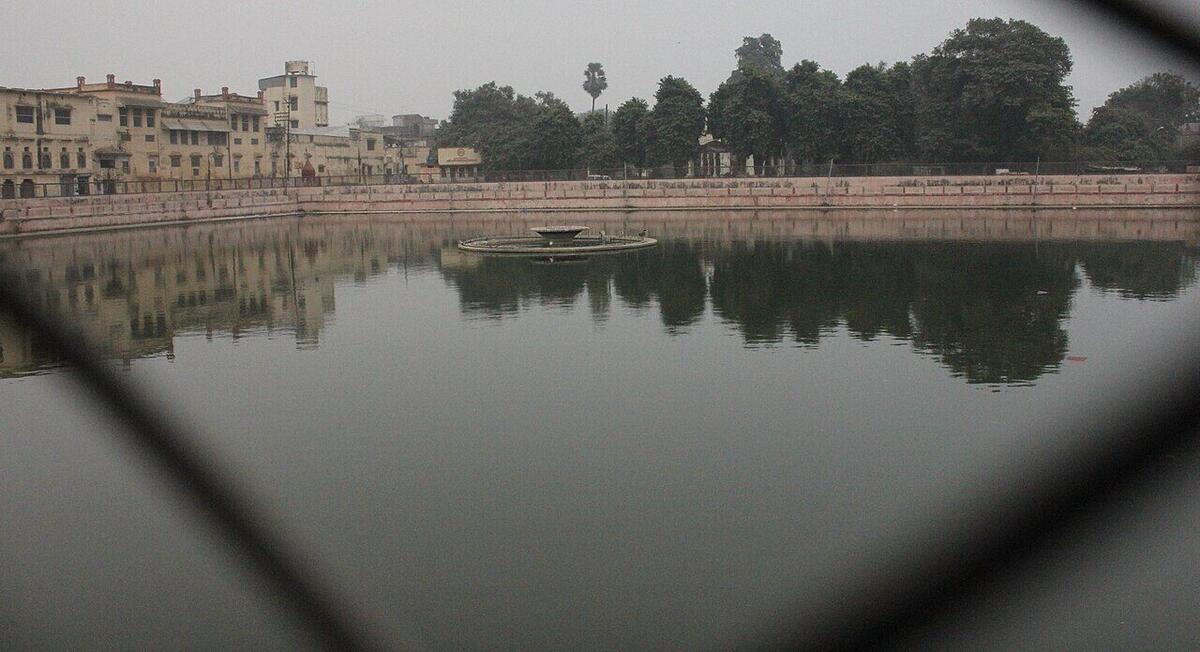
The kund itself is a large stepped tank of the old Banarasi pattern. Around and above the ruins, later centuries added their own layers of construction — including a mosque that stands over part of the older remains — so that the site as it survives is a palimpsest of the city's long and complex history. Visitors are asked to approach it with the respect due both to its ancient sanctity and to the communities who live around it today.
What the site preserves
For the student of Kashi's past, Bakaria Kund is a rare window into the city's early architectural history. The Gupta-era fragments recorded here are among the oldest structural remains known in Varanasi — a city whose living antiquity is mostly carried in memory and text rather than in standing buildings. The kund and its surroundings thus hold a quiet importance: they are physical evidence of the depth of Kashi's sacred landscape, even though no active temple stands here now and no daily worship is conducted at the site.
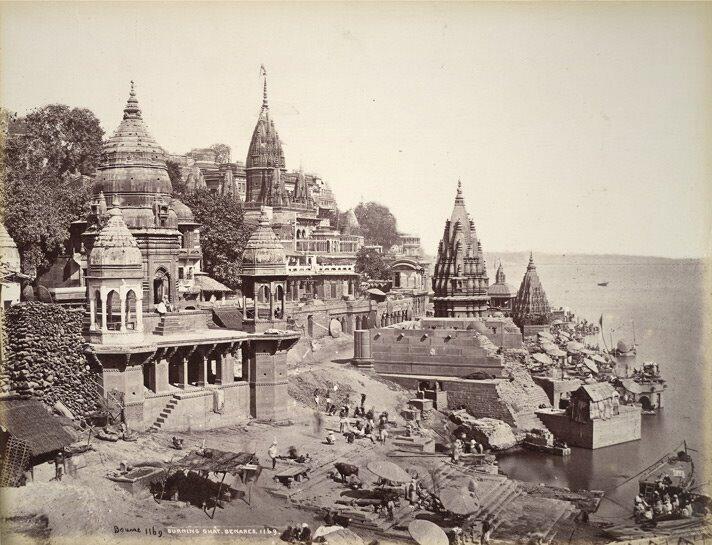
Bakaria Kund's significance today is that of memory. In the devotional understanding of Kashi, every old kund carries the sanctity of water in the Avimukta Kshetra, and this tank — with its Gupta-era temple remains — is a witness to how far back the city's sacred building tradition reaches. Those who visit do so in a spirit of remembrance: the site preserves the traces of shrines raised by devotees more than a millennium ago.
The site has no active worship, no resident priests, and no ritual observances. Its value for the yatri is contemplative — standing at the edge of the old tank, one senses the layered centuries of Kashi, in which sacred places have risen, fallen, and been built over while the city's devotional life continued around them. Many visitors pair Bakaria Kund with the living shrines of northern Kashi for a fuller sense of the city's history.
History
The archaeological record at Bakaria Kund reaches back to the Gupta period. Scholars who surveyed the site recorded ruins of temple structures of that era — carved stonework and structural fragments that are among the oldest known architectural remains in Varanasi. The kund itself is an old sacred tank of the northern city, around which these structures once stood.
In later centuries the site was built over: a mosque was raised above part of the older remains, and the surrounding lanes filled with the dense habitation of Jaitpura and Pili Kothi. The older structures survive as ruins and reused fragments within this later fabric, and the site has been noted in archaeological and heritage surveys of Varanasi as one of the city's significant early-historic locations.
No active temple functions at Bakaria Kund today. The site is best understood — and visited — as a heritage location: evidence of the antiquity of Kashi's sacred landscape rather than a living shrine.
Architecture
The kund is a large stepped tank in the old Banarasi manner, its stone revetments and ghat-steps worn by centuries. The archaeological interest of the site lies in the Gupta-era fragments recorded around it — carved stone members, pillar fragments, and structural remains of early temple building, some standing as ruins and some reused in later constructions, including the mosque that occupies part of the older ground.
Nothing at the site is arranged for darshan; there is no sanctum, no murti, and no active shrine. What the visitor sees is the raw material of history — early stonework of a quality that speaks of the city's ancient builders, embedded in the working fabric of a living neighbourhood.
Rituals & Practices
There is no active ritual worship at Bakaria Kund. The site preserves the ruins of Gupta-era temple structures, but no sanctum functions here, no priests are in residence, and no aarti or puja is conducted. Visitors come to see the old tank and the early stonework, and to reflect on the depth of Kashi's history.
Those who wish to make an offering as part of their yatra do so instead at the living shrines of northern Kashi nearby, treating Bakaria Kund as a place of remembrance — a quiet acknowledgment of the generations of builders and devotees whose work lies preserved here.
Festivals & Celebrations
| Festival | When | Crowd |
|---|---|---|
| Mahashivratri | — | High â extended night worship |
| Shravan Mondays | — | High â peaks each Monday |
| Pradosh | — | Moderate |
| Mondays | — | Moderate |
| Maha Shivaratri Trayodashi observances | — | Moderate |
Mahashivratri: The great night of Shiva, when the linga is held to be especially receptive to the prayers of devotees. Night vigil and fasting are observed with care.
Shravan Mondays: Tradition holds that the offering of Ganga-jal during Shravan Mondays is especially pleasing to Shiva and fulfils long-held prayers.
Pradosh: The Pradosh kaal is held to be among the most auspicious moments for the worship of Shiva.
Mondays: Monday is traditionally observed as the day of Shiva. Devotees keep a small vrata and visit the linga.
Maha Shivaratri Trayodashi observances: Trayodashi worship deepens the regular Shaiva rhythm of the kund and connects daily devotion to the larger devotional calendar of Kashi.
Prepare for Your Visit
Practical guidance to help you plan your pilgrimage
| Pilgrim Guidance | How to reachBakaria Kund lies in northern Varanasi in the Jaitpura area near Pili Kothi. The site is best approached by auto-rickshaw or cycle-rickshaw to the nearest motorable point, followed by a short walk through the lanes. Visitors often combine it with the shrines of northern Kashi as part of a wider day in the older mohallas of the city. Guidance for visitors
Best time to visitOctober to March is generally the most comfortable period. Early-morning weekdays are the quietest time to see the site. |
Location
Varanasi, UP
Pilgrim photos
No pilgrim photos yet.
Community corrections
No corrections yet.
Edit history
No revisions yet.
Plan Your Visit to Bakaria Kund
Get a custom itinerary and pricing for your trip.
Recommended
Packages for this destination
Pilgrim Notes
On-ground observations from fellow pilgrims
No pilgrim notes yet. Be the first to share on-ground observations!
Sign in to share a note.
Pilgrim Reviews
Be the first to share your experience at Bakaria Kund.
Sign in to write a review.
Nearby sacred places
Discover other sacred places near Bakaria Kund
Explore temples, tirthas, and pilgrimage sites in UP
Explore nearbyPart of these circuits
Walk the traditional pilgrimage routes this destination belongs to.