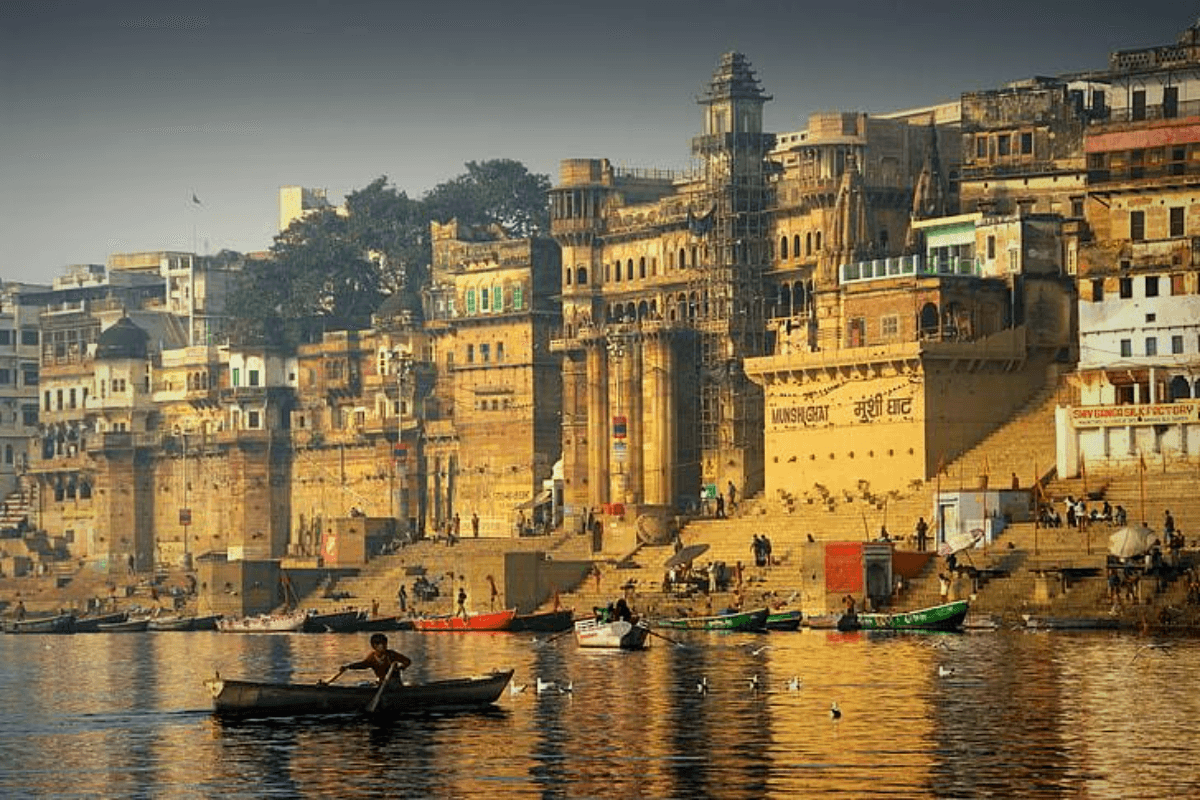
Bhadaini Ghat lies on the southern arc of the Banaras riverfront, in the stretch most pilgrims cross on their way from Assi towards the older heart of the city. In the standard numbering of the ghats — which begins at Assi in the south and runs north to Adi Keshava — Bhadaini stands fifth, immediately after Tulsi Ghat, which is named for Goswami Tulsidas, who is held to have lived there while composing the Ramcharitmanas, and immediately before Janaki Ghat. The ghat takes its name from the neighbourhood behind it rather than from a patron or a temple.
Heritage documentation records that Bhadaini was historically part of an older ghat called Lolarka Ghat, which is eulogised in Puranic literature, and that the area was known in earlier literature as Bhadra Vana, the forest of the Bhadra tree, marked by two images — Bhadreshvara Shiva and Bhadra Vinayaka (Ganesha) — which stand in shrines nearby. The southern ghat-line was divided into its present separate ghats only in the modern period, and Bhadaini emerged from that division.
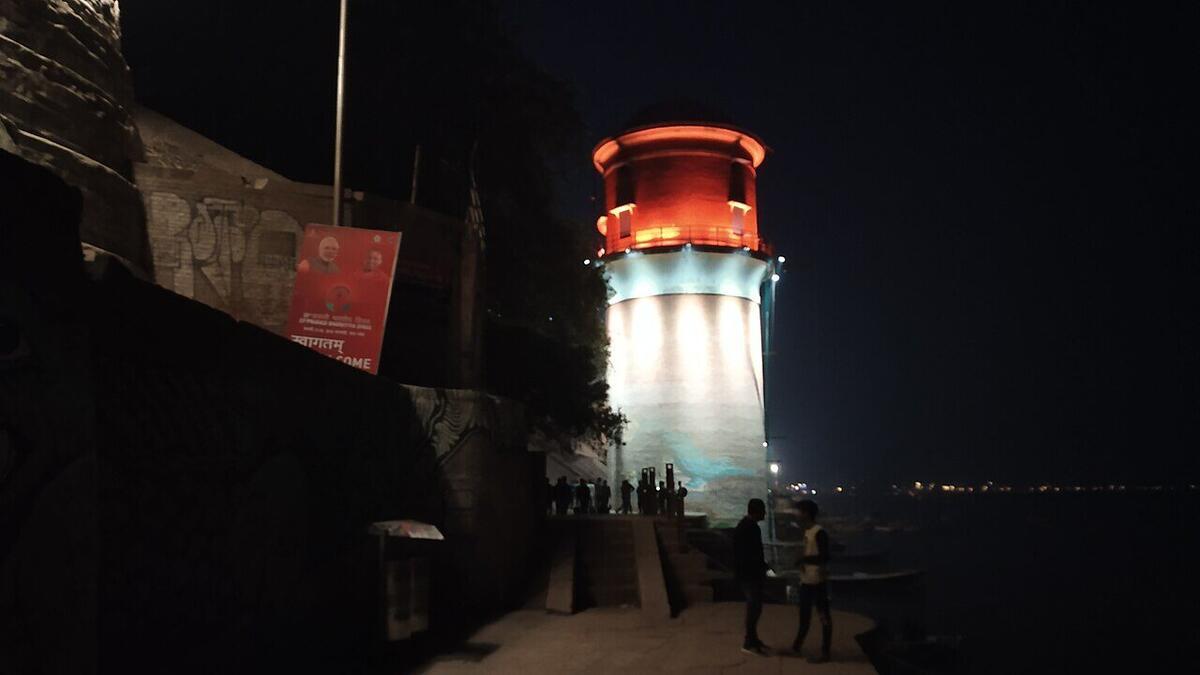
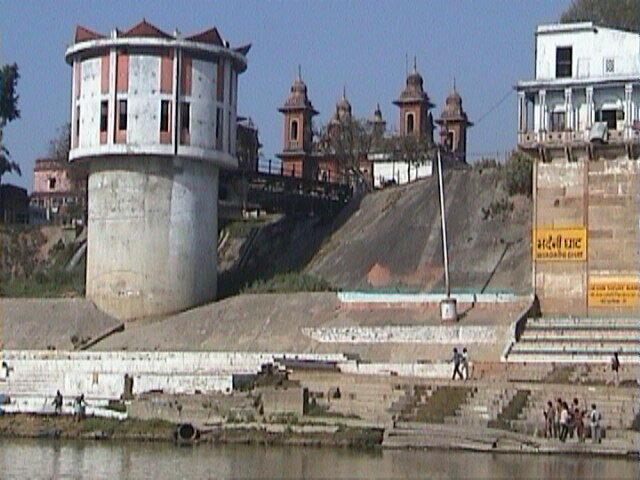
It is honest, and necessary, to say what this ghat is not. The Varanasi heritage dossier records of Bhadaini that “at this ghat no religious activities is performed”, and the city’s civic portal describes it in the same terms — not known for spiritual activity, not steeped in legend, not adorned with ornate shrines. What the steps carry instead is a piece of the city’s working life: in 1907 the Municipal Corporation opened a water supply pump here, which is why the ghat is also called Jalakala (Jal Kal) Ghat, and the pump remains in working order. For a long time only the brick slope of the water works ran down to the river and the rest of the bank was left as natural ground; the ghat was made pucca by the Municipal Corporation in 1997.
Where the sanctity of Bhadaini actually lies
The quarter above the steps carries what the steps do not. Jain tradition counts Kashi among the birth-places of four Tirthankaras, and Bhadaini is honoured as the neighbourhood in which Suparshvanatha, the seventh among them, was born; the Varanasi civic portal describes the Jain shrines here as Shri Bhadaini Tirth. A short walk inland lies Lolark Kund, the Surya tirtha of southern Kashi, from whose older ghat this one was separated. Two ghats downstream is the ghat that carries the name of Mata Anandamayi, who is recorded as having bought that land — then called Imiliya Ghat — in 1944 and had it made pucca. Within a few hundred paces several devotional worlds sit beside one another; Bhadaini itself is the plain, working ground between them.
In devotional understanding the whole crescent from Asi in the south to Adi Keshava in the north is approached as a single tirtha — the stretch where the Ganga turns north, flowing back towards her source, which devotees hold to be the reason this bank was chosen for the sacred city. Tradition praises Ganga-snan at Kashi as a purifying act, and the months of Kartik and Magha as the seasons when it is held to carry particular merit.
Bhadaini, however, is not a ritual ghat, and this page will not pretend otherwise. Heritage and civic documentation both record that no religious activity is performed here, and there is no aarti, no panda establishment and no ritual arrangement on these steps. Pilgrims who wish to take sankalp, offer arghya to the sun or perform tarpan for ancestors go a few minutes upstream to Tulsi Ghat or Assi Ghat, where those observances are established. Bhadaini is also not counted among the five ghats of the Panchatirtha circuit — Asi, Dashashwamedh, Manikarnika, Panchganga and Adi Keshava — and makes no claim to be.
The sanctity of the quarter above
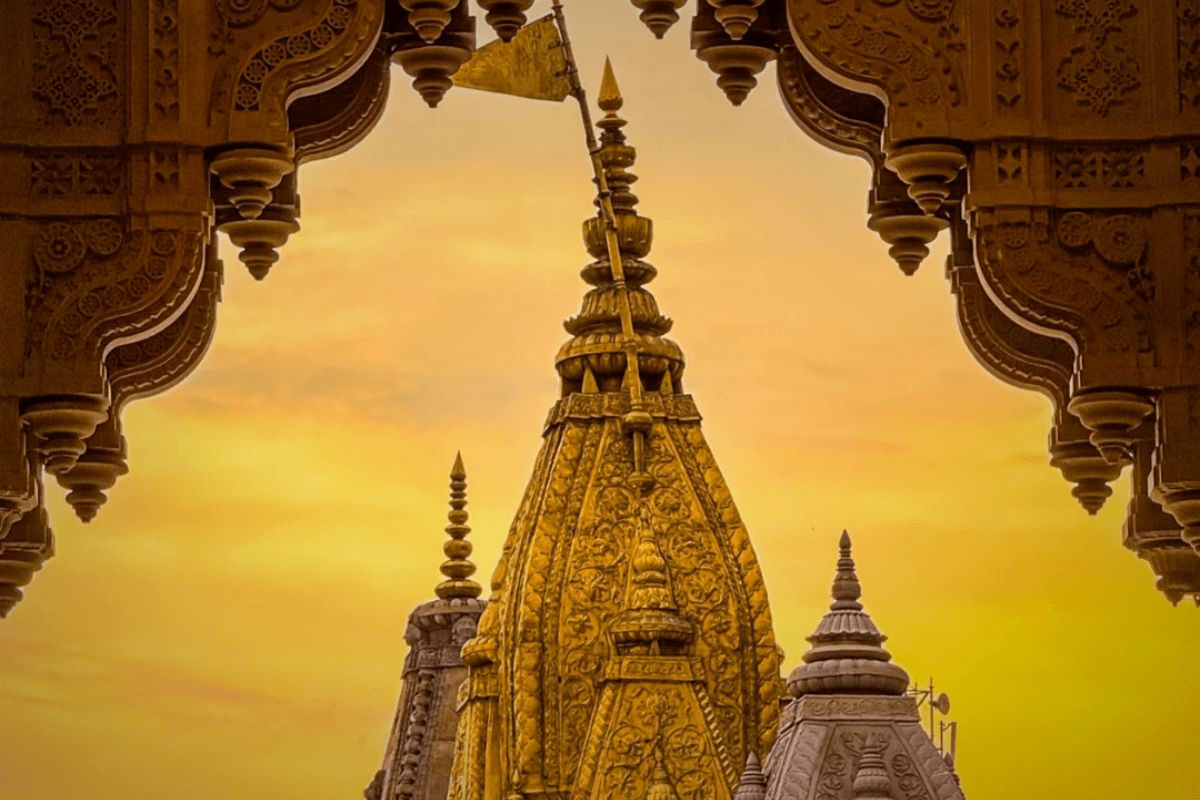
What is genuinely sacred about Bhadaini stands behind the steps rather than on them. Jain sources count Kashi among the great birth-places of the Tirthankaras — Parshvanatha, Suparshvanatha, Chandraprabha and Shreyansanatha are all held to have been born in this city or its immediate region. Suparshvanatha, the seventh Tirthankara, is described as having been born at Varanasi to King Pratishtha and Queen Prithvi, and Jain shrines in Bhadaini commemorate that birth. The Varanasi civic portal describes the site as Shri Bhadaini Tirth, records a pair of Digambara and Svetambara temples built in the mid-nineteenth century, and notes a local tradition that four of the five kalyanakas of Suparshvanatha — conception, birth, renunciation and enlightenment — are associated with this ground.
Alongside that, the older Shaiva and Ganapatya memory of the quarter survives in the names themselves: Bhadreshvara Shiva and Bhadra Vinayaka, the two images by which the heritage record says the old Bhadra Vana was known, are worshipped in shrines near the ghat. Two traditions honour this neighbourhood for different reasons, and the plain steps below serve both without belonging to either.
History
Bhadaini's recorded history begins as part of something older. Heritage documentation of the riverfront states that this ghat was historically part of Lolarka Ghat, an old ghat eulogised in Puranic literature, and that the surrounding area was known in earlier literature as Bhadra Vana — the forest of the Bhadra tree — characterised by the images of Bhadreshvara Shiva and Bhadra Vinayaka, which remain in nearby shrines. The long southern ghat that once ran from Asi was divided into separate ghats in the modern period, and Bhadaini took its present name from the neighbourhood it fronts.
No builder, patron family or dedication date for Bhadaini Ghat is named in the heritage documentation available to us, and we record that gap rather than fill it. What the record does fix is modern and municipal. In 1907 the Municipal Corporation of Varanasi opened a water supply pump at this ghat, after which it came to be called Jalakala Ghat; the pump is still in working condition, with a newer one nearby. The slope of the water works towards the Ganga was built in brick while the rest of the ghat area was left as natural ground, and the ghat was made pucca by the Municipal Corporation only in 1997. The heritage record notes that the properties along the ghat are privately held while the ghat area itself belongs to the Municipal Corporation.
The quarter around Bhadaini gathered a good deal of devotional life in the modern period even as the ghat itself stayed plain. Tulsi Ghat immediately upstream carries the memory of Goswami Tulsidas. Jain temples in the Bhadaini lanes, recorded as a Digambara and Svetambara pair of the mid-nineteenth century, commemorate the birth of Suparshvanatha. Two ghats downstream, Anandamayi Ma is recorded as having purchased the land of the then Imiliya Ghat in 1944 and had it made pucca, after which it took her name; the Sri Sri Ma Anandamayi Sangh established its Varanasi headquarters from the 1950s.
Architecture
Bhadaini has no ghat architecture in the display sense — no ornamental gateway, no patron's haveli crowning the steps, no carved pavilion. The heritage record is specific about why: for most of its documented life the only built descent here was the brick slope of the water works running down to the Ganga, and the remainder of the bank was left as natural ground. The broad masonry steps a visitor sees today date from 1997, when the Municipal Corporation made the ghat pucca.
The one structure that gives Bhadaini its second name is the water pump house opened in 1907, still working, with a newer pump beside it. It is a civic building rather than a sacred one, and it is the reason the riverfront here has the shape it has: the ghat was made for the city's water before it was made for anyone's feet.
That plainness is not poverty, and it is not failure. Ghat construction in Banaras is functional work: its purpose is to let a person walk safely from a city lane down to a moving river, and to keep doing so after every flood. The design is governed entirely by the river's year — through the monsoon the lower flights go under and the usable ghat retreats upward step by step; when the water falls, silt is cleared and the same stones return to use. Bhadaini does that work without decoration, and the gradient is gentler here than at the steeper central ghats.
Rituals & Practices
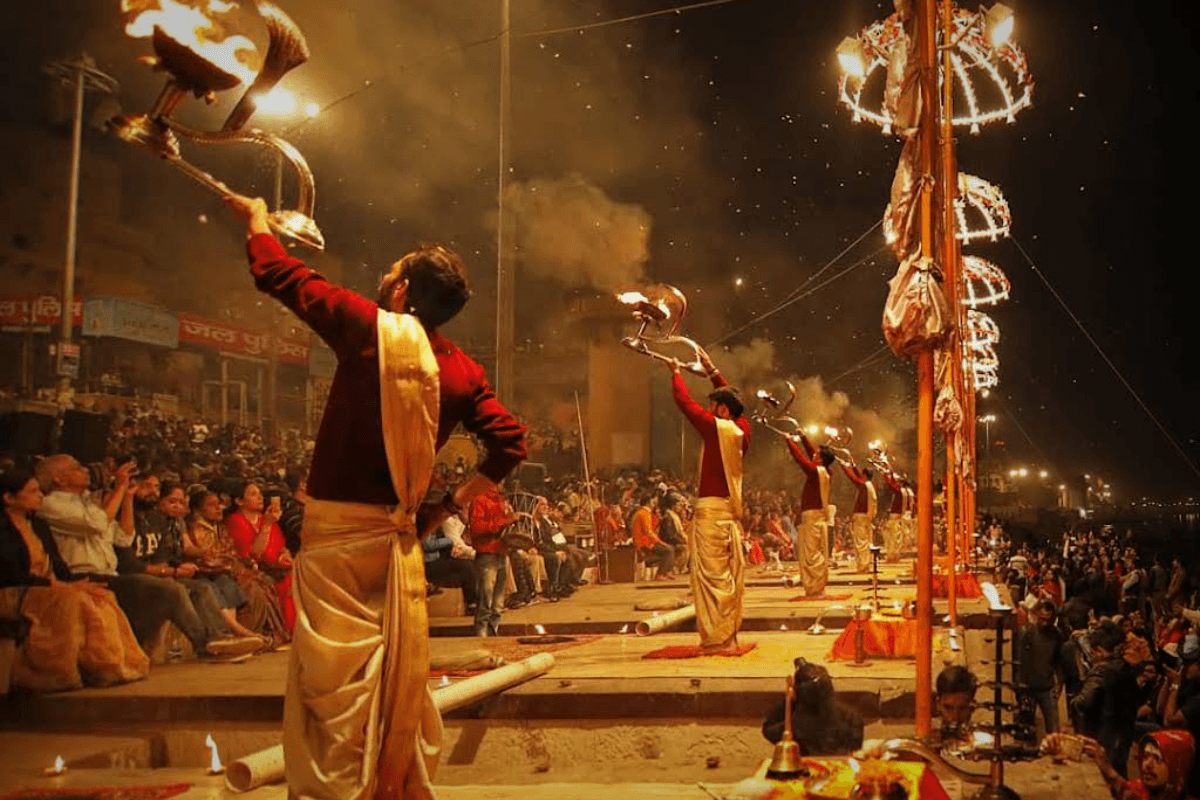
It should be said directly, because pilgrims plan around it: no organised ritual is conducted at Bhadaini Ghat. The Varanasi heritage dossier records of this ghat that no religious activities are performed here, and the city's civic portal describes it in the same way — a ghat not known for spiritual activity and not adorned with shrines. There is no Ganga aarti at Bhadaini, no pandas sitting through the day, and no ritual material or purohit to be found on the steps.
Pilgrims who have come to southern Kashi for the observances of the river should take them a few minutes upstream. Snan, sankalp in the water, arghya to the rising sun and tarpan for ancestors are established at Tulsi Ghat and Assi Ghat, and the evening Ganga aarti of the city belongs to Assi and to Dashashwamedh. Formal rites — shraddha, pind-daan, or any puja needing a purohit and full ritual material — should be arranged in advance at those ghats or through a family's own acharya.
What draws devotees to Bhadaini itself is in the lanes above rather than at the water: darshan at the Jain shrines of Bhadaini Tirth, and the nearby shrines of Bhadreshvara Shiva and Bhadra Vinayaka. Darshan hours at all of these are set locally and should be confirmed before a visit.
Festivals & Celebrations
| Festival | When | Crowd |
|---|---|---|
| Suparshvanatha Janma Kalyanak | — | Moderate; concentrated at the Jain shrines in the quarter, not on the ghat steps |
| Lolark Shashthi | — | Very high in the surrounding lanes |
| Dev Deepawali | — | High along the whole riverfront; noticeably calmer on this southern stretch |
Suparshvanatha Janma Kalyanak: In Jain tradition a Tirthankara's birth is one of the five kalyanakas, the auspicious events of a life, and the ground on which it occurred is honoured accordingly. Local tradition at Bhadaini Tirth associates four of Suparshvanatha's five kalyanakas with this site. It is the fact that most distinguishes Bhadaini from its neighbouring ghats.
Lolark Shashthi: Lolark Shashthi is among the most specific vratas of North Indian pilgrimage â a family's prayer for children, kept unbroken across generations. Pilgrims planning to be in southern Kashi on this day should expect the whole quarter to be given over to it.
Dev Deepawali: Tradition holds that on this night the devas descend to bathe in the Ganga at Kashi, and the lamps on the ghats are lit in their welcome.
Prepare for Your Visit
Practical guidance to help you plan your pilgrimage
| Pilgrim Guidance | Where Bhadaini sits on the ghat lineCounting from the south, the sequence runs Assi Ghat, Ganga Mahal (I), Riwan Ghat, Tulsi Ghat, then Bhadaini Ghat, then Janaki Ghat, Mata Anandamai Ghat, Vachchharaja (Bachraj) Ghat and Jain Ghat. Knowing this order is genuinely useful: Bhadaini can be reached on foot along the riverfront from Assi in a few minutes, and a southern morning can take in Assi, Tulsi Ghat, Bhadaini, Lolark Kund a little inland, and the Jain ghats downstream without any vehicle at all. How to reach
Preparation and best time to visit
|
Location
Varanasi, UP
Pilgrim photos
No pilgrim photos yet.
Community corrections
No corrections yet.
Edit history
No revisions yet.
Plan Your Visit to Bhadaini Ghat
Get a custom itinerary and pricing for your trip.
Recommended
Packages for this destination
Pilgrim Notes
On-ground observations from fellow pilgrims
No pilgrim notes yet. Be the first to share on-ground observations!
Sign in to share a note.
Pilgrim Reviews
Be the first to share your experience at Bhadaini Ghat.
Sign in to write a review.
Nearby sacred places
Discover other sacred places near Bhadaini Ghat
Explore temples, tirthas, and pilgrimage sites in UP
Explore nearbyPart of these circuits
Walk the traditional pilgrimage routes this destination belongs to.