Chandreshwar Mahadev is one of the cherished Shiva lingas of Kashi, worshipped here as Chandreshwar — the Lord of Chandra, the Moon. In the iconographic understanding of the Shaiva tradition, Shiva wears the crescent moon upon his matted locks, and at this shrine that intimate bond between Mahadev and Chandra is remembered, sung, and honoured in daily worship.
The shrine is small but devotionally rich. Devotees arrive carrying bilva patra, Ganga-jal, white flowers, and chandan, and offer them upon the linga with the names of Shiva and the soft murmur of Mahamrityunjaya. Many come on Pradosh evenings and on Somavar — Monday, the day held sacred to Chandra — when the connection between the Lord and the Moon is felt most strongly. Others come during Shravan, when all of Kashi turns toward her Shaiva tirthas.
Though modest in scale, Chandreshwar belongs to the wider sacred geography of Kashi, where countless Shiva lingas are honoured each by their own katha and devotional character. For pilgrims walking the lanes of the old city, a darshan here is a quiet but meaningful pause within the larger Shaiva yatra of Banaras.
Katha and local belief
Tradition holds that Chandra, the Moon, once came to this very spot to worship Mahadev. The Puranas tell that Chandra had been cursed by Daksha Prajapati — for neglecting his many wives, the daughters of Daksha, and favouring only Rohini — and the curse caused him to wane away night by night until his light almost failed. In his distress, Chandra is said to have come to Kashi, the city Shiva never abandons, and there worshipped the Lord with deep tapas and devotion.
Devotees hold that Shiva, moved by Chandra's pure surrender, granted him relief: the Moon would not be destroyed by the curse but would wax and wane in cycles, growing full again every fortnight. From that grace, tradition says, Shiva took the crescent moon onto his own forehead, holding Chandra forever close. The linga worshipped at this spot is venerated as Chandreshwar — the Lord by whose grace the Moon was saved — and it is here that devotees come when seeking the cool, restoring grace that the moon-marked Mahadev is believed to grant.
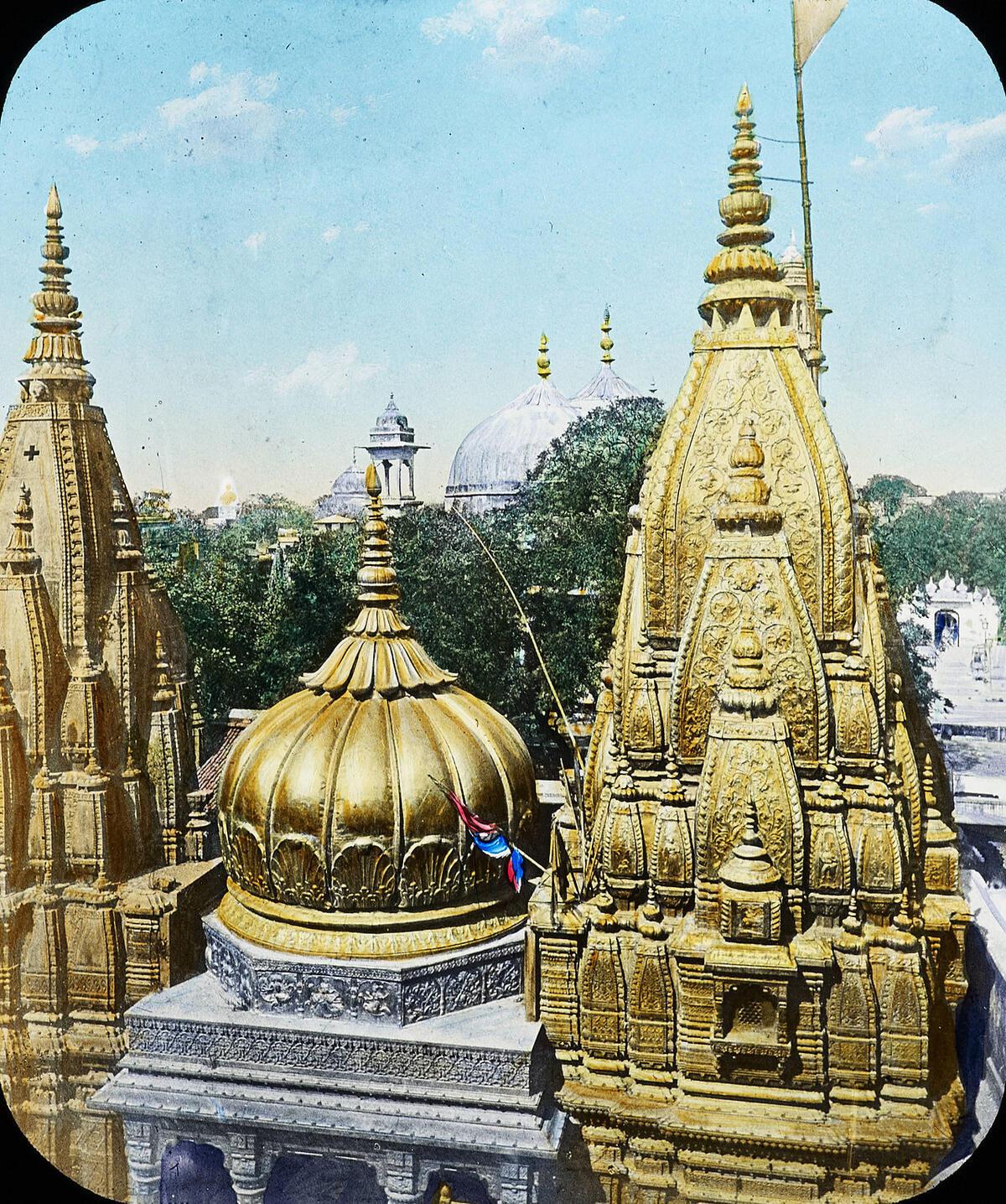
Chandreshwar belongs to the broad Shaiva worship of Kashi, but carries a particular devotional flavour drawn from his association with the Moon. In Hindu sacred understanding, Chandra is the lord of the mind (chandrama manaso jatah), and afflictions of Chandra are read in tradition as afflictions of the inner faculty — restlessness, sleeplessness, troubled emotion, scattered attention. Devotees hold that worship at Chandreshwar carries the cooling, calming grace of the moon-marked Mahadev, easing these inner heats and bringing the mind back to stillness.
Pradosh, the twilight of the thirteenth tithi observed twice each lunar month, is felt as the hour most aligned with Chandreshwar's devotional character. Somavar, Monday, also belongs to Chandra and is observed here with quiet devotion. On these occasions devotees offer Rudrabhishek, Mahamrityunjaya japa, and the simpler offerings of water and bilva that any pilgrim can carry. Tradition holds that the Lord receives them all with the same grace.
Like every Shiva linga of Kashi, Chandreshwar stands within the larger sacred field of the Avimukta Kshetra — the city Shiva is said never to leave. The shrine's particular katha gives it its identity, but its grace flows from the same source that gives Kashi her name: the unceasing nearness of Mahadev to those who seek him here.
History
The veneration of Chandreshwar at this site reaches back into the wider Shaiva worship of Kashi, the city that Hindu tradition holds to have been a centre of Shiva-bhakti from time immemorial. Among the many lingas of old Kashi, each carrying its own katha and devotional flavour, Chandreshwar takes his identity from the Chandra-Shiva tradition described in the Puranas.
Through the centuries Kashi saw cycles of building, loss, and renewal, yet worship at her lingas was never abandoned. The present shrine, like many of the smaller Shiva temples of Banaras, owes its current structure to the Maratha-period rebuilding of Kashi in the eighteenth century, when patrons such as Maharani Ahilyabai Holkar of Indore and other Hindu rulers restored the city's sacred fabric and gave shelter to its many older lingas.
What survives today is the continuity of devotion. The temple is modest in scale, and its history is not one of imperial grandeur but of the steady, generation-by-generation care of Banarasi families and pujaris who have kept the linga anointed and the lamps lit.
Architecture
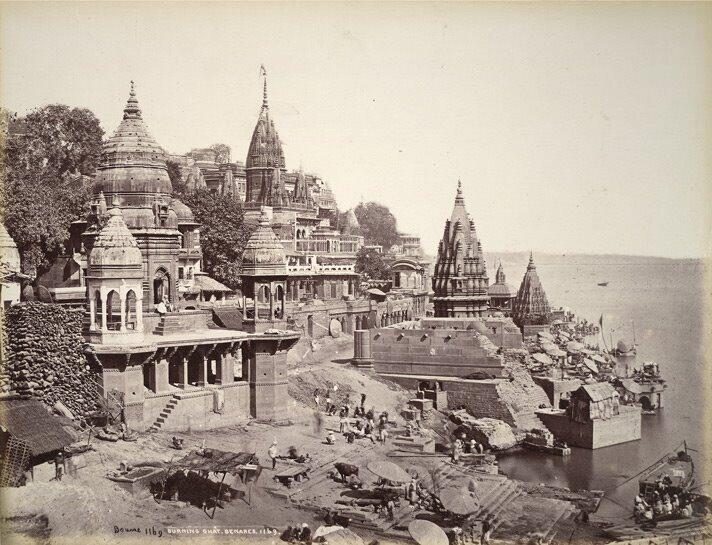
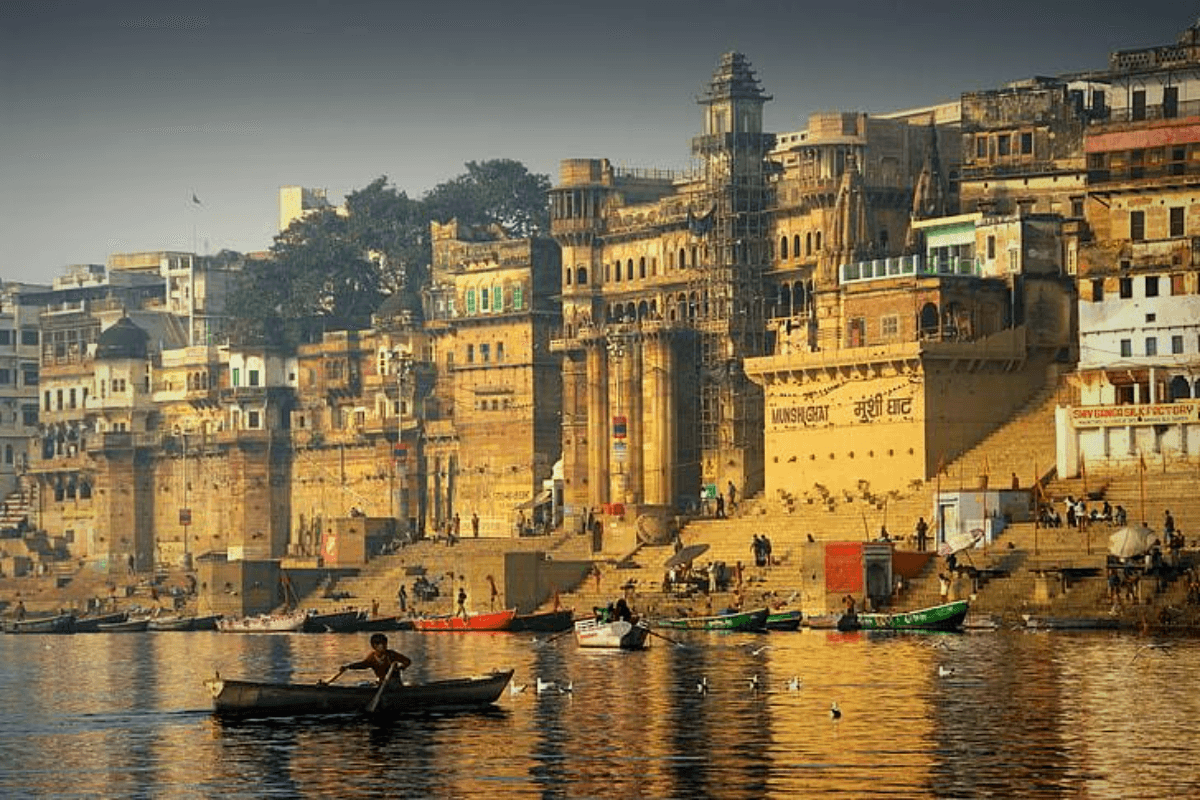
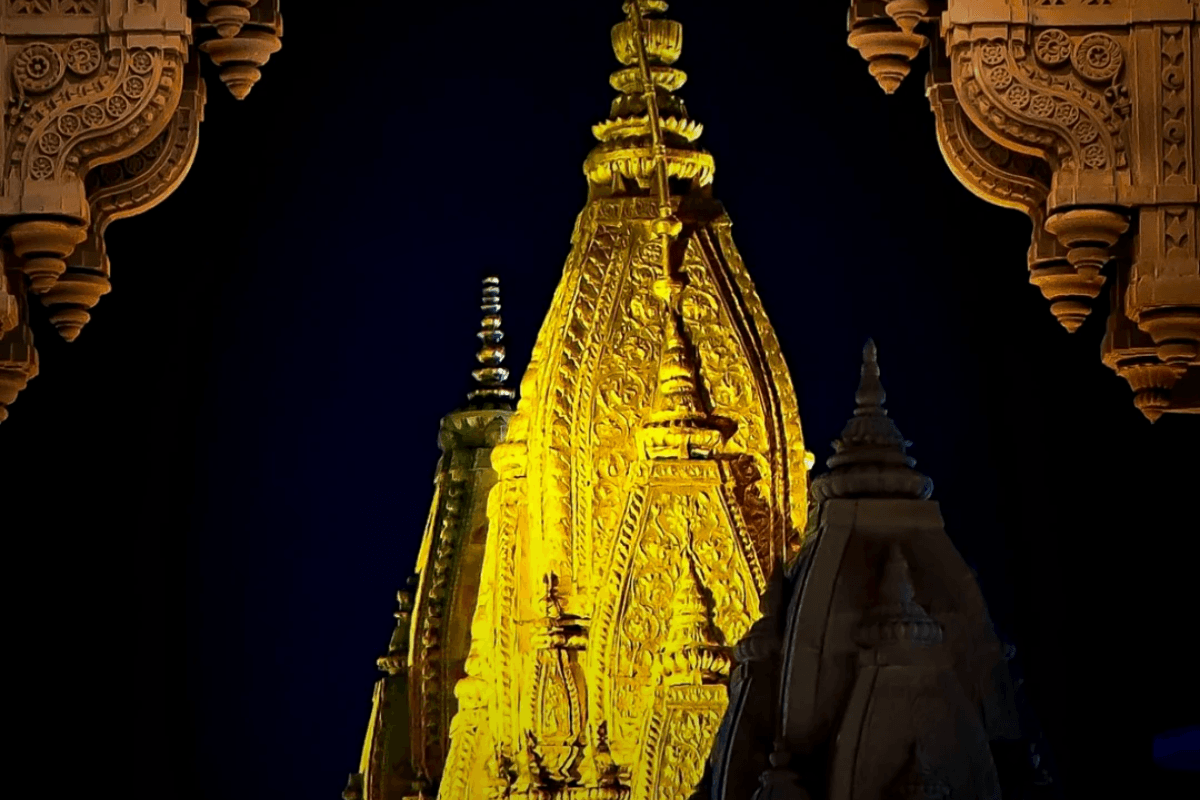
Chandreshwar Mahadev is a compact shrine in the Banarasi temple style — a single small sanctum holding the linga, a modest mandapa, and a courtyard. There is no monumental shikhara here and no grand approach: the shrine sits within the woven lane-life of Kashi and is entered with the same unceremonious closeness that marks much of the city's older devotional architecture.
The linga is the heart of the place. Anointed continuously with Ganga-jal, abhishek-milk, chandan, and bilva patra, it has the soft, polished sheen that long worship leaves on stone. A small Nandi sits in attention before the sanctum, and the walls and niches carry the simple iconography of the Shaiva tradition.
The architectural power of Chandreshwar lies not in scale but in nearness. The devotee stands close to the linga, places the offering with her own hand, and folds her palms within arm's length of the Lord — a kind of darshan that the smaller shrines of Kashi preserve in a way the larger temples cannot.
Rituals & Practices
Daily worship at Chandreshwar follows the standard Shaiva pattern, with a particular emphasis on the Pradosh and Somavar observances that align with the shrine's Chandra association. Exact timings may shift, so pilgrims should verify current schedules with the temple authorities, but the broad devotional rhythm is familiar to anyone who has worshipped at a Shiva linga of Kashi.
The morning brings abhishek of the linga with Ganga-jal, followed by the offering of bilva patra, chandan, white flowers, and the lighting of lamps. Through the day, devotees arrive with their own small offerings: a lota of water, a few bilva leaves, and the soft, unhurried recitation of Om Namah Shivaya or the Mahamrityunjaya mantra.
Offerings particularly beloved at Chandreshwar:
- Bilva patra
- Ganga-jal
- White flowers
- Chandan
Devotees often request Rudrabhishek or Mahamrityunjaya japa through the temple pujaris, especially on Pradosh evenings, Mondays, and through the month of Shravan. The Pradosh kala — the twilight of the thirteenth tithi observed twice each lunar month — is felt here with special devotional weight, as is Somavar, Chandra's day. Pilgrims wishing to participate in special pujas should verify timings with temple authorities in advance.
Festivals & Celebrations
| Festival | When | Crowd |
|---|---|---|
| Mahashivratri | — | Very high |
| Shravan | — | High â peaks on Mondays |
| Pradosh | — | Moderate to high |
| Somavar | — | Moderate to high |
| Sharad Purnima | — | Moderate |
Mahashivratri: The most sacred night of Shiva, when tradition holds that the Lord's grace is most readily received by those who keep the night vigil with devotion.
Shravan: Shravan is the month most beloved of Mahadev. Tradition holds that worship and abhishek offered during Shravan carry special grace.
Pradosh: Pradosh is the hour devotees hold as Shiva's most accessible, and at a Chandra-associated linga it is felt with special weight.
Somavar: Tradition links Monday to the Moon, and at this shrine the Chandra-Shiva bond is honoured each week.
Sharad Purnima: Devotees hold that the cooling grace of the autumn full moon meets the grace of Chandreshwar at this observance.
Prepare for Your Visit
Practical guidance to help you plan your pilgrimage
| Pilgrim Guidance | How to reachChandreshwar Mahadev lies within the lane network of old Kashi. The nearest motor approach is by auto-rickshaw or cycle-rickshaw to the closest gali entrance, from where the shrine is reached on foot through narrow lanes. Asking local residents for the linga by name is often the simplest way; the smaller shrines of Kashi are widely known to those who live around them. Preparation for Pilgrims
Best Time to VisitPradosh evenings and Mondays (Somavar) are felt with particular devotional intensity at Chandreshwar. The month of Shravan and Mahashivratri bring the broader Shaiva fervour of Kashi to the shrine as well. Sharad Purnima, the full moon of Ashwin, carries its own quiet weight at a Chandra-associated linga. For general travel, October to March offers the most comfortable weather for moving through the lanes of the old city. |
Location
Varanasi, UP
Pilgrim photos
No pilgrim photos yet.
Community corrections
No corrections yet.
Edit history
No revisions yet.
Plan Your Visit to Chandreshwar Mahadev Temple
Get a custom itinerary and pricing for your trip.
Recommended
Packages for this destination
Pilgrim Notes
On-ground observations from fellow pilgrims
No pilgrim notes yet. Be the first to share on-ground observations!
Sign in to share a note.
Pilgrim Reviews
Be the first to share your experience at Chandreshwar Mahadev Temple.
Sign in to write a review.
Nearby sacred places
Discover other sacred places near Chandreshwar Mahadev Temple
Explore temples, tirthas, and pilgrimage sites in UP
Explore nearbyPart of these circuits
Walk the traditional pilgrimage routes this destination belongs to.