Chausathi Yogini Temple — also written Chaunsath Yogini Mandir — stands above the Chausatti Ghat on the Ganga, on the stretch just south of Dashashwamedh, beside Digpatiya Ghat. The ghat itself carries the Devi's name, for the shrine of the sixty-four (chausath) Yoginis has stood above it for centuries. To the pilgrim it is, first and most simply, a shrine of the Mother — a place to bow before Devi and ask her grace.
The Yoginis are honoured in the Shakta tradition as attendant forms of the Great Goddess: each with her own name, her own form, and her own place in the circle of power that surrounds the Mother. In the daily life of the temple, worship gathers around the Devi enshrined here — venerated as Kali and as Durga — while the Yoginis are held in reverence as her companions. The shrine belongs to the old devotional fabric of the waterfront, and Banarasi families have kept its lamps burning across generations.
For most devotees the visit is unhurried and simple: darshan of the Devi, a red flower and a little sindoor offered through the priest, a diya lit, and a quiet prayer before the Mother who, tradition holds, watches over the city through her sixty-four forms. Many pilgrims reach the shrine while walking the ghats, and the climb from the river into the lane above is itself part of the approach.
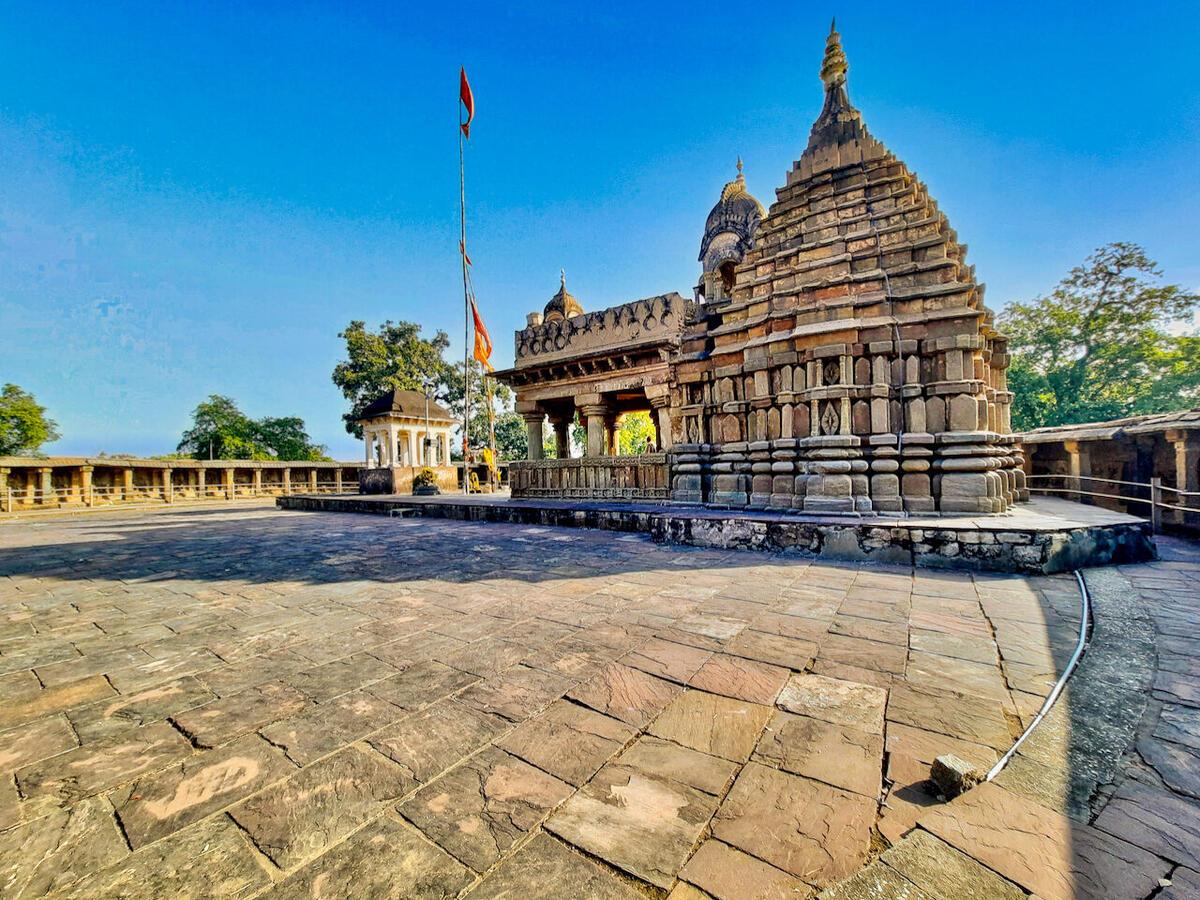
In the Shakta tradition the one Devi is worshipped in countless forms, and the sixty-four Yoginis are among the most cherished of these — the attendant shaktis who gather around the Mother as her living circle of power. To stand before them is to stand before the Devi herself, approached not as a distant power but as the Mother near at hand, watchful over the city and over those who come to her door.
The Shakta tradition holds Kashi to be a city of the Goddess as much as of Shiva. Vishwanath and Vishalakshi, Annapurna who feeds the city, Durga in her temple to the south, and the Yoginis above their ghat are all felt as one presence in many forms. A devotee who bows before the Yoginis bows before the Mother in the fullness of her shaktis, and many hold that a Kashi yatra is the richer for including the Devi in this form.
Katha and local belief
Tradition holds that the Yoginis arose from the Devi in her great battles, manifested from the Mother as the shaktis through whom she overcame the demons — each form carrying a portion of her power. The Devi Bhagavata and the Devi-mahatmya recall how the Goddess, faced with overwhelming adversaries, brought forth her attendant shaktis from her own being; the sixty-four Yoginis are remembered within this larger memory of the Mother's victory.
Devotees hold that the Yoginis, being many forms of the one Devi, leave no sincere prayer unheard. Women come to the Mother here for protection and for the well-being of their families; those carrying difficulty come to lay it before her. Navratri is her great season, and Ashtami and Navami her especial days, when the temple keeps an extended round of worship and the recitation of the Durga Saptashati fills the shrine.
History
The veneration of the Yoginis at Kashi is ancient, and the tradition is recalled within the Kashi Khanda of the Skanda Purana, which places the Devi's many forms firmly within the sacred geography of the city. The Yogini shrines of India — at Hirapur in Odisha, Bhedaghat near Jabalpur, and elsewhere — belong largely to the eighth to tenth centuries, when goddess worship flourished across the land; the Kashi tradition stands within this same long current of Shakta devotion.
Like most temples of the old city, the present shrine reflects the rebuilding of Kashi in the eighteenth century under Maratha patronage, after earlier structures were lost. Worship at the site, however, runs far deeper than any surviving stone. Set into the dense lanes above the ghat, the shrine does not take the open-courtyard form of the classical Yogini temples, yet it preserves the same devotional heart, with the sixty-four forms gathered around the Mother within its walls.
Through the generations the temple has been cared for by priestly families of the Devi tradition in Kashi, and supported by Banarasi households and pilgrims who see in the Yoginis the Mother who holds the city. The daily worship continues in its familiar rhythm, and the shrine remains a living part of the Shakta devotion of the ghats.
Architecture
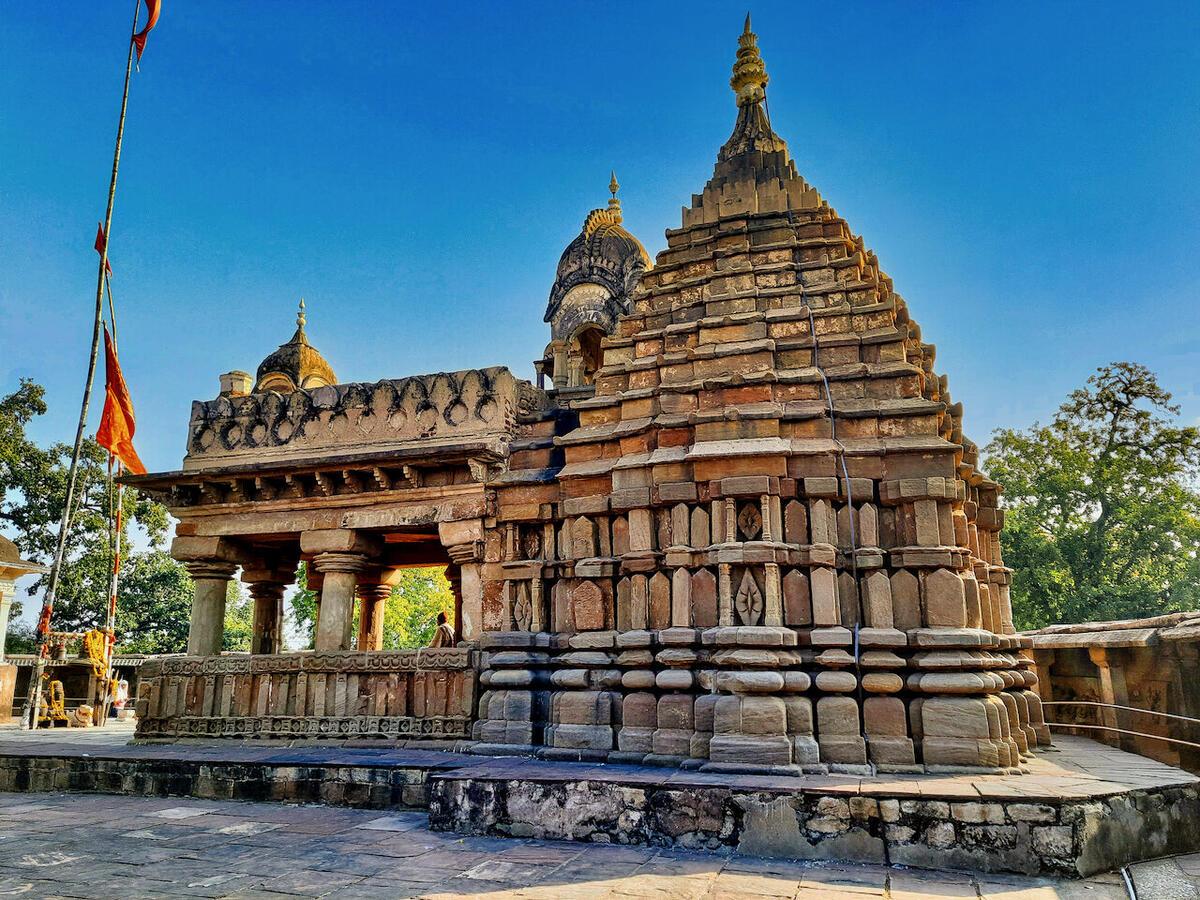
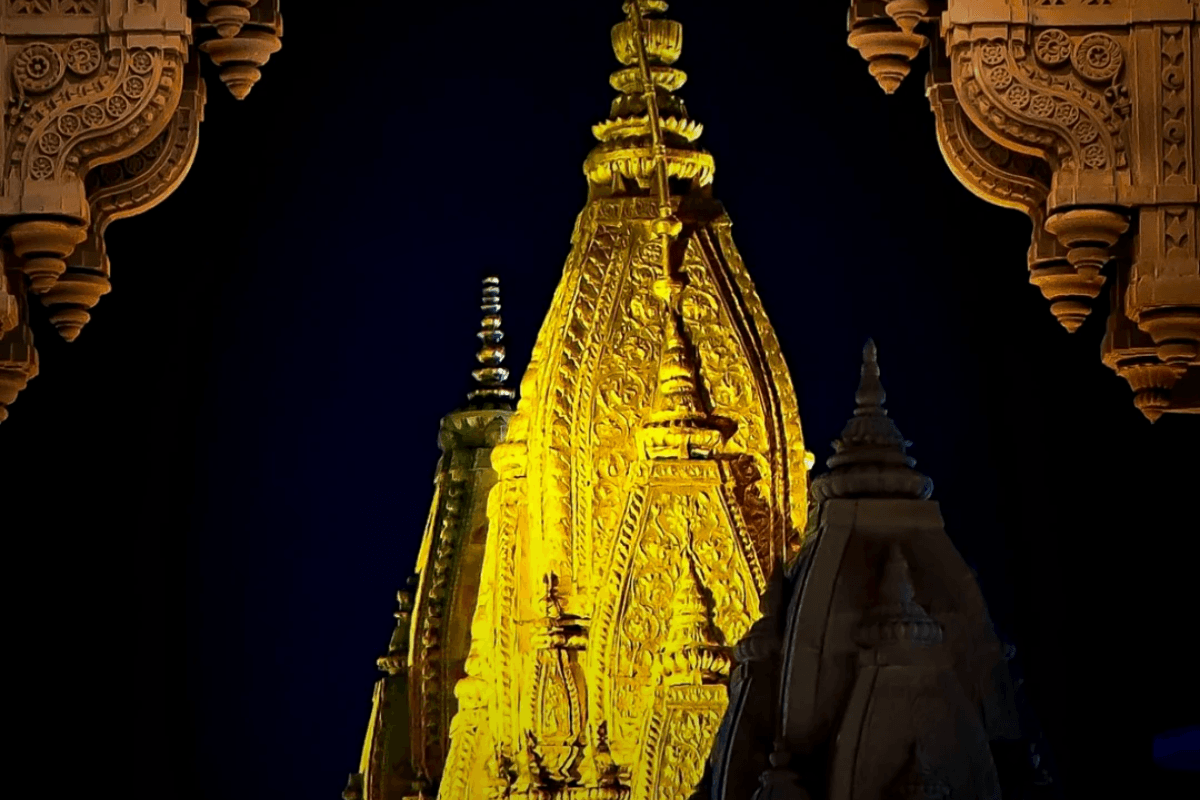
The Chausathi Yogini Temple is a compact shrine in the Banarasi style of the Maratha period — a single sanctum beneath a low shikhara, set into the lanes above Chausatti Ghat rather than rising from an open plaza. It is approached, as so much of old Kashi is, through narrow ghat-side lanes, and its presence is known more by the warmth of worship within than by any grandeur of scale.
Within, the central murti is the Devi in her principal form, and the sixty-four Yoginis are arranged around her in their ordained places. Each holds her own small image with her distinguishing attributes — her vahana and her emblem — rendered in stone, following the traditional sequence of the Yogini circle. The arrangement gathers the many forms of the Mother into one quiet enclosure.
The mood of the sanctum is inward and intimate, lit by lamps and the red of sindoor and flowers, unlike the open-sky Yogini mandiras of Odisha and Madhya Pradesh. The smallness of the space draws the devotee close, and the force of the shrine comes not from size but from nearness and the long continuity of worship.
Rituals & Practices
The daily worship at Chausathi Yogini follows the rhythm of a Shakta shrine. The Devi is awakened with the morning aarti, bathed and dressed and adorned with fresh flowers; aartis follow through the day in their customary order, with the evening aarti especially loved. The priests perform the worship; devotees offer through them and receive the Mother's prasad.
Offerings usually brought to the Devi here:
- Red flowers — hibiscus is especially traditional
- Sindoor and a small red or yellow chunari
- Sweets, especially laddoo
- A diya lit before the central shrine
Many devotees recite the Durga Chalisa or the Durga Saptashati before the Mother, and a quiet parikrama of the sanctum is the common form of devotion. The temple is most alive during Navratri, twice each year, and on the Ashtami and Navami tithis of each month, days held sacred to the Devi. On these the shrine keeps an extended round of puja.
Specific timings may vary; pilgrims are encouraged to verify with the temple before planning a visit.
Festivals & Celebrations
| Festival | When | Crowd |
|---|---|---|
| Sharad Navratri | — | Very high |
| Chaitra Navratri | — | Very high |
| Ashtami and Navami Tithis | — | Moderate |
| Diwali | — | High |
Sharad Navratri: Navratri is held to be the most powerful season of Devi worship across the land. At Chausathi Yogini the Mother is honoured in the fullness of her sixty-four shaktis, and devotees engaged in Devi sadhana hold the nine nights especially dear.
Chaitra Navratri: Tradition holds the Devi to be most accessible during Navratri, when the Mother is worshipped most actively. The spring observance carries the renewal of the year into the worship of the Goddess.
Ashtami and Navami Tithis: Ashtami and Navami are dear to the Devi tradition, and at this shrine they carry the additional grace of the Yogini circle. They form the monthly rhythm of devotion at the temple.
Diwali: Celebrates the Mother's auspicious, benevolent aspect and the triumph of light over darkness, observed across the Shakta shrines of the city.
Prepare for Your Visit
Practical guidance to help you plan your pilgrimage
| Pilgrim Guidance | How to reachChausathi Yogini Temple stands above Chausatti Ghat, just south of Dashashwamedh Ghat, beside Digpatiya Ghat. By boat from Dashashwamedh the ghat is easily reached, and the temple lies a short climb up the lanes above. On foot, it is approached through the lanes from Dashashwamedh or the neighbouring ghats. Many pilgrims include the shrine while walking the ghat stretch or taking a boat along the riverfront. Preparation for Pilgrims
Best Time to VisitEarly morning and evening, around the aartis, are the most devotionally charged times for darshan. Sharad Navratri (September–October) and Chaitra Navratri (March–April) are the temple's central seasons, with the most intense worship on Ashtami and Navami. The Ashtami and Navami tithis of each month are auxiliary days of fuller worship. For quieter darshan, ordinary weekday mornings are ideal; October to March is the most comfortable window for pilgrimage overall. |
Location
Varanasi, UP
Pilgrim photos
No pilgrim photos yet.
Community corrections
No corrections yet.
Edit history
No revisions yet.
Plan Your Visit to Chausathi Yogini Temple
Get a custom itinerary and pricing for your trip.
Recommended
Packages for this destination

Pilgrim Notes
On-ground observations from fellow pilgrims
No pilgrim notes yet. Be the first to share on-ground observations!
Sign in to share a note.
Pilgrim Reviews
Be the first to share your experience at Chausathi Yogini Temple.
Sign in to write a review.
Nearby sacred places
Discover other sacred places near Chausathi Yogini Temple
Explore temples, tirthas, and pilgrimage sites in UP
Explore nearbyPart of these circuits
Walk the traditional pilgrimage routes this destination belongs to.