Hanuman Ghat is one of the revered Hanuman shrines of Kashi, standing on the southern stretch of the Ganga between Assi and the city, in the old Vaishnava quarter of Banaras. Tradition holds that the murti here was established by Goswami Tulsidas during the years he lived and composed in Kashi, and the ghat itself takes its name from this Hanuman. To the devotee, the shrine is approached not as one Hanuman among many, but as the Lord whose nearness gives courage and lifts the weight of difficulty.
The area around Hanuman Ghat has long been a settlement of South Indian and Ramanandi Vaishnavas — followers of the Ram-bhakti tradition carried in Kashi from the great acharya Jagadguru Ramanandacharya, in whose lineage Tulsidas himself is placed. The neighbouring maths and the daily recitation of the Ramcharitmanas and the Hanuman Chalisa give this part of the riverfront a distinctly Vaishnava devotional character, set a little apart from the Shaiva intensity of the city's centre.
Hanuman is worshipped here as the perfect bhakta of Sri Ram and as Sankat Mochan — the remover of distress. Devotees come in difficulty and before important undertakings, offer a besan laddoo and the Chalisa, and many time their Tuesday or Saturday Ganga snan at the steps below to combine bathing with darshan above.
Hanuman Ghat and Sankat Mochan
The two great Tulsidas-associated Hanuman shrines of Kashi are felt together by devotees. Sankat Mochan, inland near Lahurabhir, is the larger temple founded by Tulsidas where he is said to have received Hanuman's darshan. Hanuman Ghat is the riverside shrine of the same Ram-bhakti tradition, woven into the southern circuit alongside Tulsi Ghat — where Tulsidas is said to have lived and composed the Ramcharitmanas — Assi Ghat, and Lolark Kund. Pilgrims often receive darshan at both, holding them as two expressions of the one devotion that Tulsidas planted in Kashi.
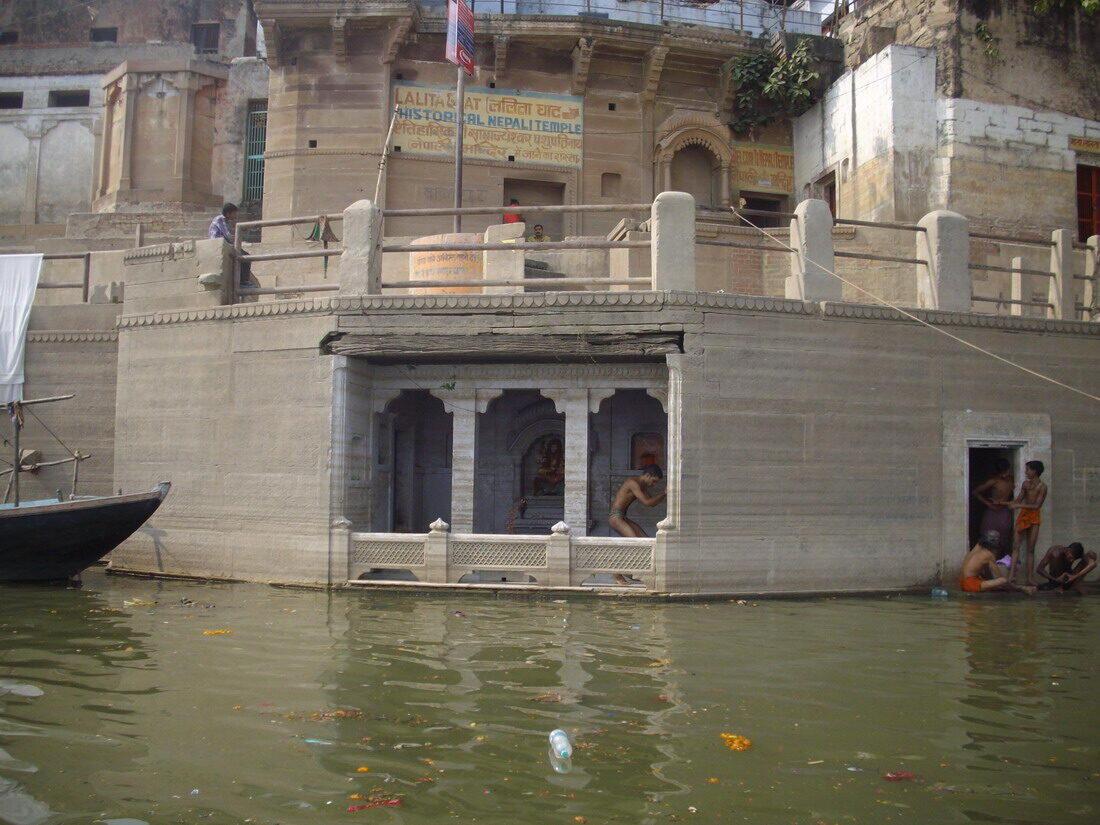
Hanuman is worshipped in Hindu tradition as Chiranjivi — ever-living — and as the foremost bhakta of Sri Ram, the servant in whom devotion, strength, and humility meet perfectly. At Hanuman Ghat the devotee approaches him as protector and remover of obstacles, the deva who carries the difficulty of his bhaktas as he once carried Ram's work across the sea. The very name Sankat Mochan — by which Hanuman is invoked here as everywhere in Kashi — names the grace that is sought: to place one's sankat, the trouble, illness, or fear, at his feet, and to carry away the lightness of having left it there.
Tradition holds Hanuman to be a form of Shiva born of Vayu, the vital breath, so that two currents meet in his darshan — the Lord who destroys what obstructs and the breath that sustains life. The Hanuman Chalisa, composed by Tulsidas himself, states the protection of his name plainly: "Bhoot pisach nikat nahi aave, mahabir jab naam sunave" — no evil influence comes near when the name of the great hero is heard.
Katha and local belief
Banaras remembers Goswami Tulsidas as a living presence on this southern reach of the river. He is held to have resided at Tulsi Ghat close by, and to have composed much of the Ramcharitmanas in these years; the establishing of a Hanuman murti at the ghat that now bears the Lord's name is woven into the same devotional memory. The Hanuman of Tulsidas is not a distant deity but the ever-present companion of every Ram-bhakta, and devotees of Hanuman Ghat hold that the Lord remains near to those who keep his name on their lips.
A Banarasi tradition holds that no difficulty is too small or too great to be placed before Hanuman. Devotees come in illness and before treatment, before examinations and journeys, before marriages and decisions, and also in seasons of quiet — simply to sit by the river in the sound of the Chalisa.
History
Hanuman Ghat lies in the southern, traditionally Vaishnava stretch of the Kashi waterfront, an area shaped over centuries by the Ram-bhakti movement that the acharya Jagadguru Ramanandacharya carried into the Ganga valley. Ramanandi sadhus and South Indian Vaishnava families settled this part of Banaras, establishing maths and keeping alive the recitation of the Ramayana traditions, and it is within this devotional landscape that the Hanuman shrine and its ghat took their place.
Devotional memory connects the shrine with Goswami Tulsidas (16th century), the great poet-saint of Ram-bhakti placed in the Ramananda lineage, who lived on this reach of the river and is held to have established the Hanuman murti here. The ghat has carried the Lord's name since.
Like much of the Banaras waterfront, the present stone ghat and shrine structures owe their form to the rebuilding of the eighteenth and nineteenth centuries, when Maratha and other Hindu patrons restored and paved the riverfront. Through all these changes the worship of Hanuman at the ghat has continued without break, maintained by Banarasi priestly families and the surrounding Vaishnava community.
Architecture
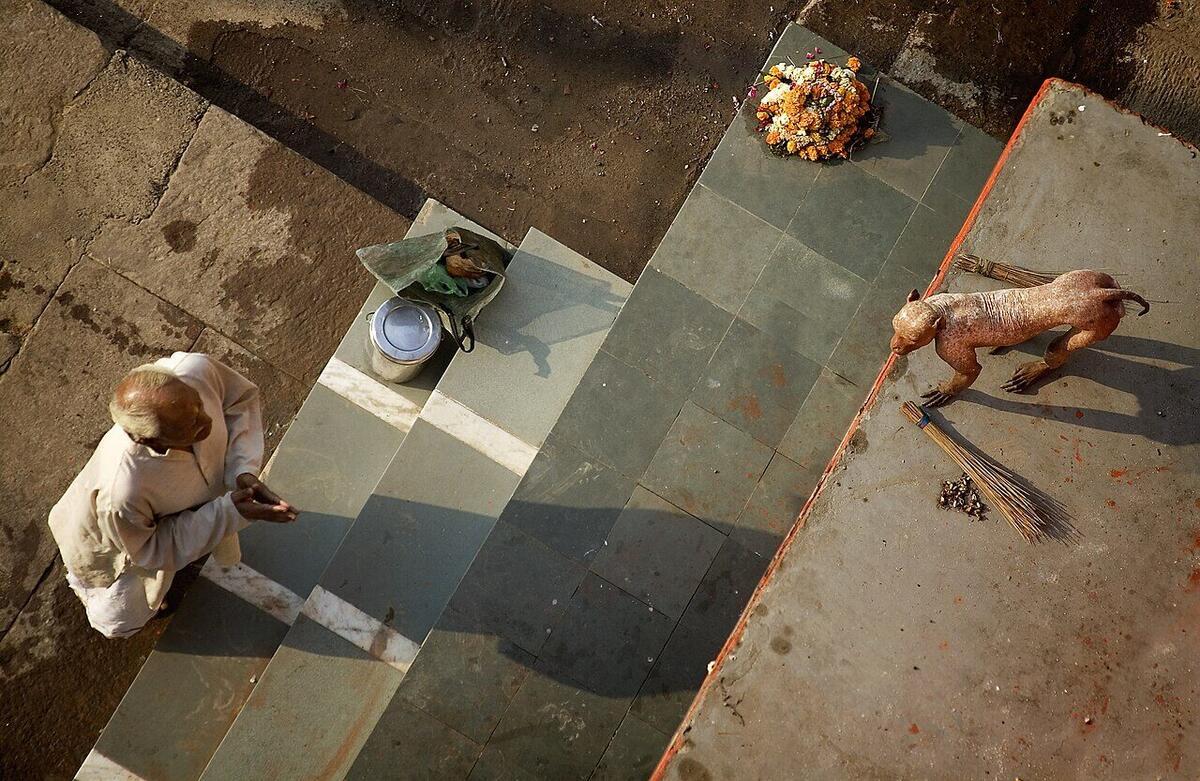
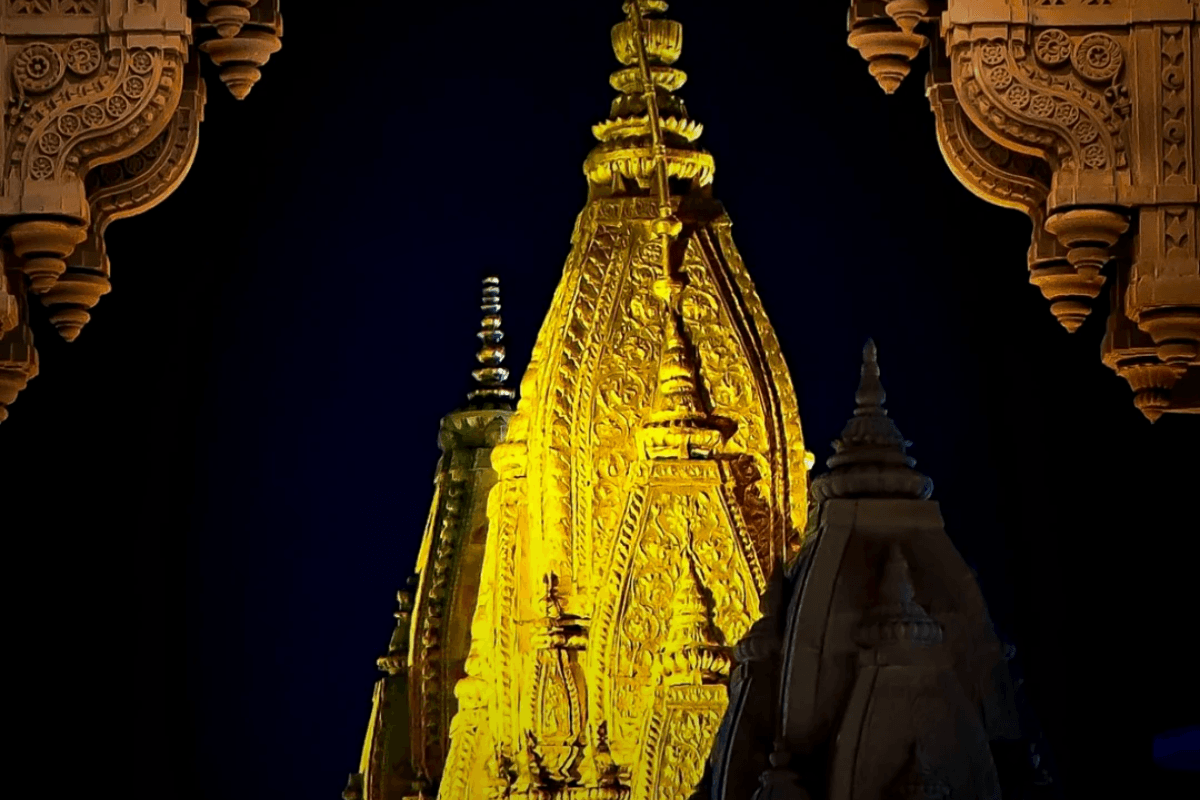
Hanuman Ghat Temple is a compact riverside shrine in the Banarasi idiom, its strength lying in nearness and continuous devotion rather than scale. The sanctum holds the murti of Hanuman, anointed with sindoor, hands folded in bhakti toward Sri Ram in keeping with the iconographic tradition of the Ram-bhakta. A small mandapa gathers the devotees who come for darshan and for the recitation of the Chalisa.
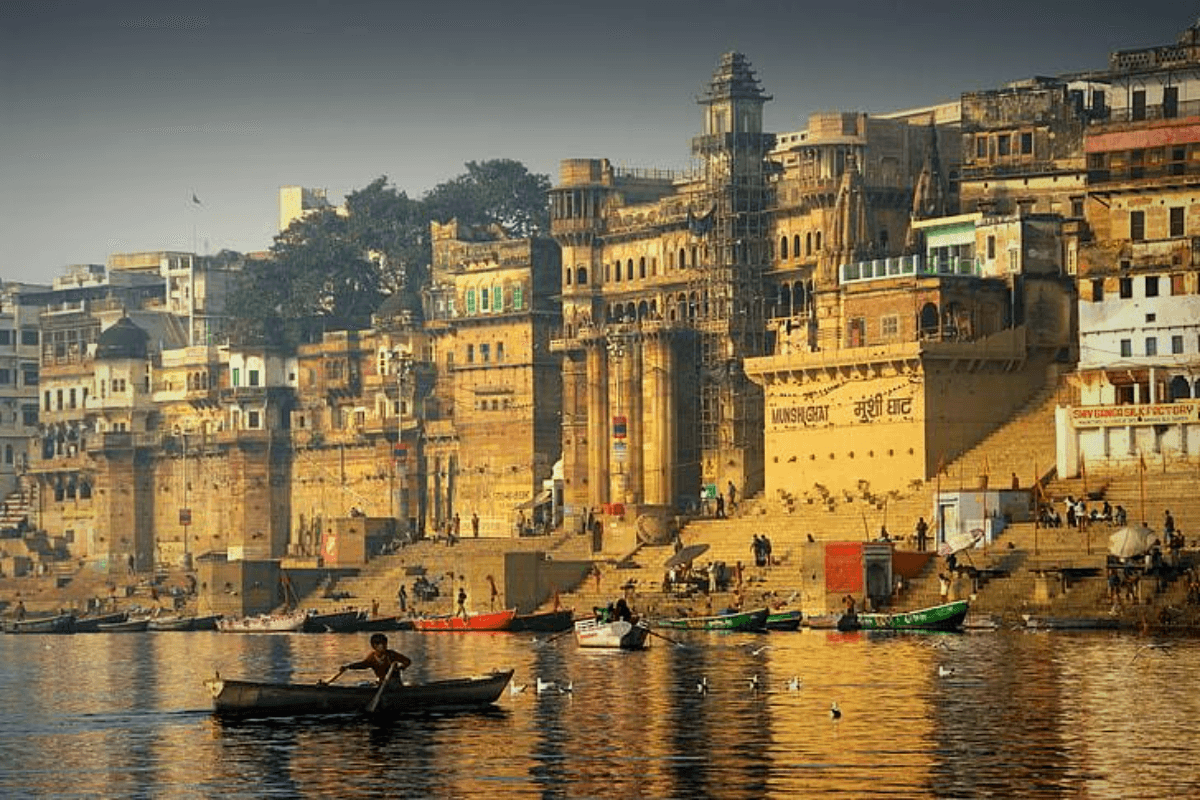
The shrine sits above the stone steps of Hanuman Ghat, looking out over the Ganga. The natural devotional approach runs upward from the water: snan first at the river below, then ascent to the temple for darshan. The surrounding lanes hold the maths and shrines of the Vaishnava quarter, so that the temple belongs to a wider devotional setting rather than standing alone.
Rituals & Practices
The central offering at Hanuman Ghat is the besan laddoo, the gram-flour sweet particularly dear to Hanuman, offered at the sanctum and received back as prasad. Sindoor and mustard oil are offered to the murti, and a thread of mauli is often tied as a token of the Lord's protection. The recitation of the Hanuman Chalisa is the steady devotional sound of the shrine.
Offerings commonly brought to the temple:
- Besan laddoos
- Sindoor and mustard oil
- Fresh marigold garlands
- Mauli — the red protective thread
Tuesday and Saturday are the days most closely associated with Hanuman worship; many devotees observe a weekly vrata and break their fast after darshan, often timing their Ganga snan at the ghat below to the same day. Hanuman Jayanti (Chaitra Purnima) is the principal annual observance. Specific timings may vary; pilgrims are encouraged to verify with the temple before a visit.
Festivals & Celebrations
| Festival | When | Crowd |
|---|---|---|
| Hanuman Jayanti | — | Very high |
| Tuesday and Saturday worship | — | High |
| Ram Navami | — | High |
| Hanuman Pujan (eve of Diwali) | — | Moderate |
Hanuman Jayanti: The most important day in the Hanuman devotional calendar. Darshan on Hanuman Jayanti is held to bring particular grace for protection, strength, and the removal of difficulty.
Tuesday and Saturday worship: Tradition holds Tuesdays and Saturdays as especially favourable for Hanuman worship; the weekly rhythm of the shrine is built around them.
Ram Navami: Sri Ram is the presiding Lord whom Hanuman serves. Celebrating Ram's birth at the temple of his foremost devotee is considered particularly meaningful.
Hanuman Pujan (eve of Diwali): Hanuman, the dispeller of fear and darkness, is invoked on the eve of the festival of light for protection of home and family.
Prepare for Your Visit
Practical guidance to help you plan your pilgrimage
| Pilgrim Guidance | How to reachHanuman Ghat is on the southern Varanasi waterfront, a short distance north of Assi Ghat. Auto-rickshaws and taxis reach the Assi crossing, from where the ghat is a short walk along the riverfront lanes. Pilgrims arriving by boat can step ashore directly at the ghat. The shrine is naturally combined with Assi Ghat, Tulsi Ghat, and Lolark Kund in a single half-day southern circuit, and many pair it with darshan at Sankat Mochan a little inland. Preparation for Pilgrims
Best Time to VisitTuesday and Saturday are Hanuman's particular days and bring the most active worship; these are spiritually charged but busier. The morning and evening aartis, with the Ganga close below, are the most atmospheric times of day. Hanuman Jayanti in spring (Chaitra Purnima) is the principal annual occasion. October to March is the most comfortable window for pilgrimage overall. |
Location
Varanasi, UP
Pilgrim photos
No pilgrim photos yet.
Community corrections
No corrections yet.
Edit history
No revisions yet.
Plan Your Visit to Hanuman Ghat Temple
Get a custom itinerary and pricing for your trip.
Recommended
Packages for this destination
Pilgrim Notes
On-ground observations from fellow pilgrims
No pilgrim notes yet. Be the first to share on-ground observations!
Sign in to share a note.
Pilgrim Reviews
Be the first to share your experience at Hanuman Ghat Temple.
Sign in to write a review.
Nearby sacred places
Discover other sacred places near Hanuman Ghat Temple
Explore temples, tirthas, and pilgrimage sites in UP
Explore nearbyPart of these circuits
Walk the traditional pilgrimage routes this destination belongs to.