Harishchandra Ghat is one of the two principal cremation ghats of Kashi. It is considered by tradition to be the older of the two — often called the Adi Manikarnika, the original cremation ground — and is linked through its name with a katha treasured across Hindu tradition: the story of Raja Harishchandra, whose truthfulness was tested at this very cremation ground.
Like Manikarnika, this ghat is an active sacred site where families perform the rites of their own dead, not a place of sightseeing. Pilgrims who wish to pay respects or to understand its tradition approach it with the same reverence due to any antim sanskar bhumi.
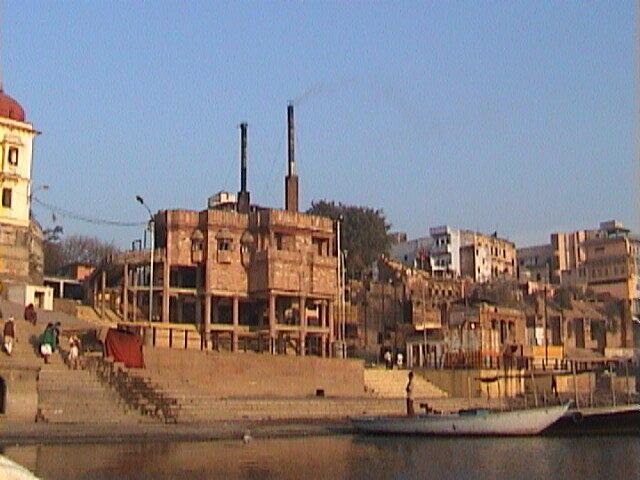
Harishchandra Ghat is smaller and typically quieter than Manikarnika, and carries a slightly different character. It is home to both traditional wood pyres and a modern electric crematorium that stands beside them, introduced in the late twentieth century for those who wish to use it.
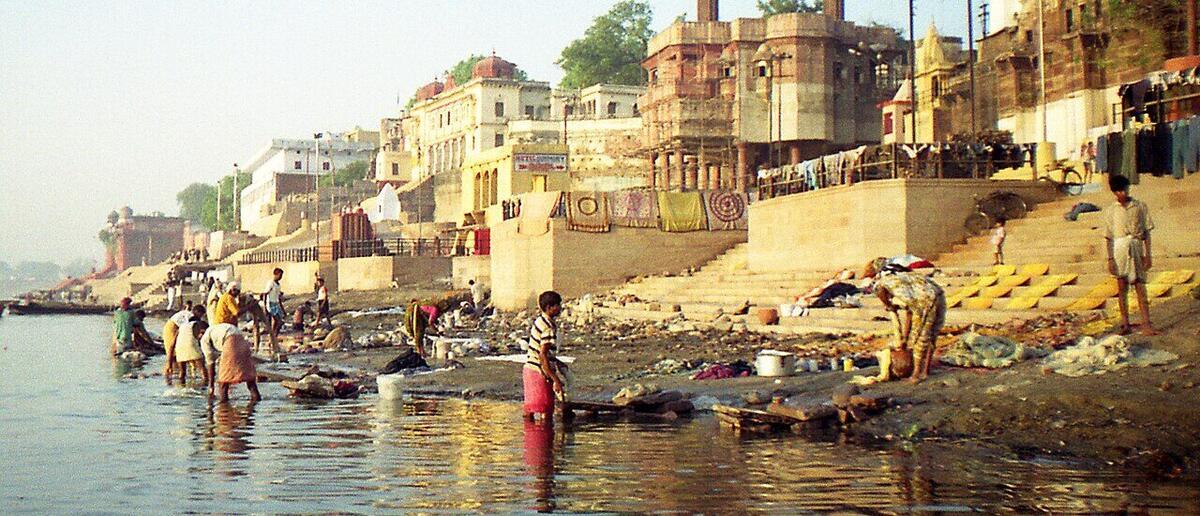
In the tradition of Kashi, antim sanskar at Harishchandra carries the same moksha-grace that is said to attend cremation at Manikarnika — the promise recorded in the Kashi Khanda that those whose final rites are performed within the pancha-krosha receive the Taraka Mantra from Shiva at the moment of departure. Some families specifically choose Harishchandra for its quieter atmosphere and its association with the story of the truthful king.
Katha and local belief
The katha of Raja Harishchandra is told in the Markandeya Purana. Tradition recounts that Harishchandra, a king of extraordinary truthfulness, was tested by the sage Vishwamitra. In the trial that followed, he lost his kingdom, parted from his wife Taramati and son Rohitashva, and sold himself into bondage to a chandala (keeper of the cremation ground). It was at Kashi, at this very ghat, that he was stationed to collect the fees for cremation.
When his own son died and his grieving wife arrived to perform the last rites, Harishchandra — bound by his duty to collect the fee — refused to allow the cremation without payment, even for his own child. This unshaken adherence to satya, the tradition tells, moved even the devas; the gods appeared, restored to him his kingdom and his family, and the katha concluded with Harishchandra held up as the embodiment of unwavering truth.
This story has shaped Hindu devotional understanding for many centuries, and the ghat that bears Harishchandra's name is approached as a place where the idea of truth — satya, the fundamental virtue — has been made visible in the earth itself.
History
Scholarly tradition regards Harishchandra Ghat as possibly the older of Kashi's two primary cremation grounds — earlier even than Manikarnika, by some accounts. Stone sati memorial stelae dating to the 15th and 16th centuries are preserved along the ghat walls, and reflect the long continuity of antim sanskar at this site.
The ghat has been repaired and extended over the centuries by the devotees and trusts who sustain it, and the surrounding precinct — including the Harishchandra Mahadev temple — forms part of the older ghat-side heritage of Kashi.
In the late twentieth century an electric crematorium was established beside the traditional pyres at Harishchandra. It continues to operate as an option for families who wish to use it, alongside the traditional wood pyres. Its introduction reflects the wider conversations on ecology and tradition that have accompanied many old practices into the modern age; the ghat today serves both approaches side by side, without ceremonial distinction.
Architecture
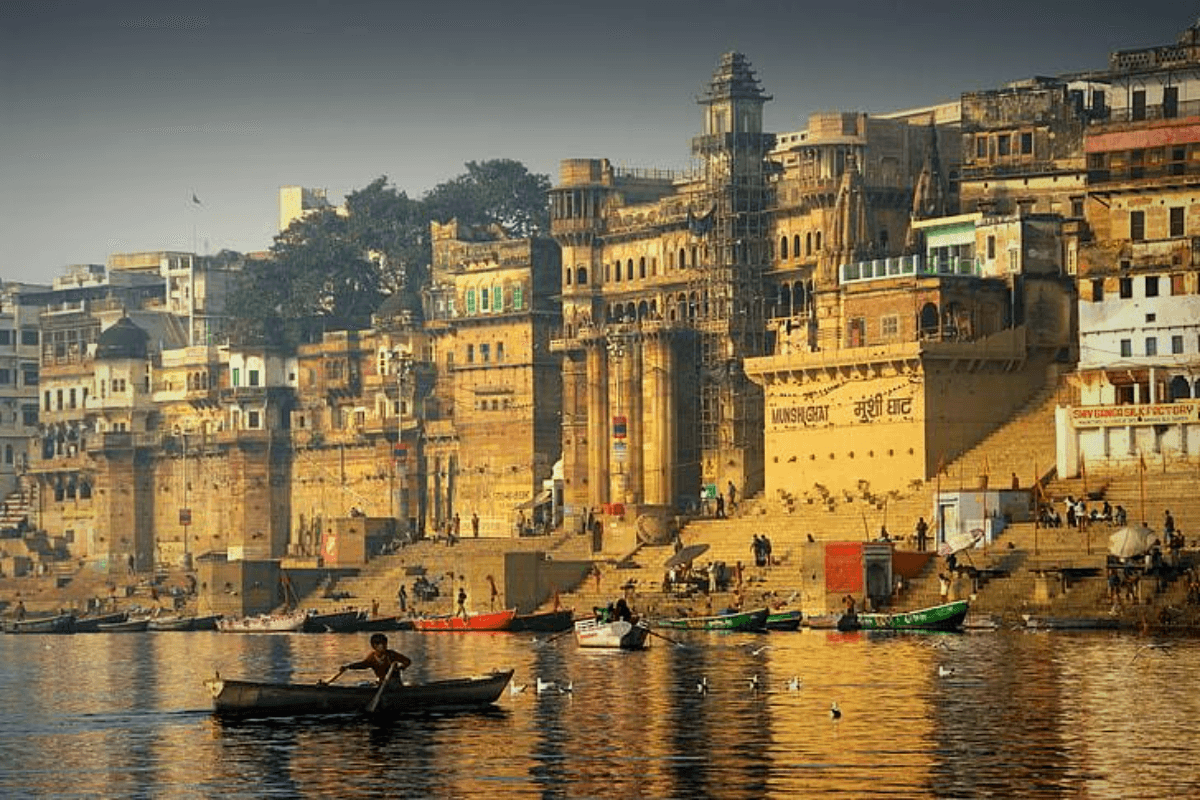
Harishchandra Ghat is a smaller and more quietly laid out cremation ghat than Manikarnika. The steps descend to the river past the cremation platforms below, with the traditional wood pyres to one side and the modern electric crematorium enclosed in a small building beside them.
Along the ghat walls stand the sati memorial stelae — carved stone markers commemorating women who in earlier centuries were said to have joined their husbands at the cremation. These stones are now preserved as historical objects, visible to pilgrims who walk the ghat respectfully.
The Harishchandreshwar Mahadev temple stands at the upper edge of the ghat, associated with the same tradition as the ghat itself. Smaller shrines dot the precinct; behind them lie the timber yards and the humble buildings of the community that serves the ghat.
Rituals & Practices
Harishchandra Ghat performs the same antim sanskar rites as Manikarnika, following the traditional sequence observed across Kashi. The body is bathed, wrapped in white cloth — or red and gold for a married woman — borne on a bamboo bier to the ghat with the chant of "Ram Naam Satya Hai", briefly immersed in the Ganga, placed upon the pyre, and consigned to fire by the son or the person performing the rite. After the pyre is complete, the ashes are collected for immersion in the river.
An electric crematorium operates alongside the traditional pyres; families may use either according to their own tradition and preference. The ghat's priests and caretakers facilitate both.
The ghat's ancillary shrines — particularly Harishchandreshwar Mahadev — are worshipped daily. Pitru Paksha, the fortnight in Bhadrapada set aside for ancestral rites, brings additional tarpana observances to the upper steps of the ghat.
Festivals & Celebrations
| Festival | When | Crowd |
|---|---|---|
| Pitru Paksha | — | High |
| Harishchandra Jayanti | — | Low to moderate |
| Mahashivratri | — | High |
Pitru Paksha: Pitru Paksha is traditionally held to be the most auspicious time for honouring one's ancestors; performing these rites at the ghat where a relative was cremated carries particular meaning.
Harishchandra Jayanti: Honours the king held in tradition as the embodiment of <em>satya</em>. A reminder of the path of truth in Hindu dharma.
Mahashivratri: As with all Shiva shrines in Kashi, Shivratri is the most important night of the temple's year â held in particular closeness at this ghat for its association with the Taraka Mantra tradition.
Prepare for Your Visit
Practical guidance to help you plan your pilgrimage
| Pilgrim Guidance | ApproachHarishchandra Ghat lies between Kedar Ghat and Dashashwamedh along the Kashi waterfront. It is reached on foot along the ghats from either direction, or by boat. As with any cremation ghat, approach it with the gravity of a sacred site rather than a viewing place. How to visit with respect
For families performing antim sanskarThe caretakers at the ghat handle all arrangements — wood (or electric crematorium), priest, and ritual supplies. For those bringing a bereaved family, it is advisable to arrange in advance with a local coordinator familiar with Harishchandra's procedures. |
Location
Varanasi, UP
Gallery
Pilgrim photos
No pilgrim photos yet.
Community corrections
No corrections yet.
Edit history
No revisions yet.
Plan Your Visit to Harishchandra Ghat
Get a custom itinerary and pricing for your trip.
Recommended
Packages for this destination
Pilgrim Notes
On-ground observations from fellow pilgrims
No pilgrim notes yet. Be the first to share on-ground observations!
Sign in to share a note.
Pilgrim Reviews
230 reviews
Be the first to share your experience at Harishchandra Ghat.
Sign in to write a review.
Nearby sacred places
Discover other sacred places near Harishchandra Ghat
Explore temples, tirthas, and pilgrimage sites in UP
Explore nearbyPart of these circuits
Walk the traditional pilgrimage routes this destination belongs to.