Kabir Math at Kabir Chaura is the principal seat of the Kabir Panth in Varanasi, revered as the place where Sant Kabir (traditionally placed in the fifteenth century, c. 1398–1518) is held to have lived, woven at his loom, and taught. He was a julaha, a weaver by trade, and from the rhythm of that loom rose some of the most quoted verses in the devotional life of North India — the dohas and sakhis that speak of the formless Divine in the plain language of the householder.
The math is not a temple of image and sanctum in the usual sense. It is a living centre of satsang and song, where Kabir's verses are recited and sung, where the seat associated with the Sant is honoured, and where the Kabir Panth has preserved his teaching through an unbroken line of acharyas. Pilgrims also visit Lahartara, the pond on the city's edge where, by a beloved tradition, the infant Kabir was found upon a lotus — the birth-memory that the Panth holds dear.
Kabir's following has never belonged to a single community. Hindus revere him as a great sant; the Kabir Panth holds him as its founding guru; his verses are gathered in the Guru Granth Sahib of the Sikhs; and seekers of many backgrounds come to his words. The math at Kabir Chaura receives them all with the same simplicity that Kabir himself taught.
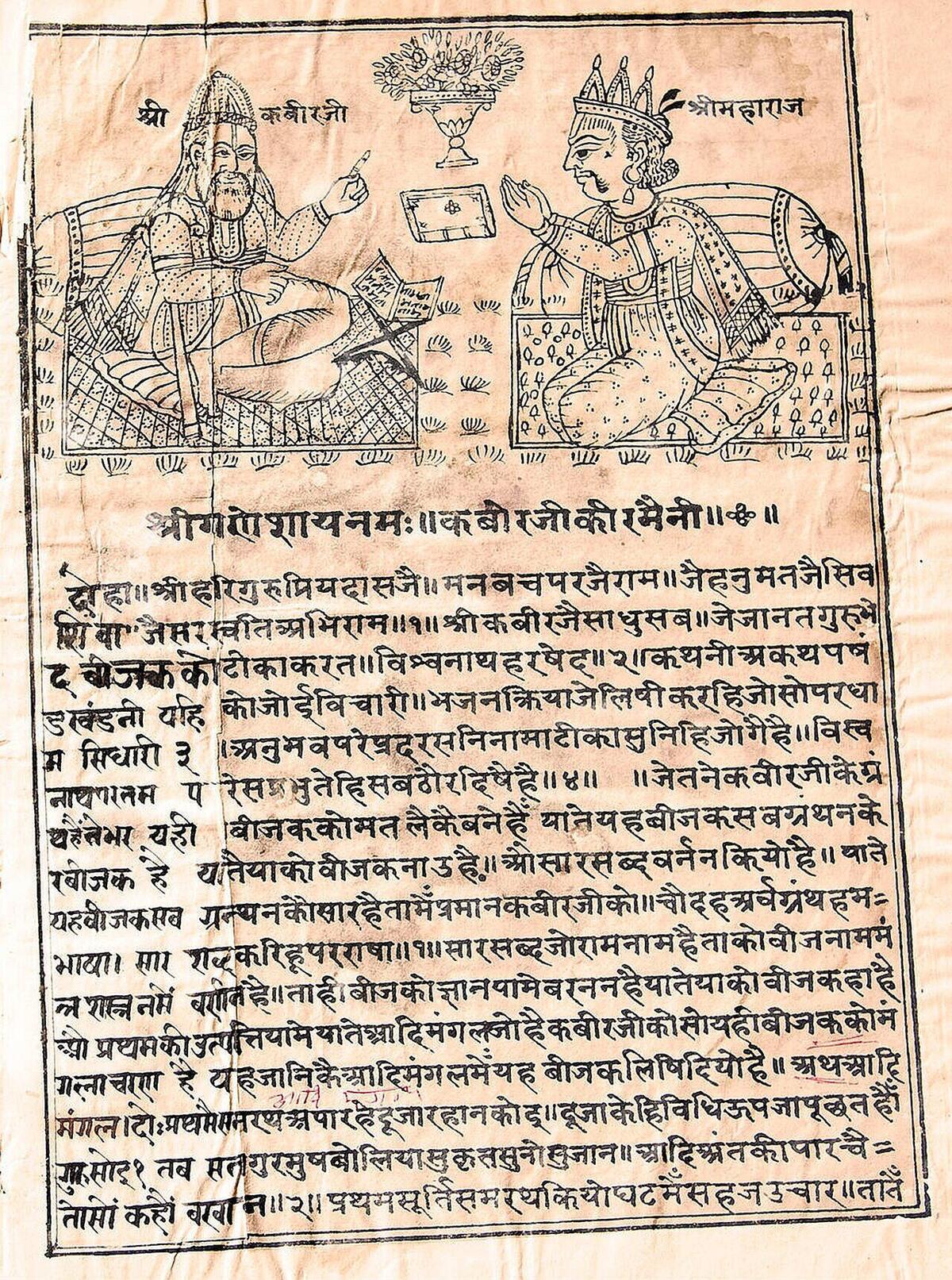
Kabir's teaching is the heart of nirgun bhakti — devotion to a Divine that is beyond name, form, and division. In his verses the Lord is known as Ram, but a Ram who is the formless truth within the seeker, not bound to image, temple, or mosque. He is approached directly, through remembrance of the Name, the company of the saints, and a life made honest by work and inward purity.
The math preserves this teaching not as doctrine alone but as living practice: the singing of Kabir's shabads, the recitation of his dohas and sakhis, the reading of the Bijak, and the quiet of satsang. Kabir spoke against empty ritual, caste pride, and the outward show of religion — not to wound any tradition, but to turn the seeker inward, toward the Divine that needs no intermediary. Devotees come here for darshan of that simplicity, for the singing, and for the steadying company of the Panth.
Katha and the Lahartara birth-tradition
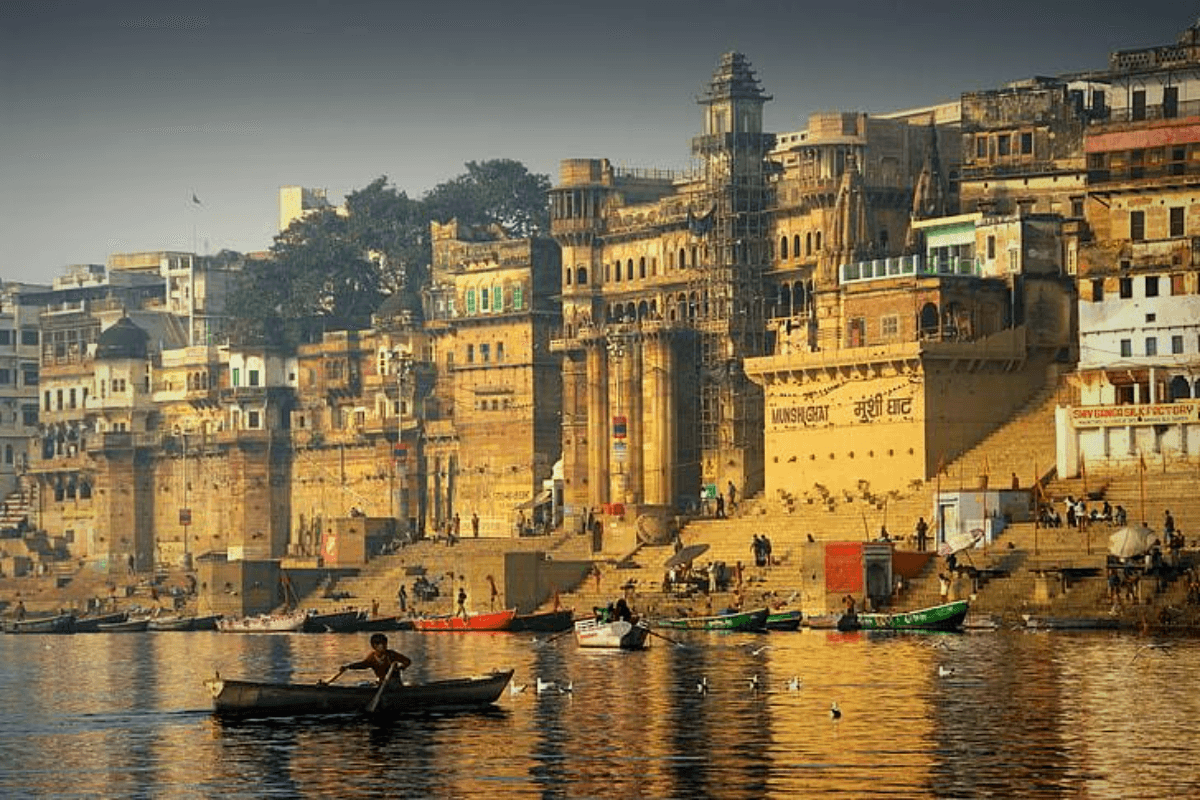
A cherished tradition of the Kabir Panth holds that the infant Kabir was found floating upon a lotus in the pond at Lahartara, and was raised by Niru and Nima, a weaver couple of Kashi. The same tradition links him, as a seeker, to the great Vaishnava acharya Ramananda — it is said that Kabir received the Name from him at the steps of a Ganga ghat in the dark before dawn, and held him as guru ever after.
Banaras also keeps the well-loved story of Kabir's passing at Maghar, where his Hindu and Muslim followers are said to have disputed over his last rites — and where, by tradition, only flowers were found beneath the cloth, to be shared between them. Whether taken as history or as parable, the story carries Kabir's own message: that the One he served could not be claimed by any single faith.
History
The history of Sant Kabir is wrapped in devotional memory more than in documented record. Tradition places him in Kashi in the fifteenth century, a weaver of humble origin whose verses spread by voice long before they were written down. His dohas, sakhis, and ramainis were carried by singers across North India and were later gathered into collections such as the Bijak, and preserved within the Guru Granth Sahib.
After Kabir, his disciples formed the Kabir Panth, which over time branched into several lineages, each with its own math and acharya. Kabir Chaura in Varanasi is honoured as a principal seat of this tradition, maintained across the centuries by a succession of mahants and acharyas who have kept the singing, the texts, and the teaching alive.
The structures at Kabir Chaura have been repaired, rebuilt, and added to over generations, so the present complex reflects accumulated devotion rather than a single period of building. Through all of it the continuity that matters most to the Panth is not of stone but of parampara — the unbroken passing of Kabir's word from teacher to seeker. The Lahartara site, with its pond, is maintained alongside as the place of the birth-tradition.
Architecture
Kabir Math is a complex of devotional and residential buildings rather than a temple of spire and sanctum. Its character is deliberately plain, in keeping with a tradition that has always valued inward sincerity over outward grandeur.
At the centre is the darshan-space holding the asana — the seat associated with Sant Kabir — around which satsang, singing, and teaching are conducted. The compound gathers a sangat-hall for community gathering, a library preserving Kabir literature and the manuscripts of the Panth, the samadhi and memorial spaces of past acharyas, and modest quarters for the resident community. A loom is kept in memory of Kabir's craft, recalling that his devotion was lived at the weaver's bench and not apart from honest work.
The Lahartara site, on the city's edge, centres on the pond of the birth-tradition and its adjacent shrine and gathering space. Both places carry the same unadorned spirit: the focus is on word and song, not on ornament.
Rituals & Practices
The devotional life of Kabir Math is shaped by song and remembrance rather than by image-worship. Exact timings of satsang and gatherings vary, so it is best to verify the current schedule with the math; the broad rhythm, however, is steady and long-loved.
- Singing of Kabir-vani. The recitation and singing of Kabir's shabads, dohas, and sakhis is the central practice of the Panth, often led by the resident singers and joined by all present.
- Satsang and discourse. The acharyas and resident teachers expound Kabir's verses; listening is itself held to be a form of devotion.
- Reading from the Bijak. Passages from the Bijak and other Kabir texts are read and reflected upon.
- Silent remembrance. Many devotees simply sit in the math's quiet and dwell on the Name.
- Simple offerings. Flowers, fruit, and a modest dakshina are customary; the tradition holds that sincerity matters far more than the size of the offering.
Sunday and full-moon sangats are especially active, when devotees gather for extended singing and discourse.
Festivals & Celebrations
| Festival | When | Crowd |
|---|---|---|
| Kabir Jayanti | — | Very high |
| Sunday Sangats | — | High |
| Full-moon Sangats | — | Moderate to high |
| Magh observances | — | Moderate |
Kabir Jayanti: The principal annual observance of the Kabir Panth, honouring the Sant whose verses and teaching the math preserves.
Sunday Sangats: The steady living rhythm of the tradition, drawing the local sangat together each week.
Full-moon Sangats: The full moon draws a fuller gathering for sustained satsang.
Magh observances: A season of deepened devotion in the Panth's annual cycle.
Prepare for Your Visit
Practical guidance to help you plan your pilgrimage
| Pilgrim Guidance | How to reachKabir Math at Kabir Chaura lies within the old city of Varanasi, reachable by auto-rickshaw from the central areas and the ghats; the lanes near the math are best covered on foot. The Lahartara site, associated with the birth-tradition, is on the western edge of the city, a longer auto-rickshaw ride away. The math keeps its own schedule and is a working tradition-centre rather than a tourist stop. Preparation for Pilgrims
Best Time to VisitKabir Jayanti (Jyeshtha Purnima, May–June) is the great annual observance, when the math is at its fullest with day-long sangat and devotees from across India. Sunday and full-moon sangats are particularly alive through the year. For an unhurried general visit, October to March is the most comfortable season, and mornings are the calmest hours. |
Location
Varanasi, UP
Pilgrim photos
No pilgrim photos yet.
Community corrections
No corrections yet.
Edit history
No revisions yet.
Plan Your Visit to Kabir Math (Kabir Chaura)
Get a custom itinerary and pricing for your trip.
Recommended
Packages for this destination
Pilgrim Notes
On-ground observations from fellow pilgrims
No pilgrim notes yet. Be the first to share on-ground observations!
Sign in to share a note.
Pilgrim Reviews
Be the first to share your experience at Kabir Math (Kabir Chaura).
Sign in to write a review.
Nearby sacred places
Discover other sacred places near Kabir Math (Kabir Chaura)
Explore temples, tirthas, and pilgrimage sites in UP
Explore nearbyPart of these circuits
Walk the traditional pilgrimage routes this destination belongs to.