Kal Bhairav is worshipped in Kashi as the Kotwal, the kshetra-pala of the sacred city — the guardian whose permission opens the yatra. The temple stands in the old Kotwalpuri lanes, a short distance from Kashi Vishwanath, and is counted in the traditional Kashi Yatra sequence as the shrine a pilgrim visits before proceeding to the Jyotirlinga.
Bhairava is a fierce form of Shiva, approached in Kashi as the protector of the kshetra rather than as a distant or ornamental deity. The sanctum is small, deeply anointed with sindoor, and suffused with the warmth of a worship that has continued unbroken for centuries. Dogs — Bhairava's vahana — rest in the doorways around the temple and are looked upon with respect by the priests and pilgrims alike.
The devotional tradition here is rooted in the Tantric Shaiva stream and is marked by distinctive observances — the offering of madira, the light touch of the peacock-feather pankhi as blessing, and the black thread (Ganda) tied on the wrist as Bhairav's protective amulet. These practices set the temple apart and lend it its particular character within the wider geography of Kashi's sacred family.
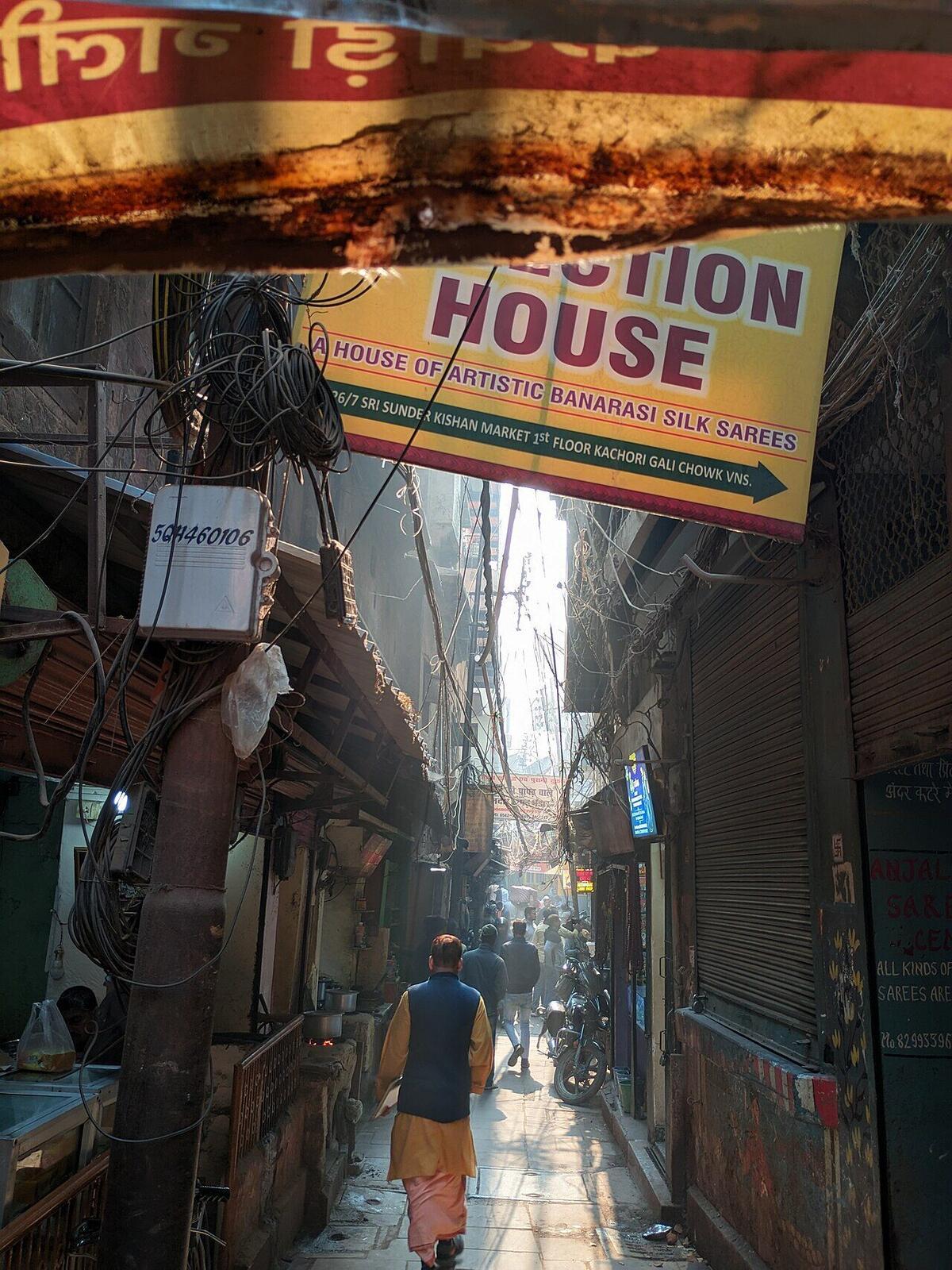
Kal Bhairav holds a foundational place in the spiritual order of Kashi. The Kashi Khanda of the Skanda Purana names Bhairava as the kshetra-pala — the guardian of the sacred field — without whose permission no being is said to access the city's grace. For this reason, the traditional Kashi Yatra begins with his darshan: the yatri presents themselves first at the gate of the Kotwal, and then proceeds to Annapurna and Vishwanath.
A devotional understanding in Kashi holds that the very syllables of the name Bhairava carry cosmic meaning — Bha for creation, Ra for sustenance, Va for dissolution — the full movement of the universe gathered into one fierce form, standing as sentinel at the gates of the holiest city.
Katha and local belief
Bhairava is approached in Kashi not for comfort, but for protection. Police personnel, lawyers before a trial, students before examinations, families facing difficult times — all come to the Kotwal's darbar and tie a Ganda on the wrist. The black thread is understood as Bhairav's protective covering; it is to be worn until it falls away of its own accord.
The offering of madira is the temple's most distinctive observance and belongs to the Tantric Shaiva tradition that has been continuously practised at this site. It is understood as an arpana that sets aside the ordinary categories of the pure and the impure — a direct offering to a form of the Lord who receives all that comes before him. The well-known aspect of the offering, in which the madira appears to be absorbed at the sanctum, is received by devotees in the spirit of darshan, not of explanation.
Kalashtami — the eighth day of each dark fortnight — is held to be Bhairav's particular night. Devotees observe a fast, attend the evening aarti, and spend the late hours of the night in vigil within the temple's atmosphere.
History
Bhairava worship at Kashi is among the oldest continuous traditions in the city. The Kashi Khanda attests to Bhairava's role as kshetra-pala, and pilgrims have approached this shrine for over a thousand years as the first stop of the traditional yatra. The present structure has been renewed on several occasions, but the worship — including the offering of madira and the blessing with the peacock-feather pankhi — has continued unbroken through every period.
The temple belongs to the Tantric Shaiva stream of worship, which flourished in Kashi from the early medieval period. Within the wider devotional geography of the city, Kal Bhairav has held his place as the guardian whose protection is sought first and whose permission opens all that follows.
Today the shrine receives pilgrims across every walk of life — policemen and soldiers, lawyers and scholars, shopkeepers and travellers — and the worship carries on in its familiar rhythm: the lamp, the pankhi, the Ganda thread, and the quiet procession of devotees through the Kotwalpuri lanes.
Architecture
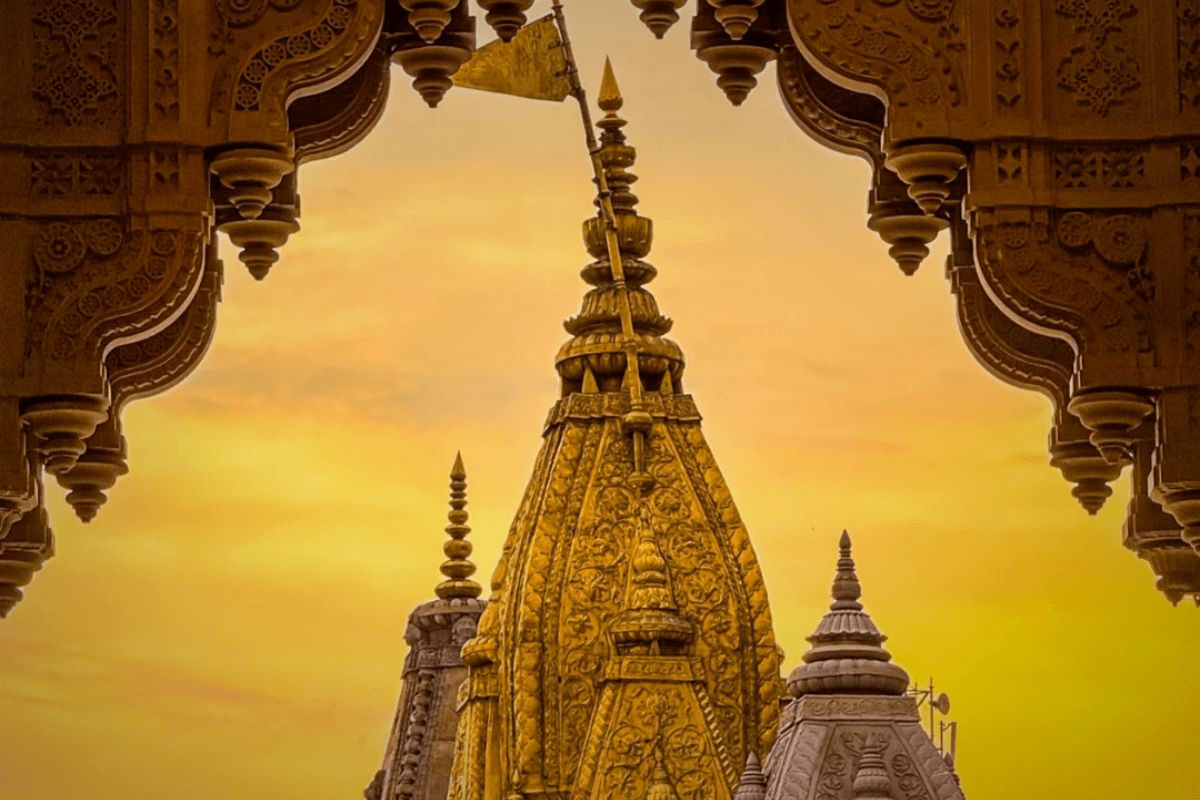
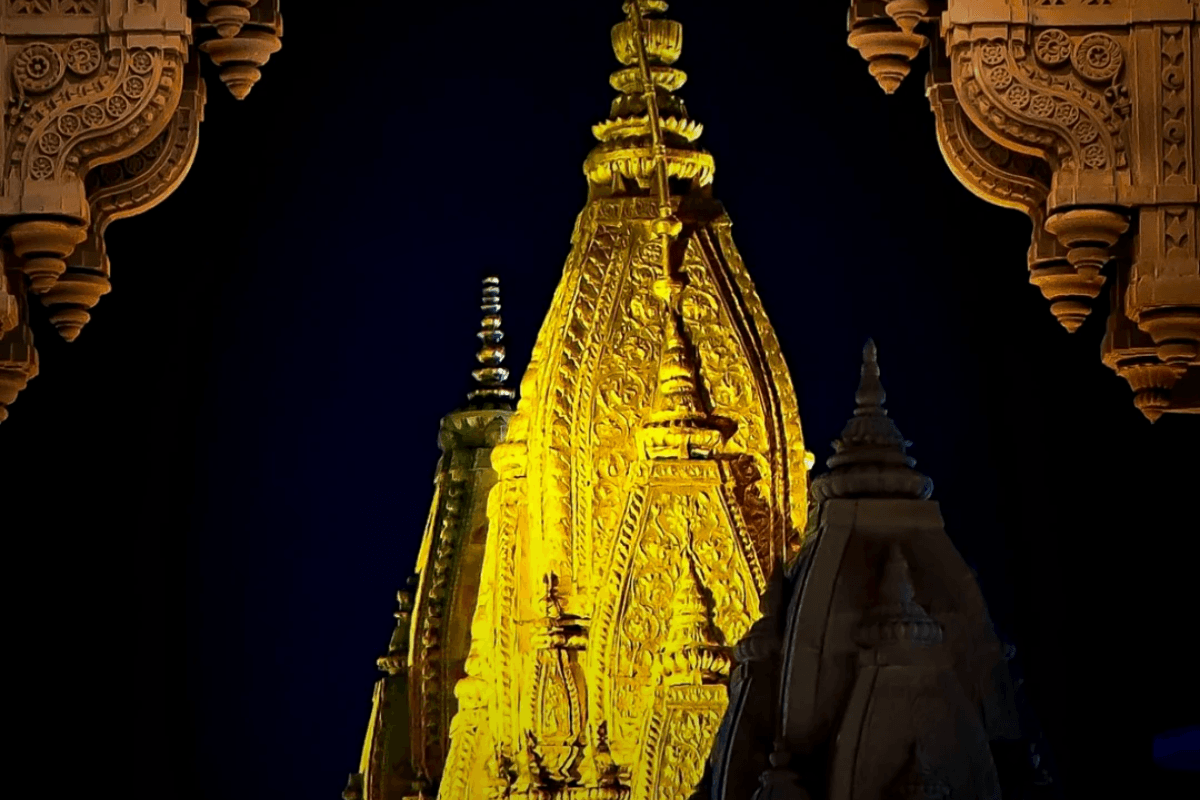
The Kal Bhairav Temple is built in the Nagara style of North Indian temple architecture, and is modest in footprint. The shikhara rises above the narrow lanes of Kotwalpuri without seeking grand scale. The temple carries a distinctive visual presence: deep saffron and red on the outer walls, thick sindoor on the inner surfaces, and the constant warmth of lamps and devotional offerings within.
The garbhagriha is small and intimate. The murti of Bhairava is heavily adorned with sindoor and flowers, and the features of the form are softened by centuries of daily worship. The space does not announce itself through ornament; it is known through the atmosphere of sustained devotion, the sound of the evening aarti, and the quiet movement of the priests.
Dogs rest in and around the doorways of the temple. Being Bhairava's vahana, they are treated with respect by priests and pilgrims alike, and many are fed by devotees as part of the day's worship.
Rituals & Practices
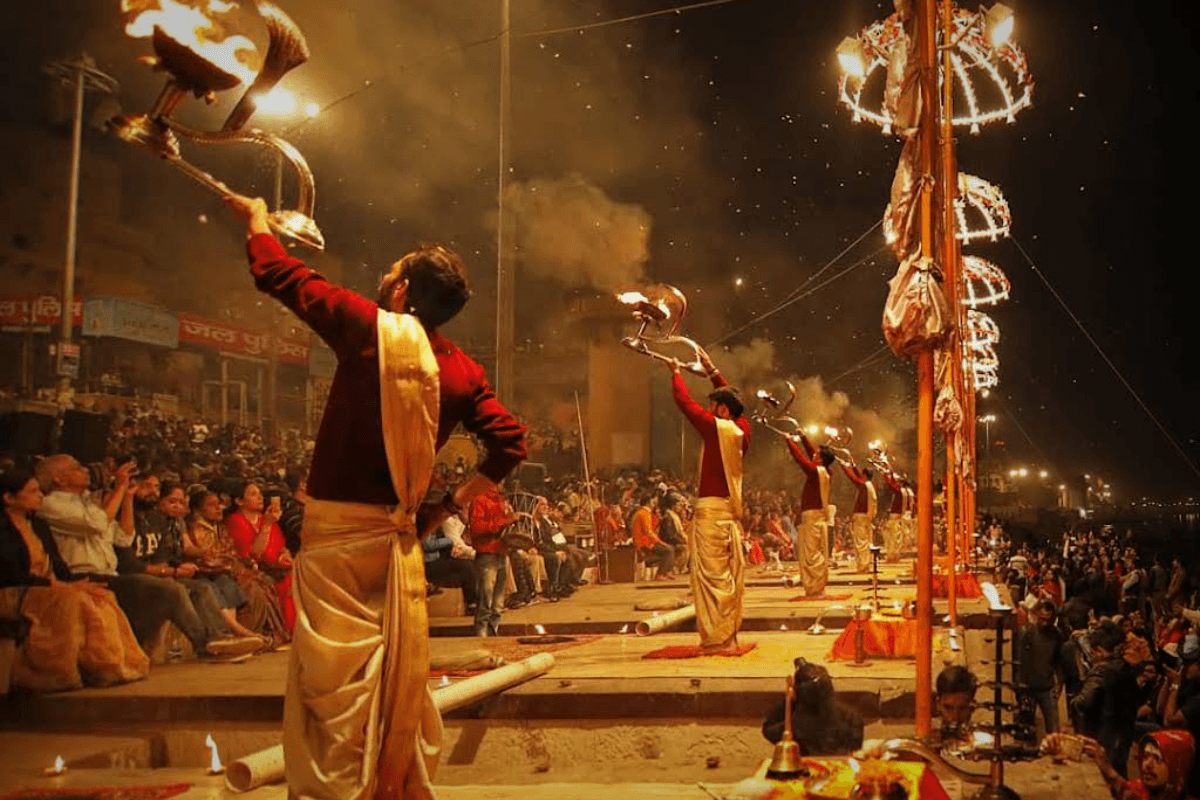
The worship at Kal Bhairav is rooted in the Tantric Shaiva tradition. Four aartis are performed each day — at 4:00 AM, noon, 7:00 PM, and 11:00 PM — each carrying its own character. The late-evening aarti is especially loved by Banarasi devotees.
Three observances mark the temple's distinctive devotional life:
- The pankhi blessing. After darshan, the priest lightly touches the devotee's head with a peacock-feather broom, considered a transmission of Bhairav's protective grace.
- The Ganda thread. A black thread is tied around the wrist as Bhairav's protective amulet. It is worn until it falls away on its own; it is not cut or removed deliberately.
- The madira arpana. Devotees may present a small quantity of madira to the priest, who offers it to the murti as an arpana in the Tantric tradition of the shrine. It is understood as an offering that sets aside ordinary categories of pure and impure. The madira is not to be received or consumed by the devotee as prasad.
On Kalashtami — the eighth day of each dark fortnight — the temple keeps an extended schedule, and many devotees observe a fast and attend the night aartis. Mahashivratri and Navratri likewise bring additional pujas and larger gatherings.
Specific timings may vary by season and by temple notice; pilgrims are encouraged to verify before planning a visit.
Festivals & Celebrations
| Festival | When | Crowd |
|---|---|---|
| Kal Bhairav Ashtami | — | Extremely high |
| Monthly Kalashtami | — | High |
| Mahashivratri | — | Very high |
| Navratri | — | High |
Kal Bhairav Ashtami: Commemorates the appearance of Bhairava as a form of Shiva. Held to be the most powerful day of the year for seeking his protection.
Monthly Kalashtami: The regular monthly observance dear to Bhairav bhaktas. Considered especially auspicious for making vows and seeking protection.
Mahashivratri: Bhairav darshan on Shivratri is traditionally sought for fearlessness and protection from untimely death.
Navratri: Bhairava is worshipped alongside the Divine Mother during Navratri as protector and companion, and his darshan is sought as part of the wider Shakti observance.
Temple Details
| Timings | note: The temple publishes no official timetable and hours extend on special days â confirm locally daily: Approx. 5:00 AM â 9:00/10:00 PM with a midday closure (per Incredible India, Govt. of India); the exact break hours vary by source |
| Darshan Types | General Darshan (free) First-come darshan; only the silver-decorated face of the deity is visible through the sanctum doorway â the rest of the idol remains covered. |
| Entry Fee | Free entry · No entry fee; darshan is free. |
Prepare for Your Visit
Practical guidance to help you plan your pilgrimage
| Best Time to Visit | Bhairav Ashtami is the temple's principal annual observance; Annakut and Shringar festivals are also celebrated here. Sundays and Tuesdays draw especially large crowds, considered auspicious for Bhairav worship (per Incredible India). |
| How to Reach | locality: Bhairavnath, Vishweshwarganj locality (per UP Tourism); the temple dates to the mid-17th century nearest station: Varanasi Junction (BSB) is the closest major railway station; autos and taxis reach the temple in around 20â30 minutes depending on traffic (per Incredible India) |
| Pilgrim Guidance | Approach and the Kashi Yatra sequenceKal Bhairav stands at the beginning of the traditional Kashi Yatra — after Ganga snana and Sakshi Vinayak, before Annapurna and Vishwanath. This order is widely observed and will often be reinforced by the priests themselves. The commonly followed sequence is:
The temple is in the Kotwalpuri lanes, about a kilometre from Godowlia. An auto-rickshaw is easiest; on foot, the atmospheric walk through the old city is itself part of the approach. Timings (verify locally before visiting)
Preparation for Pilgrims
Best Time to VisitKalashtami (the eighth of each Krishna Paksha) and the annual Kal Bhairav Ashtami in Margashirsha (November–December) are the most powerful days for darshan and also the most crowded. For a quieter darshan, ordinary weekday mornings and late evenings are best. October to March is the most comfortable window for pilgrimage. |
| Pilgrim Tips |
|
Location
Varanasi, UP
Pilgrim photos
No pilgrim photos yet.
Community corrections
No corrections yet.
Edit history
No revisions yet.
Plan Your Visit to Kal Bhairav Temple
Get a custom itinerary and pricing for your trip.
Recommended
Packages for this destination
Pilgrim Notes
On-ground observations from fellow pilgrims
No pilgrim notes yet. Be the first to share on-ground observations!
Sign in to share a note.
Pilgrim Reviews
870 reviews
Be the first to share your experience at Kal Bhairav Temple.
Sign in to write a review.
Nearby sacred places
Discover other sacred places near Kal Bhairav Temple
Explore temples, tirthas, and pilgrimage sites in UP
Explore nearbyPart of these circuits
Walk the traditional pilgrimage routes this destination belongs to.