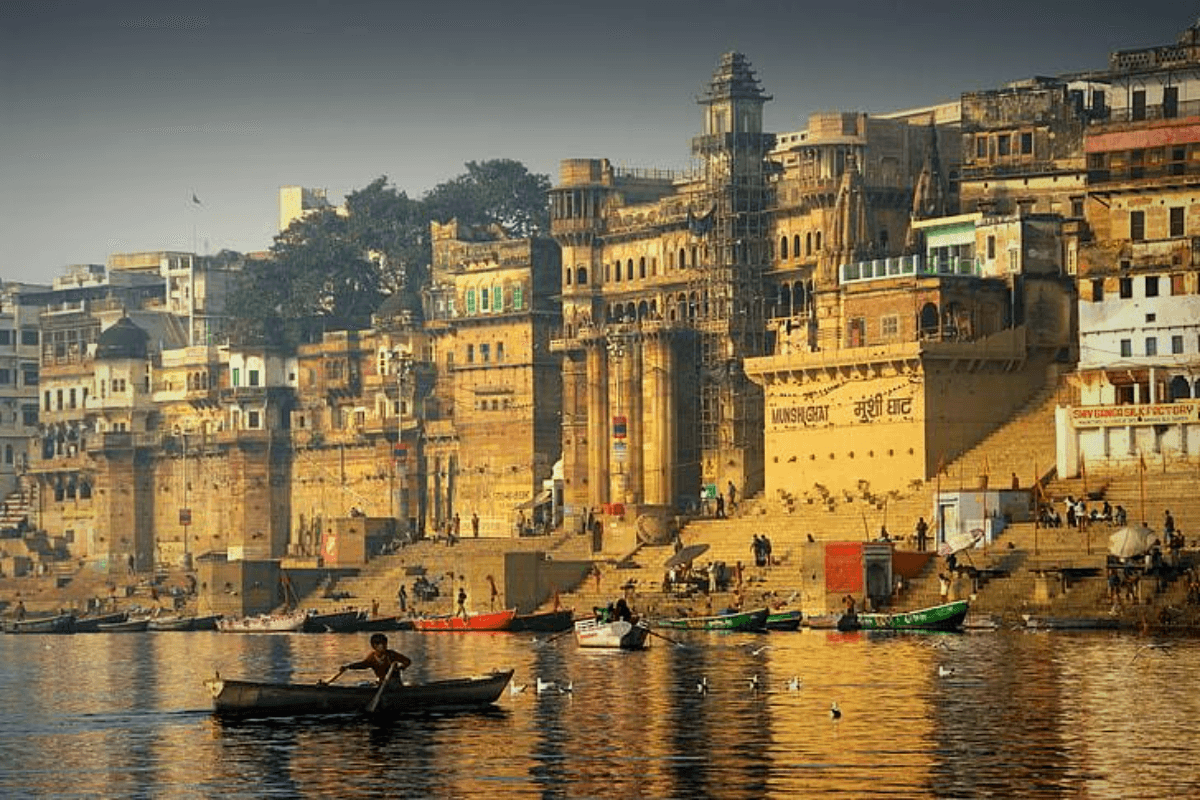
Kedar Ghat stands in the southern stretch of the Varanasi waterfront, a short distance north of Harishchandra Ghat. It takes its name from the Kedareshwar Mahadev temple at its head, where Shiva is worshipped in the same form revered in the high Himalayan Kedarnath. In the sacred geography of Kashi, this stretch is the centre of the Kedar Khanda — the southern division of the city sanctified by the presence of Kedareshwar — just as the area around the Vishwanath shrine forms its central khanda. The lingam is svayambhu, naturally manifested, and is left in its rough, unpolished form, anointed with sandalwood and bilva patra. The ghat and the temple are inseparable in pilgrim practice: a bath here is taken as the preparation for the darshan above.
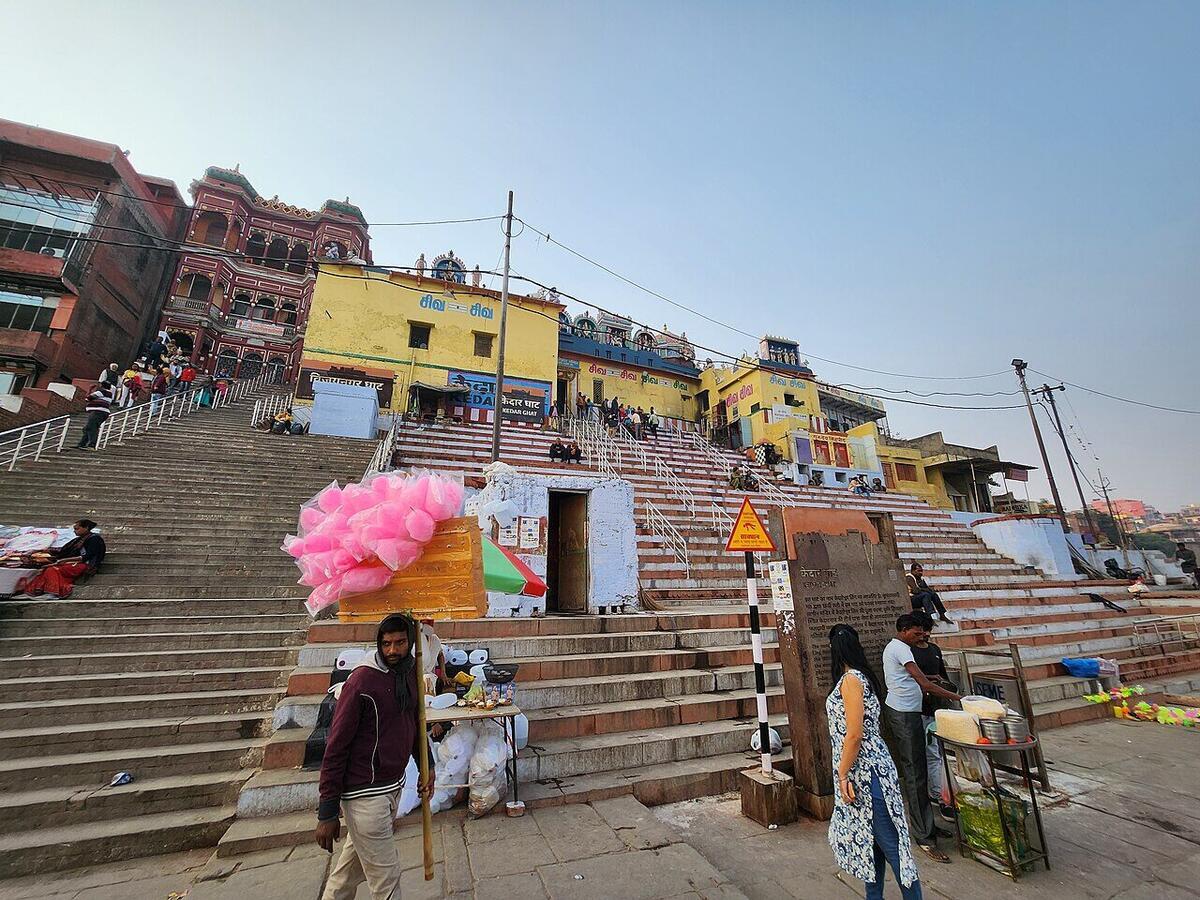
Of all the Kashi ghats, Kedar carries the most distinct South Indian and Bengali devotional character. The broad red-and-white bands painted across the risers recall South Indian temple aesthetics, and the surrounding lanes hold South Indian mathas and dharamshalas, with the unbroken presence of Tamil, Telugu, and Bengali pilgrims who have made Kedar their first ghat in Kashi for centuries.
Katha and local belief
It is said in Banaras that the Kedareshwar lingam at the top of these steps and the Kedarnath jyotirlinga in Garhwal are two manifestations of the same Shiva. Tradition holds that those who cannot complete the arduous Himalayan yatra to Kedarnath may receive its full punya by darshan here at Kedar. The lingam's unfinished, mountain-rough surface is itself the sign — Shiva at Kedar is in his austere, mountain form, not the polished form of city shrines.
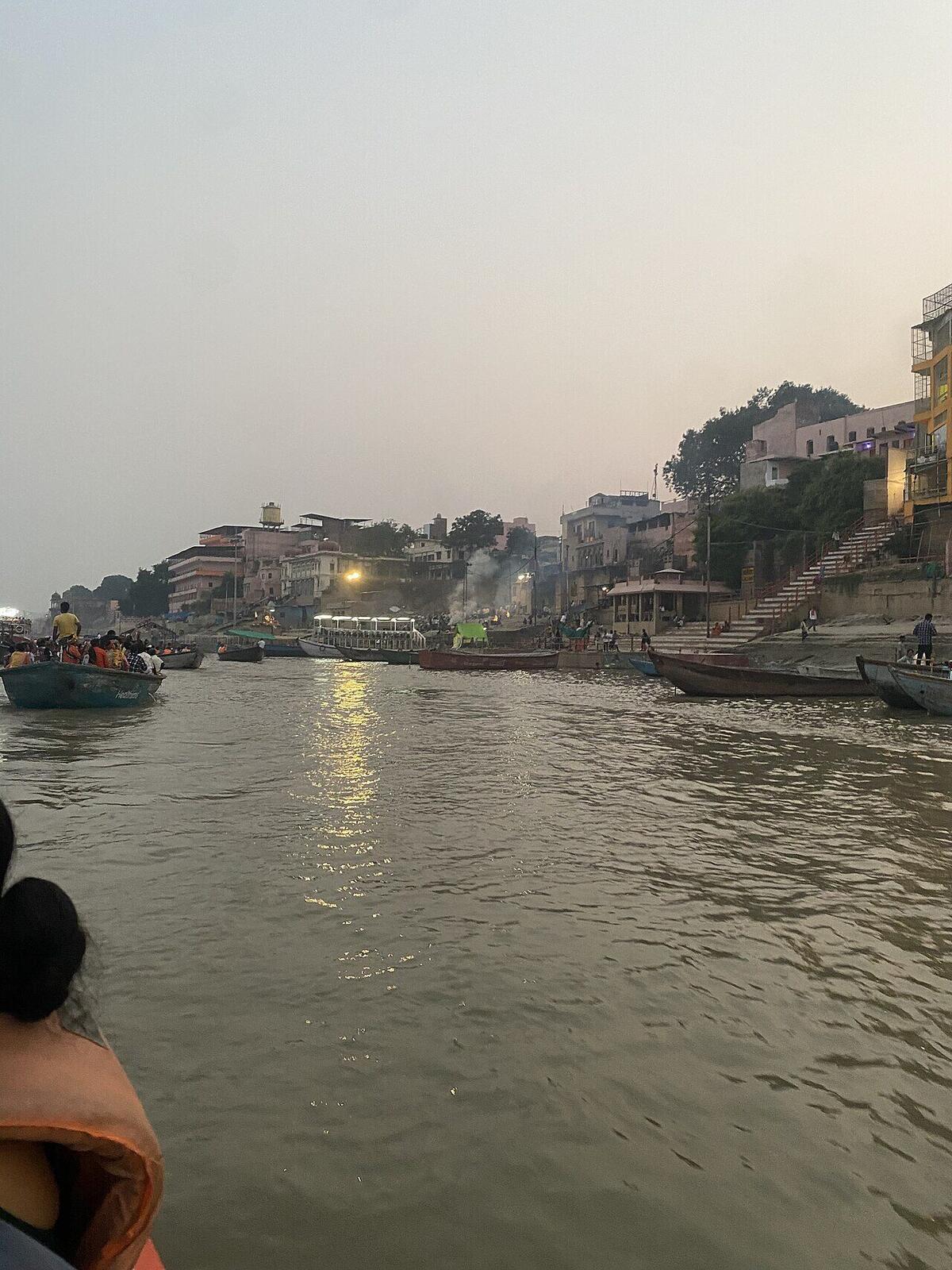
Kedar is held in Banaras to be one of the most spiritually charged ghats — second in tapas-shakti, in some traditions, only to the cremation ghats themselves. Where Manikarnika is the ghat of fire and final passage, Kedar is the ghat of austere Shaiva discipline: morning snana, abhishek of the lingam with Ganga-jal, recitation of the Maha Mrityunjaya, and the bilva patra offered upon the rough stone above. The whole of southern Kashi — the Kedar Khanda — is understood to draw its sacred character from the presence of Kedareshwar here.
Kedar and the Himalayan Kedarnath
The Puranas praise twelve principal manifestations of Shiva as jyotirlingas across Bharatavarsha. Kedarnath in Garhwal is the highest and most remote of these. Banarasi tradition holds that the lingam at the Kedareshwar temple above this ghat is the same Kedarnath made accessible to those for whom the Himalayan yatra is impossible — by age, by infirmity, or by the seasons. The mountain form of the lingam at the head of these steps, left as it is and never polished, is the visible sign of this identity. Pilgrims who wish to know the shrine itself more fully often turn to the Kedareshwar Mahadev temple that crowns the ghat.
For South Indian and Bengali pilgrims who have come to Kashi for centuries, Kedar is the central ghat of their devotion. The Tamil, Telugu, and Bengali mathas and dharamshalas in the lanes behind testify to an unbroken tradition of devotion drawn from across Bharat to this stretch.
History
The Kedareshwar shrine and the ghat that takes its name are praised in the Kashi Khanda of the Skanda Purana, which places the site within the long sacred geography of Kashi as the heart of its southern division. The present stone embankment of the ghat, like much of the Varanasi waterfront, took its modern form during the eighteenth-century rebuildings undertaken by Maratha and Bengali patrons of Kashi.
Maharani Ahilyabai Holkar of Indore, whose patronage restored Kashi Vishwanath in 1780, also contributed to the restoration of several Shaiva shrines along the river, including works at Kedar. The temple's present courtyard, the steps to the river, and the surrounding mathas reflect this period of careful rebuilding.
Through the colonial period and into the present, the ghat has retained its devotional character without becoming heavily commercialised. The South Indian and Bengali dharamshalas around Kedar, many founded in the nineteenth century by Tamil, Telugu, and Bengali trusts, continue to host pilgrim families who come for extended Kashi-vasa.
Architecture
Kedar Ghat's architecture is restrained and devotional. The broad stone steps descend to the river in the typical Banarasi pattern, but with the distinctive painted bands of red and white that mark this stretch as Kedar — a visual signature drawn from South Indian temple aesthetics.
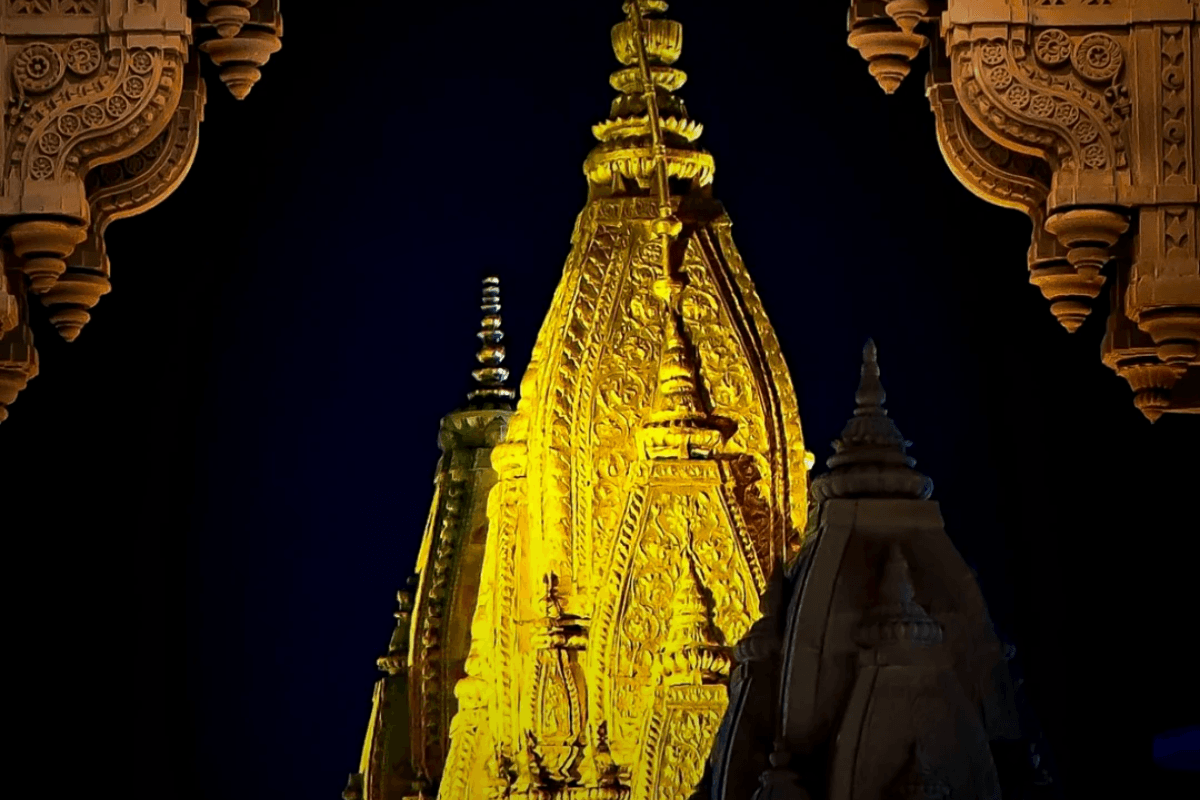
At the head of the steps stands the Kedareshwar Mahadev temple, set back from the river behind a small open courtyard. The shrine itself is compact and austere — a low-roofed sanctum housing the svayambhu lingam, with a small Nandi facing it across the courtyard. The lingam is the focus, not the architecture: it is shown in its natural rough form, left unpolished, anointed continuously with sandal paste, ash, and bilva patra.
The surrounding lanes hold a cluster of South Indian and Bengali mathas — small monastic establishments and dharamshalas built in the nineteenth century by Tamil, Telugu, and Bengali trusts to support pilgrims from those regions during their Kashi-vasa. Their architecture is plain and functional, but their continuous devotional life is part of the ghat's character.
Rituals & Practices
The pattern of devotion at Kedar is the union of snana (bath) and darshan. The pilgrim descends the steps, bathes in the Ganga with the sankalp of Shiva-darshan, and then ascends to the Kedareshwar shrine for offering at the lingam.
Offerings beloved at the lingam:
- Bilva patra — the three-leafed bel that Shiva most readily receives
- Ganga-jal poured over the lingam in abhishek
- White flowers and dhatura
- Sandalwood paste and vibhuti (sacred ash)
- The recitation of the Maha Mrityunjaya Mantra or the Rudra Suktam
The morning Rudrabhishek is the temple's central daily ritual — the formal bathing of the lingam with the panchamrit of Ganga-jal, milk, curd, honey, ghee, and sugar, accompanied by the chanting of the Rudra mantras. Pilgrims may sponsor an abhishek through the temple priests; arrangements are made simply at the courtyard.
Specific timings may vary; pilgrims are encouraged to verify with the temple before a visit.
Festivals & Celebrations
| Festival | When | Crowd |
|---|---|---|
| Mahashivratri | — | Extremely high |
| Shravan (Sawan Month) | — | Very high â peaks on Mondays |
| Kartik Purnima | — | Very high |
| Pradosh | — | Moderate to high |
Mahashivratri: Mahashivratri at Kedar carries the special weight of the South Indian and Bengali devotional tradition centred at this ghat. Many Tamil, Telugu, and Bengali families come specifically for this night, having travelled for Kashi-vasa around it.
Shravan (Sawan Month): Tradition holds Shravan as the most favourable month for Shaiva worship, and Mondays as the days on which devotees feel Shiva's grace most readily granted.
Kartik Purnima: Tradition holds that Kartik Purnima is the night the devas themselves descend to the Ganga. Kedar's particular character â the union of river and lingam â is most visible on this night.
Pradosh: Tradition holds the pradosh hour to be the time Shiva dances upon Mount Kailash. Worship in this period is regarded as carrying the merit of many ordinary days.
Prepare for Your Visit
Practical guidance to help you plan your pilgrimage
| Pilgrim Guidance | How to reachKedar Ghat is in the southern stretch of the Varanasi waterfront, a short walk north from Harishchandra Ghat and south of Dashashwamedh. Auto-rickshaws will drop pilgrims at Sonarpura crossing or at the Bhonsle Ghat lane; from there a five-minute walk through the lanes brings one to the steps. Many pilgrims prefer to approach by boat from Assi or Dashashwamedh — the painted bands of Kedar are easily recognised from the river. Preparation for Pilgrims
Best Time to VisitThe early morning, before the day's heat and crowds, is the most powerful time at Kedar — when the abhishek begins, the river is still in shadow, and the chanting of the Rudra mantras carries clearly across the steps. The month of Shravan (July to August) is the central Shaiva season and brings extended pujas and large pilgrim numbers, particularly on Mondays. Mahashivratri brings the heaviest crowds of the year. For general pilgrimage, October to March is the most comfortable window. |
Location
Varanasi, UP
Gallery
Pilgrim photos
No pilgrim photos yet.
Community corrections
No corrections yet.
Edit history
No revisions yet.
Plan Your Visit to Kedar Ghat
Get a custom itinerary and pricing for your trip.
Recommended
Packages for this destination
Pilgrim Notes
On-ground observations from fellow pilgrims
No pilgrim notes yet. Be the first to share on-ground observations!
Sign in to share a note.
Pilgrim Reviews
Be the first to share your experience at Kedar Ghat.
Sign in to write a review.
Nearby sacred places
Discover other sacred places near Kedar Ghat
Explore temples, tirthas, and pilgrimage sites in UP
Explore nearbyPart of these circuits
Walk the traditional pilgrimage routes this destination belongs to.