Kedareshwar Mahadev Mandir is the inner Shaiva shrine that gives Kedar Ghat its name and presides over the sacred quarter of southern Kashi that the Puranas honour as Kedar Khanda. The lingam within is svayambhu — self-manifested, not installed by priestly consecration — and is left in its rough, naturally formed state: an uneven mound of stone rather than a smoothed cylinder. It is among the oldest continuous Shaiva sanctums on the Kashi riverfront, and holds a particular place in the devotional life of Shaiva pilgrims from South India and Bengal, who have come to this shrine for centuries.
The temple's distinguishing tradition is that the Kedareshwar lingam here in Kashi and the great Kedarnath jyotirlinga in the Garhwal Himalayas are held to be two manifestations of the same Shiva. For the pilgrim who cannot undertake the arduous Himalayan yatra to Kedarnath — by age, by infirmity, or because the mountain shrine closes for half the year — tradition holds that darshan at Kashi's Kedareshwar carries the full punya of the Himalayan pilgrimage. The lingam's mountain-rough, uneven form, never smoothed, is itself read as the visible sign of this identity with the Himalayan jyotirlinga.
Katha and local belief
Banaras preserves a tender katha to explain why the lingam here is an uneven mound marked with a single distinct line. It is told that a devotee — remembered in the tradition through the line of the sage Vibhandak — was a humble and constant worshipper of Shiva who, before taking any food himself, would daily offer a portion of his simple meal of khichdi (rice and dal cooked together) to the Lord. One day, moved by the purity of this offering, Shiva chose to manifest then and there in the very food set before him, rising up as a svayambhu lingam from the offered khichdi. The line that runs across the face of the lingam is held in local belief to be the mark left by that offering of khichdi — the boundary, devotees say, between the rice and the dal — preserved forever in stone as the sign of a love so simple that the Lord could not refuse it.
From this katha comes the shrine's gentlest teaching: that Mahadev manifests not for the grand offering but for the sincere one, and that the food a devotee shares with the Lord before eating is itself a form of worship. To this day many devotees offer khichdi, and food shared in this spirit, at Kedareshwar.
The shrine's other enduring quality is its unusually strong South Indian and Bengali devotional character. The Tamil, Telugu, and Bengali mathas established around Kedar Ghat over the centuries — many of them still active — send their pilgrims to Kedareshwar as the central Shiva-darshan of their Kashi-vasa. The morning worship here carries the pattern of Agamic Shaiva ritual brought from the south, and the shrine is one of the few in Kashi where traditional Tamil and Telugu abhishek chants are regularly heard alongside the Sanskrit Rudra mantras.
The Kedareshwar lingam is approached in the classical pattern of Shaiva worship — with abhishek of Ganga-jal, the offering of bilva patra, recitation of the Maha Mrityunjaya Mantra or the Rudra Suktam, and the intensity of sankalp that marks serious Shaiva devotion. Set within Kedar Khanda, the southern sacred quarter of Kashi, the shrine is understood to carry its own distinct mahatmya within the larger sanctity of the city.
The shrine's particular graces, as held in Banarasi tradition:
- The full punya of Kedarnath yatra for those who cannot undertake the Himalayan pilgrimage
- Special protection and healing sought through Rudrabhishek sponsored at the shrine
- The austere tapas-shakti of a svayambhu lingam — held to respond particularly to disciplined sadhana
- The teaching of the khichdi katha — that a simple offering made with love is received by Shiva as fully as any elaborate one
- The devotional continuity of South Indian and Bengali Shaiva practice brought to Kashi
Connection with Kedar Ghat
The temple and the ghat below it are inseparable in pilgrim practice. The traditional sequence is to descend to the river for the morning snan with the sankalp of Shiva-darshan, carry a small pot of Ganga-jal up to the temple, offer it in abhishek, receive prasad, and receive tirtha-jal — the same Ganga-jal after it has touched the lingam — as the blessing of the visit. This pattern makes the ghat and the temple a single devotional unit rather than two separate destinations, and pilgrims are encouraged to approach both together.
History
The Kedareshwar shrine is praised in the Kashi Khanda of the Skanda Purana, which devotes its account of Kedar Khanda to this southern sacred quarter — placing the shrine's significance within the oldest layer of Kashi's documented sacred geography. The continuous tradition of worship at the site is traceable through Banarasi Shaiva lineages over many centuries, with the present compact sanctum dating in its current form from the eighteenth-century Maratha-period rebuildings of Kashi.
Maharani Ahilyabai Holkar of Indore, whose 1780 restoration of Kashi Vishwanath shaped so much of the modern Kashi riverfront, also supported significant works in the Kedar quarter. The shrine's present courtyard, the steps leading down to the river, and the immediately adjoining mathas reflect this period of patient rebuilding.
The South Indian and Bengali devotional communities' connection to Kedareshwar is preserved in the dharamshalas and mathas established around the temple from the nineteenth century onward. Tamil, Telugu, and Bengali trusts built these houses to support the extended Kashi-vasa of pilgrims from their regions. Many remain active today, with continuous pilgrim traffic, and they give the whole quarter around Kedar Ghat its distinctive devotional character.
Architecture
Kedareshwar Mahadev Mandir is a compact, low-slung sanctum set back from the river behind a small open courtyard. The shrine does not seek architectural grandeur — it is built in the plain Banarasi Shaiva style of the Maratha period, with a stone platform, a small Nandi mandapa, and a single-chambered sanctum entered through a low doorway. Its power lies in nearness and continuous worship rather than in scale.
Within the sanctum, the svayambhu lingam is the entire focus. It is left in its naturally rough, uneven form — a mound of stone rather than a smoothed cylinder — and bears the single distinct line that the khichdi katha explains. Beyond the daily anointing with sandal paste, ash, and bilva patra, it is neither polished nor ornamented. A small Nandi in the mandapa faces the sanctum across the courtyard.
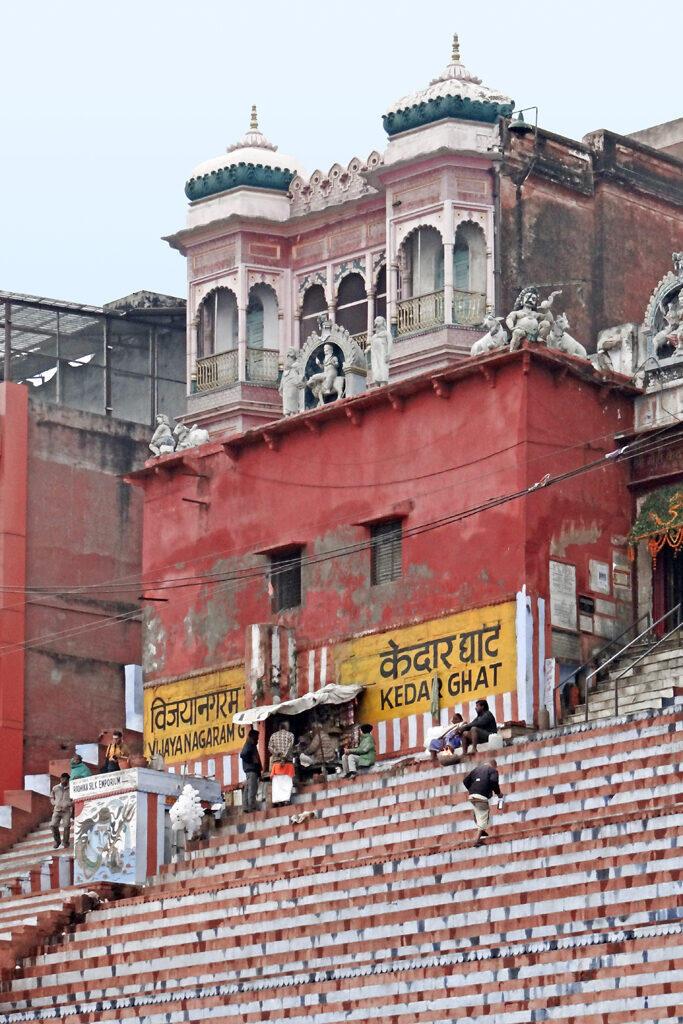
The temple's distinctive external feature — matching the steps of Kedar Ghat below — is the painted band of red and white that runs across the outer wall and railings. This colour-signature, drawn from South Indian temple aesthetics, marks the shrine as belonging to a devotional community with roots in the south, even though the temple itself is an old Banarasi structure.
Rituals & Practices
The central practice at Kedareshwar is Rudrabhishek — the formal bathing of the lingam with Ganga-jal, milk, curd, honey, ghee, and sugar (panchamrit), accompanied by the chanting of the Rudra mantras from the Yajurveda. The morning Rudrabhishek, performed around sunrise after the temple opens, is the shrine's most charged daily ritual.
Common offerings:
- Bilva patra — three-leafed bel
- Ganga-jal for abhishek
- White flowers and dhatura
- Sandalwood paste and vibhuti (sacred ash)
- Khichdi and other simple food offerings, in memory of the manifestation katha
- Recitation of the Maha Mrityunjaya Mantra or the Rudra Suktam
- For South Indian devotees, traditional Agamic offerings prescribed by the guru
Sponsored Rudrabhishek is arranged through the temple priests for a named person and sankalp. The temple conducts the full ritual with mantra recitation, and devotees may participate as sponsors and witnesses.
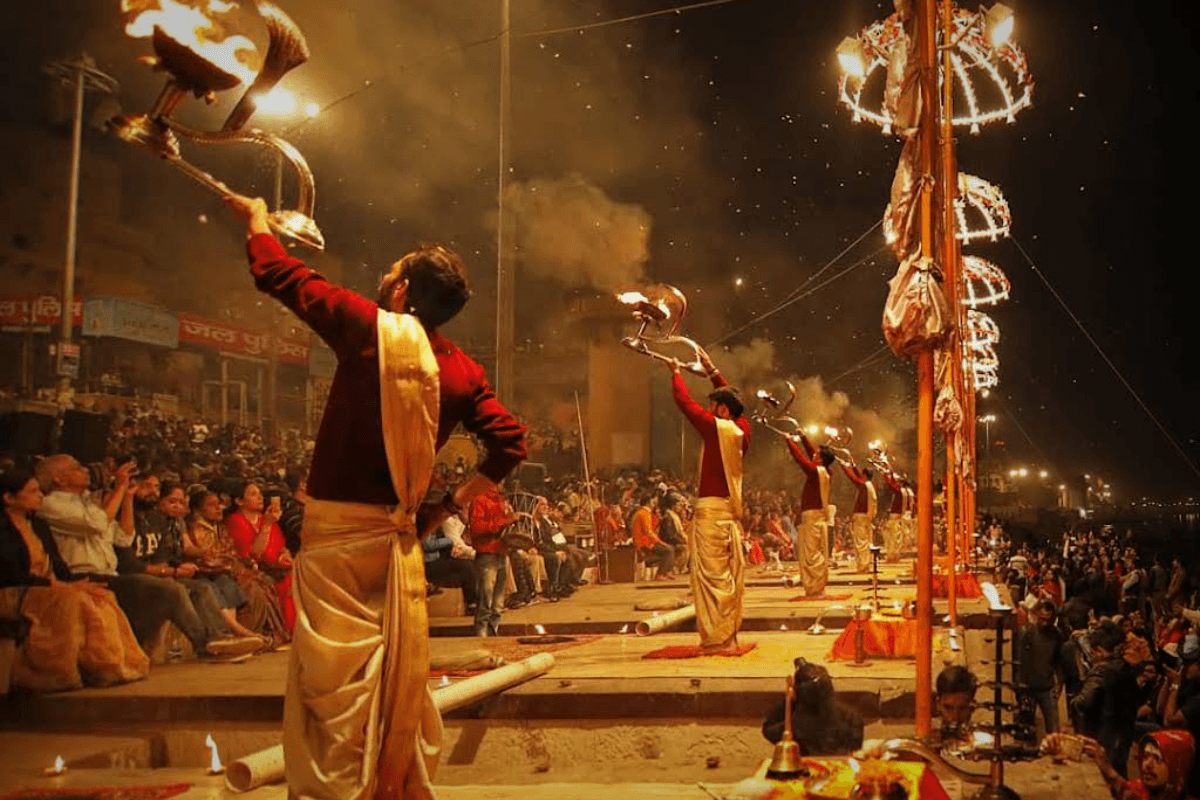
Evening worship is simpler — an aarti at sandhya time, with arati-dipa and the recitation of Shiva-stuti. Pradosh — the twilight of the 13th tithi, twice each lunar month — is the shrine's most-observed fortnightly occasion. Specific timings may vary, so pilgrims are encouraged to verify with the temple authorities before a visit.
Festivals & Celebrations
| Festival | When | Crowd |
|---|---|---|
| Mahashivratri | — | Extremely high |
| Sawan (Shravan Month) | — | Very high â peaks on Mondays |
| Pradosh | — | Moderate to high |
| Kartik Purnima (Dev Deepawali) | — | Very high |
Mahashivratri: Mahashivratri at Kedareshwar carries the special weight of the South Indian and Bengali devotional tradition centred at this shrine. Many Tamil, Telugu, and Bengali families travel specifically for this night during their Kashi-vasa.
Sawan (Shravan Month): Tradition holds Shravan as the most favourable month for Shaiva worship. Mondays, the day Shiva is said to grant darshan most readily, draw the heaviest devotion of the season.
Pradosh: Pradosh is held to be the hour when Shiva, in tradition, dances on Mount Kailash. Worship in this period is regarded as carrying the merit of many ordinary days.
Kartik Purnima (Dev Deepawali): Kartik Purnima is held to be the night the devas themselves descend to the Ganga. Kedar's particular character â the union of river and lingam â is most visible on this night.
Temple Details
| Timings | note: Timings may change with the season and on festival days â confirm locally before planning an early-morning or late-night visit. aarti: Mangala Aarti 3:15 AM · morning aarti 10:00 AM · evening aarti 5:30 PM · Shayan Aarti 10:30 PM daily: 3:00 AM â 11:00 PM |
| Pooja Services | Special pujas (arranged through the Kumaraswamy Mutt office at the temple)Anna Abhishek (annual ritual in which the Shivling is covered with cooked rice) |
| Management | Kumaraswamy Mutt (Tamil Shaiva mutt), Kedar Ghat — the temple follows South Indian tradition and its pujas are performed by the Mutt |
Prepare for Your Visit
Practical guidance to help you plan your pilgrimage
| Best Time to Visit | Ekadashi, Pradosh and Purnima are observed as specially auspicious days here; the Shravan month (July–August) — especially its Mondays — and Mahashivaratri draw the largest crowds. |
| How to Reach | by boat: Ganga boats along the ghats also stop at Kedar Ghat by road: Cycle-rickshaw or auto-rickshaw via the Sonarpura road; the final approach through the ghat lanes is on foot location: The temple stands directly above Kedar Ghat (address B-6/102, Kedar Ghat), on the southern stretch of the Varanasi riverfront |
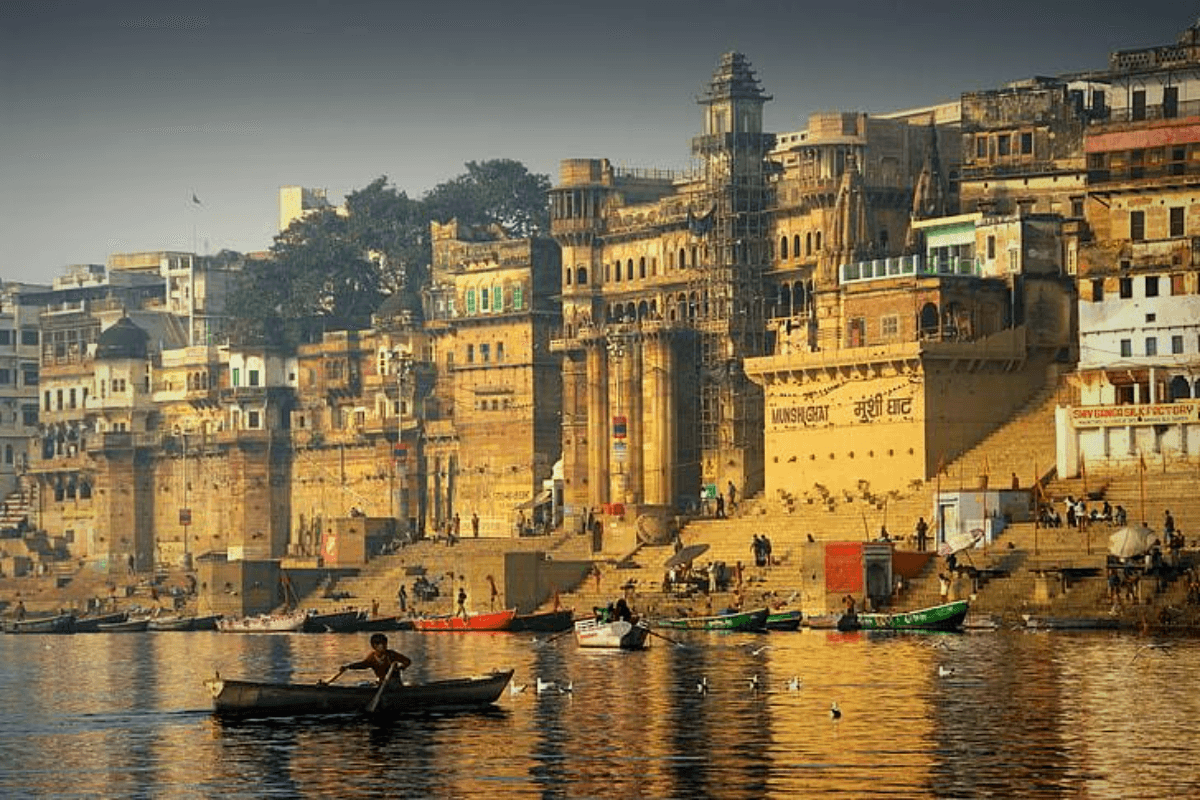
| Pilgrim Guidance | How to reachKedareshwar Mahadev stands above Kedar Ghat, on the southern stretch of the Varanasi riverfront between Harishchandra Ghat and Dashashwamedh Ghat, within the sacred quarter of Kedar Khanda. The most atmospheric approach is from the river — by boat from Assi or Dashashwamedh, recognising Kedar Ghat by its distinctive red-and-white painted bands. By land, the temple is reached through the lanes from Sonarpura crossing; auto-rickshaws drop pilgrims nearby, with a short walk of five to ten minutes through the galis. Preparation for Pilgrims
Best Time to VisitThe early morning, when the Rudrabhishek begins and the river still lies in shadow, is the most powerful time for darshan. Sawan month (July to August) is the central Shaiva season and brings extended pujas, with Mondays especially powerful. Mahashivratri draws the largest crowds of the year, and the Pradosh evenings twice each month are well-attended fortnightly observances. October to March is the most comfortable window for general pilgrimage. |
| Facilities | mutt accommodation for devotees |
| Pilgrim Tips |
|
Location
Varanasi, UP
Pilgrim photos
No pilgrim photos yet.
Official Links
Community corrections
No corrections yet.
Edit history
No revisions yet.
Plan Your Visit to Kedareshwar Temple
Get a custom itinerary and pricing for your trip.
Recommended
Packages for this destination
Pilgrim Notes
On-ground observations from fellow pilgrims
No pilgrim notes yet. Be the first to share on-ground observations!
Sign in to share a note.
Pilgrim Reviews
340 reviews
Be the first to share your experience at Kedareshwar Temple.
Sign in to write a review.
Nearby sacred places
Discover other sacred places near Kedareshwar Temple
Explore temples, tirthas, and pilgrimage sites in UP
Explore nearbyPart of these circuits
Walk the traditional pilgrimage routes this destination belongs to.