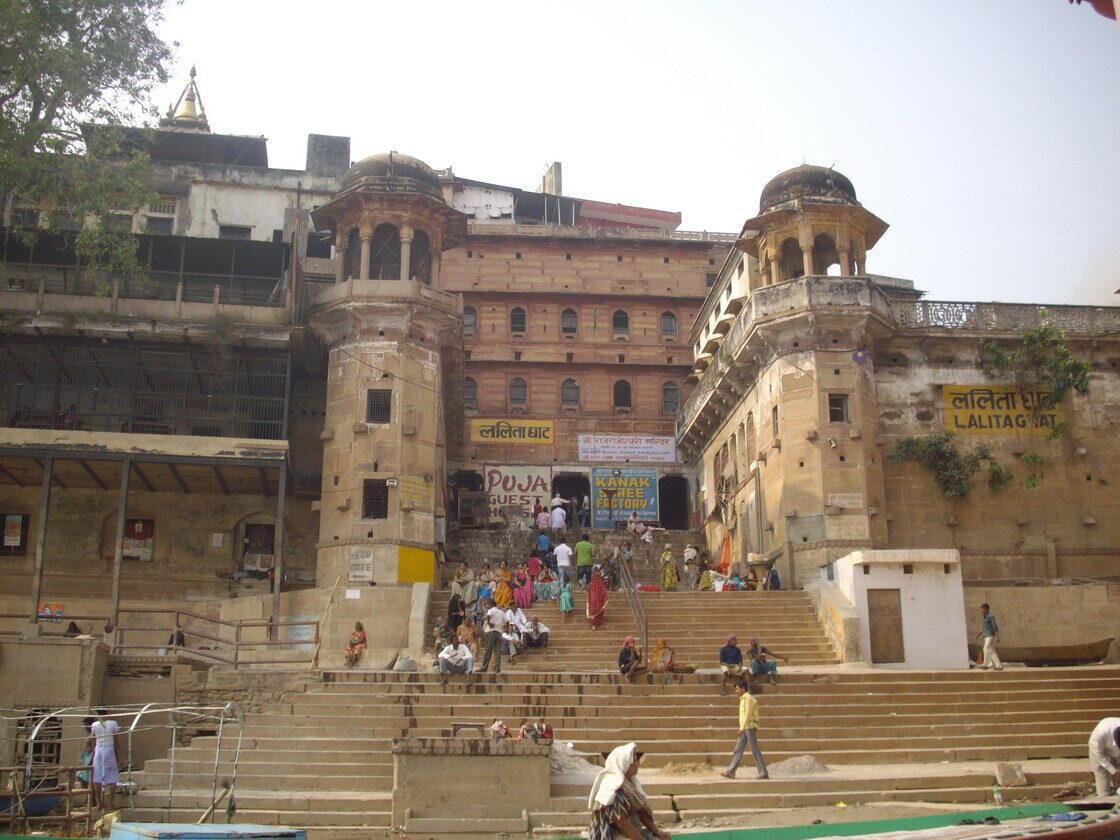
Lalita Ghat is named for Lalita Devi, worshipped in the Shakta tradition as the beautiful and benign form of the Great Goddess. A shrine to her stands above the ghat, and from her the steps below take their name. Though it is a relatively compact ghat, set in the northern sacred stretch of Kashi between Manikarnika to the north and Meer Ghat to the south, Lalita Ghat carries devotional weight far beyond its size, for two living traditions are gathered here in a single compound.
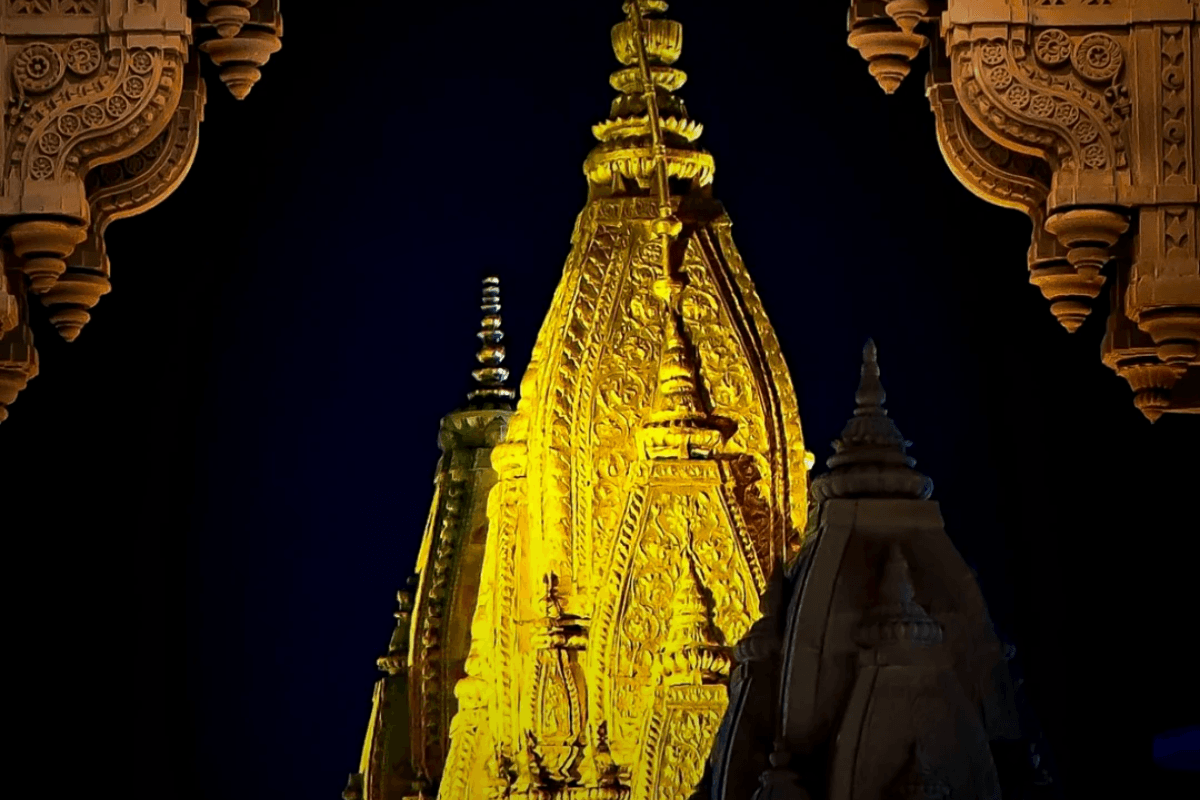
Above the steps rises the Nepali Temple (also called Kanthwala Mandir, and dedicated as Samrajeshwar Pashupatinath), built in the early nineteenth century under the patronage of the King of Nepal. Its tiered wooden pagoda roofs, carved in the Newar style of the Kathmandu valley, are the most recognisable feature of this part of the riverfront. Within the same enclosure the older Lalita Devi shrine continues the Shakta worship that gave the ghat its name. (For the temple itself, see the entry on the Nepali Temple.)
Two devotions at one ghat
Kashi has always held many streams of worship close together, and Lalita Ghat is among its clearest examples. The Lalita Devi shrine belongs to the older Shakta stratum of the city, the worship of the Mother in her form as grace and beauty. The Nepali pagoda belongs to the Shaiva devotion the King of Nepal brought to the Banaras waterfront, where Shiva is honoured in the form of Pashupatinath of Kathmandu. Devotees of both come to the ghat, and the two shrines rest side by side in one courtyard — the Mother and Mahadev held within a single sacred enclosure above the Ganga.
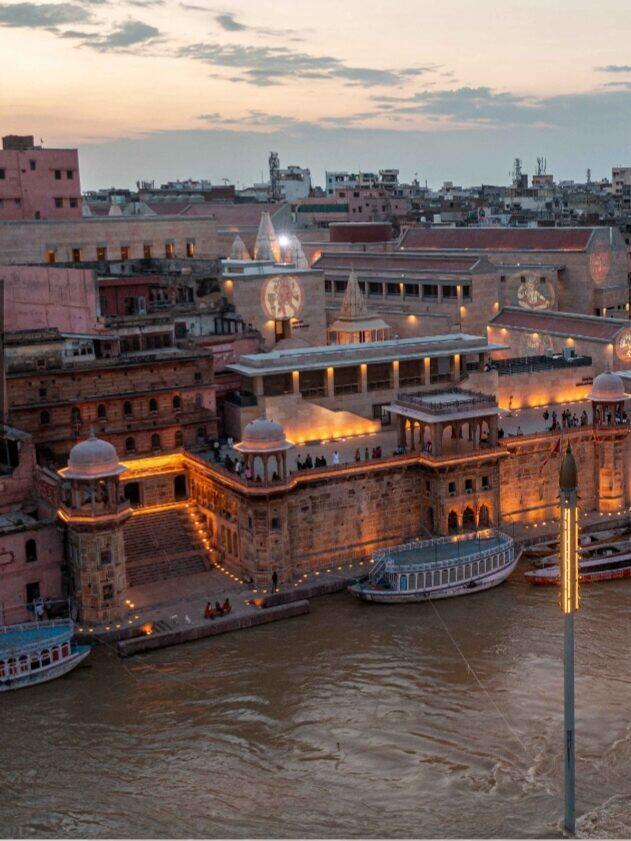
Lalita Devi belongs to the Shakta stream of Hindu worship, in which the Divine is approached as the Mother. Lalita is the gentle and gracious form of the Great Goddess — distinct from the fierce forms of Kali, Chandi and the warrior Durga, yet holding the same fullness of Devi-shakti within her. She is the presiding deity of the Lalita Sahasranama, the thousand names of the Goddess that form one of the central texts of Shakta devotion, and devotees hold that her darshan bestows grace, harmony and the inner beauty of a settled heart.
Pilgrims approach the shrine and the ghat for several reasons:
- Darshan of Lalita Devi as a benign form of the Great Goddess
- Recitation of the Lalita Sahasranama by devotees and priests
- Prayer for family harmony, beauty of character, and the cultivation of grace (saundarya)
- Darshan as one stop within the wider sacred circuit of Kashi
The Nepali sanctum within the same compound carries the devotion of Pashupatinath into Kashi. For Nepali pilgrims, this ghat is a central anchor of worship, a place where the rites of their own tradition can be offered without the long journey back to Kathmandu. For the Banarasi devotee, the compound offers a rare nearness of two devotions at once — the Mother as Lalita, and Shiva as Pashupatinath — gathered above the river.
Katha and local belief
In Shakta tradition, Lalita is revered as Lalita Tripura Sundari, the supreme Goddess of the Sri Vidya school, she who is the beauty of the three worlds. The Lalita Sahasranama, drawn from the Brahmanda Purana, praises her as the Mother who is at once tender and all-powerful, dwelling at the heart of creation. It is held in Kashi that the Goddess takes her gentle form here so that the devotee may approach the immense without fear — that where Kali overwhelms, Lalita receives.
Banaras also keeps the memory of how the Nepali devotion came to settle beside her. Tradition recalls that the King of Nepal, dwelling in Kashi, raised the pagoda to Pashupatinath so that the worship of Kathmandu's great Shiva might continue on the banks of the Ganga. That the older shrine of the Mother was kept within the new enclosure, rather than set aside, is itself remembered as an act of devotion — the newer worship bowing to the older, as Kashi has always done.
History
The Lalita Devi shrine is recorded in older Banarasi Shakta devotional accounts, placing it among the layer of Kashi's goddess-shrines that predate the present riverside structures. The exact date of its founding is not preserved, but the continuity of its worship is attested across centuries — the true historical thread of the ghat is this unbroken devotion to the Mother.
The stone embankment of Lalita Ghat, like much of the Banaras waterfront, took its present form during the eighteenth-century Maratha rebuilding of the ghats. In the early nineteenth century, during the residence of King Rana Bahadur Shah of Nepal in Kashi, the Nepali Temple was raised on the rise above the ghat. The older Lalita Devi shrine was not displaced but drawn into the new compound — a continuity characteristic of Kashi, where newer devotion gathers up the older rather than replacing it.
From the colonial period to the present, the ghat has remained a working pilgrim stretch without major change. The Nepali Temple is cared for through the office of the Government of Nepal in Kashi, while the Lalita Devi shrine is tended by the priestly families attached to the Shakta tradition of the compound. Both worships continue, side by side, as they have for generations.
Architecture
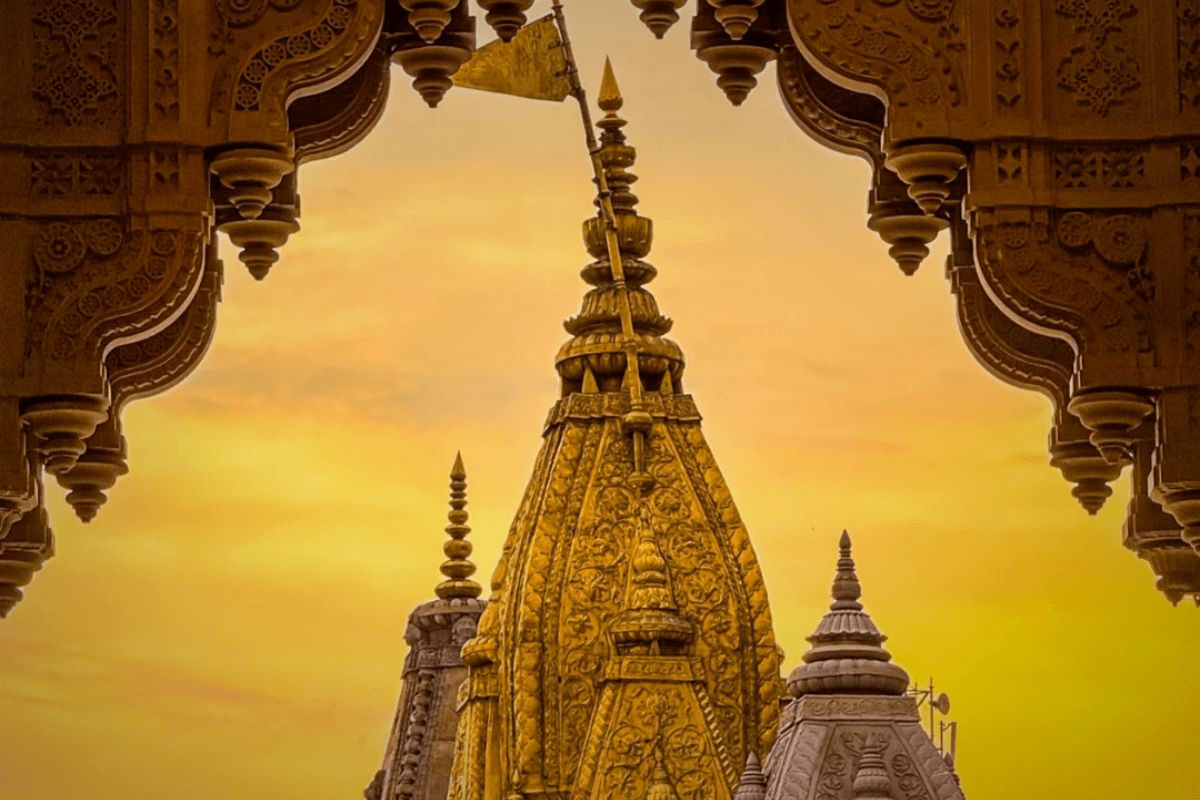
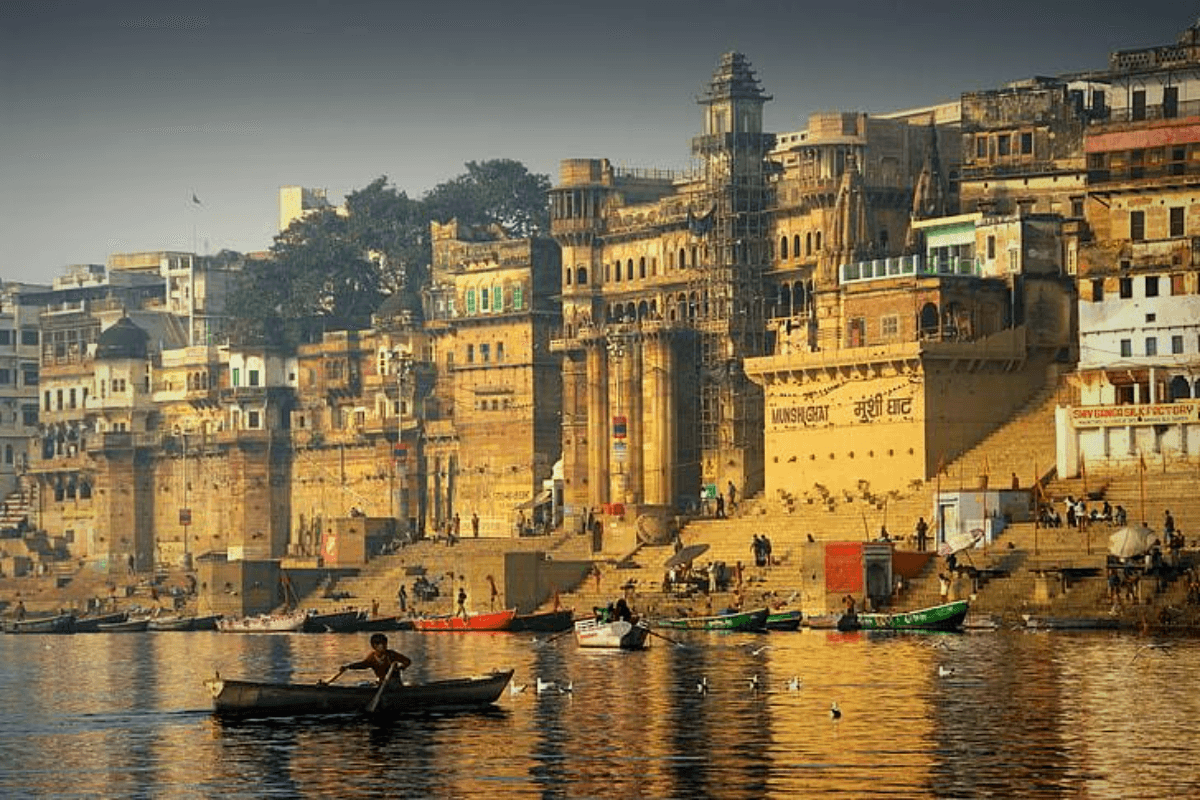
The architecture of Lalita Ghat itself is plain — broad stone steps descending to the Ganga in the familiar Banarasi pattern — and it is the compound above that holds the real interest. The tiered pagoda roofs of the Nepali Temple, supported on carved wooden struts in the Newar manner of the Kathmandu valley, are the most distinctive feature of this entire stretch of the waterfront, and are described more fully in the entry on the Nepali Temple.
The Lalita Devi shrine within the compound is a compact sanctum in the simple Banarasi Shakta style — a small garbhagriha holding the murti of the Goddess, a low mandapa where devotees gather, and the traditional implements of Shakta worship: the yantra, the trishul, the standing lamps. It is unassuming in form, but its power lies in nearness and in long devotion rather than in scale.
To hold both shrines within one enclosure — a compact Shakta sanctum and a Newar pagoda — is itself unusual in Kashi, where compounds more often keep to a single tradition. Pilgrims commonly spend time in both, and in the courtyard that joins them, where the worship of the Mother and of Pashupatinath share a single sacred space above the river.
Rituals & Practices
Worship at Lalita Ghat takes several forms, each following the tradition of its own shrine.
At the Lalita Devi shrine:
- Darshan of the murti and the offering of red flowers, with hibiscus the traditional flower of the Goddess
- Recitation of the Lalita Sahasranama, the thousand names of the Goddess, by devotees and priests
- Offerings of sindoor and turmeric
- A small dakshina toward the shrine's upkeep
At the Nepali (Pashupatinath) sanctum:
- Bilva patra, Ganga-jal and white flowers offered at the linga
- Traditional Newar-style worship during the observances of the Nepali community
At the ghat below:
- Morning snana in the Ganga
- Carrying Ganga-jal up to both shrines for abhishek
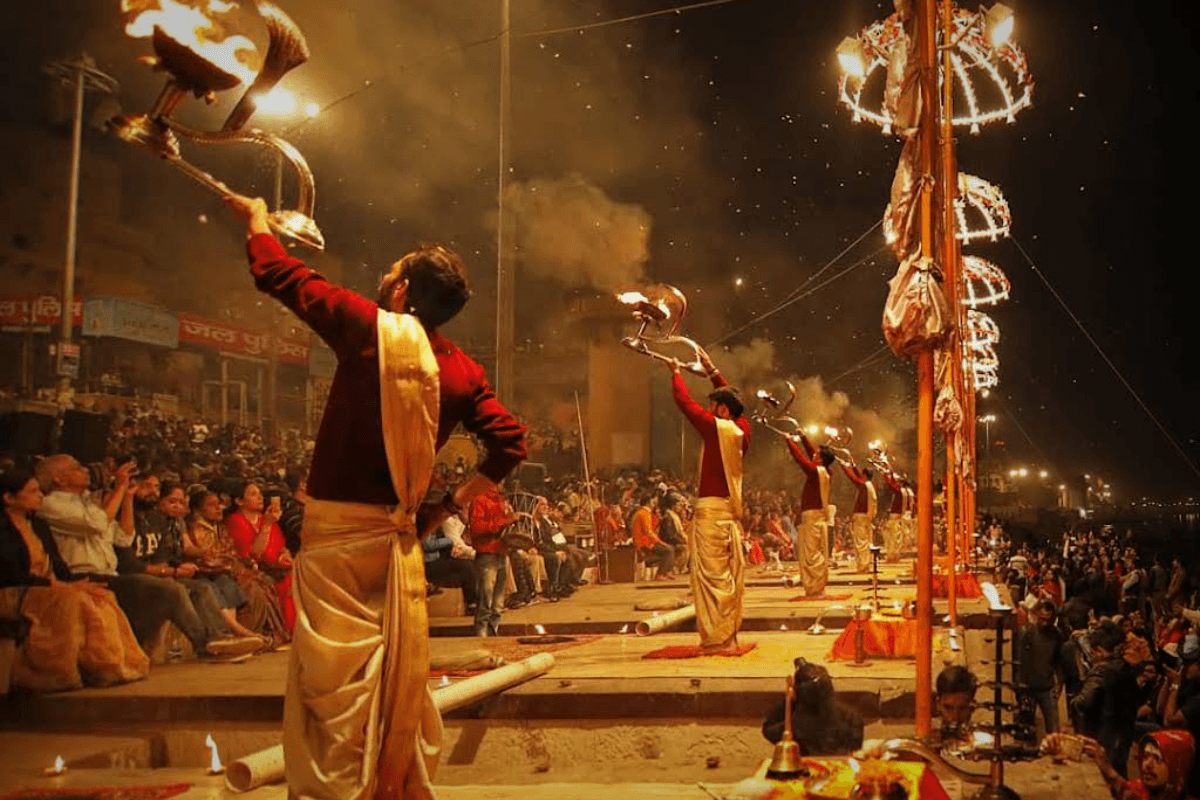
- Floating of diyas on the river during Dev Deepawali
Timings of aarti and puja may vary at each shrine; pilgrims are encouraged to verify the current schedule with the temple authorities before a visit.
Festivals & Celebrations
| Festival | When | Crowd |
|---|---|---|
| Navratri (Chaitra and Sharad) | — | Very high |
| Mahashivratri | — | Very high |
| Dev Deepawali (Kartik Purnima) | — | Extremely high |
| Fridays | — | Moderate |
Navratri (Chaitra and Sharad): Navratri joins the shrine's quiet daily worship to the wider Navratri devotion of Kashi. The Sahasranama, drawn from the Brahmanda Purana, is the textual heart of the festival here.
Mahashivratri: Mahashivratri here marks the night at the Pashupatinath form of Shiva within Kashi. For Nepali devotees unable to reach Kathmandu, this is the home temple of their tradition.
Dev Deepawali (Kartik Purnima): Dev Deepawali joins the ghat's intimate character to the city-wide offering of light. The illuminated Nepali pagoda above the steps is among the most moving sights of the night.
Fridays: The weekly rhythm of the Lalita shrine turns around Friday worship. For local devotees of the Shakta tradition, a Friday darshan is part of ordinary devotional life.
Prepare for Your Visit
Practical guidance to help you plan your pilgrimage
| Pilgrim Guidance | How to reachLalita Ghat lies on the central Varanasi waterfront, immediately north of Meer Ghat and just south of Manikarnika Ghat. The most fitting approach is by boat from Dashashwamedh — the pagoda roofs of the Nepali Temple rising above the steps make the ghat easy to recognise from the river. By land, it is reached on foot through the old-city lanes from Vishwanath Gali; auto-rickshaws set pilgrims down near the Godowlia crossing, from where the ghat is a short walk through the galis. Preparation for Pilgrims
Best Time to VisitEarly morning, roughly 5:30 to 8:00 AM, is the most peaceful time — the ghat is quiet, the morning worship at the Lalita shrine is underway, and the abhishek at the Nepali Temple is beginning. Navratri brings extended worship at the Lalita shrine, and Mahashivratri at the Nepali Temple. Dev Deepawali, on Kartik Purnima in November, fills the whole compound with light. October to March is the most comfortable season for a general visit. |
Location
Varanasi, UP
Gallery
Pilgrim photos
No pilgrim photos yet.
Community corrections
No corrections yet.
Edit history
No revisions yet.
Plan Your Visit to Lalita Ghat
Get a custom itinerary and pricing for your trip.
Recommended
Packages for this destination
Pilgrim Notes
On-ground observations from fellow pilgrims
No pilgrim notes yet. Be the first to share on-ground observations!
Sign in to share a note.
Pilgrim Reviews
Be the first to share your experience at Lalita Ghat.
Sign in to write a review.
Nearby sacred places
Discover other sacred places near Lalita Ghat
Explore temples, tirthas, and pilgrimage sites in UP
Explore nearbyPart of these circuits
Walk the traditional pilgrimage routes this destination belongs to.