Madhyameshwar Mahadev — the Lord of the centre — is the Shiva shrine that Banarasi tradition holds to stand at the very middle of Kashi. In the sacred understanding of the city, Kashi is not only a place of temples but a kshetra with an inner order, a living mandala of Shiva lingas marking its centre and its directions. Madhyameshwar is the still point at the heart of that order, the linga from which the measure of the sacred city is taken.
Devotees hold this to be among the oldest and most important Shiva-tirthas of Banaras. The Kashi Khanda of the Skanda Purana names it among the principal lingas of the kshetra, and in some strands of the city's sacred memory Madhyameshwar is honoured as a chief linga of Kashi, the centre around which Vishwanath and the directional shrines are arranged. For those undertaking the wider Kashi yatra, darshan here is not an optional stop but the anchoring of the whole pilgrimage at its core.
The shrine itself is small and unhurried, set within the old lanes of the city. Its greatness is not in scale but in place — to stand before Madhyameshwar is to stand, in the city's own reckoning, at the centre of Kashi.
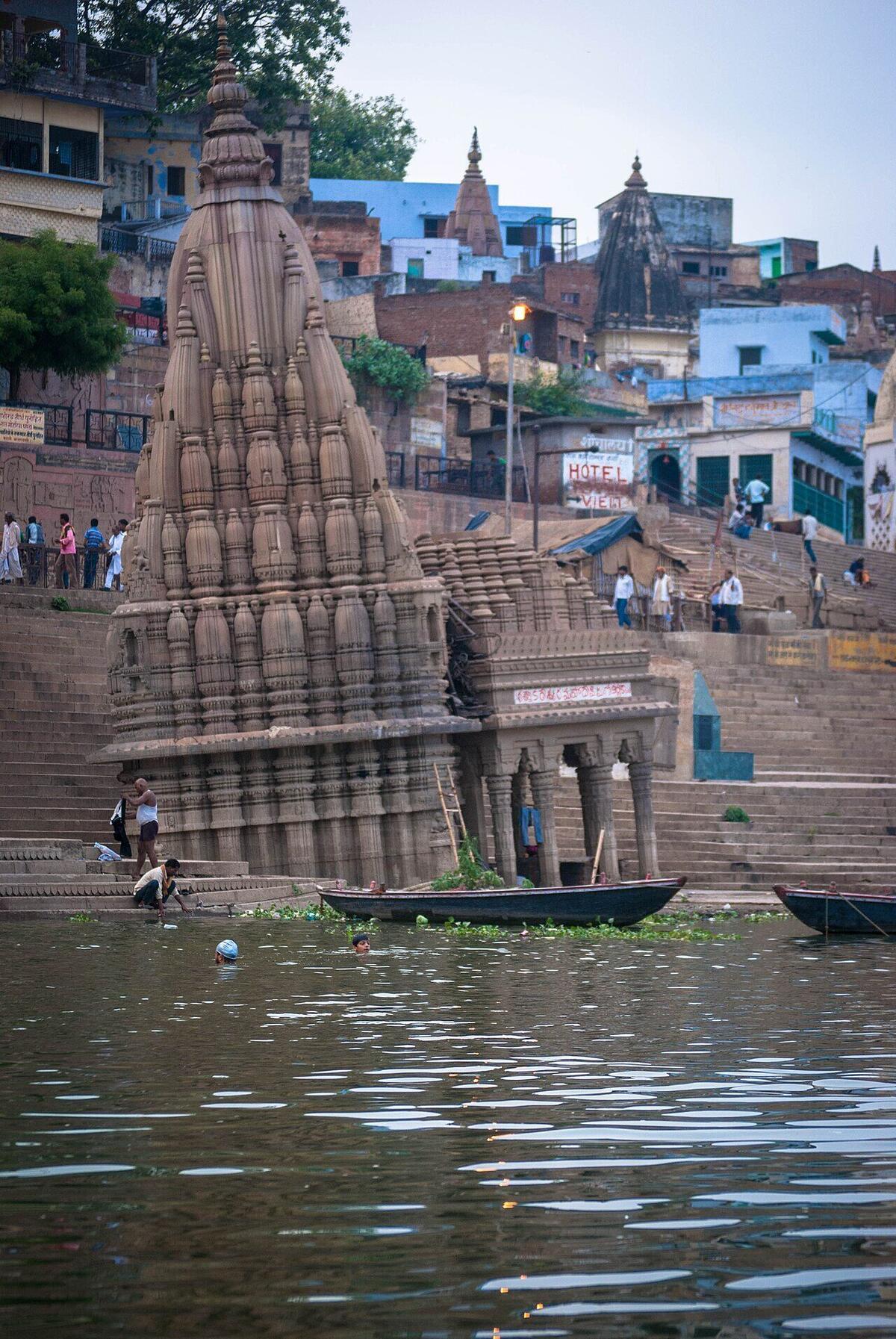
The deepest meaning of Madhyameshwar rests in the old Banarasi understanding of Kashi as a kshetra ordered around Shiva. Tradition holds that the sacred city has a geography that can be read — a centre, the cardinal directions, intermediate points — each marked by a Shiva linga, so that the whole of Kashi forms a single mandala of worship. Madhyameshwar is the centre of this mandala. Where the directional lingas guard and define the edges, Madhyameshwar is the linga that holds the kshetra together from within.
Because of this, devotees hold that worship at Madhyameshwar is worship of Shiva in his integrative grace — not Shiva of one direction or one boon, but Shiva as the axis on which the sacred city turns. Pilgrims come for the ordinary needs of Shaiva worship — Rudrabhishek, Mahamrityunjaya japa, the vow of Sawan Somvar — and also for the quieter blessing of having touched the heart of Kashi.
Katha and local belief
It is said in Banaras that to know Kashi truly one must know its lingas not as scattered shrines but as a single sacred body, and that Madhyameshwar is the heart of that body. The pandits whose lineages preserve the kshetra-tradition speak of a yatra in which the centre is visited so that the directions may be understood in relation to it.
For this reason Madhyameshwar is woven into the Panchkroshi parikrama and the wider directional darshan of the city. To complete the kshetra-worship of Kashi, tradition holds, the centre must be honoured — and the centre is Madhyameshwar.
History
Worship at Madhyameshwar reaches back into the early sacred history of Kashi. The Kashi Khanda records it among the principal lingas of the kshetra, and the city's pandit lineages have carried forward the tradition that places it at the centre of Kashi's sacred geography across many centuries.
Like much of old Banaras, the shrine passed through periods of disturbance, yet worship at the site was never abandoned — the continuity of devotion is the true thread of its history. The present temple structure belongs to the eighteenth-century Maratha-period rebuilding, the age in which much of sacred Kashi was restored and renewed by Hindu patrons.
Since then the shrine has been continuously maintained, and the knowledge of its central place in the kshetra has been preserved by the Banarasi pandits whose families know the directional Shaiva order of the city. To visit Madhyameshwar today is to stand within a tradition of worship that the centre of Kashi has never lost.
Architecture
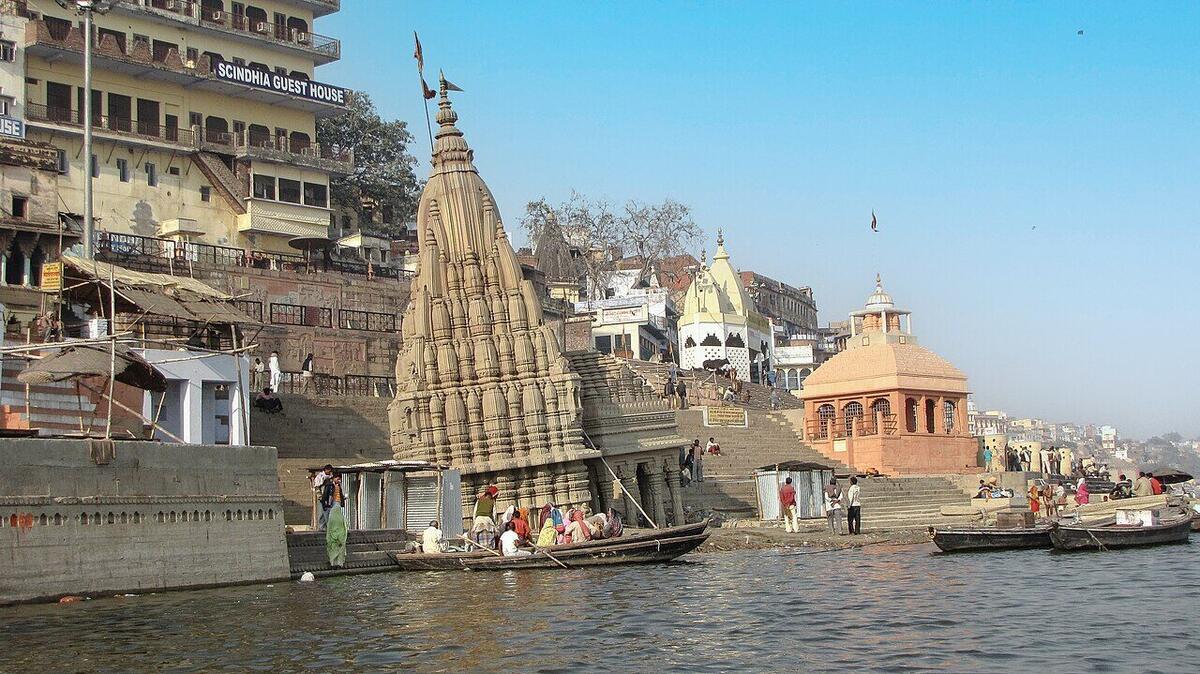
Madhyameshwar Mahadev is a compact shrine in the plain Banarasi Maratha-period idiom — a single sanctum housing the linga, a small mandapa before it, and a modest courtyard. There is little of the monumental here; the significance of the place lies in its position within the sacred order of Kashi, not in any outward grandeur.
The linga in the sanctum is dark and worn smooth by long worship, anointed through the day with sandal paste, vibhuti, bilva patra, and Ganga-jal during abhishek. A small Nandi keeps watch from across the courtyard, facing the sanctum as he does at every Shaiva shrine. The intimacy of the space draws the devotee close — here the darshan is near and unhurried, and the force of the shrine comes from devotion rather than dimension.
Rituals & Practices
Worship at Madhyameshwar follows the familiar Shaiva rhythm. Exact timings may change, so pilgrims should verify current schedules with the temple authorities, but the shape of the daily devotion is well loved and steady.
The offerings beloved here are those offered to Shiva everywhere in Kashi:
- Bilva patra and Ganga-jal in abhishek
- White flowers and dhatura
- Sandal paste, ash, and vibhuti
- Recitation of the Mahamrityunjaya Mantra and the Rudra Suktam
Those who wish to sponsor a Rudrabhishek may arrange it through the temple priests. The morning abhishek, the Pradosh evenings, Mondays, and above all the month of Sawan are the most charged periods of worship. For pilgrims undertaking the Panchkroshi parikrama or the wider Kashi yatra, Madhyameshwar is honoured in its proper place among the lingas of the kshetra — the centre received before or alongside the directions.
Festivals & Celebrations
| Festival | When | Crowd |
|---|---|---|
| Mahashivratri | — | Very high |
| Sawan (Shravan Month) | — | High â peaks on Mondays |
| Pradosh | — | Moderate |
| Panchkroshi Parikrama | — | Moderate (parikrama participants) |
Mahashivratri: Mahashivratri at any Kashi Shiva shrine carries the weight of the great night of Shiva; at Madhyameshwar it is observed at the centre of the kshetra.
Sawan (Shravan Month): The central Shaiva season; Madhyameshwar receives heightened devotion as part of the wider Sawan yatra of Kashi.
Pradosh: The fortnightly Shaiva observance, especially auspicious for Shiva worship.
Panchkroshi Parikrama: The kshetra-yatra tradition that arranges Kashi's sacred geography around its central and directional Shiva lingas.
Prepare for Your Visit
Practical guidance to help you plan your pilgrimage
| Pilgrim Guidance | How to reachMadhyameshwar Mahadev lies within the old lanes of central Varanasi. Pilgrims usually come by auto-rickshaw to the nearest lane entrance and walk the short distance through the galis to the shrine. A local guide or pandit familiar with the area makes the approach easier for first-time visitors. Preparation for Pilgrims
Best Time to VisitEarly mornings and the Pradosh evenings are the most charged for darshan. Mondays bring extended Shaiva worship, and Sawan (July-August) is the central Shaiva season, when devotion at the shrine is at its fullest. Mahashivratri draws the heaviest crowds. For general pilgrimage, October to March is the most comfortable window. |
Location
Varanasi, UP
Pilgrim photos
No pilgrim photos yet.
Community corrections
No corrections yet.
Edit history
No revisions yet.
Plan Your Visit to Madhyameshwar Mahadev Temple
Get a custom itinerary and pricing for your trip.
Recommended
Packages for this destination
Pilgrim Notes
On-ground observations from fellow pilgrims
No pilgrim notes yet. Be the first to share on-ground observations!
Sign in to share a note.
Pilgrim Reviews
Be the first to share your experience at Madhyameshwar Mahadev Temple.
Sign in to write a review.
Nearby sacred places
Discover other sacred places near Madhyameshwar Mahadev Temple
Explore temples, tirthas, and pilgrimage sites in UP
Explore nearbyPart of these circuits
Walk the traditional pilgrimage routes this destination belongs to.