Meer Ghat lies on the central sacred stretch of the Kashi riverfront, between Lalita Ghat to the north and Man Mandir Ghat to the south, a short walk from Manikarnika and Dashashwamedh. To the pilgrim its meaning rises from the lane above, for this is the ghat of Vishalakshi Devi — the wide-eyed Mother worshipped as the Shakti counterpart of Vishwanath, and counted among the classical Shakti Peethas of India. Banarasi devotees often still call this stretch Vishalakshi Ghat, and the river steps are approached not as an ordinary bathing place but as the threshold of the Devi.
For those who come for the Peetha, the visit is held to be complete only through both river and shrine: a bath in the Ganga at the ghat, sankalp taken for the darshan, and then the short ascent through the old lane to stand before Vishalakshi. (For the full Shakti Peetha tradition, see the entry on the Vishalakshi Temple.) The ghat is also home to the Dharmakupa, the ancient sacred well associated with Dharmaraja Yama, and the shrine of Dharmesha — a tirtha praised in the Kashi Khanda long before the present steps were laid.
The Mughal-era name Meer, after a local official, has stayed with the ghat across the centuries, while the worship it serves has continued unbroken. It is a quieter, more working ghat than the great Dashashwamedh stretch — less a stage for spectacle than a place where the daily devotion of Kashi goes on: morning snana, tarpana for ancestors, and the steady walk of pilgrims toward the Mother above.
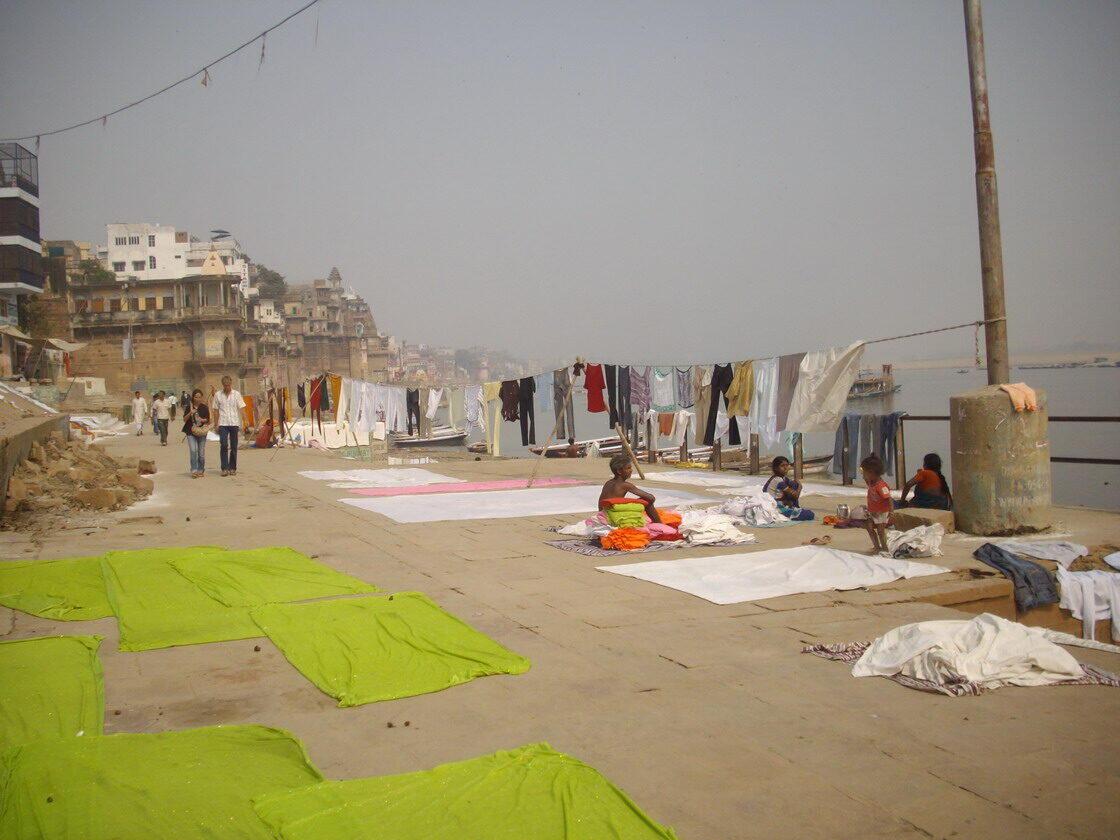
The sanctity of Meer Ghat is inseparable from Vishalakshi Devi above it. A Shakti Peetha is held in Hindu tradition to be ground upon which a relic of Sati fell, and where the Divine Mother's presence is therefore understood to remain. Tradition names the Devi's eye as the relic here, while another lineage recalls the earring (mani-karnika); both mark this as ground charged with the Mother's presence. For a devotee, the bath at the ghat is the purification that prepares the body and mind for that darshan, and the two acts are held as one sankalp.
Kashi tradition understands Vishwanath and Vishalakshi as inseparable — the city as the meeting of Shiva and Shakti — and a yatra that honours only one side is not considered complete. Many pilgrims therefore approach Meer Ghat within the same circuit that takes them through Vishwanath and Annapurna, the river bath at Meer Ghat preparing them for the Devi who completes the yatra.
Dharmakupa and the katha of the ghat
Beyond the Devi, Meer Ghat carries an older Puranic memory. The Kashi Khanda of the Skanda Purana praises the Dharmakupa here — the well of Dharma — and the shrine of Dharmesha, linked in tradition to Dharmaraja Yama, the lord of righteous order. It is said that Yama himself worshipped Shiva at this tirtha and was granted that those who offer here with a true heart are released from the fear of unrighteous death. Devotees offer water and tarpana at the Dharmakupa, and the well is counted among the sacred kupas of the Kashi mahatmya.
A belief cherished in Banaras holds that the wide gaze of Vishalakshi misses no devotee who reaches her door, and that the Ganga at her ghat carries the prayer upward before the feet are even climbed. For families, the ghat is also a place of tarpana — the offering of remembrance to ancestors made standing at the water's edge — held with particular weight during Pitra Paksha.
History
The devotional life of Meer Ghat is far older than its present name. The Shakti Peetha tradition of Vishalakshi above is ancient, recorded across Tantric and Puranic sources, and the Kashi Khanda praises the Dharmakupa tirtha at this stretch — placing worship here long before any surviving structure. The ghat below has served as the river approach to these shrines for as long as they have been worshipped.
The present stone embankment belongs to the eighteenth-century rebuilding of the Kashi riverfront, the same Maratha-period work that gave most of the surviving ghats their masonry steps. The name Meer was given during the Mughal period after a local official who held the stretch; the patron's name changed, but the worship continued exactly as before, and Banarasi memory has kept the older devotional name of Vishalakshi Ghat alongside it.
Through the colonial and modern periods the ghat has held its character as a working pilgrim approach to one of Kashi's principal Devi shrines, rather than a ceremonial showpiece. It sees fewer visitors than the great Dashashwamedh stretch to the south, and keeps the quieter, devotional temper of ghats whose life is worship rather than display.
Architecture
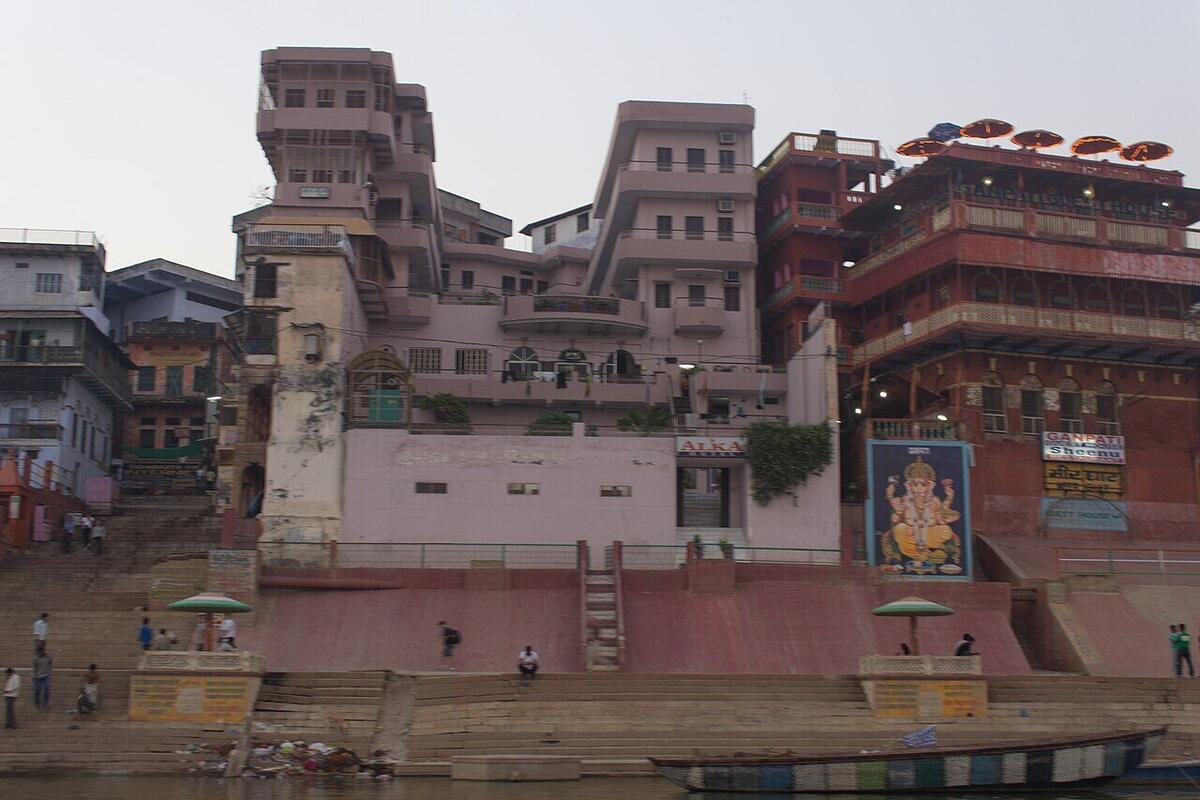
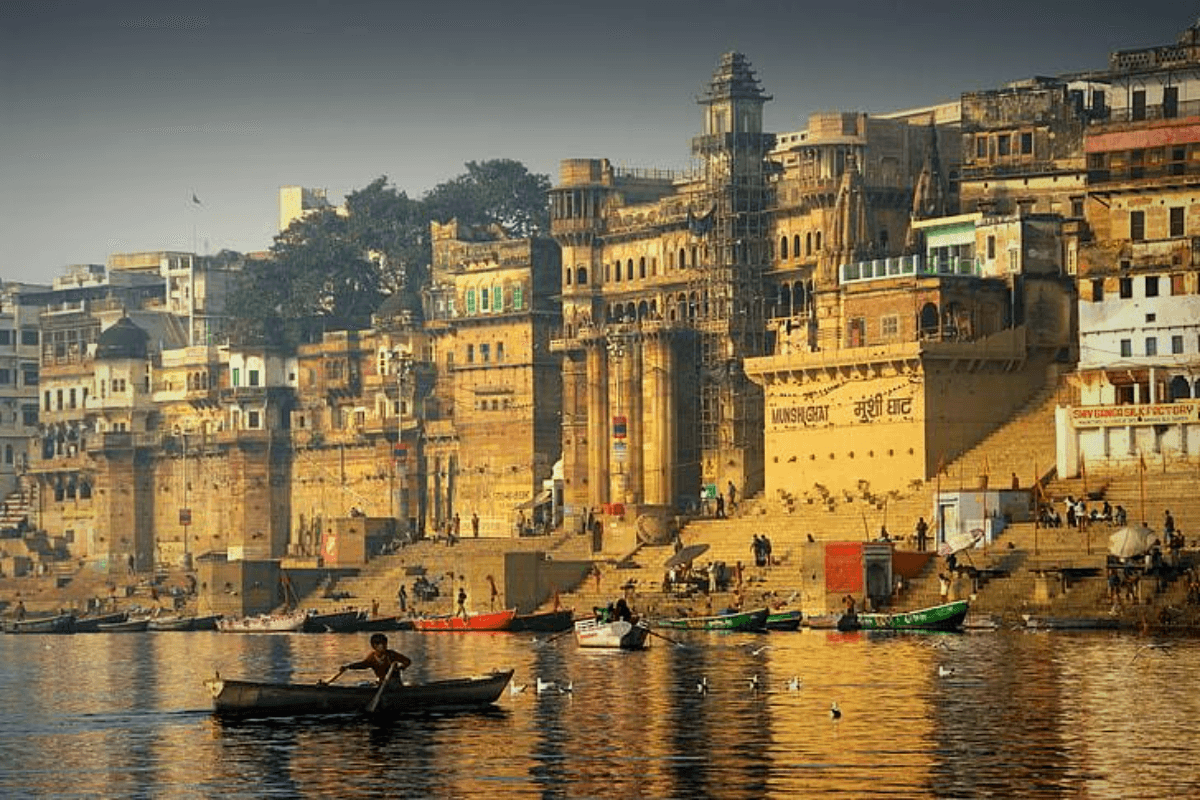
Meer Ghat is a compact ghat in the familiar Banaras pattern — broad stone steps descending to the Ganga, a paved riverside walk along the water, and narrow lanes climbing through the old-city fabric to the Vishalakshi Temple above. Its character is plain and devotional rather than monumental; the steps are unornamented and made for use, worn smooth by generations of bare feet and river water.
Small shrines, mostly Shaiva, are set into the walls along the steps, honoured by passing pilgrims though not destinations in themselves. The true sacred focus lies above — the Dharmakupa well and the intimate haveli-style sanctum of Vishalakshi, reached through the lanes. The ghat is the threshold; the shrines are the heart.
Set between Lalita Ghat to the north, with the timber Nepali pagoda rising above it, and Man Mandir Ghat to the south, crowned by the stone lattice of the Jantar Mantar observatory, Meer Ghat looks out upon two of the most distinctive stretches of the Banaras waterfront. It does not compete with them. Its grace is in quietness, in the steady rhythm of those who come to bathe and to remember.
Rituals & Practices
The devotional rhythm of Meer Ghat is shaped by the Vishalakshi Temple and the Dharmakupa above; for the full pattern of the Devi's worship, see the entry on the Vishalakshi Temple. At the river itself, the practices follow the familiar order of a Kashi ghat:
- Morning snana — taken with a sankalp for Vishalakshi darshan before the bath
- Carrying Ganga-jal — a small lota of river water borne up the lane for offering at the temple and the Dharmakupa
- Tarpana — offerings of remembrance to ancestors from the lower steps, observed especially during Pitra Paksha and on death anniversaries
- Floating diyas — lamps offered to the Ganga during Dev Deepawali and on Devi occasions
- Quiet sitting — contemplation on the steps, an ease that Meer's relative stillness allows more than the crowded central ghats
The ghat is also a common boarding point for boats — upstream toward Dashashwamedh for the evening Ganga Aarti, or downstream toward Manikarnika. Worship timings at the Vishalakshi Temple above may shift through the year; pilgrims are encouraged to verify before a visit.
Festivals & Celebrations
| Festival | When | Crowd |
|---|---|---|
| Navratri | — | Very high |
| Dev Deepawali | — | Extremely high |
| Pitra Paksha | — | High |
| Friday Devi Darshan | — | Moderate to high |
Navratri: Tradition holds that the presence of a Shakti Peetha is most accessible during Navratri, when the Divine Mother is most actively worshipped. Meer Ghat is the river-level threshold of that worship.
Dev Deepawali: Tradition holds that Dev Deepawali marks the descent of the devas to bathe in the Ganga. The ghat's central position gives it a fine view of the city-wide offering of light.
Pitra Paksha: Tarpana at Kashi during Pitra Paksha is held to carry particular weight in the ancestral tradition. Meer Ghat offers one of the quieter, more reflective stretches for this private rite.
Friday Devi Darshan: The weekly rhythm of Meer Ghat is shaped by Friday's particular devotion to the Mother â a working pattern preserved unchanged across generations.
Prepare for Your Visit
Practical guidance to help you plan your pilgrimage
| Pilgrim Guidance | How to reachMeer Ghat is on the central stretch of the Kashi riverfront and is most beautifully reached by boat — about 10 to 15 minutes downstream from Dashashwamedh. By land, it is approached through the old lanes from Vishwanath Gali or the Chowk area; auto-rickshaws set pilgrims down at Godowlia, from where the walk through the lanes takes about ten to fifteen minutes. The ghat and the Vishalakshi Temple above are best visited together in a single morning or half-day. Preparation for Pilgrims
Best Time to VisitEarly morning, roughly between 5:30 and 7:30, is the most fitting time — the temple above is opening, the ghat is calm, and the river light is at its gentlest. Late afternoon suits a quieter visit, especially when combined with the evening Ganga Aarti at Dashashwamedh afterwards. Navratri and the major Devi observances bring extended worship and larger gatherings. October to March is the most comfortable window for pilgrimage overall. |
Location
Varanasi, UP
Pilgrim photos
No pilgrim photos yet.
Community corrections
No corrections yet.
Edit history
No revisions yet.
Plan Your Visit to Meer Ghat
Get a custom itinerary and pricing for your trip.
Recommended
Packages for this destination
Pilgrim Notes
On-ground observations from fellow pilgrims
No pilgrim notes yet. Be the first to share on-ground observations!
Sign in to share a note.
Pilgrim Reviews
Be the first to share your experience at Meer Ghat.
Sign in to write a review.
Nearby sacred places
Discover other sacred places near Meer Ghat
Explore temples, tirthas, and pilgrimage sites in UP
Explore nearbyPart of these circuits
Walk the traditional pilgrimage routes this destination belongs to.