Nageshwar is the Shiva Jyotirlinga of the Saurashtra coast — named in the Dwadash Jyotirlinga stotra as Nagesham of the Darukavana — an identification also claimed for Aundha Nagnath in Maharashtra and Jageshwar in Uttarakhand. The shrine sits 15 kilometres from Dwarka on the western edge of India, where the Arabian Sea meets the Gujarati shore. Tradition holds that this is the place where Shiva manifested as a Jyotirlinga to liberate his devotee Supriya from the asura Daruka.
The temple is approached past a massive 25-metre seated stone murti of Lord Shiva in dhyana mudra — visible from a long way off and a beloved photograph for pilgrims. The shrine itself is a smaller traditional Shiva mandir; the Jyotirlinga is set in a stone yoni-base and is offered abhishek through the day. Pilgrims combine Nageshwar with Dwarkadhish darshan in a single Dwarka yatra.
Katha and local belief
The Shiva Purana tells the katha. The asura Daruka and his wife Daruki ruled a forest on the western coast and tormented the sages. They captured a great devotee of Shiva named Supriya, along with other Vaishyas, and threw them into prison. Supriya kept reciting Om Namah Shivaya and teaching the mantra to the other prisoners. When Daruka came to kill them, Supriya called out to Shiva. Mahadev appeared in the prison itself, in the form of the Jyotirlinga, slew Daruka, and granted Supriya the boon that this manifestation would remain at this very spot for the welfare of all who come.
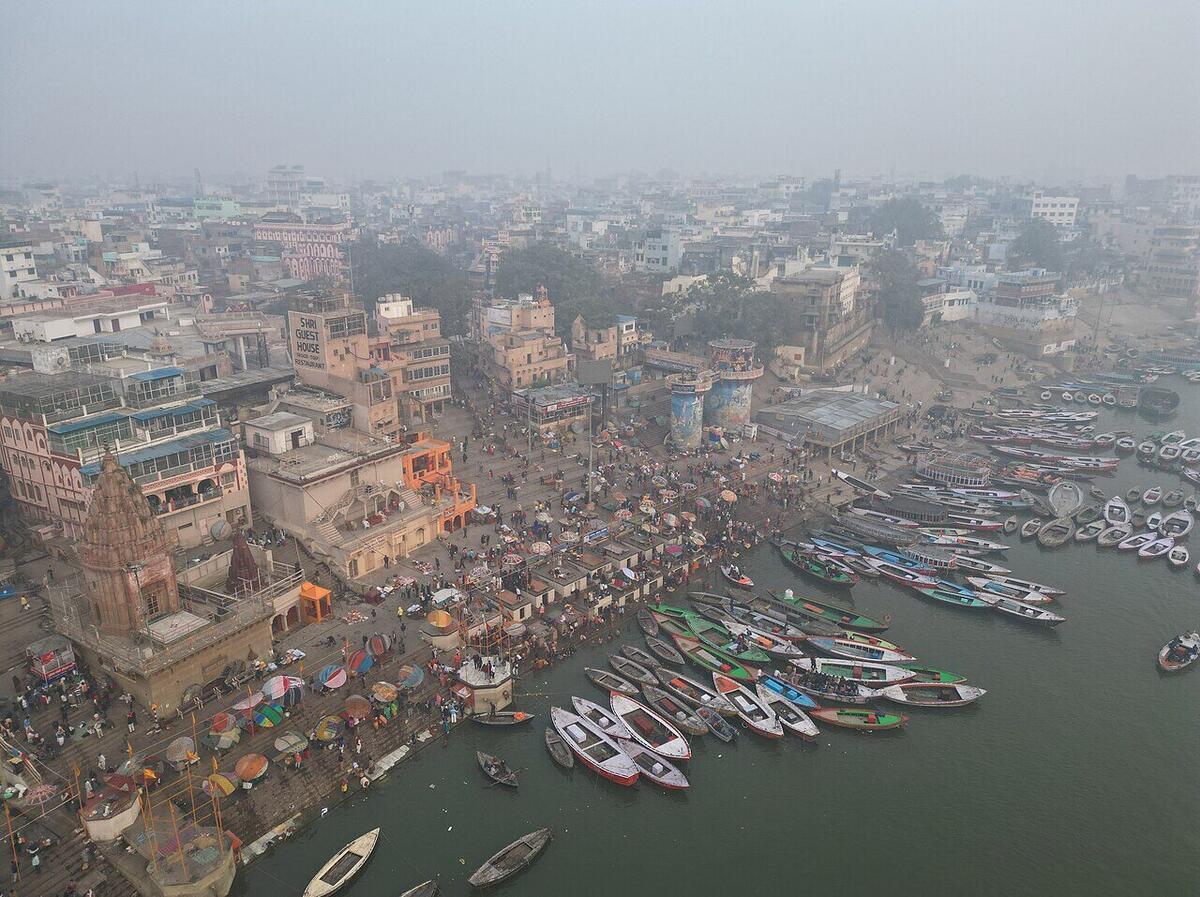
The twelve Jyotirlingas are held to be the supreme Shiva shrines of Bharat — each a self-manifest pillar of Shiva's infinite divine light at a specific tirtha. The traditional Dwadash Jyotirlinga stotra of Adi Shankaracharya names all twelve: Somnath in Saurashtra, Mallikarjuna at Srisailam, Mahakaleshwar at Ujjain, Omkareshwar at the Narmada, Kedarnath in the Himalayas, Bhimashankar in the Sahyadri, Vishwanath at Varanasi, Trimbakeshwar at the Godavari source, Vaidyanath at Deoghar, Nageshwar near Dwarka, Rameshwar at Rameshwaram, and Ghrishneshwar at Aurangabad.
Tradition holds that doing darshan of all twelve Jyotirlingas in a single lifetime is the supreme aspiration of a Shaiva pilgrim. Nageshwar is the only Jyotirlinga in coastal Gujarat (Somnath is on a different stretch of the same coast); a single Saurashtra yatra typically covers both, along with Dwarkadhish and Bet Dwarka.
History
Nageshwar's history reaches into the Puranas. The temple as the present pilgrim shrine was rebuilt and renovated several times through the medieval period. The current temple structure was rebuilt in 1996, and the massive seated Shiva murti raised through the patronage of Gulshan Kumar of T-Series, whose family completed the work after his death in 1997. The 25-metre Shiva murti is one of the largest Shiva-statues in India.
The temple is managed by the Nageshwar Jyotirlinga Trust. Daily aartis, festival processions, and pilgrim services are coordinated by the Trust. Despite the modern infrastructure and the large pilgrim flow, the traditional rhythms — abhishek with milk and bilva-patra, recitation of the Mahamrityunjaya mantra, and the offering of bhog — continue as they have for centuries.
Architecture
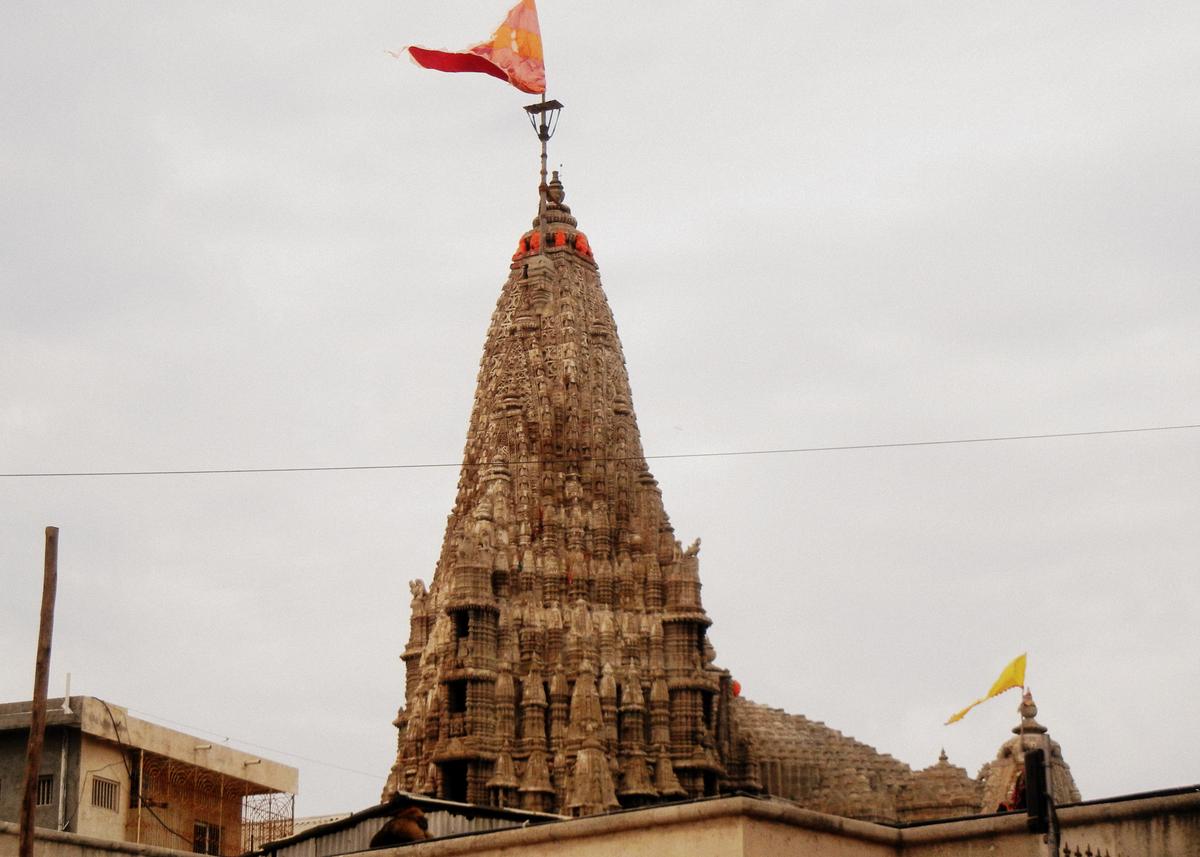
The Nageshwar Jyotirlinga temple complex includes the main shrine (a traditional Shiva mandir with a Nagara-style shikhara), the giant 25-metre seated Shiva murti at the entrance, smaller subsidiary shrines, a parikrama path, and a pond. The garbha-griha holds the Jyotirlinga set in a stone yoni; the chamber is dimly lit and decorated with brass lamps and floral garlands.
The seated Shiva murti is the iconic image of the site — Mahadev in dhyana mudra with the trident, the snake (the eponymous "Nag-Eshwar"), and the matted hair flowing down his shoulders. The murti is a popular photograph; visitors are welcome to take pictures around it but not inside the main sanctum.
Rituals & Practices
The temple opens around 5:30 AM with Mangala Arati and closes after Shayan Arati around 9:00 PM. There are typically four major aratis through the day — Mangala, Madhyahna, Sandhya, and Shayan. The Jyotirlinga is offered abhishek with milk, panchamrit, water, and bilva-patra; pilgrims can participate in the abhishek by booking ahead with the Trust.
The traditional sequence at Nageshwar is: bath at the temple pond or kund, parikrama of the temple, abhishek (if booked) or simple darshan, recitation of the Mahamrityunjaya mantra. Many pilgrims combine the visit with the Gomati Ghat snan at Dwarka before or after.
Special pujas include Rudrabhishek with the eleven-fold Rudri recitation, Mahamrityunjaya Jaap, and Shiva-Sahasranama recitation. Mondays — sacred to Shiva — see the highest pilgrim flow outside festival days.
Festivals & Celebrations
| Festival | When | Crowd |
|---|---|---|
| Mahashivratri | — | very_high |
| Shravan month | — | very_high |
| Sawan Monday (every Monday in Shravan) | — | very_high |
| Pradosh Vrat | — | high |
Mahashivratri: The most sacred night of the Shaiva year at every Jyotirlinga.
Shravan month: The month dear to Shiva; the second-busiest after Mahashivratri.
Sawan Monday (every Monday in Shravan): Mondays are sacred to Shiva.
Pradosh Vrat: A monthly Shaiva fast and darshan day.
Prepare for Your Visit
Practical guidance to help you plan your pilgrimage
| Pilgrim Guidance | How to reach Nageshwar JyotirlingaThe temple is 15 km from Dwarka by road — about 30 minutes drive. From Dwarka most pilgrims hire a shared taxi or auto. The nearest railhead is Dwarka (15 km); the nearest airport is Jamnagar (140 km). Most pilgrims include Nageshwar in their Dwarka yatra, often combined with Bet Dwarka by boat on the same day. Preparation for pilgrimsModest dress; the temple is an active Shiva shrine. Mobile phones and cameras are permitted in the outer courtyard but not in the sanctum. Footwear removed at the entrance. The giant Shiva murti can be photographed freely; respect any "no photography" signs near the inner shrine. Carry bilva-patra and a small offering if you wish; both are available at the temple stalls. Best time to visitOctober to March is the most pleasant weather. Mahashivratri (February-March) is the spiritual peak — thousands of pilgrims attend, with night-long abhishek and Mahamrityunjaya recitation. Shravan month (July-August) is the second-busiest — sacred to Shiva. Sawan Mondays are particularly crowded. Avoid May-June (very hot) and the deep monsoon. |
Location
Devbhumi Dwarka, GJ
Pilgrim photos
No pilgrim photos yet.
Community corrections
No corrections yet.
Edit history
No revisions yet.
Plan Your Visit to Nageshwar Jyotirlinga
Get a custom itinerary and pricing for your trip.
Recommended
Packages for this destination
Pilgrim Notes
On-ground observations from fellow pilgrims
No pilgrim notes yet. Be the first to share on-ground observations!
Sign in to share a note.
Pilgrim Reviews
Be the first to share your experience at Nageshwar Jyotirlinga.
Sign in to write a review.
Nearby sacred places
Discover other sacred places near Nageshwar Jyotirlinga
Explore temples, tirthas, and pilgrimage sites in GJ
Explore nearbyPart of these circuits
Walk the traditional pilgrimage routes this destination belongs to.