The Nepali Temple at Lalita Ghat in Varanasi is a shrine of Pashupatinath, the great Shiva of the Nepali devotional world. The linga within is worshipped as Pashupatinath, the Lord of all living beings, in the same spirit and with the same offerings as at the revered Pashupatinath shrine in Kathmandu. For Nepali Hindus settled in Kashi or unable to return home, and for Banarasi devotees alike, it is a place where Shiva is approached with quiet, daily reverence.
The temple was built so that the worship of Pashupatinath might continue in Kashi in the architectural language and ritual tradition of Nepal. It rises in the Kathmandu pagoda style, an unusual and dignified form on a waterfront otherwise crowned by stone Nagara shikharas. To the Nepali community it stands as a piece of the home shrine carried to the holy city of Shiva; to Kashi it has long been one of the river's familiar and cherished Shiva temples.
Sitting above Lalita Ghat, near Manikarnika, the temple belongs naturally to the sacred fabric of the riverfront. Pilgrims come, as at any Kashi Shiva shrine, with Ganga-jal and bilva patra, fold their hands before the linga, and carry away the quiet that long worship leaves in a place.
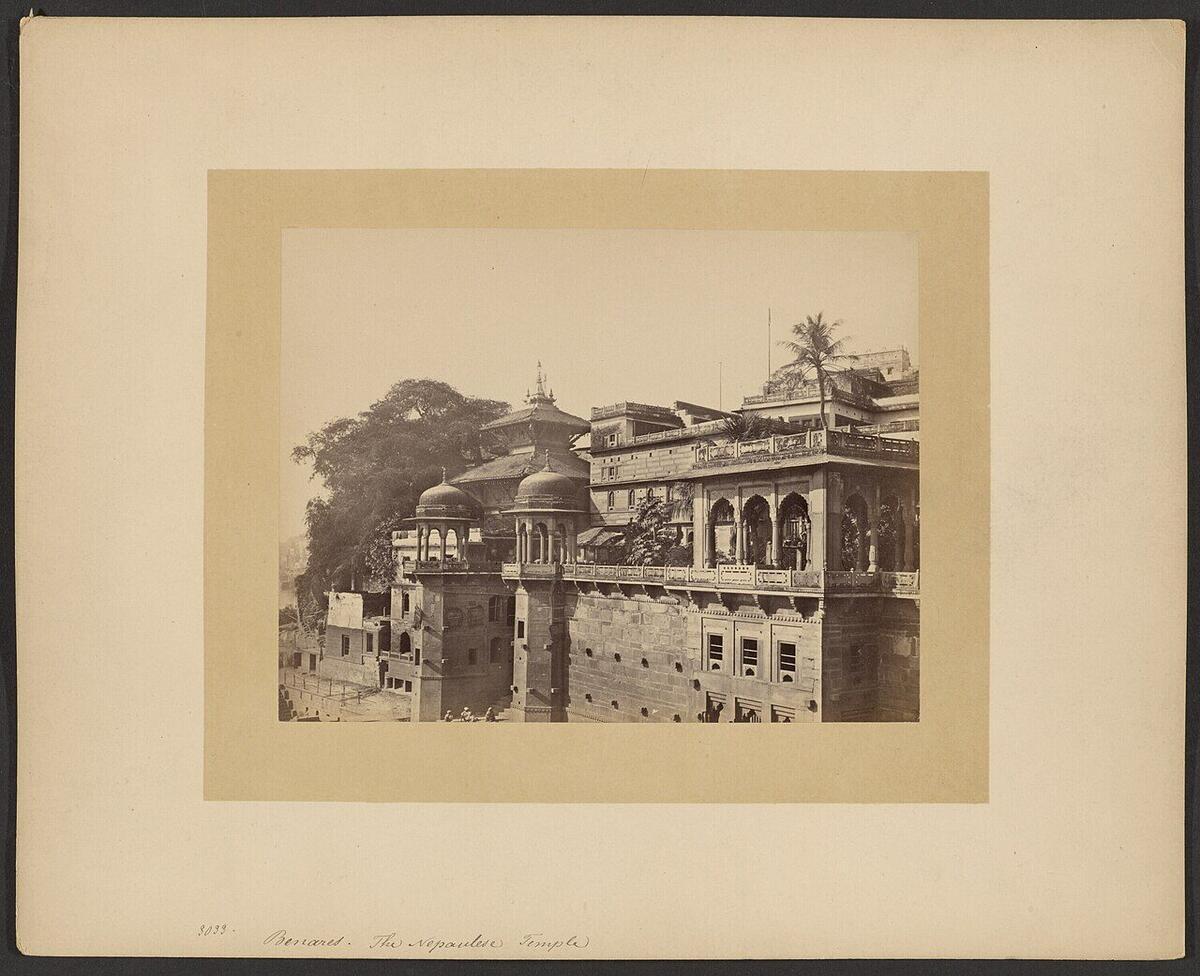
The Nepali Temple holds a particular meaning for the Nepali devotional community in Kashi and across India. Pashupatinath is the great Shiva of the Nepali tradition, revered for centuries as the protecting Lord of Nepal and the principal pilgrimage of every Nepali Hindu. To have his form here in Kashi, and to perform the same pujas and offerings here as at the Kathmandu shrine, carries the spiritual weight of keeping the home temple near even when one is far from home.
For Banarasi Shaiva devotees, the temple is one of the city's distinctive Shiva shrines, approached with the same reverence as any Kashi Shiva mandir. The linga is worshipped as Pashupatinath, with Ganga-jal, bilva patra, sandal, and flowers, and the devotee bows before it as before Mahadev himself.
Pashupatinath and Kashi Vishwanath
Tradition holds Pashupatinath of Kathmandu and Kashi Vishwanath of Banaras to be two great Shiva shrines of the Hindu world that complete one another, joined in a single Shaiva devotional bond between India and Nepal. Pilgrims from Nepal who undertake the Kashi yatra, and Banarasis who travel to Pashupatinath, are completing a circuit long recognised in Shaiva tradition. The Nepali Temple at Lalita Ghat makes a portion of that sacred bond present within Kashi itself, so that the two great Lords are remembered together on the banks of the Ganga.
History
The temple was commissioned by King Rana Bahadur Shah of Nepal during his stay in Varanasi in the early nineteenth century, around 1800 to 1804. Construction began under his patronage and was completed in stages by his successors over the following decades, an enduring act of Nepali royal devotion to Pashupatinath carried out on the soil of Kashi.
The timber for the structure was brought down from the Nepali forests and assembled on the Lalita Ghat site by Newar craftsmen, the same artisanal community that built and maintained the pagoda temples of the Kathmandu Valley. The result is one of very few authentic Newar-style temples outside Nepal, and the only one of significant scale on the Banaras waterfront.
The temple has been cared for since its founding by Nepal's representatives in Kashi, and conservation work has been undertaken periodically, most recently with technical support from Nepali heritage authorities. Through every restoration the essential thing has remained unchanged: it is a living temple, with daily worship of Pashupatinath and an active community of Nepali resident devotees.
Architecture
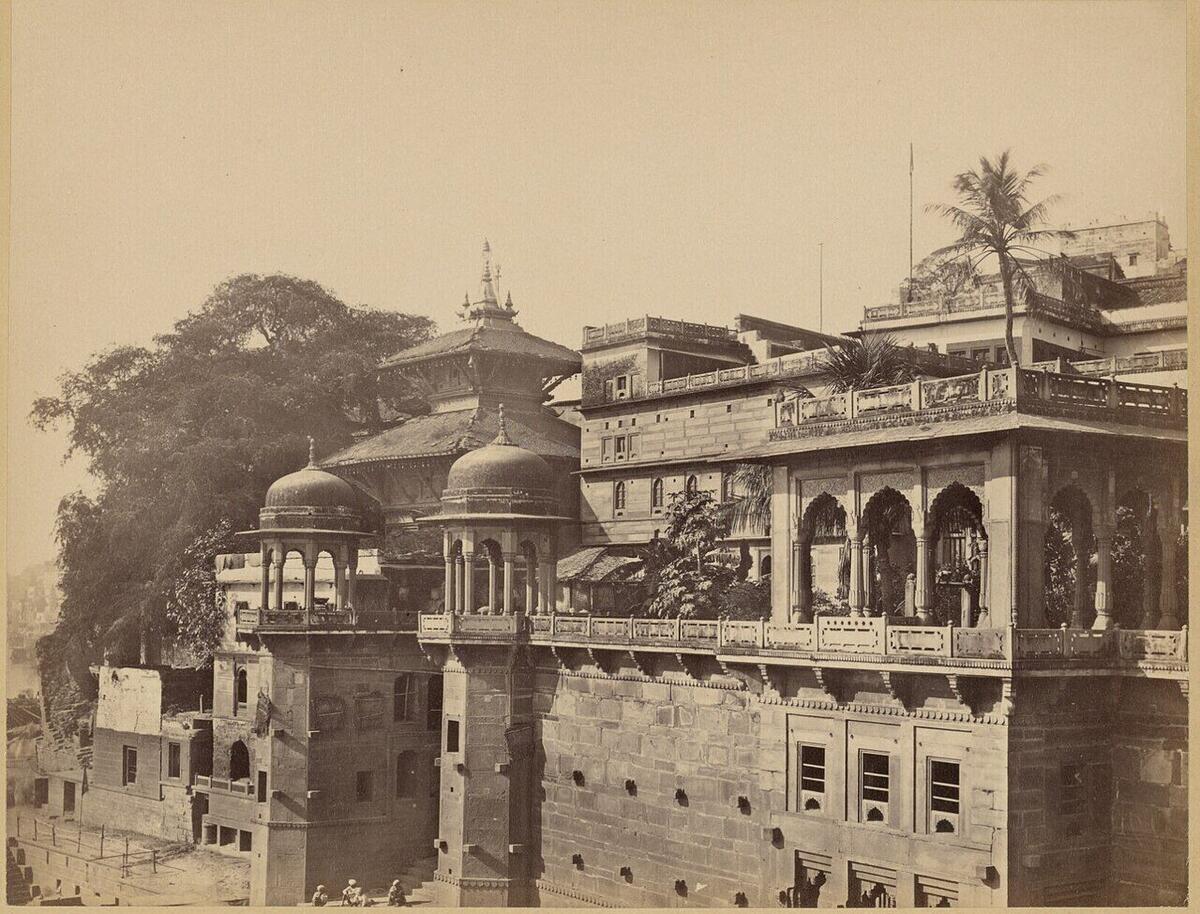
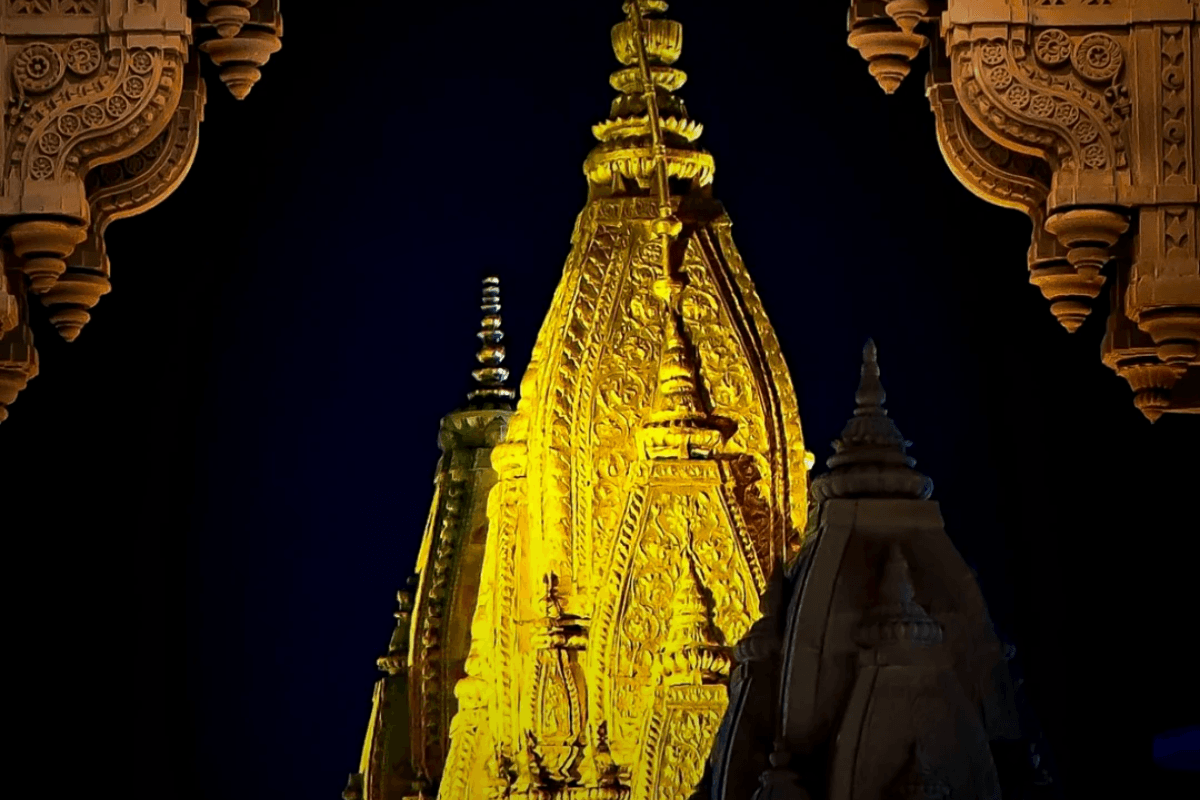
The Nepali Temple is built in the Newar pagoda style, whose lineage runs from the early Licchavi period in Nepal through the great pagodas of the Kathmandu Valley. The temple rises in tiered pagoda roofs, each smaller than the one below, supported by carved wooden struts known as tundal, which are the structure's most distinctive feature.
The materials are characteristic of Newar building: a stone plinth with a brick core, structural timberwork in sal and teak, and tiered roofs once covered in copper sheet and tile. The wooden struts and roof brackets carry the detailed woodcarving traditional to Newar temple craft, in the same idiom seen on the pagoda temples of Kathmandu, with deities, attendants, and mythological figures of classical Hindu iconography. This woodcraft is part of the temple's sacred heritage and is approached by devotees with the seriousness owed to any temple sculpture.
In the Nepali tradition the sanctum opens to the four directions through carved doorways. The linga at the centre is anointed with sandal paste, and during major puja devotees take darshan from each of the four sides in turn.
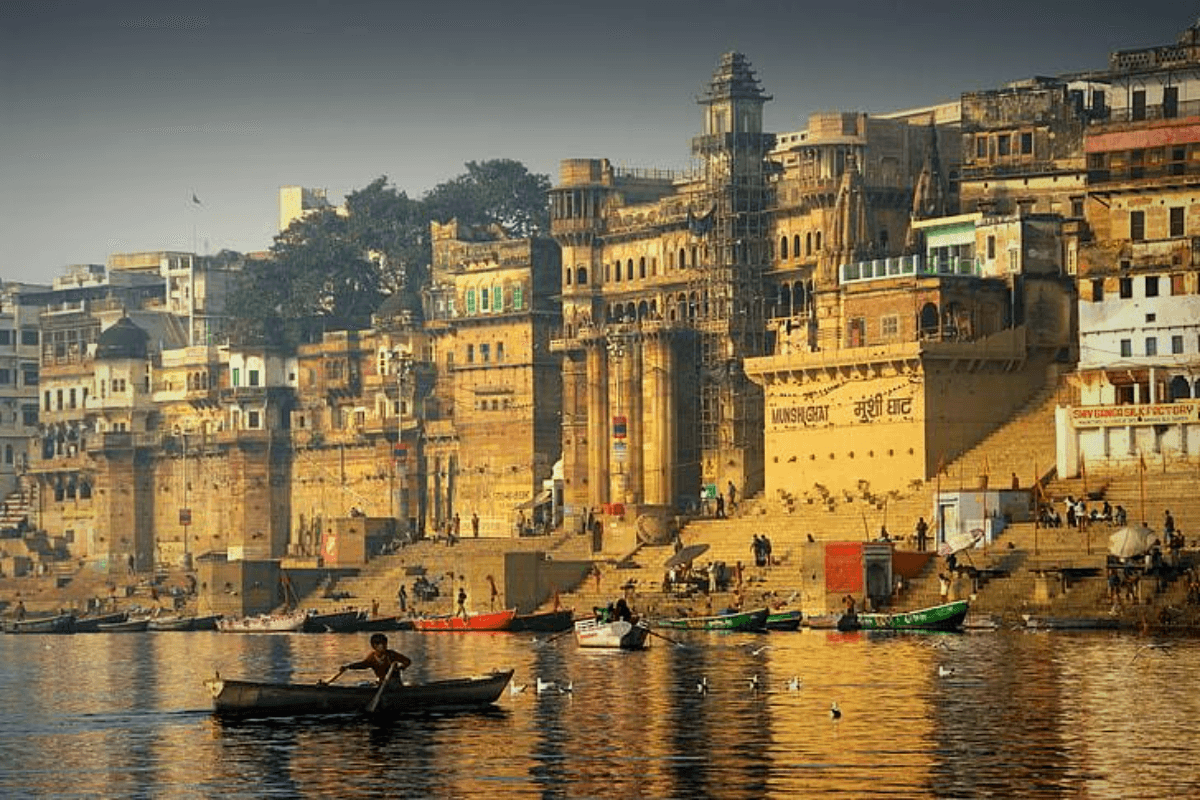
Set on the rise above Lalita Ghat, the temple commands a clear view of the Ganga, its tiered roofs lifting above the riverfront and visible from the boats that pass below. Its quiet pagoda silhouette has long been part of the sacred skyline of Kashi.
Rituals & Practices
Daily worship at the Nepali Temple follows the Newar Shaiva tradition carried from Kathmandu. The morning puja begins with abhishek of the linga, followed by aarti and the offering of flowers, bilva patra, and the small Nepali oil lamps characteristic of Pashupatinath worship.
Offerings beloved at the temple include:
- Bilva patra — the three-leafed bel
- Ganga-jal for abhishek
- White flowers, with marigold and jasmine in the Newar manner
- The small Nepali oil lamps (diyo), sometimes available at the temple
- Prasad of Nepali sweets such as sel roti and laddoo on festival days
Many devotees also seek Rudrabhishek and Mahamrityunjaya japa, especially through the month of Shravan. Yet for most pilgrims the offering remains simple: Ganga-jal, a few bilva leaves, folded hands, and the name of Mahadev.
The annual Mahashivratri observance is the temple's central event of the year, when the resident Nepali community gathers in numbers and worship extends through the four prahars of the night. Exact timings may vary, so pilgrims are encouraged to verify the current schedule with the temple before a visit.
Festivals & Celebrations
| Festival | When | Crowd |
|---|---|---|
| Mahashivratri | — | Very high |
| Sawan (Shravan Month) | — | Moderate to high, peaks on Mondays |
| Indra Jatra | — | Moderate (community festival) |
| Pradosh | — | Moderate |
Mahashivratri: Mahashivratri here holds the particular meaning of marking the night at the Pashupatinath form within Kashi. For Nepali devotees who cannot travel to Kathmandu, this is the home temple.
Sawan (Shravan Month): Tradition holds Shravan to be the most favourable month for Shaiva worship, and Mondays the days when Shiva, in tradition, grants darshan most readily.
Indra Jatra: A community festival of the Nepali Kashi-vasis, and one of the days the temple's Newar devotional character is most evident.
Pradosh: Pradosh is held to be the hour when Shiva, in tradition, dances upon Mount Kailash. The fortnightly observance is part of the temple's regular devotional rhythm.
Prepare for Your Visit
Practical guidance to help you plan your pilgrimage
| Pilgrim Guidance | How to reachThe Nepali Temple stands at Lalita Ghat, just north of Manikarnika Ghat in the old city. A gentle way to arrive is by boat from Dashashwamedh, the pagoda roofs easily recognised from the river; ask the boatman to dock at Lalita Ghat, from where a short climb leads up to the temple. By land it is reached on foot through the lanes from Vishwanath Gali, about ten minutes through narrow stepped galis, with auto-rickshaws dropping pilgrims at the Bhonsale Ghat lane. The last stretch is best walked. Preparation for Pilgrims
Best Time to VisitThe early morning, during the abhishek, is the temple's most devotional hour, and the late afternoon is calm and well suited to a quiet darshan. Mahashivratri brings the largest gathering of the year and is the most spiritually charged time. The month of Shravan (July to August), and Mondays in particular, bring extended worship. October to March is the most comfortable window for visiting overall. |
Location
Varanasi, UP
Gallery
Pilgrim photos
No pilgrim photos yet.
Community corrections
No corrections yet.
Edit history
No revisions yet.
Plan Your Visit to Nepali Temple (Lalita Ghat)
Get a custom itinerary and pricing for your trip.
Recommended
Packages for this destination
Pilgrim Notes
On-ground observations from fellow pilgrims
No pilgrim notes yet. Be the first to share on-ground observations!
Sign in to share a note.
Pilgrim Reviews
250 reviews
Be the first to share your experience at Nepali Temple (Lalita Ghat).
Sign in to write a review.
Nearby sacred places
Discover other sacred places near Nepali Temple (Lalita Ghat)
Explore temples, tirthas, and pilgrimage sites in UP
Explore nearbyPart of these circuits
Walk the traditional pilgrimage routes this destination belongs to.