The Panchganga Ghat temple cluster rises in the lanes and platforms above one of Kashi's panchatirtha ghats. Pilgrims approach it after their bath at Panchganga (covered separately on the ghat page), climbing the long stone steps to offer darshan at the Vaishnava and Shaiva shrines that have stood here for centuries. At the heart of the cluster is Bindu Madhava, the Vishnu of Kashi, paired in traditional devotional understanding with Vishwanath himself as one of the two great tutelary deities of the city.
In the older Vaishnava memory of Banaras, Bindu Madhava is counted among the Pancha Madhava of Kashi, the five forms of Vishnu — Bindu Madhava, Adi Madhava, Mana Madhava, Pancha-Ganga-tata Madhava, and Sweta Madhava — whose darshan completes the Madhava-yatra of the city. Of these, Bindu Madhava above Panchganga has long held the place of honour, and tradition holds that a Kashi yatra which does not include his darshan remains, in a quiet way, incomplete.
Around the principal Madhava shrine stand several smaller temples and sanctums on the platforms above the ghat — Shaiva lingas, Devi niches, Hanuman, Ganesha, and family-trust shrines maintained by Maratha, Bengali, and Rajput patrons over the centuries. Together they make Panchganga not only a bathing tirtha but a small Vaishnava-Shaiva temple complex, woven into the upper terraces of the ghat.
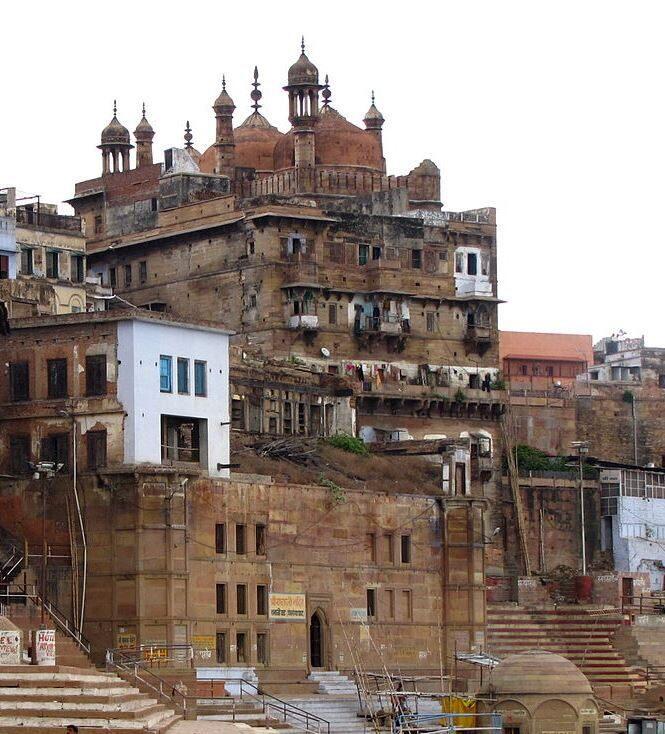
The devotional centre of this cluster is Bindu Madhava, Vishnu worshipped as the lord of the five-river sangam. Tradition holds that wherever the Ganga is joined by other sacred streams, Vishnu abides as Madhava; at Panchganga, where five streams are said to meet, that presence is felt with special concentration. Pilgrims who carry Ganga-jal from the bath below and offer it to Bindu Madhava above are honouring, in a single sequence, both the river and the lord of the river.
In the wider sacred geography of Kashi, Bindu Madhava is counted as one of the Pancha Madhava — the five Vishnu pithas of Banaras whose combined darshan is treasured by Vaishnava pilgrims. Among the five, Bindu Madhava holds the senior place. The old devotional understanding pairs him with Vishwanath: Hari at Panchganga and Hara at Vishwanath, both honoured as Kashi's twin patrons. Many traditional pilgrims therefore complete their Vishwanath darshan with a darshan of Bindu Madhava in the same yatra.
The smaller shrines that surround the Madhava sanctum are not incidental. Each carries its own quiet line of devotion — a Shiva linga long served by a particular family, a Devi niche kept lit by neighbourhood women, a Hanuman icon turned toward the Madhava shrine. For the pilgrim who walks the cluster slowly, the place reveals itself less as a single temple and more as a small mandala of Vaishnava and Shaiva worship gathered above a great tirtha.
Katha, Mahatmya, and Sacred Memory
The mahatmya of Bindu Madhava is praised in the Kashi Khanda of the Skanda Purana and in the Vaishnava devotional literature of Banaras. Tradition tells that Vishnu took his seat at this point of the Kashi waterfront to honour the unseen confluence of five rivers, and that his presence here sanctifies both the bath at the ghat below and the darshan at the shrine above.
The Pancha Madhava yatra is a beloved Vaishnava observance of Kashi. Pilgrims visit, in traditional order, Bindu Madhava at Panchganga, Adi Madhava, Mana Madhava, Pancha-Ganga-tata Madhava, and Sweta Madhava. Some complete the yatra in one day; others spread it across the Vaishnava festivals of the year. Through every variation, Bindu Madhava remains the heart of the sequence.
The original Bindu Madhava temple that once stood above Panchganga was a grand Vaishnava shrine of medieval Kashi, frequented by saints, acharyas, and pilgrims from across Bharatvarsha. In the late seventeenth century, during the reign of Aurangzeb, the temple was destroyed, and a mosque was raised on its site. Vaishnava worship at Panchganga did not end. The smaller Bindu Madhava shrine that pilgrims worship at today was established nearby, and the line of darshan has been kept unbroken from that time to this. The continuity of devotion across centuries of difficulty is itself a quiet part of the temple cluster's sacred memory.
History
The Panchganga Ghat temple complex is one of the most ancient continuously worshipped sites of Vaishnava Kashi. Puranic tradition names Bindu Madhava among the principal Vishnu shrines of the city, and the Pancha Madhava yatra has been known in Banaras for many centuries.
The original Bindu Madhava temple was a great Vaishnava shrine of medieval Kashi, mentioned in pilgrim accounts as one of the city's crown Vishnu temples. It was destroyed in the late seventeenth century during the reign of Aurangzeb, and a mosque was built upon the original site. The present Bindu Madhava shrine at which pilgrims worship today is a smaller temple established near the original location, where Vishnu has been continuously honoured from that period onward.
The eighteenth and nineteenth centuries brought a wave of Maratha, Bengali, and Rajput patronage to the Panchganga waterfront. Maratha families restored ghat structures and shrines; Bengali zamindars and devotee-trusts maintained sub-shrines along the upper steps; and pious householders endowed small lingas, Devi niches, and Hanuman shrines that together form the temple cluster as it stands today. Many of these were tied to family worship and have been kept up by the same lineages across generations.
What the pilgrim sees today is the layered fruit of all this patronage and care — a smaller but continuously worshipped Bindu Madhava, surrounded by sub-shrines maintained by lineage trusts, set above one of the most sacred bathing points of Kashi. The grandeur of the older temple is gone, but the line of darshan it carried has never broken.

Architecture
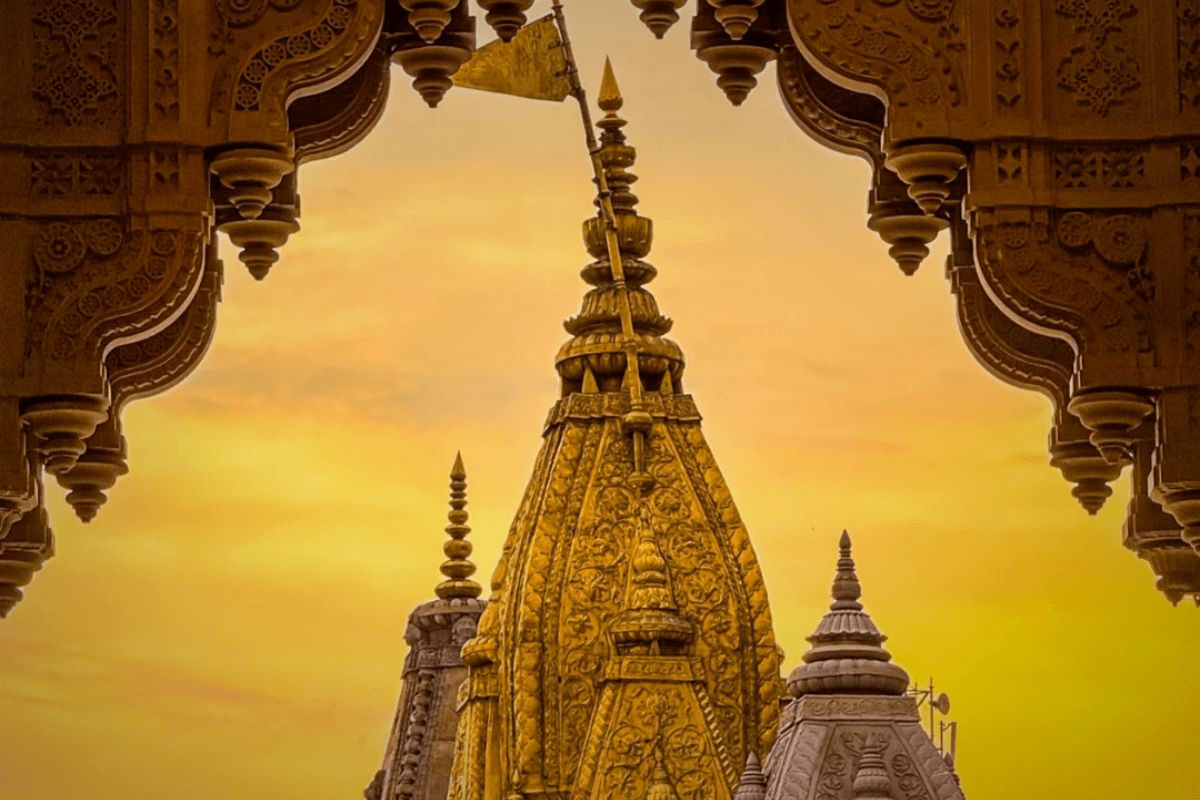
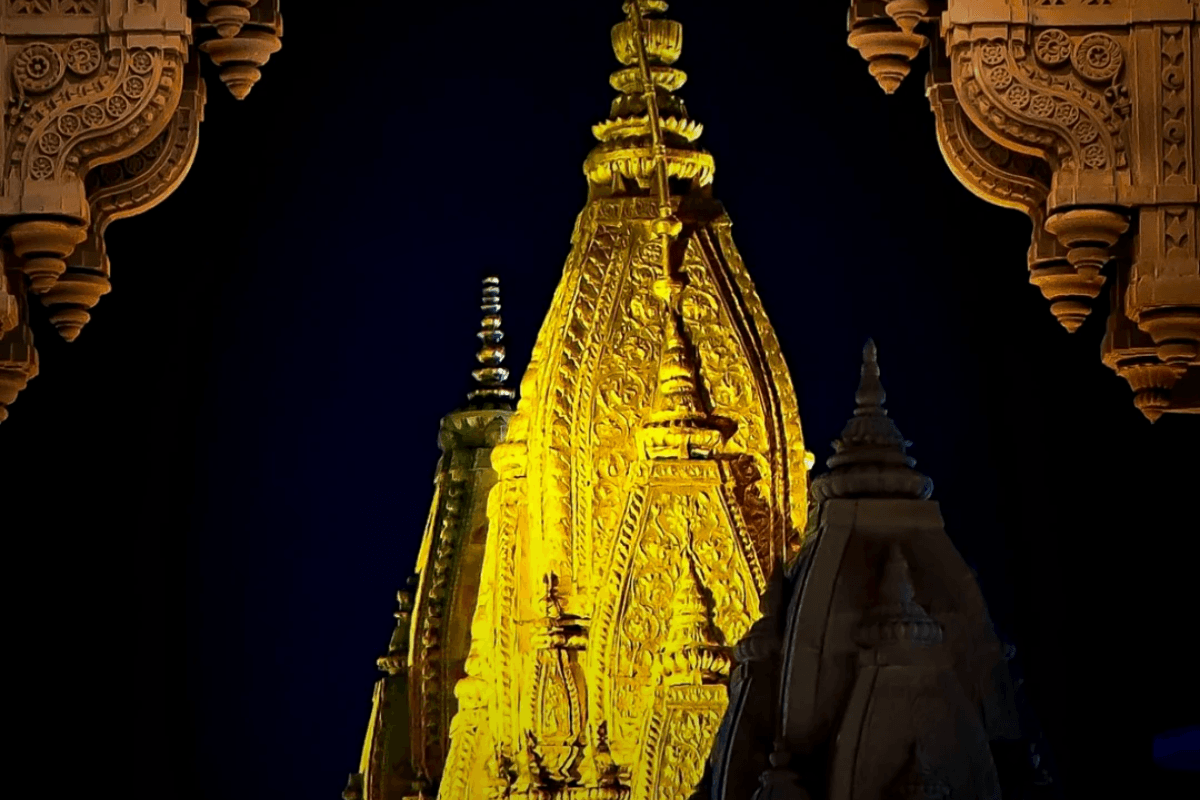
The Panchganga temple cluster is built in the layered stone style of the Kashi waterfront. The shrines sit on the broad upper platforms above the ghat, reached by climbing the long flight of steps from the river. The architecture is intimate rather than monumental — small sanctums with stone shikharas, low doorways, and carved thresholds, set close together along the terraces.
The Bindu Madhava shrine itself is compact. The sanctum holds a richly dressed image of Vishnu as Madhava, served daily with tulsi, yellow flowers, and chandan. Outside the sanctum, a small platform allows pilgrims to fold their hands, offer a lota of Ganga-jal, and stand briefly before the deity. The shrine does not depend on scale; its dignity comes from continuous worship and from the seriousness with which the image is dressed and offered to each day.
Around the Madhava shrine, smaller temples and niches dot the upper steps — Shaiva lingas under stone canopies, a Devi murti tended by neighbourhood women, a Hanuman icon facing the river, Ganesha at a doorway corner. Carved chhatris and small platforms among the steps were originally built for meditation, recitation, and the safe-keeping of ritual offerings. Some still hold daily worship; others stand as quiet witnesses of earlier centuries of devotion.
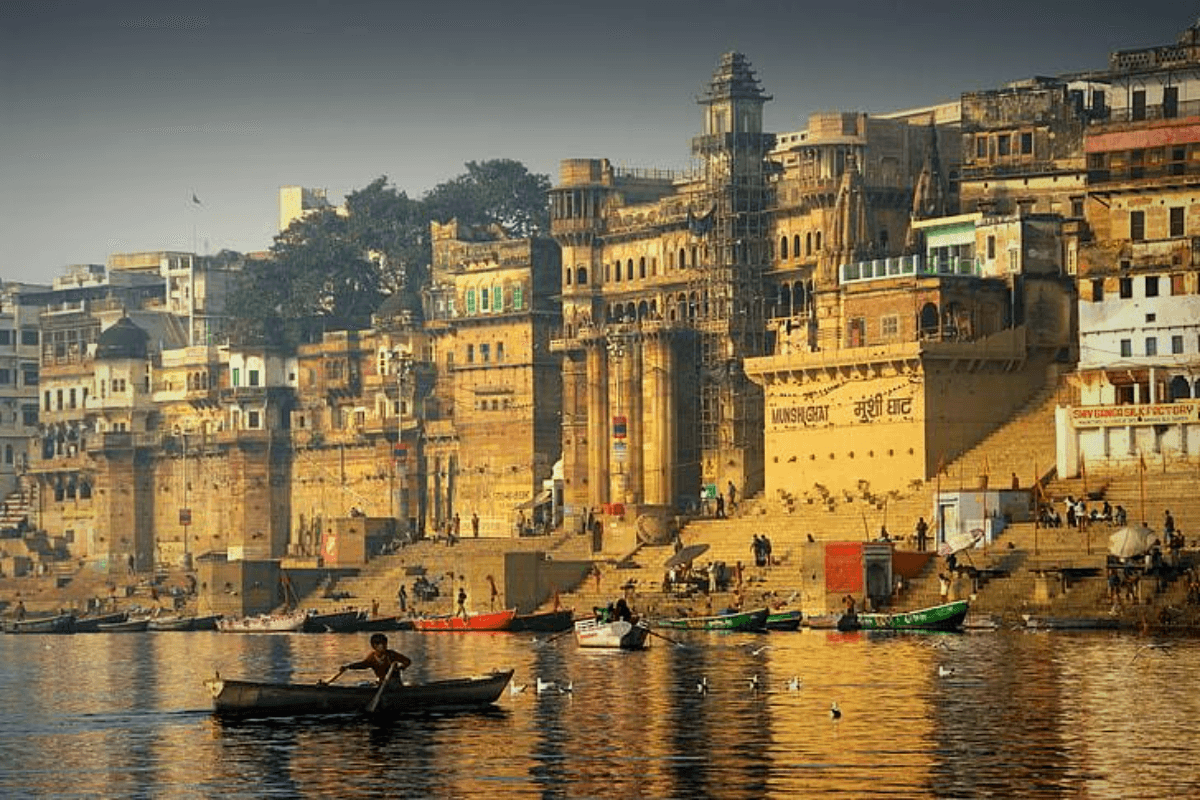
Set above the wide bathing ghat and seen from the river at dawn, the cluster gives Panchganga its characteristic upper-terrace silhouette — small shikharas and stone roofs rising in stages, framed by the larger structure that bears the traces of the older Bindu Madhava temple in its lower walls.
Rituals & Practices
Worship in the temple cluster combines Vaishnava and Shaiva traditions, with Bindu Madhava at its centre. Most pilgrims arrive after their bath at the ghat below (covered separately on the ghat page) and carry the Ganga-jal of that bath upward to be offered at the shrines above.
At Bindu Madhava, the offerings most beloved are:
- A lota of Ganga-jal poured at the feet of the deity
- Tulsi patra, especially dear to Madhava
- Yellow flowers, chandan, and a simple diya
- A short prayer or the recitation of a Vishnu-stotra
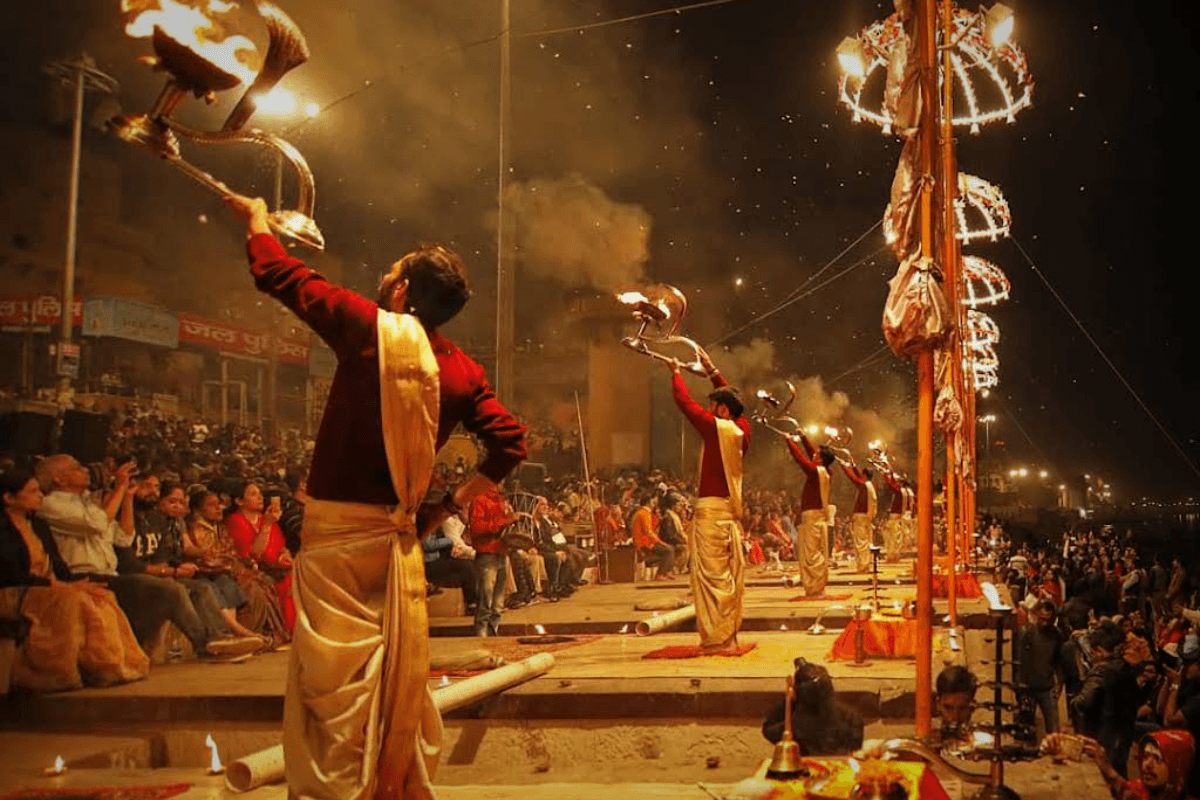
The daily rhythm at the Madhava shrine moves from mangala aarti in the early morning, through abhishek and shringar, into bhoga, evening aarti, and the closing shayan. Exact timings vary by season and by the temple trust's own calendar, so pilgrims are encouraged to verify timings with temple authorities on the day of darshan.
At the smaller Shaiva shrines along the upper steps, the customary offerings are bilva patra, Ganga-jal, and a few flowers, with the soft repetition of Har Har Mahadev. At the Devi and Hanuman niches, women devotees often light small diyas, leave a flower or a tulsi leaf, and stand a moment in prayer before moving on. Many pilgrims who follow the older Banarasi sequence pair their bath at Panchganga, their Bindu Madhava darshan, and their Vishwanath darshan as a single morning yatra honouring both Hari and Hara within a single round.
For Vaishnava pilgrims who wish to complete the Pancha Madhava yatra, Bindu Madhava is the natural starting point. A pandit familiar with the traditional sequence can guide the order of darshan at the other four Madhava shrines spread across Kashi.
Festivals & Celebrations
| Festival | When | Crowd |
|---|---|---|
| Kartik Purnima and Dev Deepawali | — | Extremely high |
| Ekadashi | — | High |
| Pancha Madhava yatra days | — | Moderate to high |
| Mahashivratri | — | Very high |
| Shravan Mondays | — | High |
Kartik Purnima and Dev Deepawali: Kartik Purnima is held among the most auspicious days for Vaishnava observance, and Dev Deepawali honours the gods who are believed to descend to bathe in the Ganga on this night. For the Panchganga cluster, the two together carry the spiritual peak of the year.
Ekadashi: Ekadashi is held to be the day most dear to Vishnu. At Bindu Madhava the observance carries the added weight of darshan at one of the Pancha Madhava of Kashi.
Pancha Madhava yatra days: The Pancha Madhava yatra is among the most cherished Vaishnava observances of Kashi, with Bindu Madhava holding the senior place among the five.
Mahashivratri: The most sacred night of Shiva. At Panchganga the Shaiva sub-shrines come into their own quieter charge, honoured by devotees who pair the night vigil with Vishwanath darshan.
Shravan Mondays: Shravan is held to be the month most dear to Shiva, and the Shaiva sub-shrines at Panchganga receive a quieter share of the great Shravan devotion that fills Kashi.
Prepare for Your Visit
Practical guidance to help you plan your pilgrimage
| Pilgrim Guidance | Approach and the Kashi Yatra sequenceThe temple cluster sits above Panchganga Ghat in the northern stretch of the Kashi waterfront, between Scindia Ghat and Ram Ghat. Pilgrims reach it in two ways. From the river, by boat to Panchganga and then climbing the steps. From the lanes, through the old galis above the ghat from the direction of Vishwanath or Kal Bhairav. Within the traditional Kashi yatra, Panchganga belongs to the Panchatirthi bathing sequence — Assi, Dashashwamedh, Panchganga, Manikarnika, Adi Keshava. Many devotees also pair the bath at Panchganga and the darshan of Bindu Madhava with their Vishwanath darshan in one morning, keeping the old understanding that honours both Hari and Hara as Kashi's twin patrons. Vaishnava pilgrims may begin the Pancha Madhava yatra from this cluster, with Bindu Madhava as the first of the five Madhava shrines. Preparation for PilgrimsA small amount of preparation helps the visit to the cluster feel unhurried and inward.
The cluster is at its most beautiful in the hour after sunrise, when the bathing is finishing at the ghat below and the shrines above are receiving their morning worship. Best Time to VisitOctober to March is the most comfortable season overall. Ekadashi, observed twice each lunar month, is the most charged day for Bindu Madhava darshan. Kartik and Vaishakh are especially auspicious months for Vaishnava observance, with Kartik Purnima and Dev Deepawali bringing the entire ghat and its temple cluster into one of the most cherished devotional scenes in Kashi. For Shaiva observance within the cluster, Mondays and the month of Shravan are the favoured times. |
Location
Varanasi, UP
Pilgrim photos
No pilgrim photos yet.
Community corrections
No corrections yet.
Edit history
No revisions yet.
Plan Your Visit to Bindu Madhav Temple (Panchganga Ghat)
Get a custom itinerary and pricing for your trip.
Recommended
Packages for this destination
Pilgrim Notes
On-ground observations from fellow pilgrims
No pilgrim notes yet. Be the first to share on-ground observations!
Sign in to share a note.
Pilgrim Reviews
Be the first to share your experience at Bindu Madhav Temple (Panchganga Ghat).
Sign in to write a review.
Nearby sacred places
Discover other sacred places near Bindu Madhav Temple (Panchganga Ghat)
Explore temples, tirthas, and pilgrimage sites in UP
Explore nearbyPart of these circuits
Walk the traditional pilgrimage routes this destination belongs to.