Pandey Ghat is one of the small, working ghats of the Kashi crescent, set between Khori Ghat and Sarveshvara Ghat on the stretch of riverfront that lies a short walk upriver from Dashashwamedh. Heritage documentation treats Khori, Pande and Sarveshvara as a single riverfront unit of about 0.126 hectare, and the older name of these steps is the one that appears in the seventeenth-century Sanskrit text Giravana-padamanjari: Sarveshvara Ghat, after Sarveshvara — Shiva as the lord of all — whose shrine stands above the water. The present name comes from a later patron. Around 1805, Babua Pande, a wealthy Brahmin of Chhapra in Bihar, made this ghat pucca and built a wrestling place upon it, and the steps came to be called Babua Pande Ghat. Half a generation later James Prinsep — then assay master at the Benares mint, who surveyed the city in 1822 and produced an accurate map of it — recorded these steps as Panree Ghat, a spelling the heritage record notes as one of his many altered renderings of local names.
What Babua Pande built here belongs to a particular understanding of devotion. In the akhara tradition of north India, the wrestler's discipline is held to be a vow rather than a sport: rising before dawn, exercise in the earthen pit, a simple diet, restraint of the senses, and Hanuman taken as the presiding deity of the ground. To lay bathing steps to the Ganga and a wrestling pit above them in one act of patronage was to place the discipline of the body directly alongside the discipline of the river — snan and sadhana on the same stone.
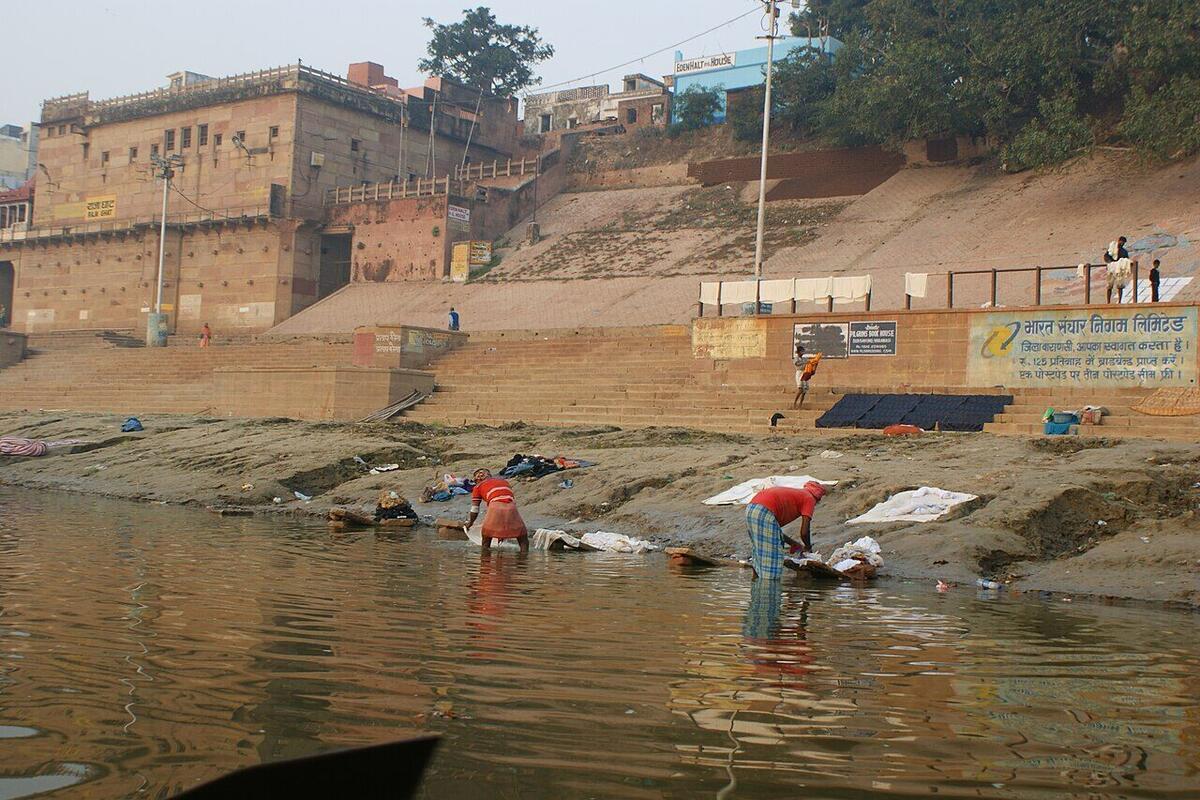
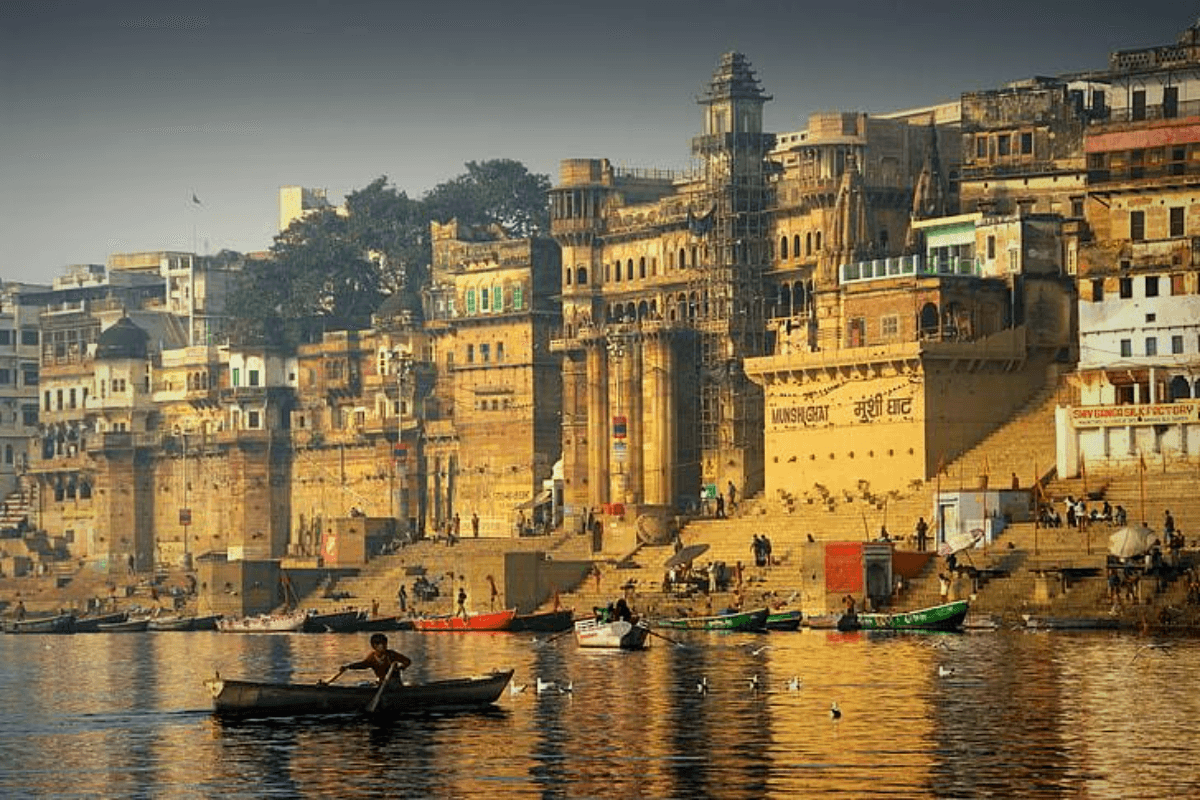
Today Pandey Ghat serves chiefly the neighbourhood above it, and the heritage record describes it plainly. Heritage documentation says of the adjoining Khori Ghat that it is neglected as regards religious and cultural festivities, and not preferred even for daily sacred baths; of Pande Ghat itself it records that the scene has long been dominated by the dhobis, so much so that Motichand (1985) described it as Dhobi Ghat. Its steps carry the ordinary morning traffic of the mohallas above — a bath, a lota of Ganga-jal taken home, washing spread on the stone, boats tied along the edge. For a pilgrim walking the crescent, that quietness is what it offers: a place on the river to sit with the Ganga for an hour.
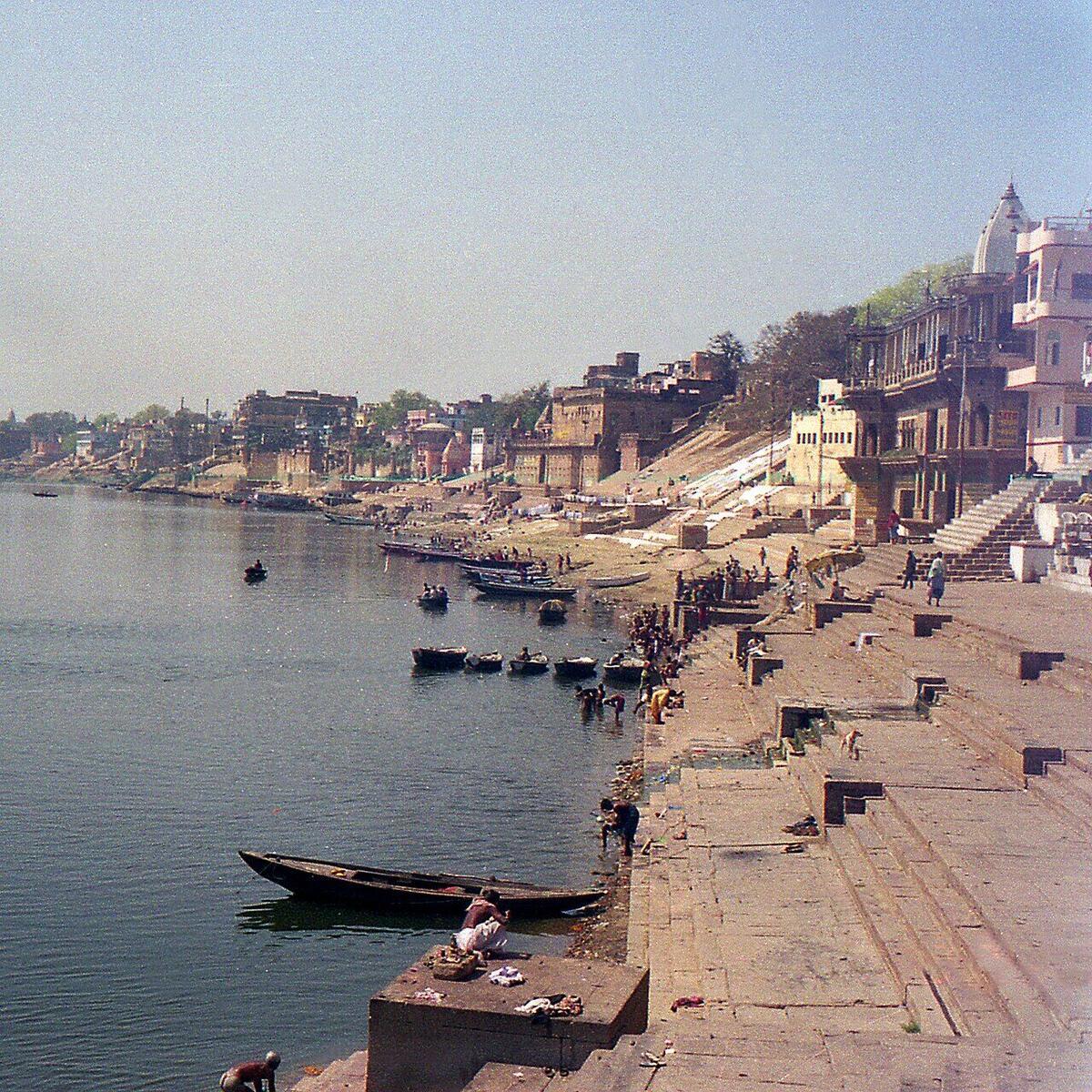
The devotional identity of these steps rests on the shrine that gave them their older name. Sarveshvara — the lord of all — is one of the many -eshvara forms of Shiva by which Kashi's sacred geography is mapped, each linga giving its name to a corner of the city or a flight of steps on the river. A temple of Someshvara stands in the same vicinity. That the ghat is recorded as Sarveshvara Ghat in a text of the seventeenth century places it within Kashi's documented tirtha tradition rather than in local memory alone.
Heritage documentation also places two old water-front tirtha sites near these steps. The site of Prabhasa Tirtha is recorded as lying in the vicinity of Pande Ghat, though the same record notes that the rites in Prabhasa's name are now performed near Raja Ghat; the site of Ganga Keshava Tirtha is described as close to Sarveshvara Ghat, of which Babua Pande Ghat is the southern part. Pilgrims who follow the older tirtha lists will recognise the associations; those who do not will still find the merit that tradition grants to the Ganga at any point along the Kashi bank.
Beyond the shrines, the significance a devotee is most likely to feel here is the one Babua Pande's patronage built into the ground: that sacredness is carried in daily discipline. The wrestler's vow and the bather's vow are made of the same substance — early rising, restraint, repetition, a body offered to a practice. In devotional understanding, no act at the Ganga is small; what makes it a sadhana is that it is done every day.
History
The steps are older than their present name. The Giravana-padamanjari, a Sanskrit work of the seventeenth century, records this stretch of the riverfront as Sarveshvara Ghat, and its historicity as a tirtha rests on that mention. Heritage records note that the overall space of the ghat was made pucca under the patronage of Mathura Pandey in the late eighteenth century.
The name in use today dates to about 1805, when Babua Pande, a wealthy Brahmin of Chhapra in Bihar, made the ghat pucca and built a wrestling place here; from his patronage the steps became known as Babua Pande Ghat. In 1822 James Prinsep, then assay master at the Benares mint, surveyed Banaras and produced an accurate map of the city; the heritage record notes that he set these steps down as Panree Ghat, one of many local names his maps carried in altered spelling.
The adjoining Khori Ghat, also called Ganga Mahal Ghat, was made pucca in the late nineteenth century by Kavindra Narayan Singh, and heritage documentation notes a compound of five temples standing at the head of these steps. The ghat as it stands now was reconstructed in 1965 by the Government of Uttar Pradesh, the same programme that gave many of the Varanasi ghats their present stonework. The temple properties along the steps are held by their respective trusts and the ghat itself by the Municipal Corporation; the heritage record notes no dedicated conservation plan for the ghats here, the trusts maintaining their own properties as they see fit.
Architecture
Pandey Ghat is a small ghat and makes no attempt at grandeur. Its steps were reconstructed to their present form in 1965 by the Government of Uttar Pradesh. The whole Khori–Pande–Sarveshvara stretch covers roughly 0.126 hectare, which is a fraction of what a major ghat like Dashashwamedh occupies.
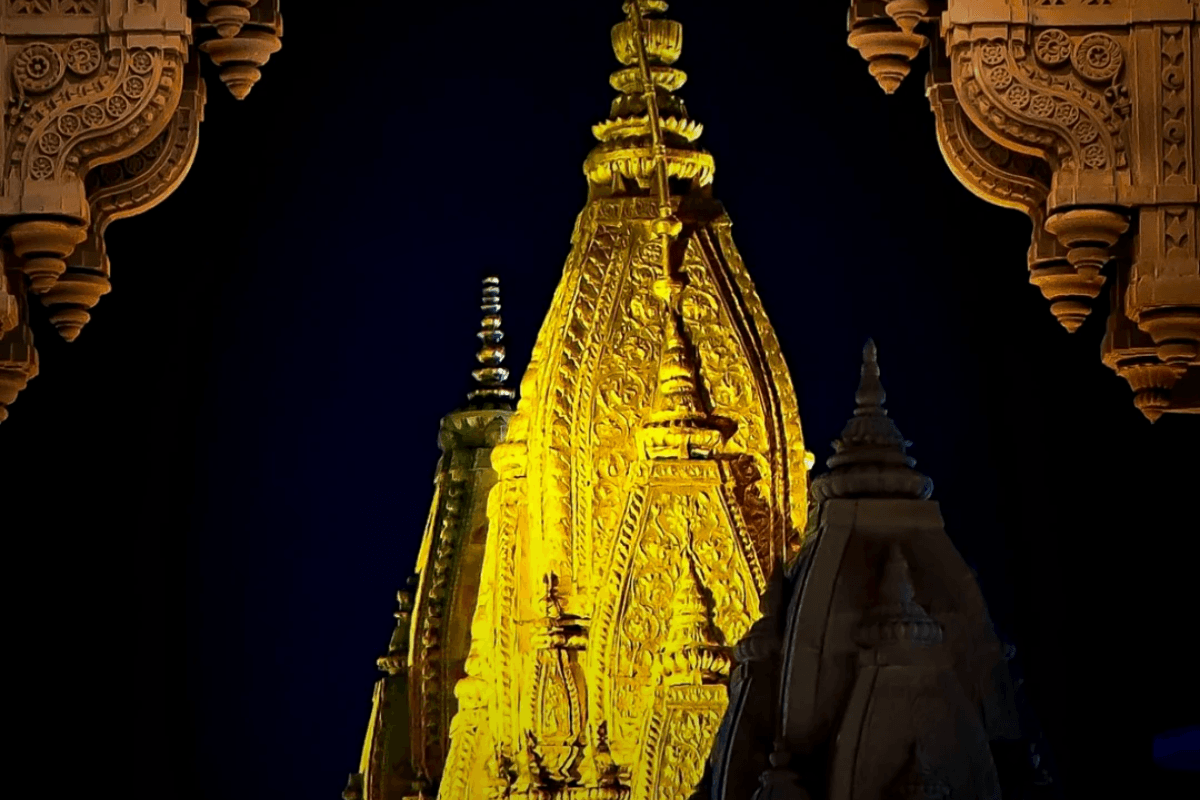
The interest lies at the top rather than at the water. Heritage documentation records a compound of five temples at the head of the adjoining Khori Ghat, presenting a fine view over the river; the Sarveshvara shrine that gave these steps their older name stands in this stretch, and a temple of Someshvara lies in the vicinity. Above and behind them the residential lanes press close, as they do along most of the southern crescent, so that the ghat reads less as a monument than as the river-facing edge of a neighbourhood.
The wrestling place Babua Pande opened is still listed in the heritage record as the landmark of this ghat, entered there by house number. Its substance was never architectural in the usual sense: the floor of an akhara is worked earth, turned and watered and kept soft, not masonry. What his patronage left in stone is the ghat itself — the pucca steps that still carry the mohalla to the Ganga every morning.
Rituals & Practices
The practice here is the plain practice of a Kashi bathing ghat. Devotees come down at first light for snan, take a sankalp, offer water to the sun, carry a lota of Ganga-jal back for the household shrine, and set a clay diya afloat in the evening. Tarpan for ancestors is performed at the water's edge, as it may be at any point along the river. There is no organised aarti at these steps and no ceremony staged for visitors.
Darshan at the small temples above the ghat follows the ordinary rhythm of neighbourhood shrines — abhishek of the linga with Ganga-jal, bilva patra, a lamp — and their opening hours are set by their trusts rather than published. Confirm locally on the day if you wish to enter.
Pilgrims who want a formal rite performed here — sankalp, tarpan, shraddha — should arrange for a purohit in advance. No purohits keep a regular station on these steps as they do at the larger ghats, so nothing can be arranged on the spot.
Festivals & Celebrations
| Festival | When | Crowd |
|---|---|---|
| Dev Deepawali | — | Very high across the city; moderate at this ghat |
| Kartik Purnima snan | — | High |
| Pitra Paksha | — | Moderate |
| Mahashivratri | — | Moderate at this ghat |
| Daily Ganga snan | — | Low |
Dev Deepawali: Tradition holds that Dev Deepawali marks Shiva's victory over Tripurasura and the descent of the devas to bathe in the Ganga; the rows of lamps are offered in their welcome.
Kartik Purnima snan: The Puranas praise snana during Kartik, and above all on Kartik Purnima, as bearing great devotional fruit.
Pitra Paksha: Tarpan offered to the ancestors in the Ganga at Kashi is held in tradition to carry particular merit for the departed.
Mahashivratri: Tradition holds Mahashivratri to be the night on which Shiva is most readily approached; abhishek with Ganga-jal is the characteristic offering.
Daily Ganga snan: The unbroken daily practice that keeps a small ghat a living part of Kashi rather than a relic of its patrons.
Prepare for Your Visit
Practical guidance to help you plan your pilgrimage
| Pilgrim Guidance | How to reachPandey Ghat lies on the southern arc of the Varanasi ghats, between Khori Ghat and Sarveshvara Ghat, with Digpatiya, Chausatthi and Rana Mahal ghats just downstream and Raja and Narada ghats above. The easiest approach is on foot along the riverfront from Dashashwamedh — a walk of roughly ten to fifteen minutes past Shitala, Ahilyabai, Munshi, Darbhanga, Rana Mahal, Causatthi, Digpatiya and Sarveshvara. It can also be reached through the lanes from the Dashashwamedh road, or by boat; ask the boatman for Pandey Ghat or Sarveshvara. In the monsoon, when the river covers the lower steps, the riverfront walk between ghats is frequently closed and the lanes are the only route. Best time to visitEarly morning, between first light and about nine, is when the ghat has its own life — bathers, sunlight coming across the water from the far bank, boats moving on the river. Late afternoon is good for sitting. October to March is the most comfortable season for most pilgrims; July to September brings high water and slippery, silt-covered steps. On Dev Deepawali night the Varanasi ghats are lined with lamps, though the principal viewing points lie downriver from here. What to expectThis is a small, plain, residential ghat, and it is best approached as such. There is no aarti, no shopping, no guide service and no facilities on the steps. Carry your own drinking water, a cloth if you mean to bathe, and small change for temple offerings. The stone can be slick where the river has left silt, so step carefully and keep to the drier upper courses with elderly pilgrims or children. The dhobis have long worked this stretch, so expect washing on the steps as part of the ghat's ordinary life. Half an hour is enough unless you have come to sit, in which case stay as long as you wish; nothing here is hurried. |
Location
Varanasi, UP
Gallery
Pilgrim photos
No pilgrim photos yet.
Community corrections
No corrections yet.
Edit history
No revisions yet.
Plan Your Visit to Pandey Ghat
Get a custom itinerary and pricing for your trip.
Recommended
Packages for this destination
Pilgrim Notes
On-ground observations from fellow pilgrims
No pilgrim notes yet. Be the first to share on-ground observations!
Sign in to share a note.
Pilgrim Reviews
Be the first to share your experience at Pandey Ghat.
Sign in to write a review.
Nearby sacred places
Discover other sacred places near Pandey Ghat
Explore temples, tirthas, and pilgrimage sites in UP
Explore nearbyPart of these circuits
Walk the traditional pilgrimage routes this destination belongs to.