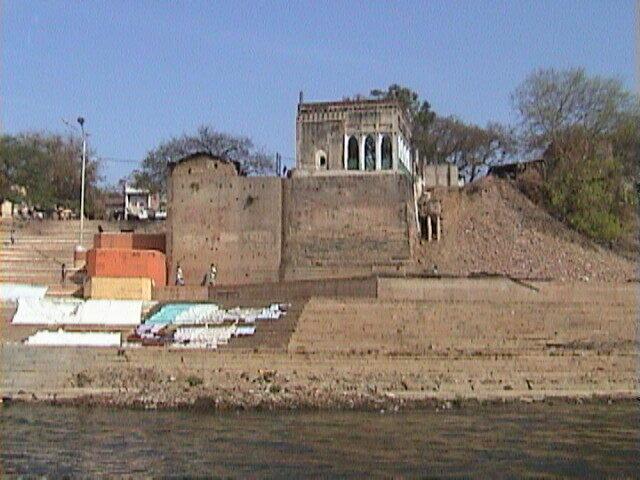
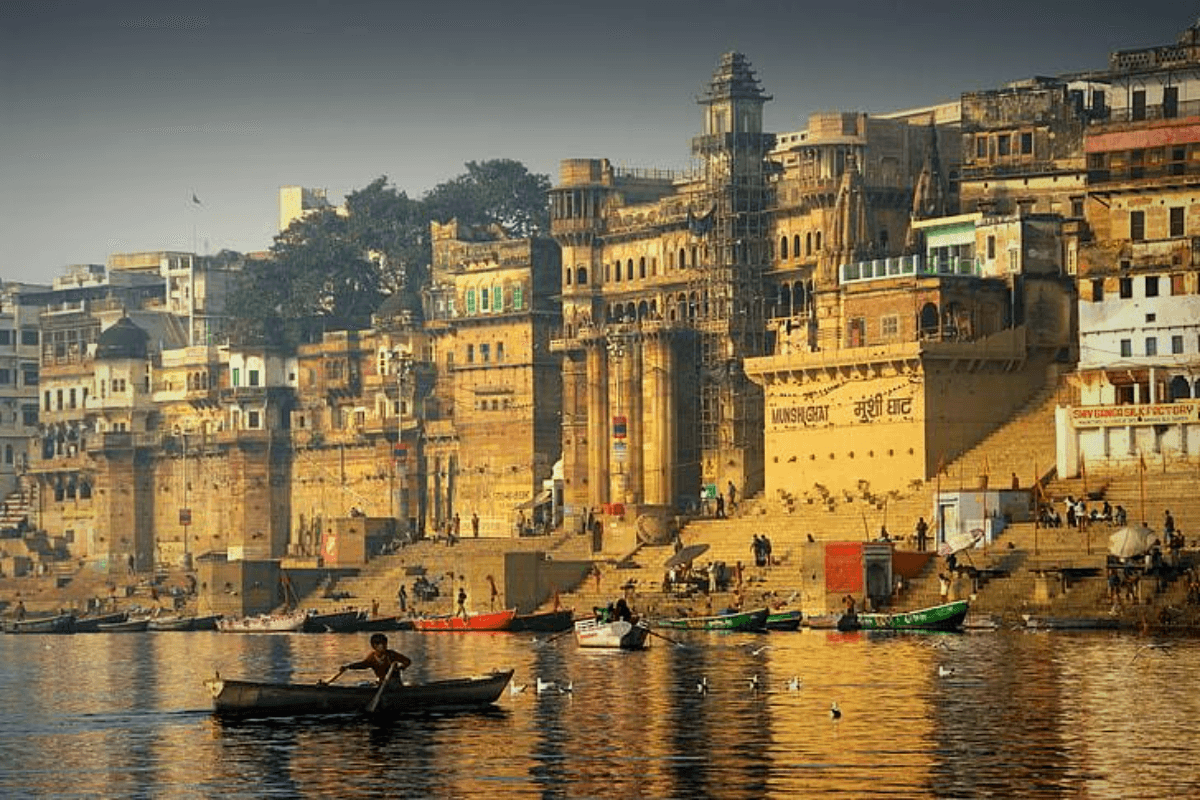
Prahlad Ghat Temple is the Vaishnava shrine that anchors the northern stretch of the Varanasi waterfront between Trilochan Ghat and Raj Ghat. Tradition holds that the ghat is named for Bhakta Prahlad, the boy-devotee of Vishnu whose steadfast bhakti, tested through fire, water, poison, and the wrath of his father Hiranyakashipu, drew the Lord himself to manifest as Narasimha, the man-lion avatara, for the protection of his devotee. The shrine at the ghat preserves this devotional memory in living pilgrim form.
Devotees hold that the ghat carries the Vaishnava thread within the largely Shaiva sacred geography of Kashi. Vaishnava families of Banaras, and pilgrims walking the broader Vaishnava-tirtha sequence along the Ganga, count Prahlad Ghat among their stations. The temple complex enshrines Narasimha, often in paired Prahlad-Narasimha imagery, with the boy-bhakta standing in folded-hand surrender beside the fierce yet protecting form of the Lord.
Katha and local belief
The katha of Prahlad is one of the foundational bhakti narratives of Hindu tradition, drawn from the Bhagavata Purana and Vishnu Purana. Hiranyakashipu, the asura king, had won a boon that he could not be slain by man or beast, indoors or outdoors, by day or by night, on earth or in air, by any weapon. Confident of his invincibility, he forbade the name of Hari in his kingdom. Yet his own son Prahlad, from the womb itself it is said, refused to abandon the name of Vishnu.
Tradition tells of repeated trials: Prahlad was thrown from cliffs, given poison, trampled by elephants, and placed in the lap of his aunt Holika upon a burning pyre, the very episode that Hindus remember each year on Holika Dahan. Through each trial, Hari himself shielded the boy. When at last Hiranyakashipu struck the pillar of his sabha and demanded to know where the protector of Prahlad was, Vishnu emerged as Narasimha from the pillar, neither man nor beast, at the threshold of day and night, in the doorway, lifted the asura onto his thighs, and ended him with claws that were no weapon.
Devotees of Kashi hold that wherever Prahlad's name is remembered, Narasimha remains present as the protector. The Prahlad Ghat shrine is approached in this devotional understanding: as a place where bhakti tested through difficulty is honoured, and where the devotee may sit quietly with the assurance that Hari does not forget those who do not forget him.
Prahlad Ghat Temple is approached by devotees as a seat of nishchala bhakti, devotion that does not waver under trial. The shrine's central teaching, drawn from the Prahlad-charitra of the Bhagavata Purana, is that sincere and continuous remembrance of Hari is itself enough to draw down his grace. Those who come here often arrive carrying inner difficulty: opposition in their devotional path, fear, illness, or a sense of being tested. The Prahlad katha is offered to them not as old story but as living assurance.
Tradition holds that Narasimha is the ugra form of Vishnu, fierce in appearance but utterly gentle to the devotee. The Puranas praise him as Bhakta-vatsala, the one whose love for his devotees is the love of a mother for a child. At Prahlad Ghat, this dual character of Narasimha, terrible to oppressors of bhakti and tender to the bhakta, is the inner meaning of darshan. Devotees offer tulsi patra, yellow flowers, and prasad of sweet rice, and many sit afterward in quiet japa of the Narasimha-stuti or the Narasimha Kavacha.
Mahatmya and the Holika-Prahlad memory
The Prahlad-Holika episode gives the shrine a particular weight at the turning of the seasons. On Phalguna Purnima, when Hindus across the land kindle the Holika Dahan fire, the memory honoured is precisely the one preserved here: Holika, the asura's sister, gifted with a shawl that protected her from fire, took the boy Prahlad upon her lap to burn him alive. Tradition holds that Hari himself moved the shawl, and the protection fell upon the bhakta while Holika herself was consumed. Devotees of Kashi remember this on the night before Holi and recall that the festival of colour begins from the burning away of all that opposes bhakti.
Devotees hold that the four trials of Prahlad, fire, water, poison, and the elephant, are an inner pattern as well. The bhakta who endures with the name of Hari on the tongue is said to find that what was meant to destroy becomes, by grace, the very thing that strengthens the heart.
History
The northern stretch of the Varanasi waterfront, between Trilochan and Raj Ghat, has carried a continuous Vaishnava devotional layer alongside Kashi's Shaiva centre. Tradition holds Prahlad Ghat to be among the older ghats of this stretch, named for Bhakta Prahlad and remembered in Banarasi tradition as a site of long-standing Vaishnava worship.
The temple, like many shrines of Kashi, has known periods of difficulty across the medieval centuries, but the worship itself never broke. Vaishnava families of the locality, the panda lineages of the ghat, and the wider devotional life of Banaras kept the Prahlad-Narasimha tradition alive. The present temple is understood to belong to the Maratha-period rebuilding of the eighteenth century, the era in which patrons such as the Holkars, the Bhonsales, and the Peshwas restored a great many Kashi shrines.
Through the nineteenth and twentieth centuries the ghat continued as part of the regular Kashi pilgrimage round, especially for Vaishnava families and for those walking the northern ghats toward Raj Ghat and Adi Keshava. The shrine today is modest in scale but unbroken in worship, and the steps below it continue to receive bathers, boatmen, and pilgrims as they have for centuries.
Architecture
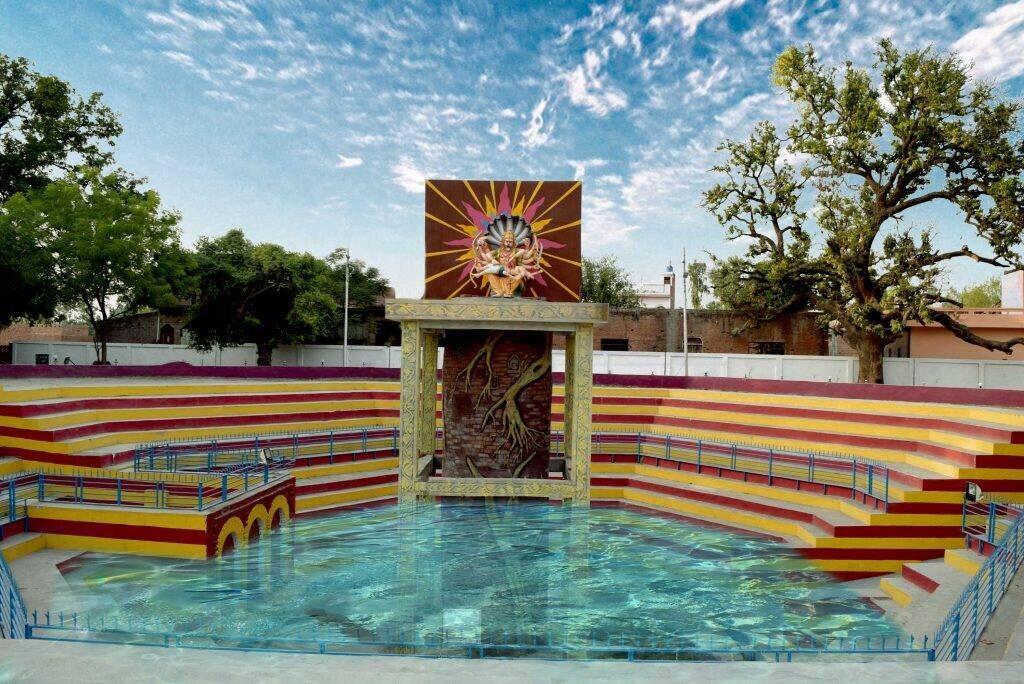
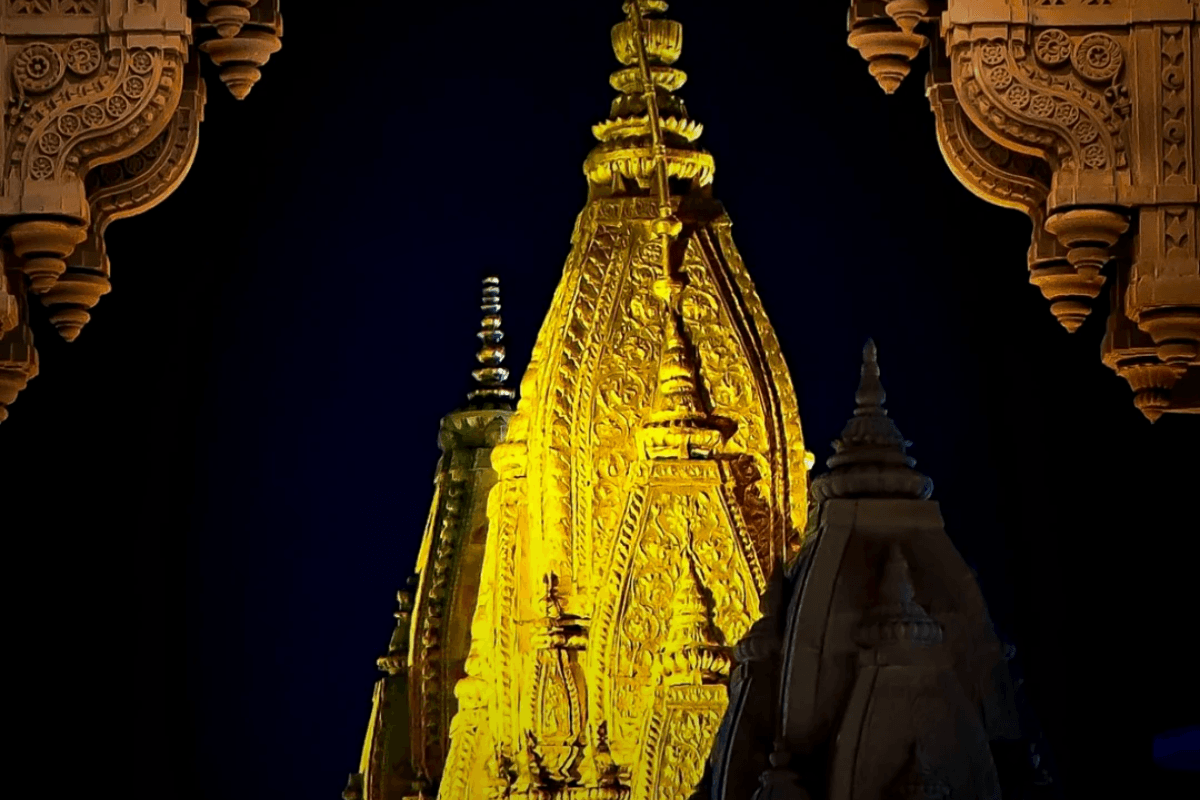
Prahlad Ghat Temple is a compact Vaishnava shrine built in the Banarasi style that characterises the smaller ghat-side temples of Kashi. Its strength lies not in scale but in nearness and continuity of worship. The shrine rises a short distance above the ghat steps, its entrance opening onto the flow of pilgrims, bathers, and morning aarti.
The garbhagriha enshrines the murti of Narasimha, often paired with the figure of Bhakta Prahlad standing in folded-hand surrender at the Lord's side. The Narasimha murti is anointed with chandan and decorated with tulsi patra and yellow flowers, the offerings traditionally beloved of Vishnu. Devotees often note that the fierce iconography of the Lord, claws raised, asura at the feet, is softened in worship by the daily sandal paste, the soft cloth wrapping, and the small flame of the aarti diya.
The outer structure of the temple reflects the typical Banarasi ghat-shrine pattern: a small shikhara above the sanctum, a modest mandapa, and a doorway opening toward the river. The steps that descend to the Ganga from the temple precinct carry the memory of generations of pilgrims who first bathed below and then climbed up for darshan.
Rituals & Practices
The daily worship at Prahlad Ghat Temple follows the standard Vaishnava rhythm of a Banarasi ghat-shrine. Exact timings may vary by season and observance, so pilgrims should verify timings with the temple authorities before planning a specific darshan.
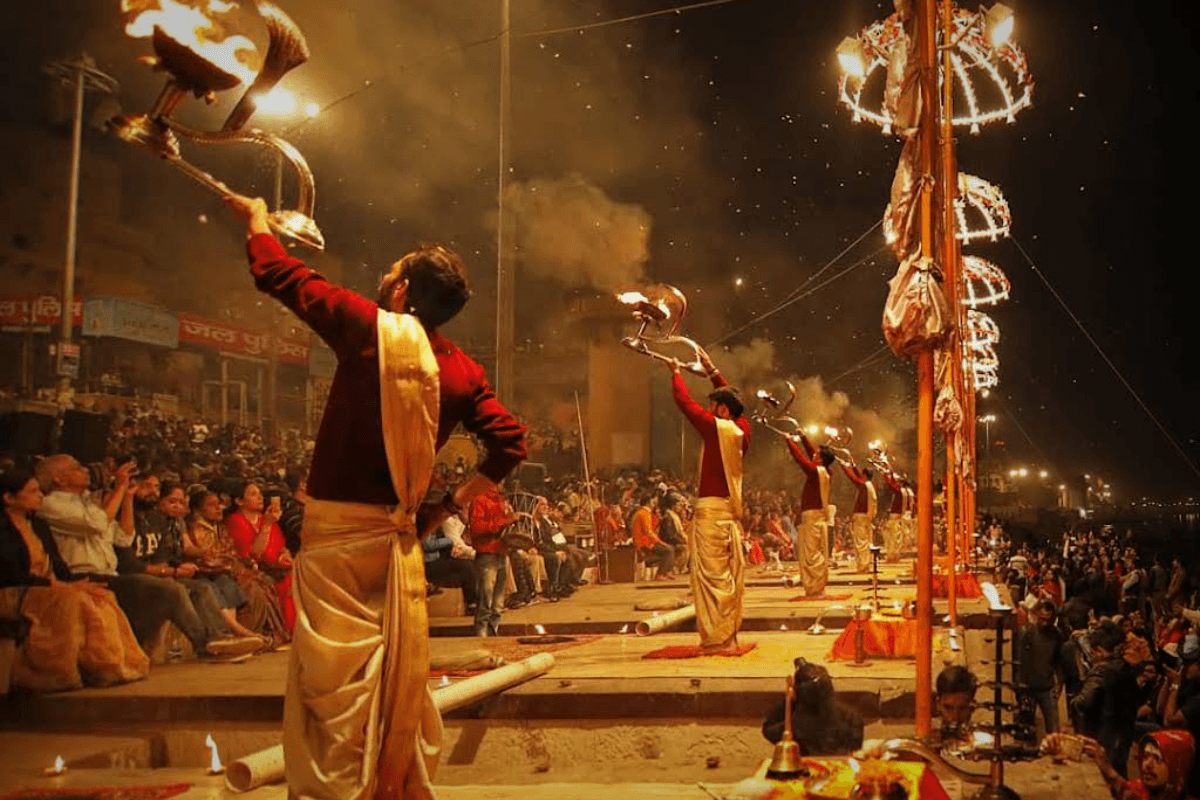
The day opens with mangala aarti and abhishek of the Narasimha murti, followed by chandan-lepa and the offering of tulsi patra and yellow flowers. Through the day, devotees offer prasad of sweet boiled rice, panchamrita, and seasonal fruits. The closing aarti at dusk turns the small sanctum into a circle of lamp-light and bell-sound, often joined by the recitation of the Narasimha-stuti or selected verses of the Prahlad-charitra from the Bhagavata Purana.
Offerings traditionally beloved at this shrine include:
- Tulsi patra
- Yellow flowers, especially marigold and chrysanthemum
- Chandan and akshat
- Prasad of sweet boiled rice or panchamrita
Many devotees undertake the Narasimha Kavacha japa or recitation of the Prahlad-charitra at the shrine, particularly when facing difficulty in their devotional path. Ekadashi observance is also widely kept by Vaishnava families of Banaras, who break their fast after darshan here on the morning of Dvadashi. Saturdays draw additional devotees, as the day is associated with Narasimha in many regional traditions.
Festivals & Celebrations
| Festival | When | Crowd |
|---|---|---|
| Narasimha Jayanti | — | Very high |
| Holika Dahan and Holi | — | High |
| Ekadashi | — | Moderate to high |
| Janmashtami | — | High |
| Vaikuntha Ekadashi | — | High |
Narasimha Jayanti: Tradition holds that on this day Vishnu emerged from the pillar as the man-lion avatara, ended the asura Hiranyakashipu, and placed Prahlad on the throne. Devotees come for protection, courage in bhakti, and the strengthening of devotional resolve.
Holika Dahan and Holi: Devotees hold that the Prahlad-Holika episode is the inner meaning of Holika Dahan: the burning away of all that opposes bhakti. The festival of colour the next day is felt as the joy of that deliverance.
Ekadashi: Ekadashi is held among the most beloved vratas in Vaishnava tradition, observed for the purification of body and mind and the deepening of remembrance of Hari.
Janmashtami: Krishna being a Vishnu avatara, his birth night is held dear at Vaishnava shrines including Prahlad Ghat.
Vaikuntha Ekadashi: Tradition holds that the gates of Vaikuntha stand open on this day to the sincere devotee. The Prahlad katha is recited as the example of bhakti that opens those gates.
Prepare for Your Visit
Practical guidance to help you plan your pilgrimage
| Pilgrim Guidance | Approach and the northern-ghats sequencePrahlad Ghat lies along the northern stretch of the Varanasi waterfront, between Trilochan Ghat to the south and Raj Ghat to the north. Pilgrims approach the shrine in two traditional ways. The first is by boat from Dashashwamedh or Assi, gliding northward past the central ghats and disembarking at the Prahlad Ghat steps. The second is through the narrow lanes of old Kashi from the Trilochan or Macchodari side. Vaishnava pilgrims often include Prahlad Ghat within a wider northern-ghats sequence that also takes in Trilochan, Panchganga, and Adi Keshava, the Vaishnava terminus at the Varana-Ganga sangam. Preparation for pilgrims
Best time to visitNarasimha Jayanti on Vaishakha Shukla Chaturdashi (April or May) is the principal annual occasion of the shrine and draws large numbers of devotees. Holika Dahan and the night before Holi carry particular weight here through the Prahlad-Holika katha. Ekadashi observances each fortnight and Saturdays bring steady devotional traffic. For ordinary darshan, October to March is the most comfortable period, and early mornings after the mangala aarti often offer the calmest experience. |
Location
Varanasi, UP
Pilgrim photos
No pilgrim photos yet.
Community corrections
No corrections yet.
Edit history
No revisions yet.
Plan Your Visit to Prahlad Ghat Temple
Get a custom itinerary and pricing for your trip.
Recommended
Packages for this destination
Pilgrim Notes
On-ground observations from fellow pilgrims
No pilgrim notes yet. Be the first to share on-ground observations!
Sign in to share a note.
Pilgrim Reviews
Be the first to share your experience at Prahlad Ghat Temple.
Sign in to write a review.
Nearby sacred places
Discover other sacred places near Prahlad Ghat Temple
Explore temples, tirthas, and pilgrimage sites in UP
Explore nearbyPart of these circuits
Walk the traditional pilgrimage routes this destination belongs to.