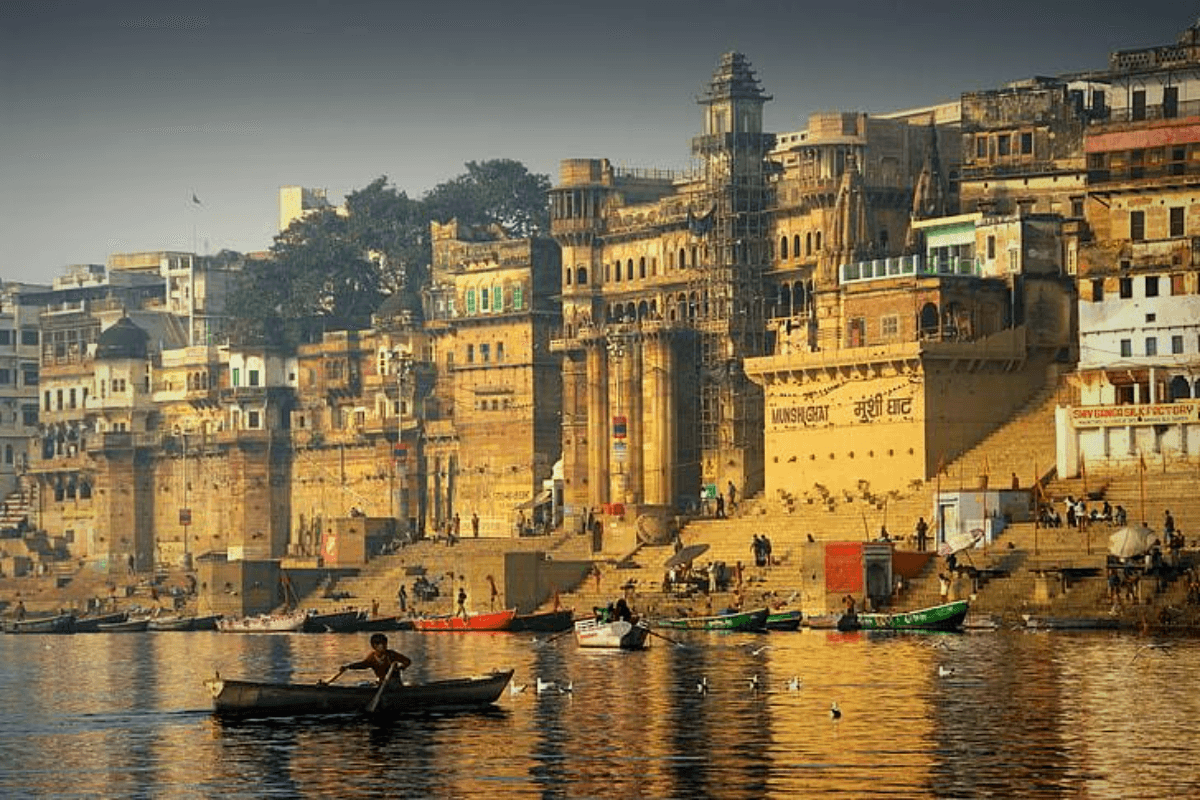
Ratneshwar Mahadev is a Shiva shrine that stands beside Manikarnika Ghat, in the most sacred stretch of the Kashi waterfront. Here Shiva is worshipped as Ratneshwar — Mahadev of this place — within the wider devotional life of the Mahashamshan, the great cremation ground where Kashi turns toward moksha. To the people of Banaras the temple is a beloved presence, leaning gently toward the Ganga, its lower portion held under the river for much of the year, and offered for direct darshan only when the waters fall in the dry season.
For most of the year the river covers the sanctum entrance, and devotees offer their prayers from the ghat above, looking down at the tilted shikhara rising from the water. Only in the driest months — usually around the close of summer — does the waterline recede enough for the sanctum to open and for the lingam within to receive abhishek and offerings directly. This seasonal rhythm of hiding and emergence is part of how Kashi has come to know and love this Mahadev.
Katha and local belief
Banaras keeps several cherished traditions about why the temple leans, and it tells them as devotional teaching rather than as fixed history. The story most often heard at the ghats is remembered as the Matri-rin katha: that the temple was raised by a devoted son or servant to repay the debt owed to his mother, and dedicated in her name rather than to Mahadev alone. It is said in Banaras that a debt to one's mother can never be fully repaid, and so the shrine, however lovingly built, was held never to attain complete merit — and it is in this spirit that the people of Kashi understand its lean toward the river.
Another tradition told along the ghats holds that the temple was built in proud rivalry with the great shrines of Kashi, and that the lean is a gentle reminder of the truth that devotion, not grandeur, is what Mahadev receives. These kathas are loved not because they settle the question of the tilt, but because they carry the older Banarasi wisdom that surrender outweighs achievement before Shiva. The shrine stands as it has stood for generations — leaning toward the Ganga, resting in her waters, and still a place of worship when it rises.
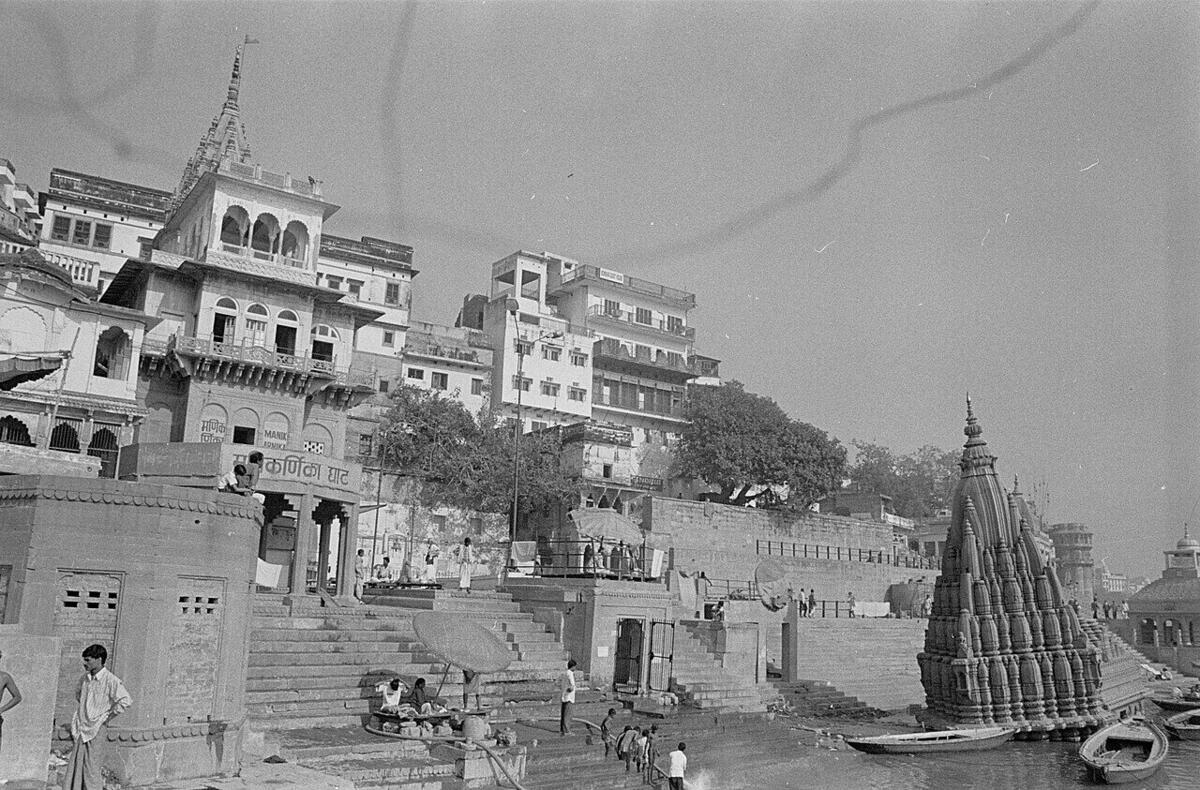
Ratneshwar Mahadev belongs to the dense Shaiva fabric of Kashi, the city that tradition holds Shiva never to leave. Like the countless lingas of Banaras, it is approached as Shiva made near to human hands — a place to offer Ganga-jal and bilva patra, to bow, to remember, and to ask for the steadiness that the city's Mahadevas are believed to grant.
What gives this shrine its particular devotional character is that Shiva here keeps to the rhythm of the Ganga herself. For much of the year the sanctum rests beneath the river, and darshan is offered from above; only in the dry months does the lingam emerge to be touched and bathed. Devotees hold this not as an obstacle but as a teaching. The darshan asks for patience and for an arrival earned by season, and Banarasi tradition treats the darshan-from-a-distance during the submerged months as fully valid — the Mahadev who hides in the Ganga is no less present to the prayer offered from the steps above.
Ratneshwar and the Mahashamshan
The shrine's nearness to Manikarnika, the great cremation ghat, gives its worship a quiet gravity. The temple stands within sight of the pyres and of every family that comes to perform antim sanskar, and it is the same Ganga that receives both the ashes of the departed and the lower sanctum of this Mahadev. Devotees who come to Kashi for the last rites of a loved one often find themselves resting also in silent darshan of Ratneshwar. In Banaras it is felt that Shiva, half held within the river while his devotees are carried to her banks, abides close to Kashi's unbroken passage through death toward moksha.
History
The precise date of Ratneshwar Mahadev's construction is not firmly established. It is generally placed within the eighteenth to nineteenth centuries, in the long Maratha and regional-patron period that gave much of the surviving Kashi waterfront its present stone form. Across these centuries, through changing patrons and changing fortunes, the shrine has remained a place of Shiva worship on the Manikarnika stretch.
The lean appears to have developed over time rather than at the founding. Nineteenth-century paintings and early photographs already show the temple inclined toward the river, and the angle is understood to have deepened gradually as the Ganga worked at the foundation over the decades. The likely cause, in plain terms, is the sustained action of the river against the platform on which the shrine rests.
In modern times several conservation proposals have been discussed, but none has set out to straighten the temple. Its leaning form is now inseparable from its identity, and the prevailing view among those who care for the ghats is that the shrine should be steadied without altering the character Banaras has come to cherish. That it has stood in this inclined state for well over a century is itself a quiet testimony to the soundness of the original work — and to the devotion that has kept it a living shrine.
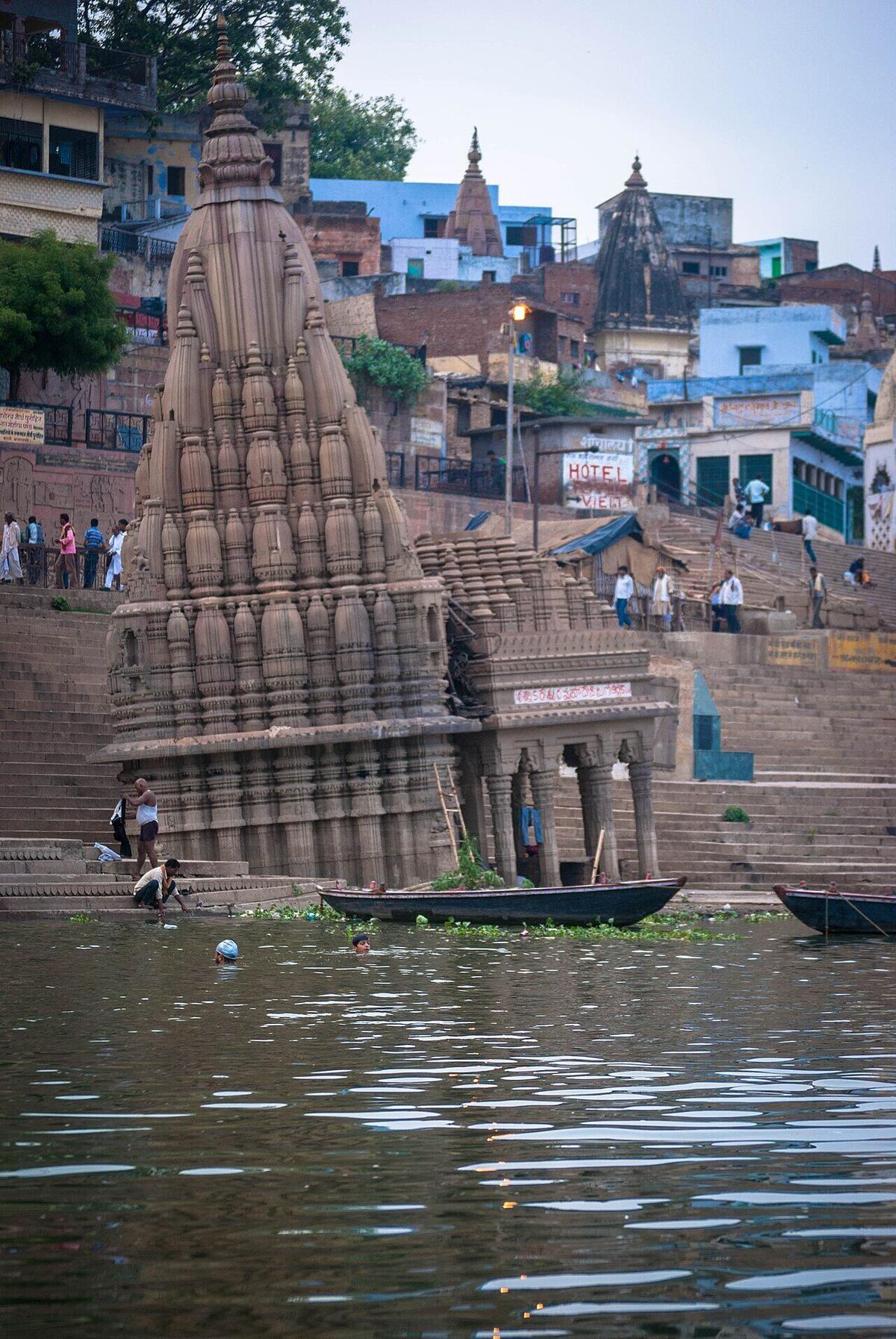
Architecture
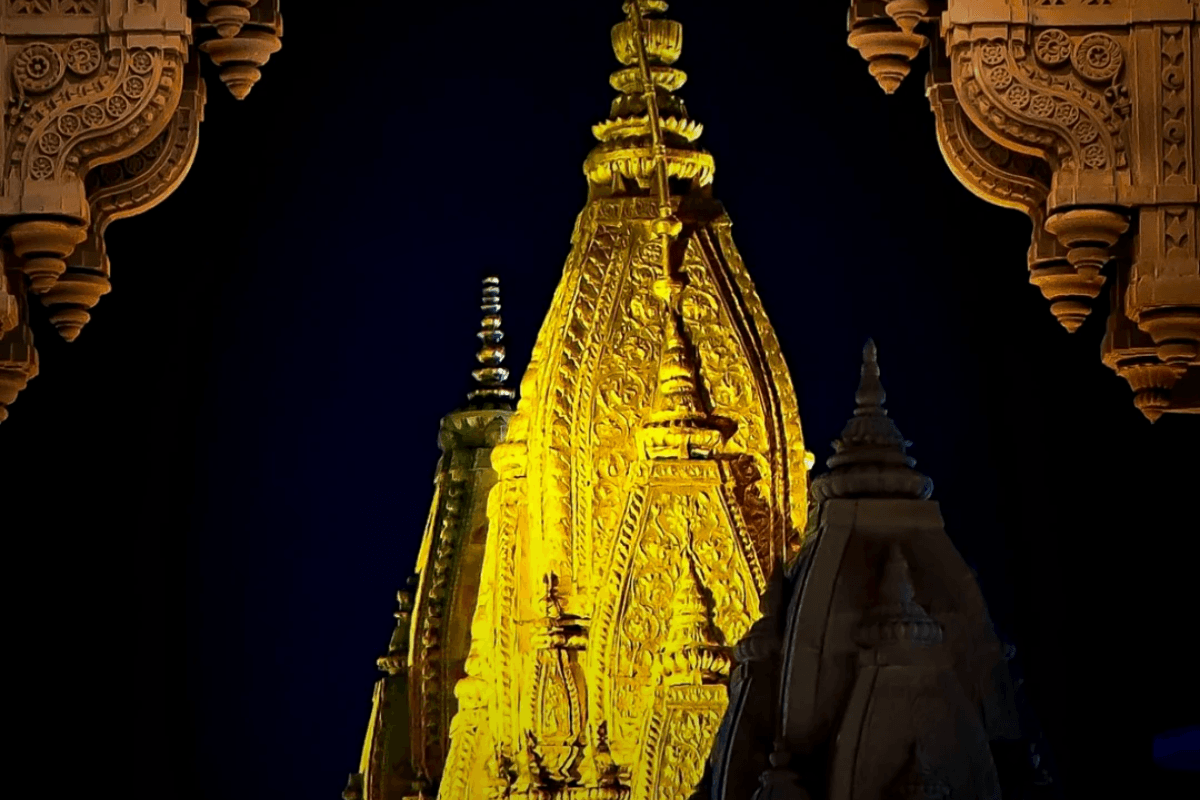
Ratneshwar Mahadev is a compact temple in the North Indian Nagara style, raised on a stone platform at the edge of the Manikarnika stretch that the Ganga has steadily undercut over the years. A single garbhagriha holds the Shiva lingam, and above it rises a curving shikhara in the restrained Nagara manner, without elaborate ornament. As with so many Kashi shrines, its meaning lies not in scale but in nearness — a small sanctum where the devotee may stand close to Mahadev.
The temple's most recognisable feature is its pronounced lean toward the river, a tilt that the people of Banaras have long held with affection. The shikhara inclines away from the vertical, and the shrine seems to rest against the pull of the Ganga rather than to stand apart from her.
The seasonal submersion is the other feature that defines the temple as it is experienced. Through the monsoon and for months afterward, the lower portion of the structure, including the sanctum entrance, lies beneath Ganga-water. Only in the driest stretch of the year does the waterline fall far enough to reveal the doorway and the lingam within. This yearly cycle of resting in the river and emerging from it is as much a part of the shrine as its stone.
Rituals & Practices
Worship at Ratneshwar Mahadev follows the rhythm of the Ganga, and so takes two forms across the year.
In the dry months, when the sanctum is open (usually around the close of summer):
- Direct darshan of the lingam within the garbhagriha, once the waterline has fallen enough to permit entry
- Abhishek with Ganga-jal, drawn from the river that flows immediately alongside
- Offerings of bilva patra, white flowers, and the customary Shaiva arpan
- Recitation of the Mahamrityunjaya mantra and Rudra Suktam, as at any Shiva shrine
Through the submerged months (most of the year):
- Darshan from the ghat above, looking down upon the tilted shikhara
- Bilva patra and flowers offered into the water over the sanctum
- Quiet darshan from a passing boat as it draws near the shrine
- Personal sankalp offered to Shiva in his hidden form
The shrine's place beside Manikarnika lends its worship a particular depth. It rests within the direct view of the great cremation ghat, and many who have come to Kashi for the last rites of a family member find themselves sitting also in the quiet darshan of this Mahadev.
Because the opening of the sanctum depends on the Ganga's level, which shifts from year to year, pilgrims hoping for direct darshan should verify current conditions with local temple attendants before planning their visit.
Festivals & Celebrations
| Festival | When | Crowd |
|---|---|---|
| Mahashivratri | — | High (observed from the ghat above) |
| Season of Direct Darshan | — | Moderate (devoted pilgrims) |
| Shravan (Sawan) | — | Moderate (observed from the ghat above) |
| Dev Deepawali | — | Very high |
Mahashivratri: Mahashivratri here carries a tender quality drawn from the shrine's submergence â a reminder that the Mahadev who opens to darshan in the dry months is the same Shiva who waits, hidden in the Ganga, through the rest of the year. The night teaches patience and a devotion that does not depend upon nearness.
Season of Direct Darshan: For those who wait for it, the opening of Ratneshwar's sanctum is among the more cherished moments of the Kashi Shaiva year. Tradition holds that the darshan earned by patient waiting carries a particular blessing.
Shravan (Sawan): Shravan at Ratneshwar shows the tradition's grace in accommodating the shrine's own rhythm â devotion continues even when the sanctum cannot be entered, and the Mahadev resting in the Ganga remains near to every prayer.
Dev Deepawali: Tradition holds Dev Deepawali to mark the descent of the devas to bathe in the Ganga. Though the sanctum is still largely under the river, the lamps offered along these ghats carry the devotional spirit of the night to the waters around the shrine.
Prepare for Your Visit
Practical guidance to help you plan your pilgrimage
| Pilgrim Guidance | How to reachRatneshwar Mahadev stands beside Manikarnika Ghat, on the central stretch of the Kashi waterfront, close to Scindia Ghat. It is most easily seen from the river: as a boat moves along this stretch of ghats the leaning shikhara comes into view from a distance. By land, the approach is through the lanes that descend toward Manikarnika from Vishwanath Gali. Most pilgrims come to it as part of a wider darshan of the central ghats rather than as a separate journey. Preparation for Pilgrims
Best Time to VisitFor the rare direct darshan of the lingam, the driest months, usually around the close of summer, are the time the sanctum opens. For darshan from the ghat at any season, October to March is the most comfortable general window. Mahashivratri falls before the waterline has fully receded, so at that time the shrine is still partly under the river and the observance is kept from the ghat above. |
Location
Varanasi, UP
Pilgrim photos
No pilgrim photos yet.
Community corrections
No corrections yet.
Edit history
No revisions yet.
Plan Your Visit to Ratneshwar Mahadev Temple
Get a custom itinerary and pricing for your trip.
Recommended
Packages for this destination
Pilgrim Notes
On-ground observations from fellow pilgrims
No pilgrim notes yet. Be the first to share on-ground observations!
Sign in to share a note.
Pilgrim Reviews
Be the first to share your experience at Ratneshwar Mahadev Temple.
Sign in to write a review.
Nearby sacred places
Discover other sacred places near Ratneshwar Mahadev Temple
Explore temples, tirthas, and pilgrimage sites in UP
Explore nearbyPart of these circuits
Walk the traditional pilgrimage routes this destination belongs to.