Sheetla Mata — Shitala Devi, "the cool Mother" — is worshipped in Kashi as the goddess of healing. Tradition holds her to be the Mother who cools the body's heat, who soothes fever and the eruptive ailments of childhood, who watches over the sick and especially over little children. Her name itself, Sheetla, carries the blessing she is invoked for: shitalata, the cooling calm that returns when illness lifts and health is restored.
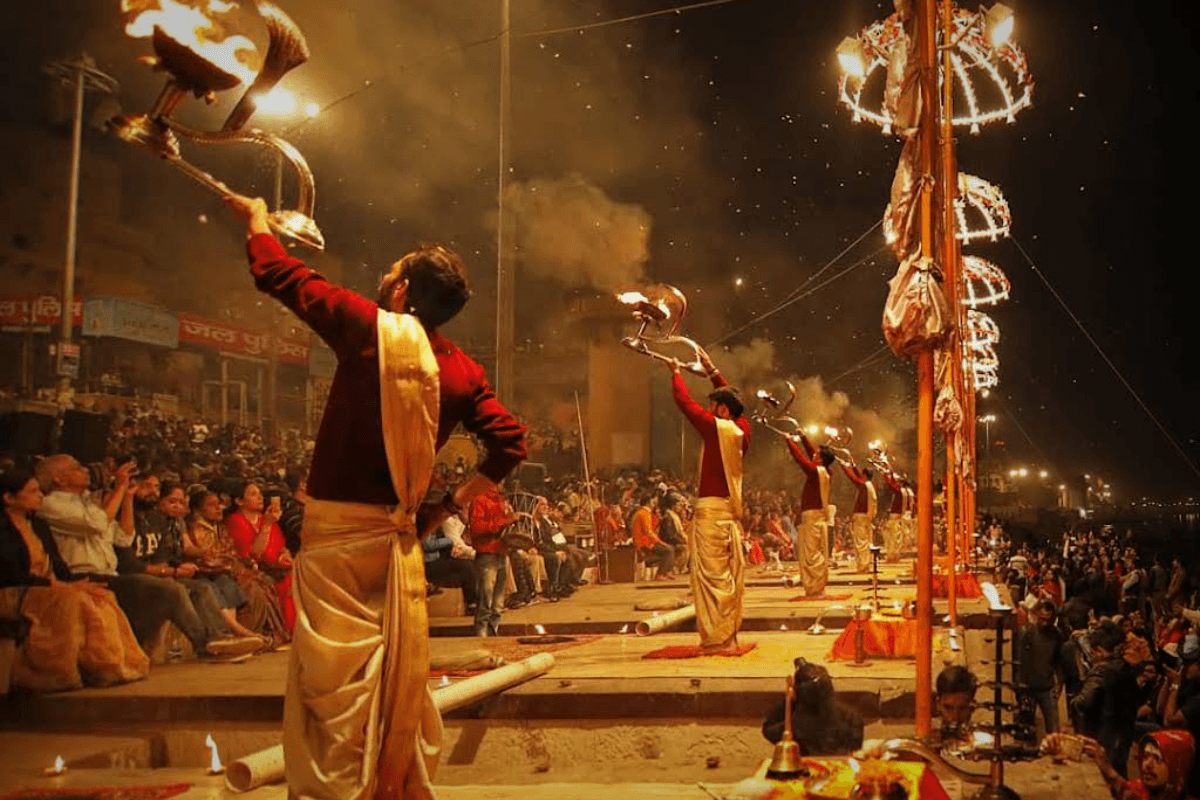
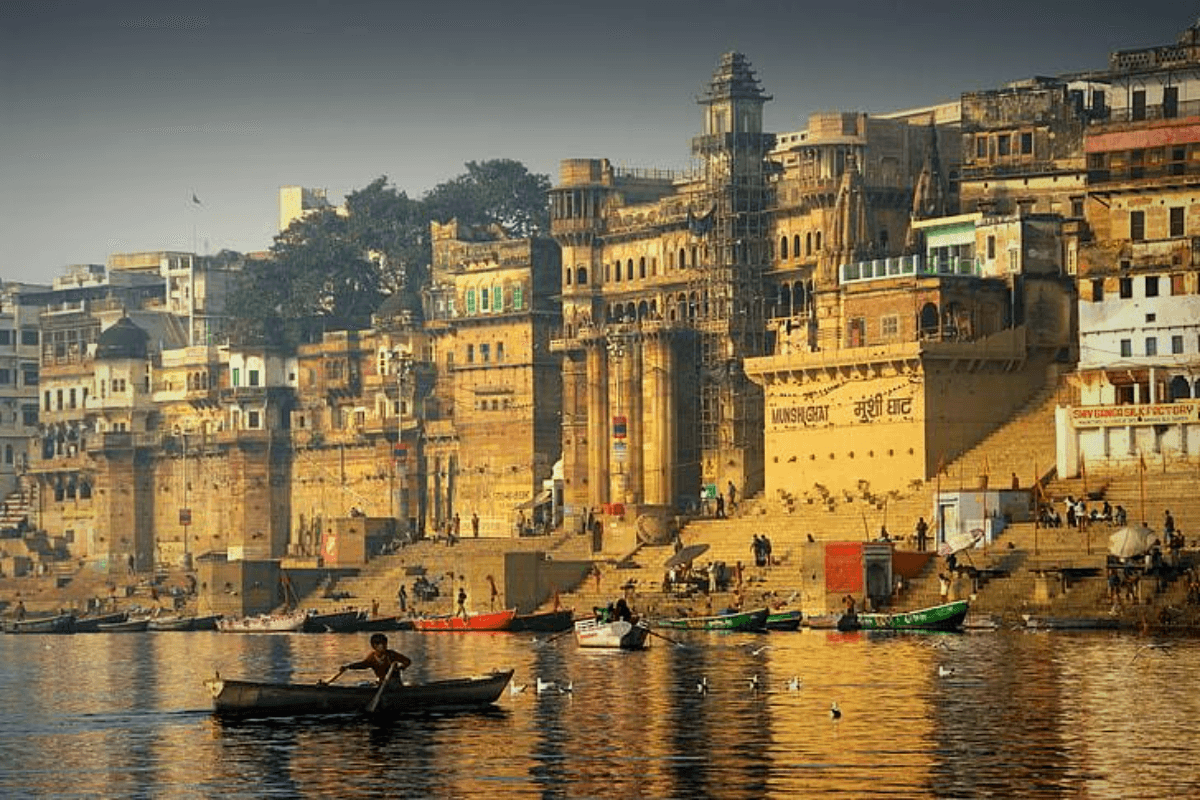
The temple sits on the Ganga riverfront at Sheetla Ghat, immediately beside Dashashwamedh Ghat — the very steps where the evening Ganga Aarti is performed. This makes it one of the most visited Devi shrines in all of Kashi: pilgrims arriving for darshan at the river, families on a Banaras yatra, and above all the city's own mothers, who fold Sheetla Mata into the everyday rhythm of their devotion. Few Banarasi households are without a memory of this shrine — a vow made for a feverish child, a thanksgiving offered after recovery, an infant carried here for first darshan.
Katha and local belief
Tradition holds Sheetla to be a fierce yet deeply maternal form of the Devi, who arose to cool the burning that disease brings. Devotees picture her riding her mount with a small water-pot of cooling water, a winnowing fan, a broom, and the neem twigs that are her sacred plant — each a sign of the care she gives. Cool water from her worship is sprinkled on the ailing; fresh neem leaves are kept by the bedside of the sick; the broom marks the cleansing she is held to perform. None of this is set against medicine — in living Banarasi practice, prayer at her feet and careful tending of the patient go hand in hand.
It is said in Banaras that the Mother at Sheetla Ghat is among the most responsive of all her shrines, and that the Ganga flowing past her steps is itself part of her cooling grace. Many families have brought their children to her door across three and four generations, and the visiting tradition continues unbroken to this day.
Sheetla Mata is approached as the Mother in her healing aspect — the Devi who tends the body when it burns and restores it to coolness and calm. Devotees hold that her grace settles not only fever and the eruptive ailments of childhood but also the inner heat of anxiety, restlessness, and anger. In traditional understanding, illness and its great heat are met by the Mother's cooling presence, drawn near through worship, neem, and water. This is never framed against physical care; in Banarasi practice, sankalp at the shrine and the tending of the patient — cool water, neem-leaf bedding, light food, rest — belong together as one act of love.
Devotees come to Sheetla Mata especially for:
- The wellbeing and recovery of children who are unwell
- Relief and recovery during fever and prolonged illness
- Thanksgiving after recovery from a serious illness
- The cooling of inner unrest — anxiety, agitation, or anger
- The protection of newborns — many Banarasi families bring infants here for first darshan
Sheetla among the forms of the Mother
Tradition places Sheetla among the forms of the Devi — counted by some within the Sapta Matrikas, the seven mother-goddesses, and understood by others as a healing aspect of the Mother, worshipped with special intensity on the ashtami of the lunar month. Her most beloved day is Sheetla Ashtami, the eighth day after Holi, when families across North India keep the observance of Basoda: food cooked the previous evening is offered cool to the Mother and shared as prasad, a gentle marking of the cooling that the season — and her grace — is held to bring.
History
The shrine of Sheetla Mata on the Dashashwamedh riverfront is among the older Devi shrines of the Kashi ghats. Banarasi devotional memory carries its worship back several centuries, and while the exact date of its founding is not preserved, its place on the sacred riverfront and its dedication to the Mother of healing root it firmly in the older traditions of the city.
The temple in its present form reflects the eighteenth-century period of rebuilding along the Kashi ghats, when much of the Dashashwamedh stretch took the shape it holds today. The compact sanctum, the courtyard, and the steps that join the shrine to the river all belong to this period. It has been cared for continuously since by the priestly families and the community of devotees attached to it, with restoration undertaken from time to time.
Through the colonial and modern eras the temple's role has remained constant. As medical knowledge and treatment have changed, the tradition of Sheetla worship has continued alongside them — held now as a companion to medical care, sustaining the spiritual and emotional life of families through times of illness.
Architecture
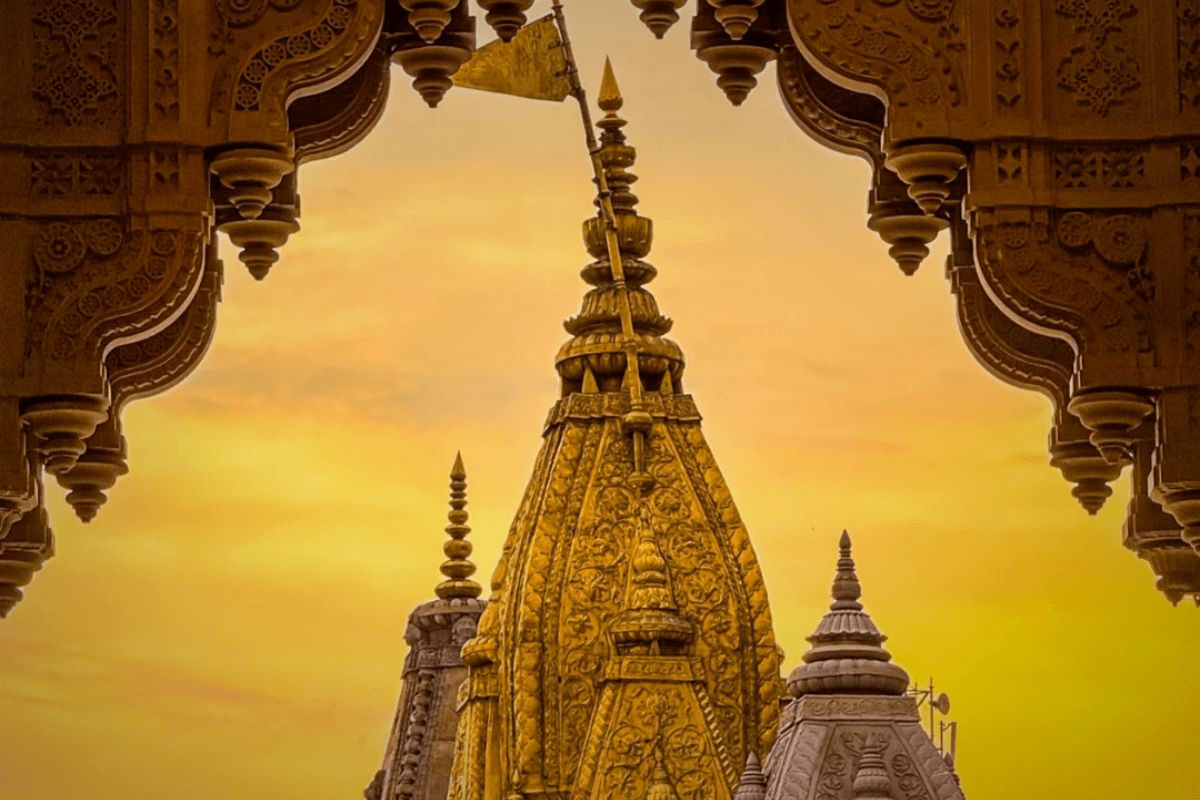
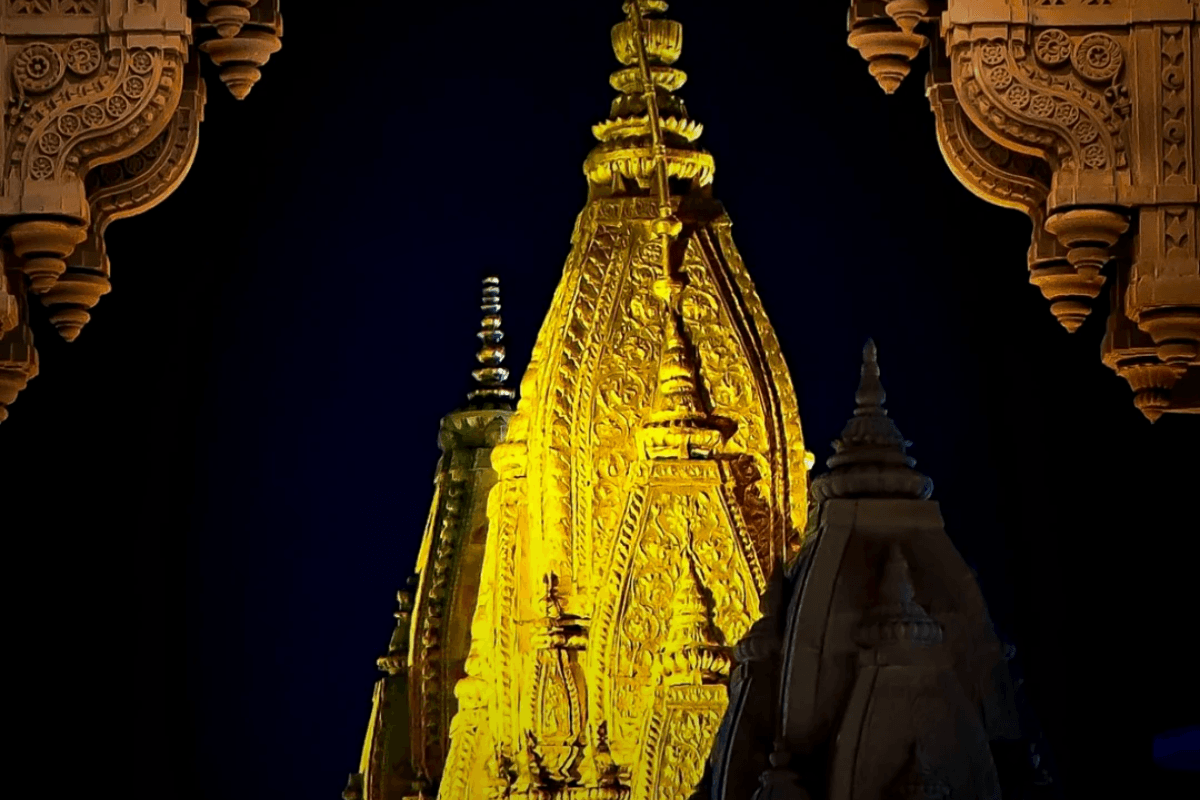
The Sheetla Mata Mandir is a compact riverside shrine, modest in scale and built in the simple Banarasi temple style of its period. The sanctum is small, opening onto a courtyard that connects directly to the steps of the ghat below. Its proportions are intimate — the temple is made to be entered and sat within, not admired from afar — and its strength lies in nearness and long devotion rather than in size.
Within the sanctum, the murti of Sheetla is the focal point, the Mother shown with the water-pot, winnowing fan, and broom that are her signs. She is dressed daily in red and yellow, the colours devotees associate with the Devi in her healing form, and adorned with marigold and the small water-pot offerings that pilgrims bring.
The compound keeps a small space where devotees may sit with their sankalp, often for long sittings during a family's time of illness. Below the temple the steps descend to the Ganga, and the river — close enough that the evening aarti at Dashashwamedh carries up to the shrine — is part of how the temple is experienced. Many devotees take a ritual snan before darshan.
Rituals & Practices
The central practice at Sheetla Mata is jal-arpana — the offering of cool water to the Mother, which is then carried home as blessed water for the one who is unwell. Devotees bring small earthen or copper pots, fill them with Ganga-jal at the ghat below, bring them up to the sanctum for arpana, and take them home for use beside the patient.
Offerings devotees commonly bring:
- Cool water, Ganga-jal preferred, in earthen or copper pots
- Fresh neem leaves and neem twigs
- Yellow and red flowers — marigold and hibiscus
- Sindoor and turmeric
- Food cooked the previous evening, especially on Sheetla Ashtami
- A small contribution toward the temple's annadana
The morning and evening aartis are the principal daily worships. Through the day the temple stays open for personal sankalp and arpana, and devotees with seriously ill family members may sit in the courtyard for long periods. Specific timings may vary; pilgrims are encouraged to verify with the temple before a visit.
Festivals & Celebrations
| Festival | When | Crowd |
|---|---|---|
| Sheetla Ashtami (Basoda) | — | Extremely high |
| Navratri | — | Very high |
| Mondays and Fridays | — | High |
| Summer season | — | Moderate to high |
Sheetla Ashtami (Basoda): Tradition holds Sheetla Ashtami to be the day the Mother grants her healing grace most readily through the year. Families come above all for the wellbeing of their children. The Basoda tradition, kept across North India, has its principal Banarasi expression at this temple.
Navratri: Sheetla is held as a form of the Mother, and the Navratri observance honours her alongside the Devi's other forms. The temple takes full part in the city-wide Navratri devotional life.
Mondays and Fridays: Mondays and Fridays are traditionally held to be the days the Mother gives darshan most readily. The weekly rhythm of the temple is built around them.
Summer season: The Sheetla tradition is woven into the seasonal life of the subcontinent. Worship grows most heartfelt at the very time when the prayers for cooling and health are most deeply felt.
Prepare for Your Visit
Practical guidance to help you plan your pilgrimage
| Pilgrim Guidance | How to reachThe Sheetla Mata Mandir stands at Sheetla Ghat, immediately beside Dashashwamedh Ghat on the Kashi riverfront. The most pleasant approach is along the ghats from Dashashwamedh — only a short walk, with the temple rising just past the main aarti steps. By land, the temple is reached through the lanes from Godowlia or Dashashwamedh crossing; auto-rickshaws drop pilgrims nearby, with a short walk down to the ghat. Many pilgrims combine darshan here with the evening Ganga Aarti at Dashashwamedh, or with Kedar Ghat a little further along the river. Preparation for Pilgrims
Best Time to VisitEarly mornings are the most peaceful, with the morning aarti and the cool river light, and evenings carry the glow of the Ganga Aarti close by at Dashashwamedh. Sheetla Ashtami, the eighth day after Holi (March–April), is the temple's central annual observance. The warmer months bring larger numbers of devotees arriving with sankalp for the healing of their families. Mondays and Fridays are favoured for Devi worship. October to March is the most comfortable window for a general visit. |
Location
Varanasi, UP
Pilgrim photos
No pilgrim photos yet.
Community corrections
No corrections yet.
Edit history
No revisions yet.
Plan Your Visit to Sheetla Mata Temple
Get a custom itinerary and pricing for your trip.
Recommended
Packages for this destination
Pilgrim Notes
On-ground observations from fellow pilgrims
No pilgrim notes yet. Be the first to share on-ground observations!
Sign in to share a note.
Pilgrim Reviews
Be the first to share your experience at Sheetla Mata Temple.
Sign in to write a review.
Nearby sacred places
Discover other sacred places near Sheetla Mata Temple
Explore temples, tirthas, and pilgrimage sites in UP
Explore nearbyPart of these circuits
Walk the traditional pilgrimage routes this destination belongs to.