Shivala Ghat lies on the southern stretch of the Kashi riverfront, between Mahanirvani Ghat and Gularia Ghat, with the akhara ghats of Mahanirvani and Niranjani and then the fortified palace of Chet Singh upstream, and Gularia, Dandi, Hanuman, Karnataka and Harishchandra Ghats a short walk downstream. The name is the plainest in Banaras. A shivala is a Shiva shrine of the kind a neighbourhood keeps for itself, and the shrine above these steps has given its name not only to the ghat but to the whole mohalla behind it.
Heritage documentation records that Shivala once extended over much of this stretch, and that by the middle of the nineteenth century the area had been divided into five ghats. What still carries the Shivala name is a broad, unhurried flight of steps used chiefly by the families who live above it. Snan at first light, a lota of Ganga-jal carried up to the linga, tarpan for the ancestors on the appointed tithis, a diya set on the water at dusk — this is the ghat's day, and it repeats without ceremony.
The neighbourhood above the steps carries an old southern presence. The king of Banaras endowed the Brahmendra Math here for the welfare of pilgrims from South India, and the Varanasi district heritage listing describes that math today as the seat of the Iyer Brahmin and Telugu-speaking Shaiva community of South India, whose families keep their own observances alongside the Banarasi ones. In the lanes behind the ghat stand the shrine of Hayagriva Keshava and the temples of Svapaneshvara and Svapaneshvari, together with a Hanuman shrine — small working temples that see steady household worship rather than pilgrim crowds.
For the pilgrim arriving from the crowded centre, the character of Shivala is its quiet. It is a place to bathe, to sit on the stone for a while, and to walk up to a small Shiva shrine where nobody hurries you.
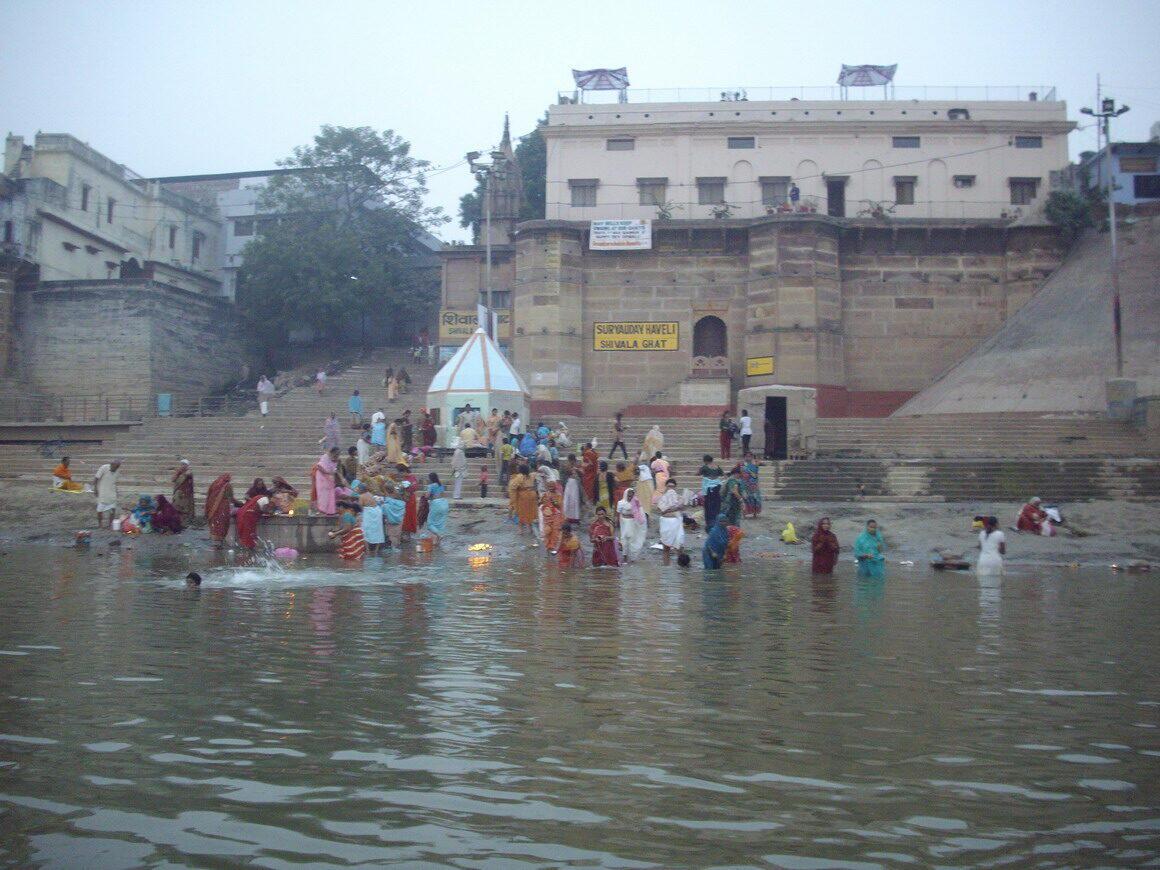
Kashi is understood by devotees as Shiva's own city, and that devotion is not held only in its great temples. A shivala is the form belief takes at the scale of a lane: a linga tended across generations by a few hundred households, where the water carried up from the Ganga each morning is the same water offered at Vishwanath. Shivala Ghat is the river-step of such a shrine, and the daily movement between the two — down for snan, up for jal-arpan — is the whole devotional pattern of the place.
The ghat sits within the southern stretch that pilgrims walk between Assi and Kedar Ghat, and many take their snan here for the simple reason that it is quieter than the ghats at the centre. In devotional understanding, the fruit of Ganga snan within the Kashi kshetra does not depend on the fame of the step one stands upon; the southern ghats have long been valued for exactly this — a bath and a sankalp taken without press of crowd, and a linga close at hand to receive the water afterwards.
This stretch also carries a long renunciate presence, and for many pilgrims that is part of its meaning. Heritage records place the Naga Dashanami akharas of Niranjani and Mahanirvani immediately upstream of Shivala, and at Dandi Ghat just downstream a branch of the Sharada Pith of Dvaraka, where the Dandi ascetics live — those who carry the staff and wear ochre. To bathe here in the early morning is to bathe within sight of sadhus at their own observances, which devotees regard as an auspicious companionship rather than a spectacle.
History
The devotional life of this stretch is older than its stonework; the landings here were earth and mud long before they were stone. Heritage documentation records that Raja Balwant Singh of Banaras first had Shivala Ghat made pucca in 1767, and that his successor Chet Singh extended it in 1770, during the years his palace was being built alongside.
That palace, immediately upstream, was raised as a small fortress, and in 1781 it saw the confrontation between Chet Singh's forces and the troops of Warren Hastings, after which the fort passed to British control; the Maharaja of Banaras recovered possession of it in the late nineteenth century. The worship along the ghat continued through all of it, unbroken. In the same late-nineteenth-century decades the Nepali king Sanjay Vikram Shah built the palace that still stands above these steps, and a Shiva temple with it, while the king of Banaras endowed the Brahmendra Math for pilgrims coming from the south — a foundation that made Shivala the settled quarter of Kashi's southern Shaiva families.
Until the middle of the twentieth century the water between Chet Singh Ghat and Shivala Ghat was the setting for Budhva Mangal, when decorated boats gathered on the river and parties of musicians performed through the day. The observance lapsed here, and Uttar Pradesh's cultural department later revived a version of it at Rajendra Prasad Ghat. The steps as they stand today were rebuilt in 1988 by the state irrigation department; the ghat area is held by the municipal corporation, while the temples, maths and residences above it belong to their own trusts and families.
Architecture
Shivala is a broad ghat; the figure of about 0.58 hectares in the heritage documentation is recorded for the Shivala–Gularia–Dandi stretch taken together rather than for Shivala alone. The steps were rebuilt in 1988 in the plain dressed stone used along this stretch, and they carry no aarti platform or ceremonial stage. The shape of the ghat is made for two things only — descending to the water, and sitting.
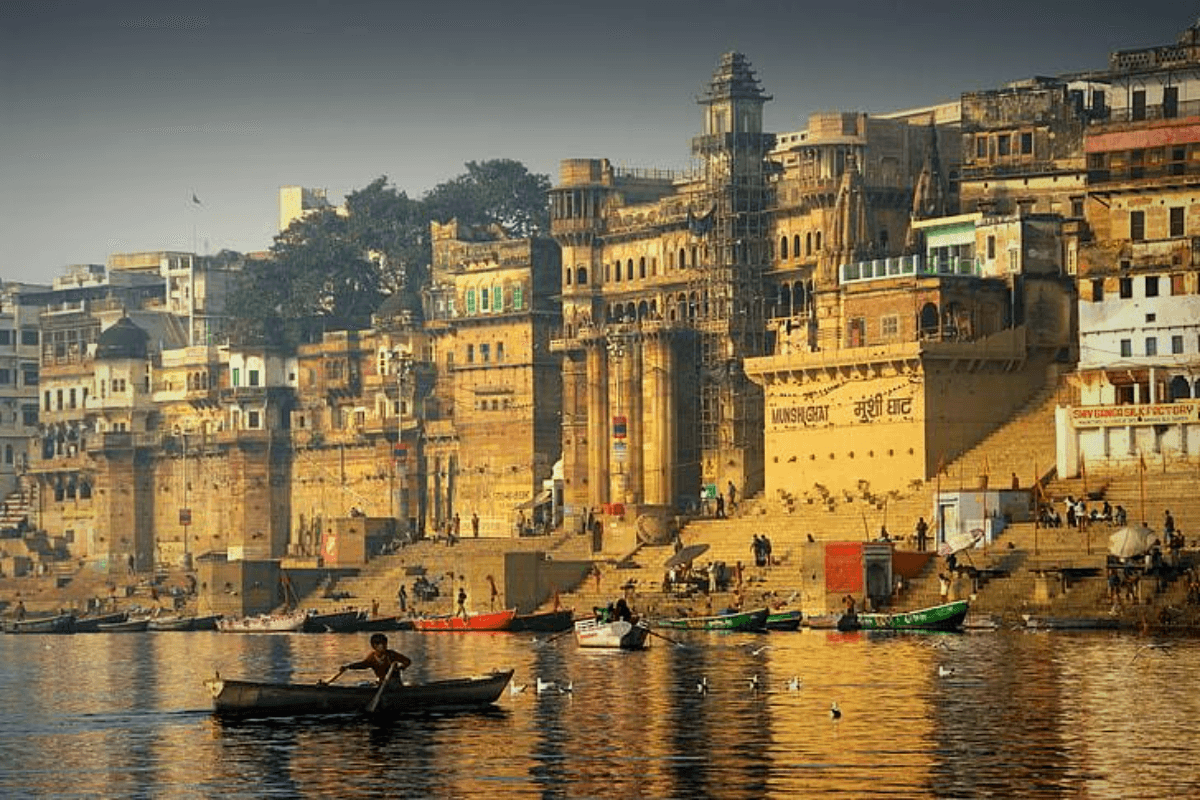
What gives the frontage its skyline is the Shivala Palace above, raised by King Sanjay Vikram Shah in the late nineteenth century, its long river façade now much weathered. The small Shiva shrine that gives the ghat its name stands at the northern part of the frontage, and the Brahmendra Math stands in the neighbourhood above.
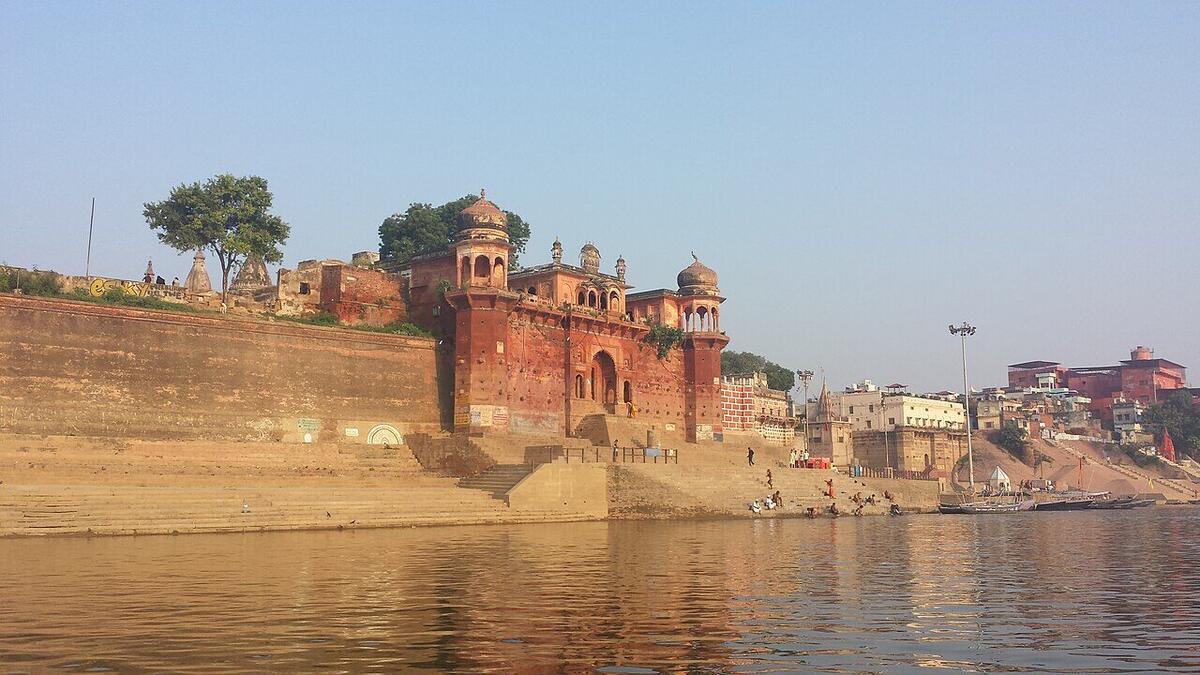
A short way upstream, past the Niranjani and Mahanirvani akhara ghats, stands the Chet Singh fortress, built as a riverside residence with pavilions on a terrace above the Ganga, reached through a monumental gateway, its terrace corners marked by two massive structures capped with octagonal domed pavilions, and three Shiva temples of the eighteenth and nineteenth centuries standing in its compound. Seen from a boat, Shivala reads as a residential riverfront rather than a temple front — math, palace and household shrine set one against the other, with the steps running down to the water between them.
Rituals & Practices
The practice at Shivala is domestic and daily. Devotees come down at first light for Ganga snan, fill a lota to carry up to the Shiva shrine, and offer jal and bilva patra to the linga. Families beginning a Kashi observance take sankalp here, and tarpan for ancestors is performed on the appointed tithis and through Pitru Paksha.
The Shaiva seasons bring the fullest gathering. On the Mondays of Sawan, when the offering of Ganga-jal to Shiva is at its most intense across Kashi, the steps are in use from before dawn; and Mahashivratri is kept at the shrine above as it is at Shiva shrines across Kashi. Through the rest of the year the rhythm is simply snan, darshan and a lamp set on the water at dusk.
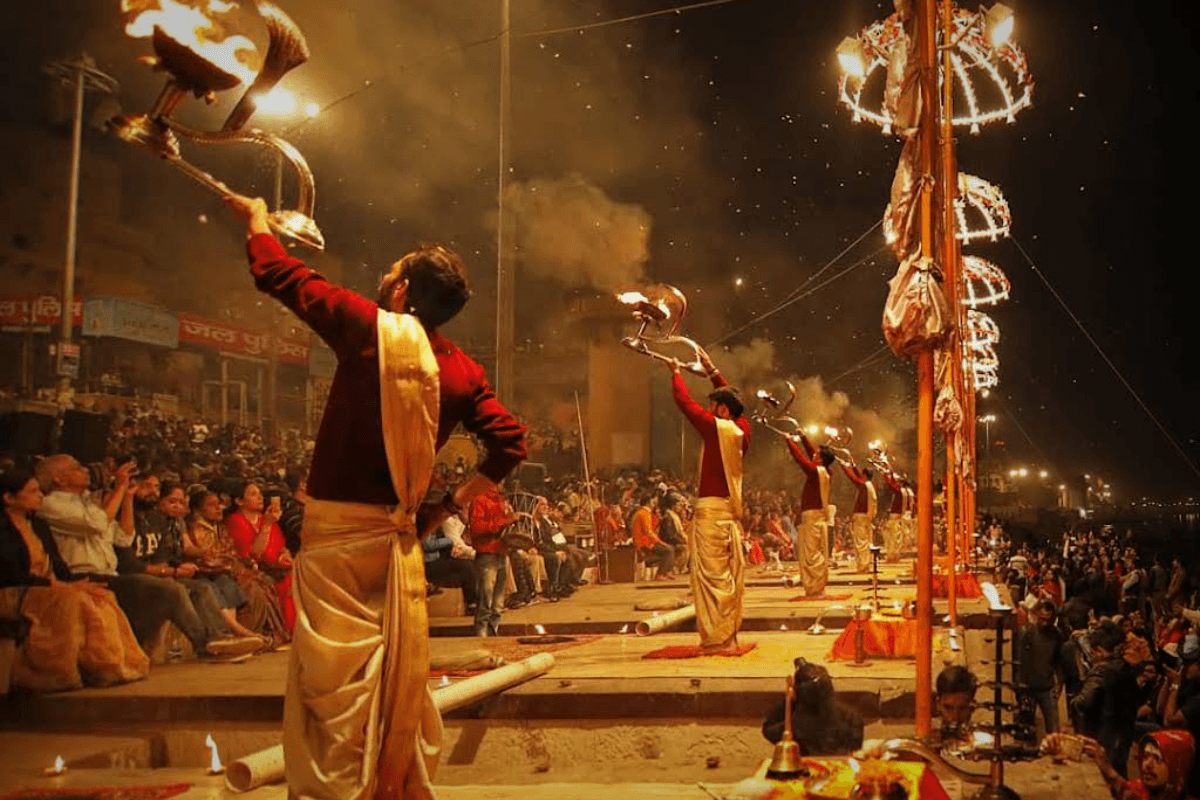
Shivala holds no formal evening Ganga Aarti of the kind offered at Dashashwamedh, and pilgrims who wish to attend one walk or take a boat downstream. Timings at the small shrines above the ghat are kept by their own priests and trusts and are not fixed for visitors; confirm them locally on the day.
Festivals & Celebrations
| Festival | When | Crowd |
|---|---|---|
| Mahashivratri | — | High, but far lighter than the central ghats |
| Sawan Somvar | — | High on Mondays, moderate through the rest of the week |
| Dev Deepawali | — | Very high across the city; moderate on this ghat |
| Kartik Purnima Snan | — | High from before dawn |
| Ganga Dussehra | — | Moderate to high |
Mahashivratri: Tradition holds that the offering of jal and bilva patra to the linga on this night carries especial grace. For a neighbourhood shrine like the Shivala, this is the fullest night of its year.
Sawan Somvar: Shravan is held to be Shiva's own month, and the offering of Ganga-jal to the linga is its central act of devotion across Kashi.
Dev Deepawali: Tradition holds that Dev Deepawali marks Shiva's victory over Tripurasura and the descent of the devas to bathe in the Ganga; the lamps on the steps are offered in their welcome.
Kartik Purnima Snan: The Puranas praise snana and daan on Kartik Purnima as bearing the fruit of great yajnas; in Kashi the whole waterfront keeps the day.
Ganga Dussehra: Devotees hold that snan on this day honours Ganga Mata's coming to the earth, and that the river receives the day's offerings with especial grace.
Prepare for Your Visit
Practical guidance to help you plan your pilgrimage
| Pilgrim Guidance | How to reachShivala is both a ghat and a well-known mohalla, so the simplest approach is from Shivala crossing, from where a short lane drops to the steps past the math and the palace frontage. Pilgrims walking the riverfront can reach it from Assi in the south, passing Tulsi, Bhadaini, Janki, Anandamayi, Jain, Nishad Raj, Panchkot, Prabhu, Chet Singh, Niranjani and Mahanirvani Ghats; from Dashashwamedh in the north the walk comes upstream past Kedar, Vijayanagaram, Lali, Harishchandra, Karnataka, Hanuman, Dandi and Gularia Ghats. A shared boat from Assi or Dashashwamedh is the easiest approach for elderly pilgrims, and from the river the ghat is identified by the long weathered façade of the Shivala Palace above it. Preparation for pilgrims
Best time to visitOctober to March is the most comfortable season, with clear mornings and a low, steady river. Sawan (July–August) and Mahashivratri bring the ghat's own devotional peak. During the monsoon the lower steps go under water and the usable ghat shrinks to the upper flight, so bathing is best avoided when the current is high. On Dev Deepawali the whole waterfront is lit, and Shivala, being off the main crush, is one of the calmer places from which to see it. |
Location
Varanasi, UP
Gallery
Pilgrim photos
No pilgrim photos yet.
Community corrections
No corrections yet.
Edit history
No revisions yet.
Plan Your Visit to Shivala Ghat
Get a custom itinerary and pricing for your trip.
Recommended
Packages for this destination
Pilgrim Notes
On-ground observations from fellow pilgrims
No pilgrim notes yet. Be the first to share on-ground observations!
Sign in to share a note.
Pilgrim Reviews
Be the first to share your experience at Shivala Ghat.
Sign in to write a review.
Nearby sacred places
Discover other sacred places near Shivala Ghat
Explore temples, tirthas, and pilgrimage sites in UP
Explore nearbyPart of these circuits
Walk the traditional pilgrimage routes this destination belongs to.