Tridev Mandir is a Kashi shrine of the integral darshan, where Brahma, Vishnu and Mahesh are enshrined together as the Trimurti — not three competing deities, but the three faces of the one Brahman. Tradition holds the Trimurti to be a single Reality showing itself through three great functions: sristi, creation entrusted to Brahma; sthiti, sustenance held by Vishnu; and samhara, the gracious dissolution that returns the soul to its source, presided over by Mahesh.
What gives this shrine its special place in Kashi is the rare presence of Brahma in his own iconographic form. Shrines dedicated specifically to Brahma are uncommon across India; devotees who long to offer worship directly to the Creator find that opportunity here, side by side with Vishnu and Shiva. Pilgrims come for the unified darshan of all three, for sankalpas that span more than one stream, and for the simple wish to bow to the integral view before continuing into the specific shrines of Kashi.
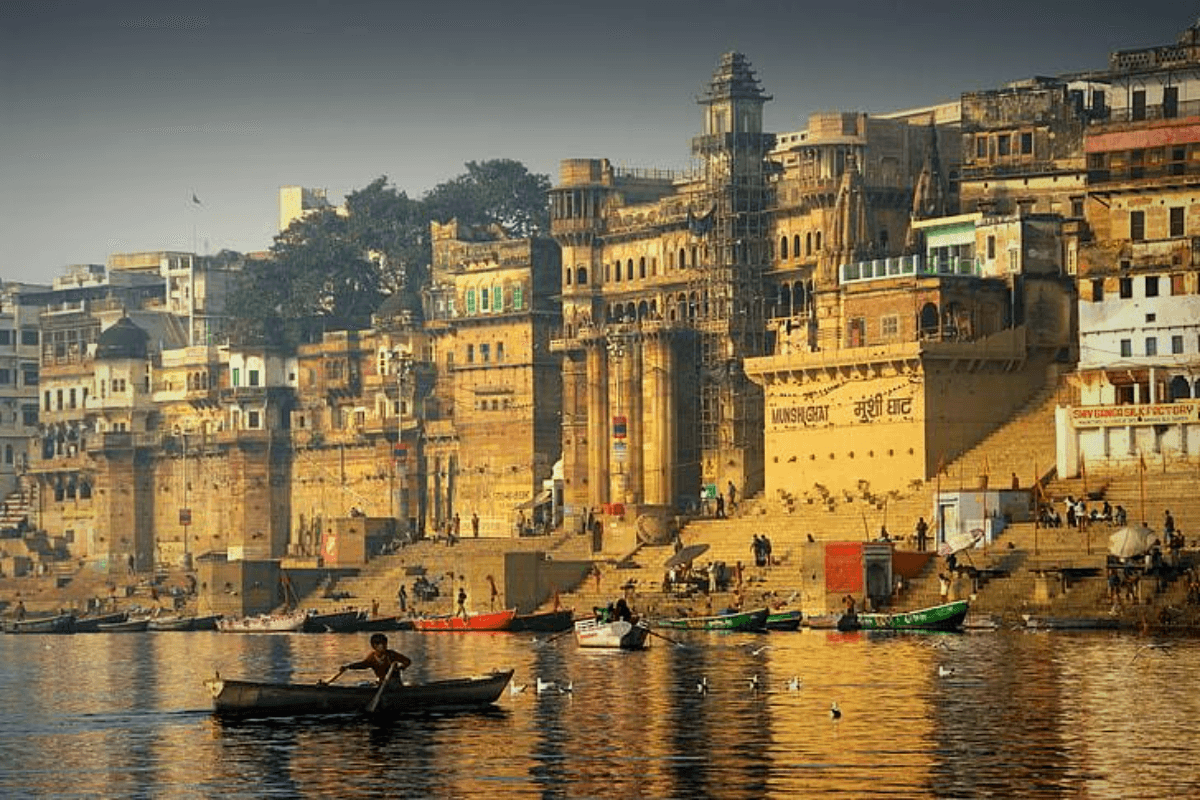
The temple sits in the southern stretch of the old city, gathered into the wider devotional life of Varanasi. It is approached not as a grand edifice but as a quiet doorway where the three principal forms of Hindu cosmology stand together to receive the devotee's prayer.
Katha and local belief
A beloved Banarasi katha tells of a sage of the puranic age, weary of partisan disputes among followers of Vaishnava, Shaiva and Brahma traditions, who came to Kashi to ask which deity is supreme. Tradition holds that the three appeared to him in turn and each spoke the same words: "I am the form you have been worshipping under another name." The sage is said to have established this shrine so the answer might become visible to others — not three deities, but one Brahman showing three faces of the one work.
Devotees hold that a single parikrama here, performed with the three names recited in sequence — Om Brahmane Namah, Om Namo Narayanaya, Om Namah Shivaya — renders the day's worship complete in all three streams. This is especially cherished by pilgrims whose time in Kashi is limited but who wish to honour the integral view before continuing on to their kuldevta or chosen ishta-deva.
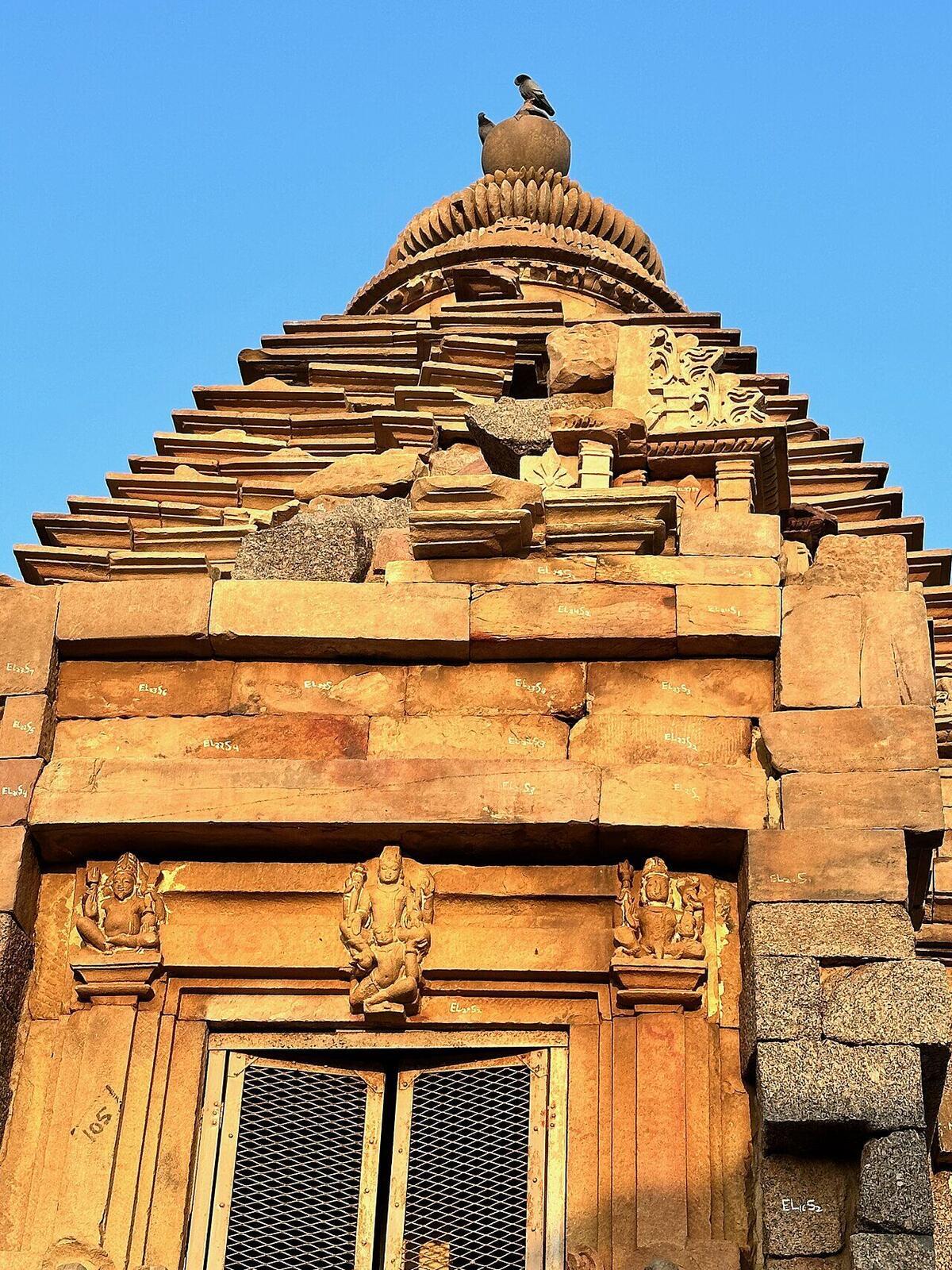
The Tridev tradition rests on one of the deepest layers of Hindu thought — the Trimurti doctrine carried in the Puranas, in which Brahma, Vishnu and Shiva are understood as three functional aspects of the one Brahman. Creation, sustenance and the gracious dissolution that returns the soul to its source are not three rival realities but three movements of the same divine life. The Adi Shankara tradition teaches this synthesis openly; the Tridev shrines across India, and especially this one in Kashi, are its visible expression in stone and worship.
Devotees come here with several distinct intentions. Sankalpas that span more than one stream — a vow involving both family prosperity (Vishnu) and freedom from illness (Shiva), or one combining the auspiciousness of new beginnings (Brahma) with householder stability (Vishnu) — are placed here because all three may receive the petition together. Couples preparing for marriage often pause here before proceeding to their kuldevta's shrine. Writers, artists, students and those undertaking a new venture hold the Brahma-side of the shrine in particular reverence, for the direct worship of Brahma is rare elsewhere in the country.
Mahatmya — the shrine of the integral view
An older Banarasi mahatmya describes this shrine as a kshetra of samadarshana, equal-vision worship, in which the partisan attachments of sectarian devotion are gently set aside in favour of the integral view. The teaching does not diminish any specific bhakti. Rather, it places Tridev as a threshold from which the pilgrim may continue into the Vaishnava, Shaiva or Devi shrines of Kashi with the deeper recognition that whichever face one worships, one is worshipping the One. Tradition encourages a particular sequence: on entering Kashi, take darshan first at Tridev, receive the integral view's blessing, and then move on to the shrine of one's primary devotion.
For devotees of Brahma in particular, this shrine carries a tender significance. The Puranas tell that Brahma's open worship became rare in India, yet here in Kashi he is received in his four-faced form, alongside Vishnu and Mahesh, with the dignity and prayer the Creator's worship deserves.
History
The founding history of the Tridev Temple is not documented. Like many of Kashi's smaller neighbourhood shrines, it enters the record only through the living memory of the families who have worshipped here, and its earlier past cannot be stated with certainty. What can be said is that the shrine belongs to the city's tradition of integral-darshan worship, in which the principal forms of the divine are honoured together at a single threshold.
Through the 19th and 20th centuries the temple was maintained as a smaller neighbourhood shrine, receiving the modest renovations common to many such temples of Kashi — fresh exterior work, a widened mandapa for congregational worship on Trimurti tithis, and improved arrangement of the deity niches.
The recent Vishwanath Dham Corridor works in the central pilgrim area have not directly touched this shrine, which sits outside that footprint and continues in its older neighbourhood rhythm — served by the priests and devotees who keep the three names alive at this single threshold.
Architecture
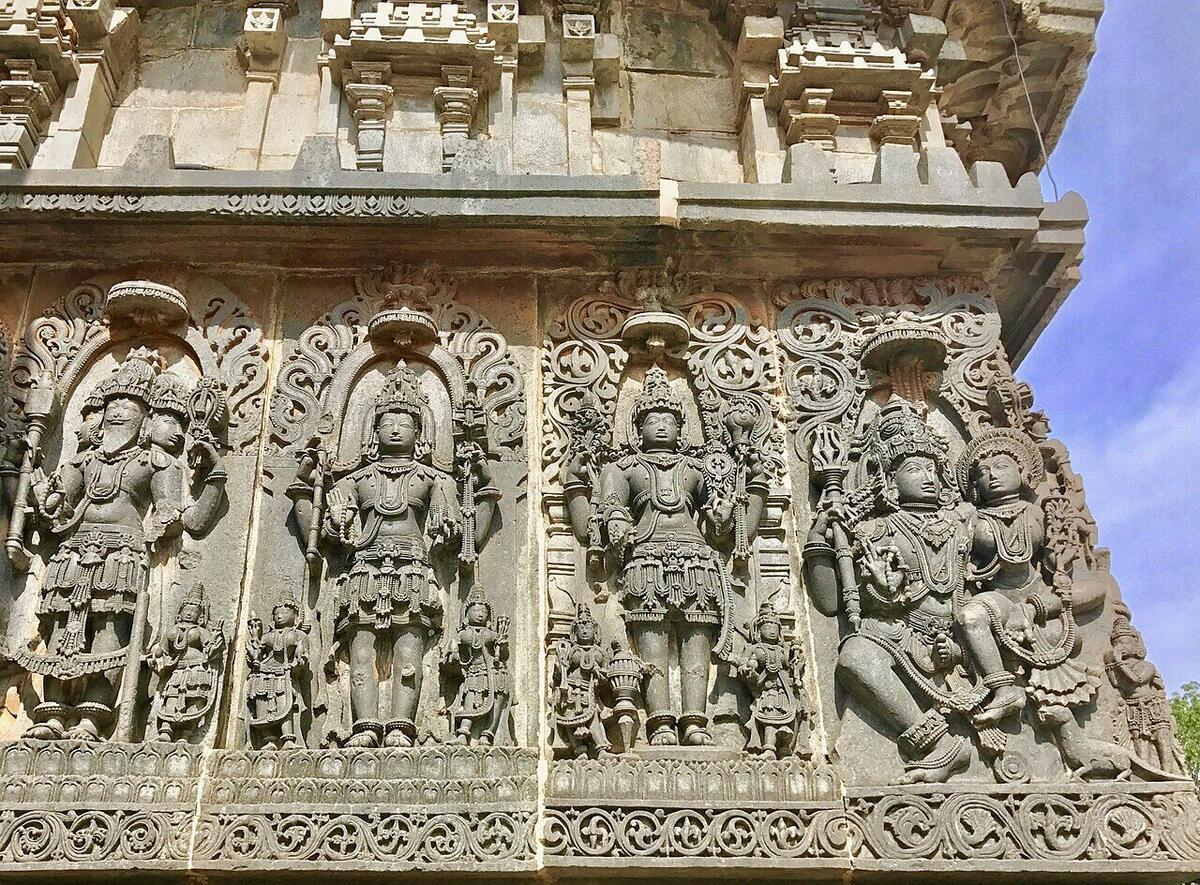
The temple follows a simple Banarasi configuration adapted to its Trimurti dedication. A single garbhagriha holds three deity niches set side by side: Brahma in his four-faced form, with the hamsa beside him; Vishnu in his standing posture bearing shankha, chakra, gada and padma; and Mahesh as a lingam with Nandi facing it. The three are given equal architectural weight, reflecting the shrine's central teaching that no one face stands above the others.
The mandapa outside the sanctum is broader than is usual for a shrine of this size, opened up to accommodate congregational worship on Trimurti-specific tithis — Akshaya Tritiya, Pradosh evenings, Janmashtami and Mahashivratri. The shrine's strength lies not in scale but in the rare completeness of its iconography: the Creator, the Preserver and the Lord of dissolution received together, each in their own form, at one altar.
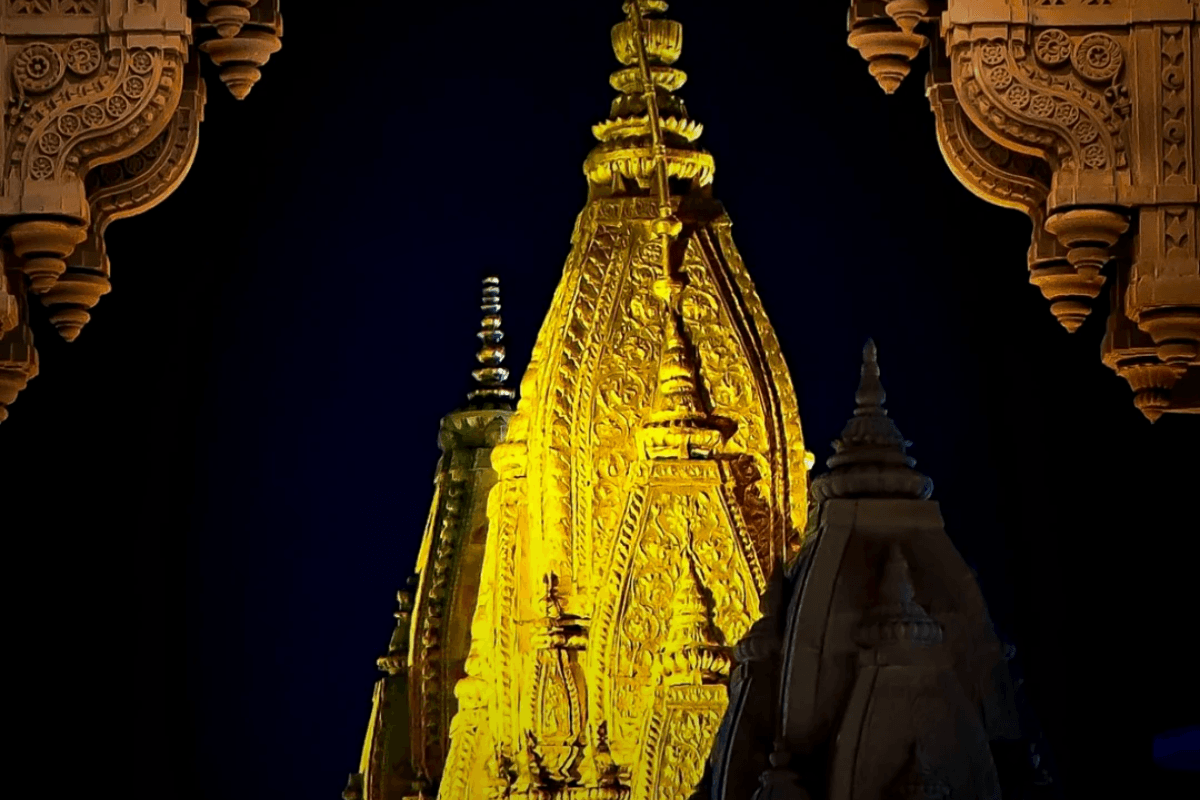
The outer carvings are restrained but careful, in keeping with the older Banarasi shrine idiom. A stylised Trimurti motif appears in the temple's ornament — three lotuses on a single stem — a quiet visual reminder that the three are rooted in one.
Rituals & Practices
Daily worship at Tridev Mandir takes the unusual form of three woven streams, one for each deity, performed by a single priest in succession or by three priests together when extended pujas are scheduled. The rhythm is slower than at single-deity shrines, since each form receives its own offering and mantra.
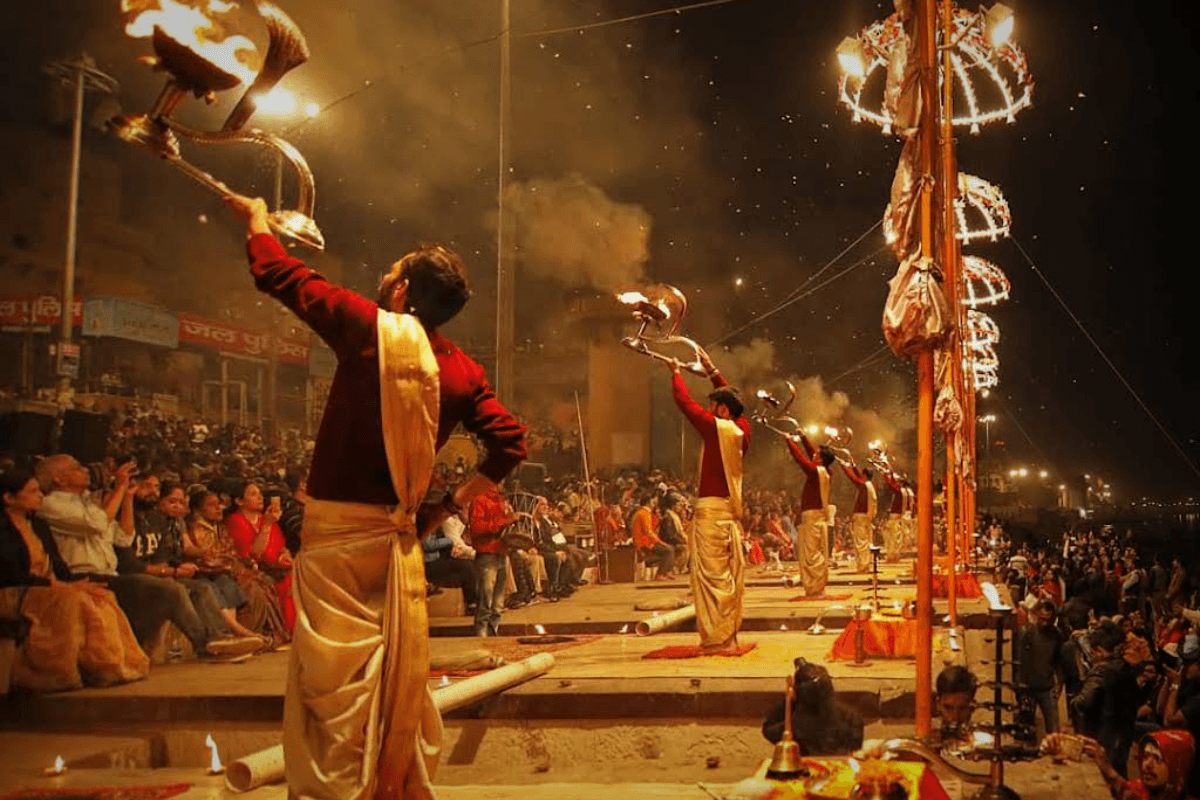
- Tridev arati. Performed twice daily, morning and sandhya. The arati honours Brahma first, Vishnu second and Mahesh last, following the cosmic order of sristi–sthiti–samhara.
- Brahma puja and sankalpa. Rare elsewhere in India, offered here in his own form. Writers, scholars, students before examinations, and those beginning new ventures hold this part of the worship in particular reverence.
- Vishnu stuti and Vishnu Sahasranama. Recited on Ekadashi tithis, with bhog of fruits, sweets and tulsi patra.
- Rudrabhishek. Performed on the Shiva side of the shrine on Pradosh and Mondays, with bilva patra and Ganga-jal abhishek in the standard manner.
- Trimurti parikrama. Devotees walk a small parikrama within the mandapa, reciting Om Brahmane Namah, Om Namo Narayanaya, Om Namah Shivaya in sequence three times. Tradition holds that this single parikrama renders the day's worship complete in all three streams.
Many devotees bring a small offering for each deity — yellow flowers for Brahma, tulsi patra and fruits for Vishnu, bilva patra and Ganga-jal for Mahesh. An offering brought for only one of the three is also fully accepted; the priest will distribute it appropriately.
Verify timings for priest-led pujas, Vishnu Sahasranama recitation slots, Rudrabhishek availability and any extended Trimurti worship with the temple authorities before planning a special darshan.
Festivals & Celebrations
| Festival | When | Crowd |
|---|---|---|
| Akshaya Tritiya | — | High |
| Vaikuntha Ekadashi | — | High |
| Mahashivratri | — | High |
| Kartik Purnima (Dev Deepawali) | — | High |
| Trayodashi Pradosh | — | Moderate |
| Vishnu Janmashtami | — | Moderate to High |
Akshaya Tritiya: One of the few days when Brahma puja is performed at a public shrine â a particular grace of this temple.
Vaikuntha Ekadashi: The supreme Vishnu tithi; the Vishnu stream of the Trimurti worship is foregrounded.
Mahashivratri: The Shiva stream of the Trimurti worship is foregrounded; integral-view devotees keep the night here for the unified darshan.
Kartik Purnima (Dev Deepawali): The full moon of Kartik is held especially auspicious for the integral view.
Trayodashi Pradosh: The Pradosh hour aligns with the contemplative emphasis of the integral view.
Vishnu Janmashtami: The Krishna-Vishnu form is celebrated within the integral darshan of the three.
Prepare for Your Visit
Practical guidance to help you plan your pilgrimage
| Pilgrim Guidance | How to reachTridev Mandir lies in the southern stretch of the old city of Varanasi, reached by auto-rickshaw to the nearest gali entrance and then by a short walk through the lanes. From Dashashwamedh Ghat the temple is roughly a 15-20 minute walk; from the Assi Ghat side it is a little longer through the galis. Cycle-rickshaws know the shrine by both "Tridev Mandir" and the local lane name — either will guide you to the entrance. Preparation for pilgrims
Best time to visitTithis specific to each of the three forms are the most charged: Akshaya Tritiya for Brahma, Ekadashi (especially Vaikuntha Ekadashi in December–January) for Vishnu, and Pradosh tithis together with Mahashivratri for Mahesh. The shrine is also unusually full on Kartik Purnima (Dev Deepawali), when the integral view is celebrated across the whole of Kashi. Early morning between 6 and 8 and the sandhya arati are the most contemplative times. October to March is the most comfortable season for moving through the southern galis. |
Location
Varanasi, UP
Pilgrim photos
No pilgrim photos yet.
Community corrections
No corrections yet.
Edit history
No revisions yet.
Plan Your Visit to Tridev Temple
Get a custom itinerary and pricing for your trip.
Recommended
Packages for this destination
Pilgrim Notes
On-ground observations from fellow pilgrims
No pilgrim notes yet. Be the first to share on-ground observations!
Sign in to share a note.
Pilgrim Reviews
Be the first to share your experience at Tridev Temple.
Sign in to write a review.
Nearby sacred places
Discover other sacred places near Tridev Temple
Explore temples, tirthas, and pilgrimage sites in UP
Explore nearbyPart of these circuits
Walk the traditional pilgrimage routes this destination belongs to.