Trimbakeshwar in Varanasi is worshipped as Trimbaka Mahadev, Shiva in his form as Tryambaka, the three-eyed Lord. His is the name that opens the Maha Mrityunjaya Mantra, Tryambakam yajamahe sugandhim pushtivardhanam, the great Vedic prayer for healing, long life, and release from the fear of untimely death. To stand before this linga is to stand before the deity at the very heart of that mantra.
The great Trimbakeshwar Jyotirlinga, counted among the twelve principal Jyotirlingas of Shiva, rises near Nashik in Maharashtra at the source of the Godavari. The Kashi shrine carries that same devotion into Banaras, so that pilgrims who cannot make the long journey to Maharashtra may still receive Trimbaka-darshan within the sacred ambit of Kashi. In this way the shrine belongs to a wider and beloved Banarasi tradition: the gathering of India's great tirthas into the city of Shiva, so that the whole sacred geography of the land may be honoured at the place of moksha.
Katha and local belief
Devotees hold that the Maha Mrityunjaya Mantra is itself addressed to Trimbaka, for the verse opens with his very name. Worship at any Trimbakeshwar shrine therefore carries an added weight, for it is offered at the home-site of the mantra's own deity. In Banaras this devotion joins the city's wider love of the Mahamrityunjaya, kept alive at the Mrityunjay Mahadev shrine of Daranagar and the Maha Mrityunjaya temple near Dashashwamedh. Tradition holds that the third eye of Tryambaka is the eye of knowledge that burns away ignorance and the fear of death, and so the devotee comes here not only to ask for length of days, but for the inward fearlessness that the name of Shiva grants.
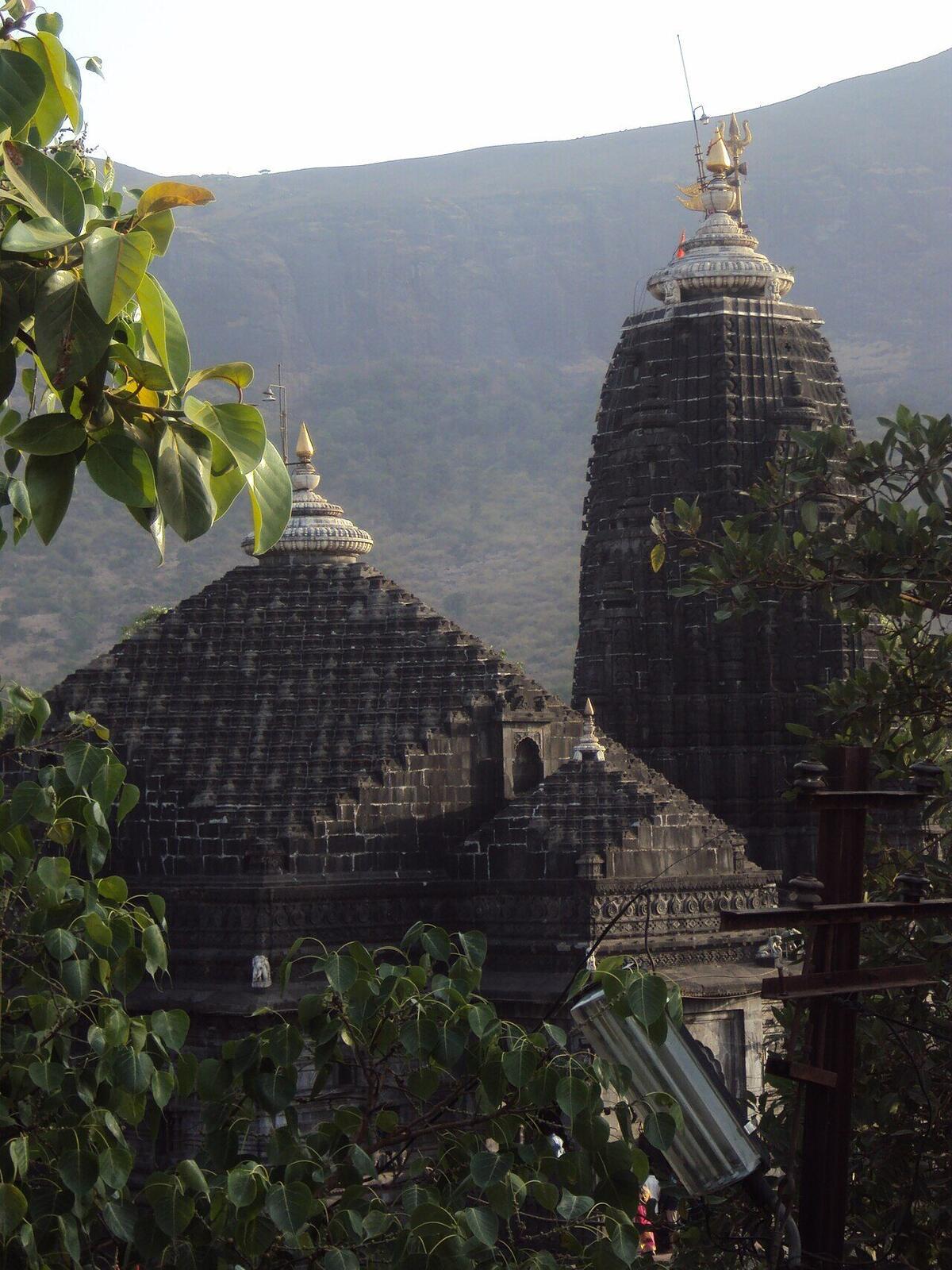
The spiritual heart of Trimbakeshwar in Kashi lies in the meeting of two great streams of Shaiva devotion. The first is the Maha Mrityunjaya tradition, the Vedic mantra of healing and protection from death; the second is the Jyotirlinga tradition, the twelve principal manifestations in which Shiva is worshipped across the length of India. Trimbakeshwar is counted among those twelve, and worship at the Kashi shrine keeps that great connection alive in the lanes of Banaras.
Devotees come here above all to seek the grace of Tryambaka against untimely death, grave illness, and affliction. Worship follows the familiar Shaiva pattern, with particular emphasis on the recitation of the Maha Mrityunjaya Mantra, Rudrabhishek with traditional offerings, and the sankalp taken for the protection and well-being of oneself and one's family. For those who long for the distant Maharashtra Jyotirlinga but cannot reach it, the Kashi shrine offers a true and cherished link.
The Maha Mrityunjaya and the Kala-sarpa tradition
Tradition holds that the third eye of Tryambaka is the eye that consumes death itself, and the Maha Mrityunjaya Mantra is offered to that very grace. The Maharashtra Trimbakeshwar is also renowned across India as a foremost site for the kala-sarpa-yoga shanti puja, the remedial worship for the horoscope combination involving Rahu and Ketu. The Kashi shrine continues this tradition in its own Banarasi form, and pandits versed in the ritual perform the puja for devotees whose horoscope is held to carry the affliction. Devotees hold that sincere worship of Tryambaka, offered with faith, lightens the burdens that astrology names and steadies the heart against fear.
History
The Trimbakeshwar shrine in Varanasi belongs to a long-cherished Banarasi practice of bringing the great Jyotirlingas and tirthas of India into a living Kashi presence, so that pilgrims may honour all twelve Jyotirlingas within the city of moksha. The Kedareshwar shrine performs the same service for the Himalayan Kedarnath; Trimbakeshwar in Kashi keeps near at hand the devotion of the Maharashtra Trimbakeshwar near Nashik.
The present temple belongs to the broad rebuilding of Kashi's shrines in the Maratha period of the eighteenth century, when much of sacred Banaras was restored and renewed. Through the changing fortunes of the city, worship at the shrine has continued without break, with priestly families preserving its particular ritual bond with the Maharashtra parent shrine. The true thread of its history is not stone or date but this unbroken continuity of devotion.
Architecture
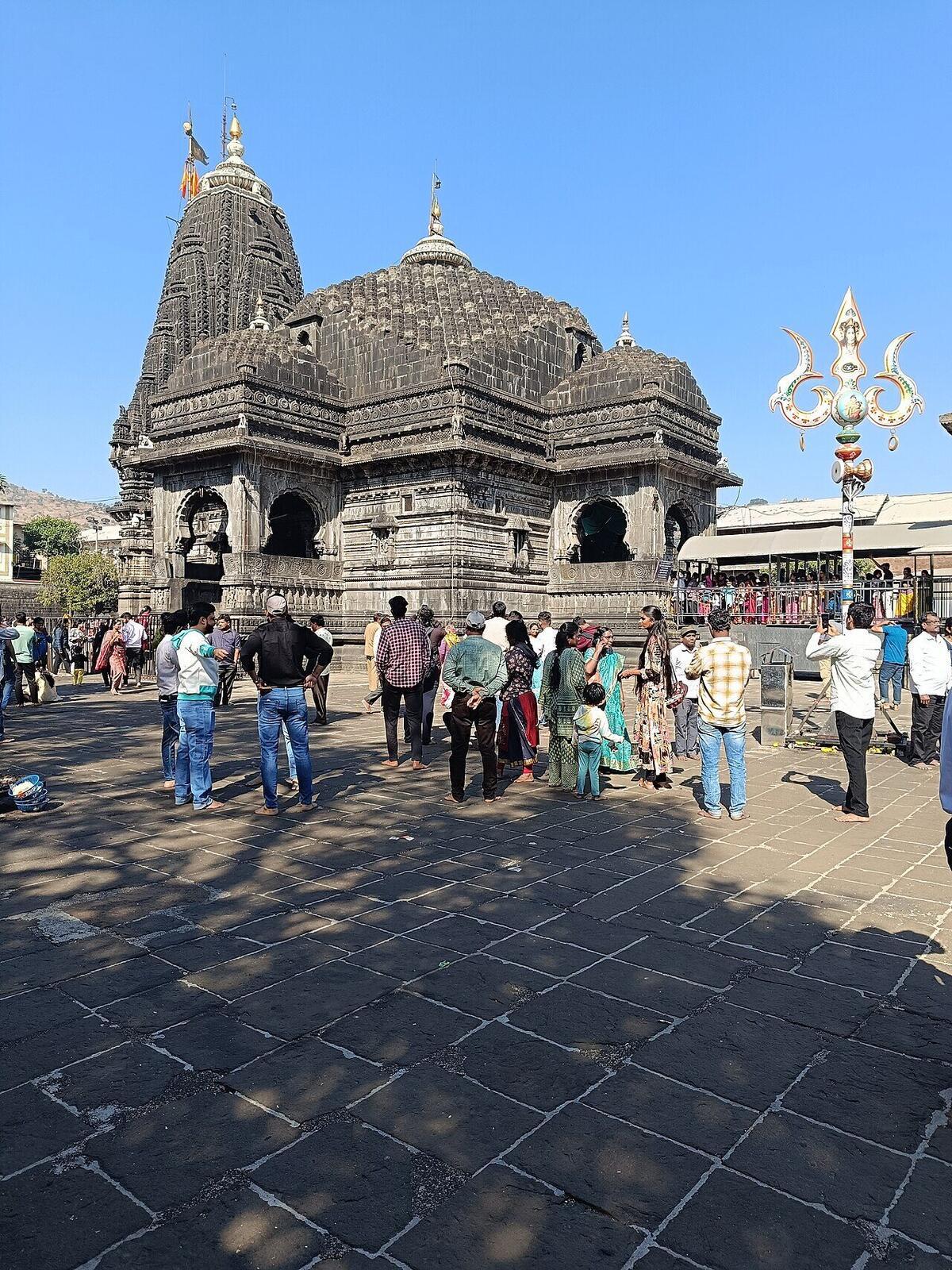
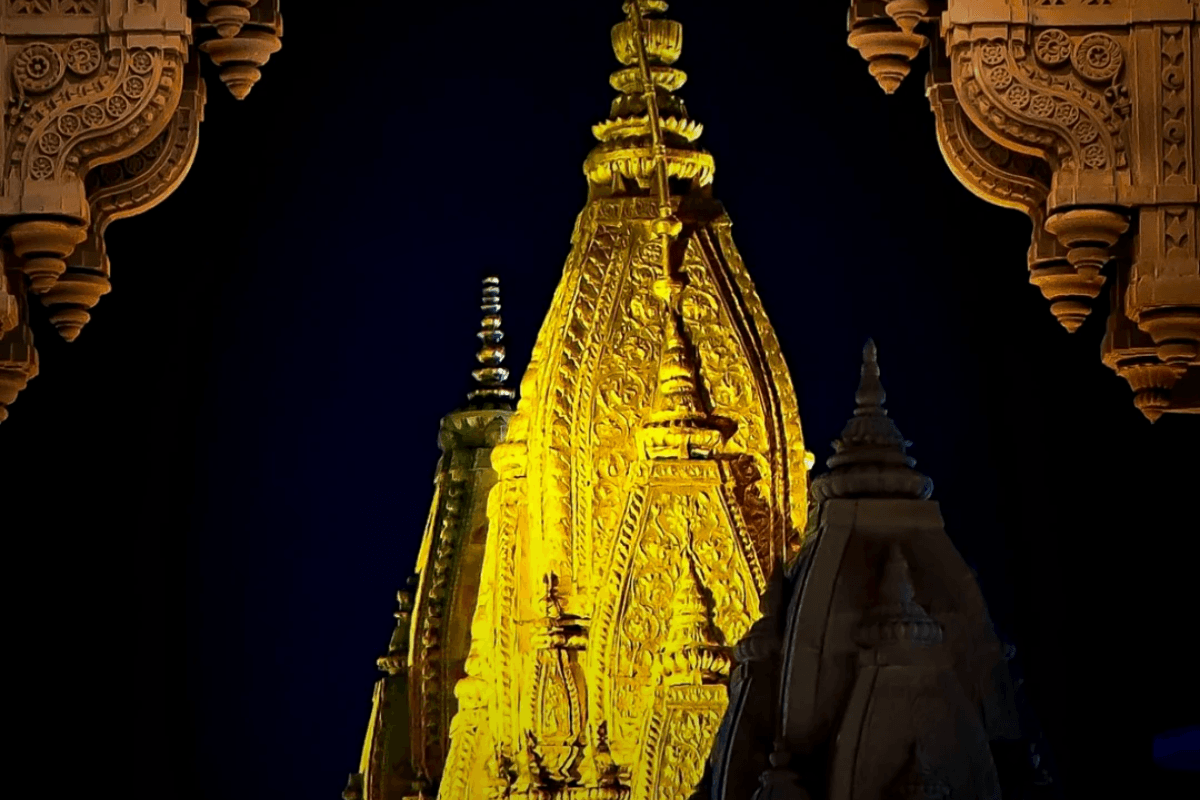
Trimbakeshwar in Varanasi is a compact Shiva shrine in the working Banarasi style of the old city. Its power lies not in scale but in the intensity of continuous worship. The sanctum holds the linga, kept anointed with sandal paste, bhasma, and bilva patra in the manner of the living Shiva-shrines of Kashi.
At the Maharashtra parent shrine, the Trimbaka tradition is marked by a distinctive three-faced linga held to represent Brahma, Vishnu, and Mahesh together, the three powers of creation, preservation, and dissolution gathered in one form. The Kashi shrine preserves the iconographic memory of this tradition in its own Banarasi adaptation. The compound is modest and unhurried, in keeping with the many smaller Shaiva shrines of the period that line the lanes of Banaras, where nearness and devotion matter more than grandeur of scale.
Rituals & Practices
Daily worship at Trimbakeshwar follows the familiar Shaiva rhythm with a particular Trimbaka emphasis on the Maha Mrityunjaya. The offerings most beloved here are:
- Bilva patra, the foremost Shaiva offering
- Ganga-jal for abhishek
- White flowers and dhatura
- Chandan, bhasma, and vibhuti
- Recitation of the Maha Mrityunjaya Mantra, the central recitation of this shrine
Many devotees arrange a sponsored Rudrabhishek through the temple priests, and those who carry the kala-sarpa-yoga combination in their horoscope arrange the shanti puja with a pandit trained in its sequence. Yet for most pilgrims the worship remains simple: a lota of Ganga-jal poured over the linga, a few bilva leaves offered with folded hands, and the soft repetition of Om Tryambakam yajamahe.
The morning Rudrabhishek, the Pradosh evenings, Mondays, and the whole month of Shravan are the most charged periods of worship, and Mahashivratri draws the heaviest crowds. Timings may change, so pilgrims are encouraged to verify current schedules with the temple authorities before a visit.
Festivals & Celebrations
| Festival | When | Crowd |
|---|---|---|
| Mahashivratri | — | Very high |
| Shravan (Sawan Month) | — | High, peaking on Mondays |
| Pradosh | — | Moderate |
| Kala-sarpa-yoga shanti periods | — | Variable |
Mahashivratri: Devotees hold that the night vigil and fast of Mahashivratri bring the direct grace of Shiva. At a Trimbakeshwar shrine it carries the added depth of being the festival of the deity who is the namesake of the Maha Mrityunjaya Mantra.
Shravan (Sawan Month): Tradition holds Shravan to be the most favourable month for the worship of Shiva, and offering Ganga-jal during this month is believed to bring his abundant grace.
Pradosh: Tradition holds Pradosh to be the hour in which Shiva dances upon Kailash. Worship in this hour is held to carry the merit of many ordinary days.
Kala-sarpa-yoga shanti periods: For families whose horoscope is held to carry the kala-sarpa-yoga combination, Trimbakeshwar in Kashi is regarded as one of the principal sites for this remedial worship.
Prepare for Your Visit
Practical guidance to help you plan your pilgrimage
| Pilgrim Guidance | How to reachTrimbakeshwar lies within the old lanes of Kashi, reached by auto-rickshaw to the nearest lane entrance followed by a short walk through the galis. Many pilgrims include it alongside other Shiva shrines of the old city, especially those devoted to the Mahamrityunjaya. Preparation for Pilgrims
Best Time to VisitEarly mornings and Pradosh evenings are the most charged times for darshan. Mondays, Shiva's own day, bring extended worship, and Shravan (July-August) is the central Shaiva season. Mahashivratri brings the heaviest crowds. For comfortable general pilgrimage, October to March is the most pleasant window. |
Location
Varanasi, UP
Pilgrim photos
No pilgrim photos yet.
Community corrections
No corrections yet.
Edit history
No revisions yet.
Plan Your Visit to Trimbakeshwar Temple (Kashi)
Get a custom itinerary and pricing for your trip.
Recommended
Packages for this destination
Pilgrim Notes
On-ground observations from fellow pilgrims
No pilgrim notes yet. Be the first to share on-ground observations!
Sign in to share a note.
Pilgrim Reviews
Be the first to share your experience at Trimbakeshwar Temple (Kashi).
Sign in to write a review.
Nearby sacred places
Discover other sacred places near Trimbakeshwar Temple (Kashi)
Explore temples, tirthas, and pilgrimage sites in UP
Explore nearbyPart of these circuits
Walk the traditional pilgrimage routes this destination belongs to.