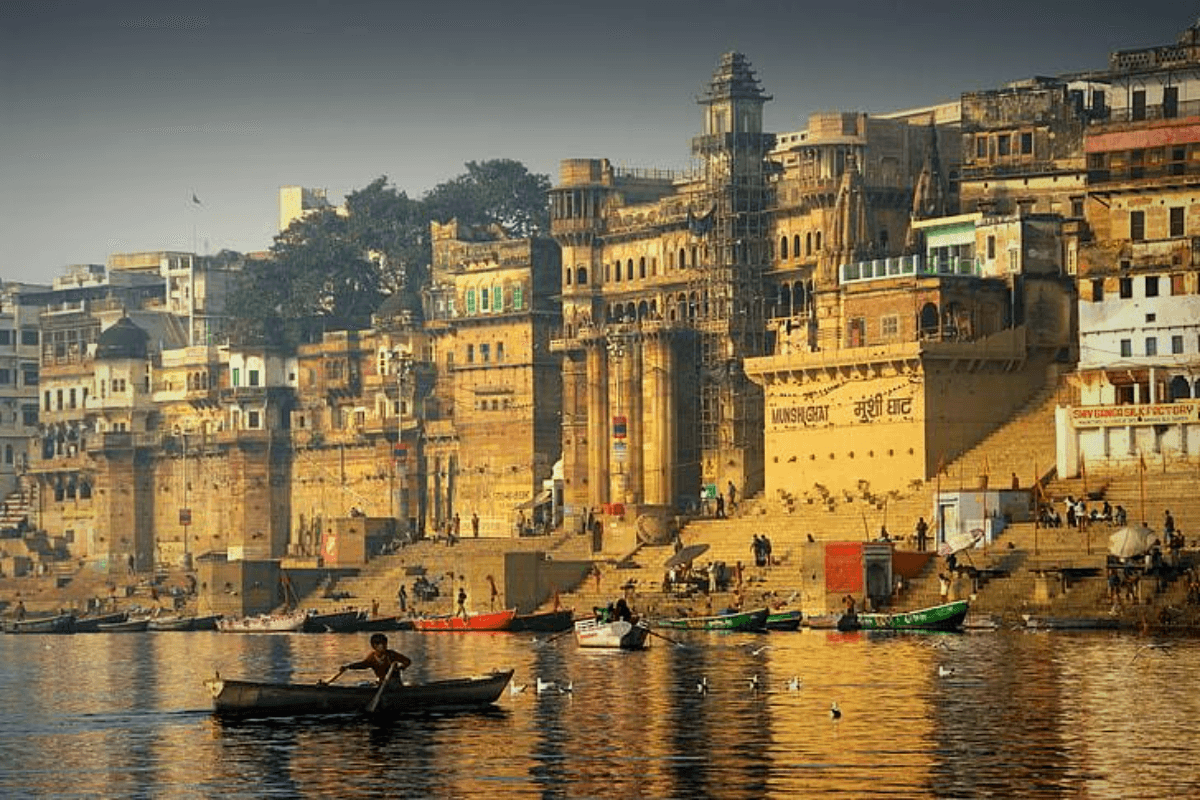
The Varanasi Ghats are the 84 broad stone-step descents to the Ganga that run along the Banaras waterfront from the southern Assi Ghat to the northern Adi Keshava Ghat. Together they form the most distinctive single feature of the city — a continuous stretch of approximately 6.5 kilometres along the river's western bank, every section of which has its own patron, its own history, and its own place within the wider Kashi devotional geography.
The 84 number is itself significant: 84 lakh species of life are enumerated in some Hindu cosmological texts, and the 84 ghats are sometimes understood as a riverside expression of this comprehensive sweep of existence — every form of life, every kind of devotee, finding its place along the Ganga's flow.
The principal ghats
Of the 84, several stand out as the pilgrim circuit's structural anchors:
- Assi Ghat — southern boundary, where the Assi stream meets the Ganga
- Tulsi Ghat — Goswami Tulsidas's residence and the akhara
- Harishchandra Ghat — one of two cremation ghats, with the deeper antim sanskar tradition
- Kedar Ghat — Kedareshwar Mahadev shrine, South Indian devotional centre
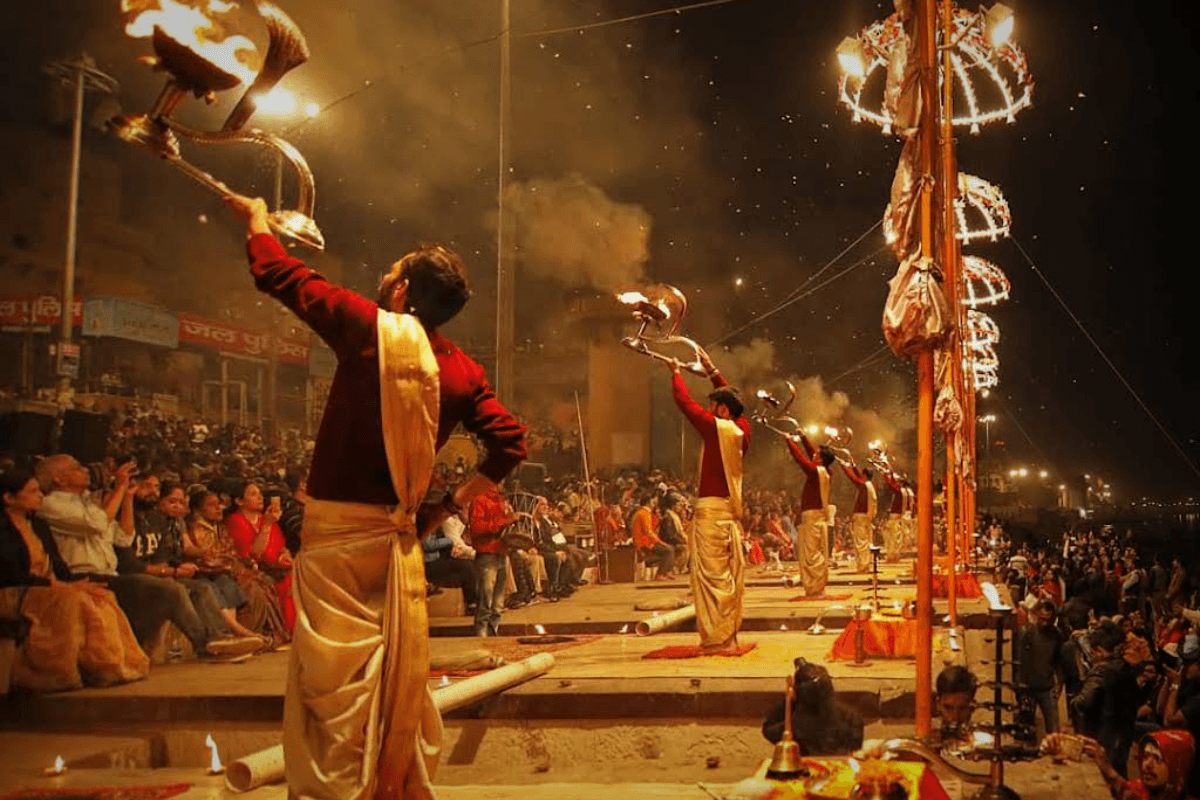
- Dashashwamedh Ghat — central and most celebrated, with the great evening Ganga Aarti
- Manikarnika Ghat — the principal cremation ghat, the great Mahashamshan
- Panchganga Ghat — confluence of five rivers in tradition, panchatirtha
- Adi Keshava Ghat — northern terminus where Vishnu first stepped into Kashi
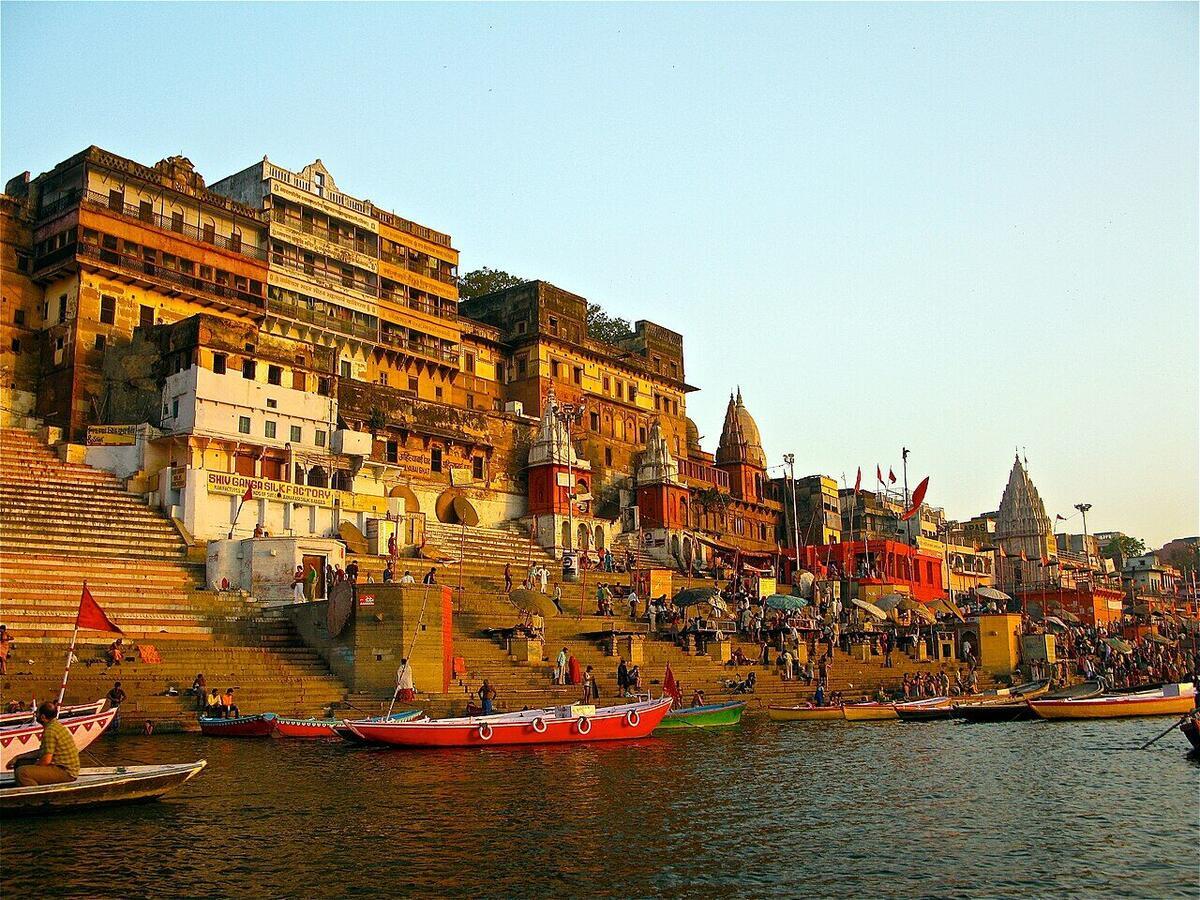
The Varanasi ghats together represent the most concentrated continuous stretch of sacred riverfront in Hindu pilgrimage geography. The classical pilgrim practice — the Panchakroshi parikrama or the wider Kashi yatra — incorporates ghat-bathing as a structural element. The five panchatirtha ghats (Assi, Dashashwamedh, Manikarnika, Panchganga, Adi Keshava) are the traditional sequence of river-snan that completes the wider Kashi pilgrimage.
Beyond the formal yatra, the ghats are the place of daily Ganga snan for thousands of Banarasis, the site of evening Ganga Aarti at multiple stretches, the location of last-rites for those whose families bring them to Kashi for moksha, and the visual identity of the city in the world's imagination.
History
The ghats in their present stone-built form are largely the product of the eighteenth and nineteenth centuries — the period of Maratha, Bengali, Rajput, and other regional princely patronage that gave the waterfront its current architecture. Earlier ghats existed in less formal form (mud, wooden steps, occasional stone), but the comprehensive stone embankment we see today reflects the great rebuilding period.
Queen Ahilyabai Holkar's 1780 restoration was a particularly significant moment, but the wider rebuilding involved patronage from princely families across India: the Scindias (Gwalior), the Holkars (Indore), the Nana Phadnavis line, the Bengal zamindars, the Rajput princes (Mewar, Amber, Jaipur), the South Indian states (Mysore, Vizianagaram), and many more. Each family's patronage left its name on a section of the waterfront.
Architecture
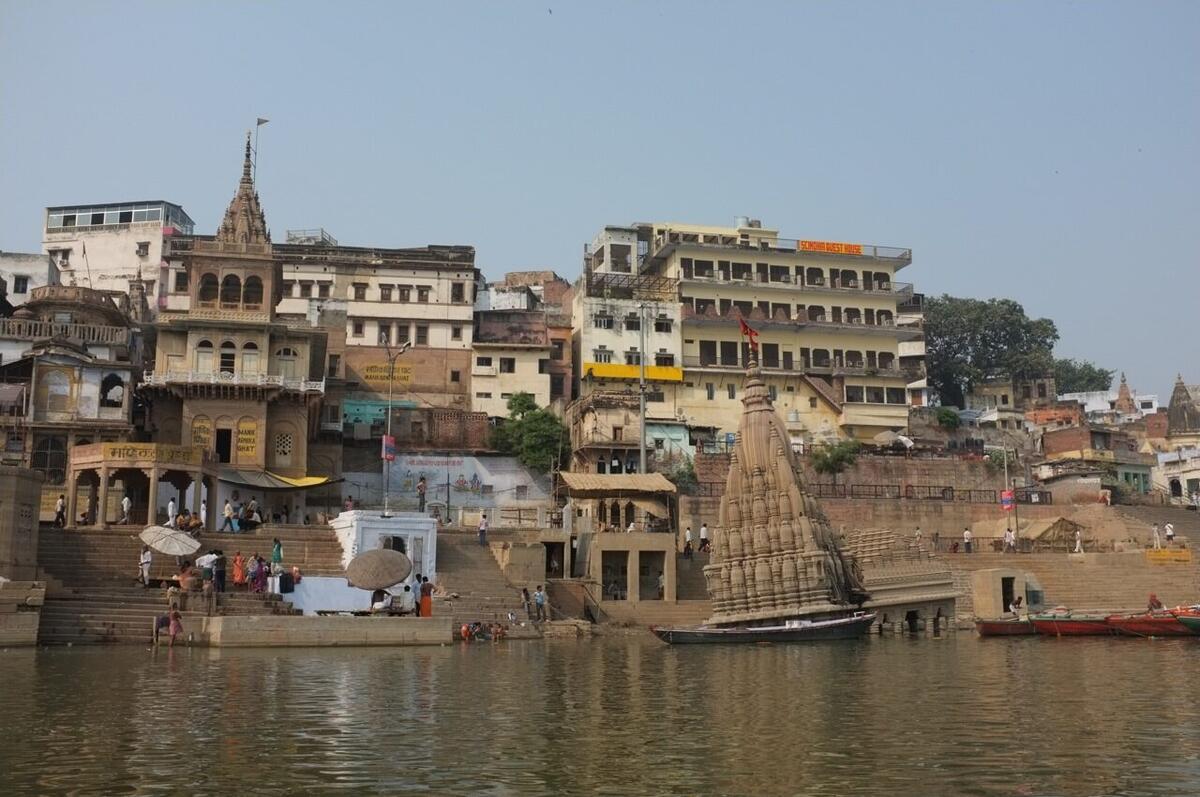
The ghats share a common architectural pattern: broad stone steps descending in tiers from the bluff above to the river, allowing devotees to stand at any preferred depth. The materials are predominantly Chunar sandstone (the same stone used in much Mughal architecture). The risers are wide enough to sit on; the treads are typically textured for grip when wet.
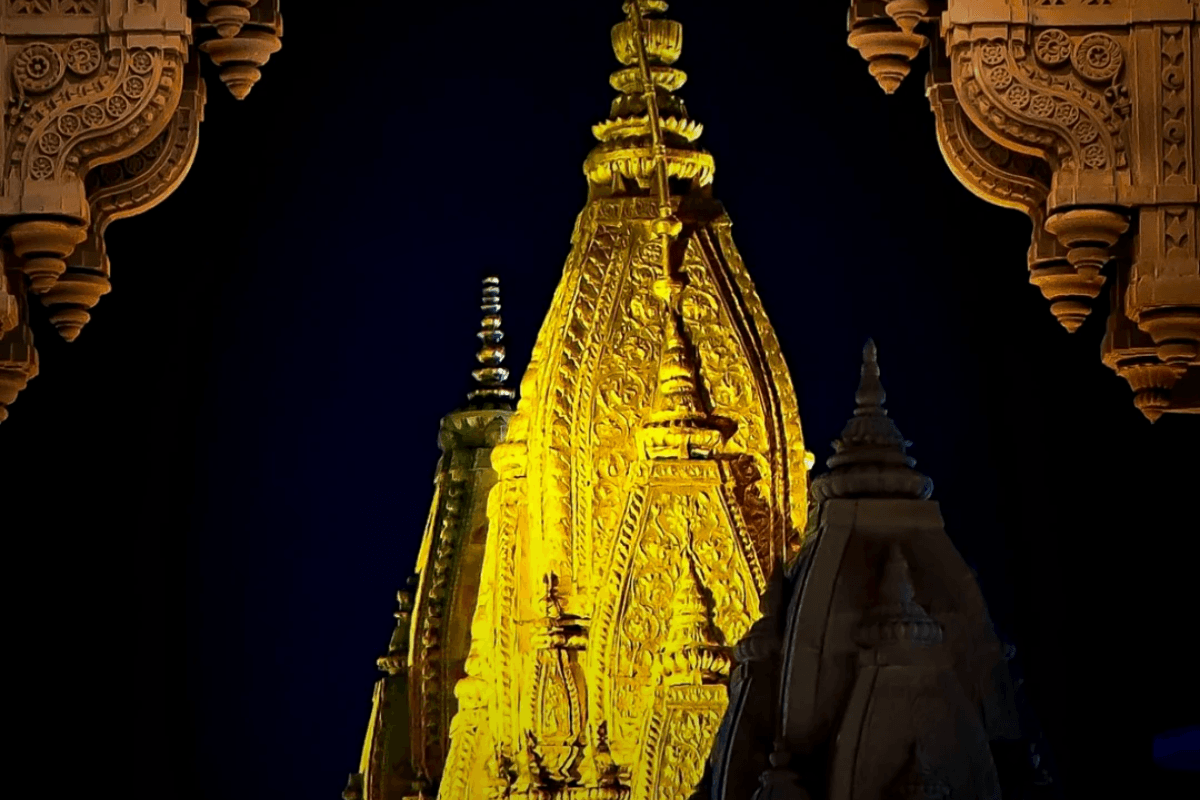
The structures above each ghat — palaces, temples, dharamshalas, mathas — give each section its distinctive visual character. The Maratha palaces (Scindia, Ahilyabai), the Rajput palaces (Man Mandir, Rana Mahal), the Bengali patronage buildings (Darbhanga, Digpatiya), the temples at Tulsi, Kedar, Manikarnika, and Panchganga — together create the architectural patchwork that distinguishes one ghat from another.
Rituals & Practices
The principal practices across the ghat system:
- Morning snan — pre-dawn or dawn bathing, the most common daily practice
- Evening Ganga Aarti — at Dashashwamedh principally, also Assi and other ghats
- Tarpana — ancestor offerings, particularly during Pitra Paksha
- Antim sanskar — last rites at Manikarnika and Harishchandra
- Boat tours — the standard way to see the ghat stretch in continuous form
- Festival observance — Dev Deepawali, Ganga Dussehra, Mahashivratri all bring extended ghat-life
- Panchakroshi parikrama — the wider Kashi pilgrimage that incorporates ghat-bathing
Festivals & Celebrations
| Festival | When | Crowd |
|---|---|---|
| Dev Deepawali | — | Extremely high |
| Ganga Dussehra | — | Very high |
| Mahashivratri | — | Very high |
| Daily Ganga Aarti at Dashashwamedh | — | Continuous high |
| Pitra Paksha | — | Very high |
| Sawan and Mahashivratri at temple-bearing ghats | — | Very high |
Dev Deepawali: Held to be the night the devas descend to the Ganga. The defining annual visual experience of the Banaras waterfront.
Ganga Dussehra: Particular Ganga-worship occasion.
Mahashivratri: The Shaiva night observed across the city''s pilgrim sites.
Daily Ganga Aarti at Dashashwamedh: The defining daily ritual of the waterfront.
Pitra Paksha: Tarpana on a citywide scale.
Sawan and Mahashivratri at temple-bearing ghats: The Shaiva calendar dimension of the ghat life.
Prepare for Your Visit
Practical guidance to help you plan your pilgrimage
| Pilgrim Guidance | How to experience the ghatsMost visitors approach the ghats in three ways:
Preparation
Best timeOctober to March is the most comfortable window for general ghat-experience. Dev Deepawali (Kartik Purnima, October-November) is the single most spectacular night across all ghats. Major festivals (Mahashivratri, Sawan, Ganga Dussehra) bring exceptional pilgrim flow. |
Location
Varanasi, UP
Pilgrim photos
No pilgrim photos yet.
Community corrections
No corrections yet.
Edit history
No revisions yet.
Plan Your Visit to Varanasi Ghats
Get a custom itinerary and pricing for your trip.
Recommended
Packages for this destination
Pilgrim Notes
On-ground observations from fellow pilgrims
No pilgrim notes yet. Be the first to share on-ground observations!
Sign in to share a note.
Pilgrim Reviews
15 reviews
Be the first to share your experience at Varanasi Ghats.
Sign in to write a review.
Nearby sacred places
Discover other sacred places near Varanasi Ghats
Explore temples, tirthas, and pilgrimage sites in UP
Explore nearbyPart of these circuits
Walk the traditional pilgrimage routes this destination belongs to.