Vridhakal Temple is one of the old Shiva shrines of Kashi, where Mahadev is worshipped as Vriddha Kaleshwar — the ancient Lord of Time. The name itself carries the devotional memory of Kashi: vriddha, the elder, the one already old, the linga that tradition holds to have been worshipped here for generations beyond reckoning. Devotees who come for darshan are entering one of the city's many quiet Shaiva centres whose authority rests not on scale but on antiquity and unbroken worship.
The shrine sits in the Daranagar locality of the old city, within the precinct of the Mrityunjay Mahadev temple, a small mandir reached through the gali network that knits this part of Kashi together. The atmosphere is intimate. A bell at the threshold, a steady stream of regulars carrying bilva patra and a small lota of Ganga-jal, the soft cadence of the Maha Mrityunjaya mantra in the inner space — these are the daily rhythms. Many devotees here belong to families whose connection with this lingam reaches back three or four generations.
Katha and local belief
Banaras tradition holds that the linga at Vridhakal is among the ancient Shiva forms of Kashi, established when the city itself was young in the puranic memory. The very name vriddha is read by devotees not as a sign of weariness but as a sign of completed presence — Shiva as the one who has already kept vigil over Kashi through countless yugas. Because of this, the form is approached with a particular kind of trust: the petitioner does not need to explain at length. The Lord, devotees hold, has already heard.
A loved local belief associates the shrine with the Maha Mrityunjaya mantra. Tradition holds that whoever recites the mantra here at Pradosh sandhya with a steady sankalpa places themselves under the grace of Vriddha Kaleshwar — not for life merely lengthened, but for years that ripen into wisdom and equanimity. Elder devotees of Kashi, those who have entered the later sandhyas of life, hold this shrine especially close.
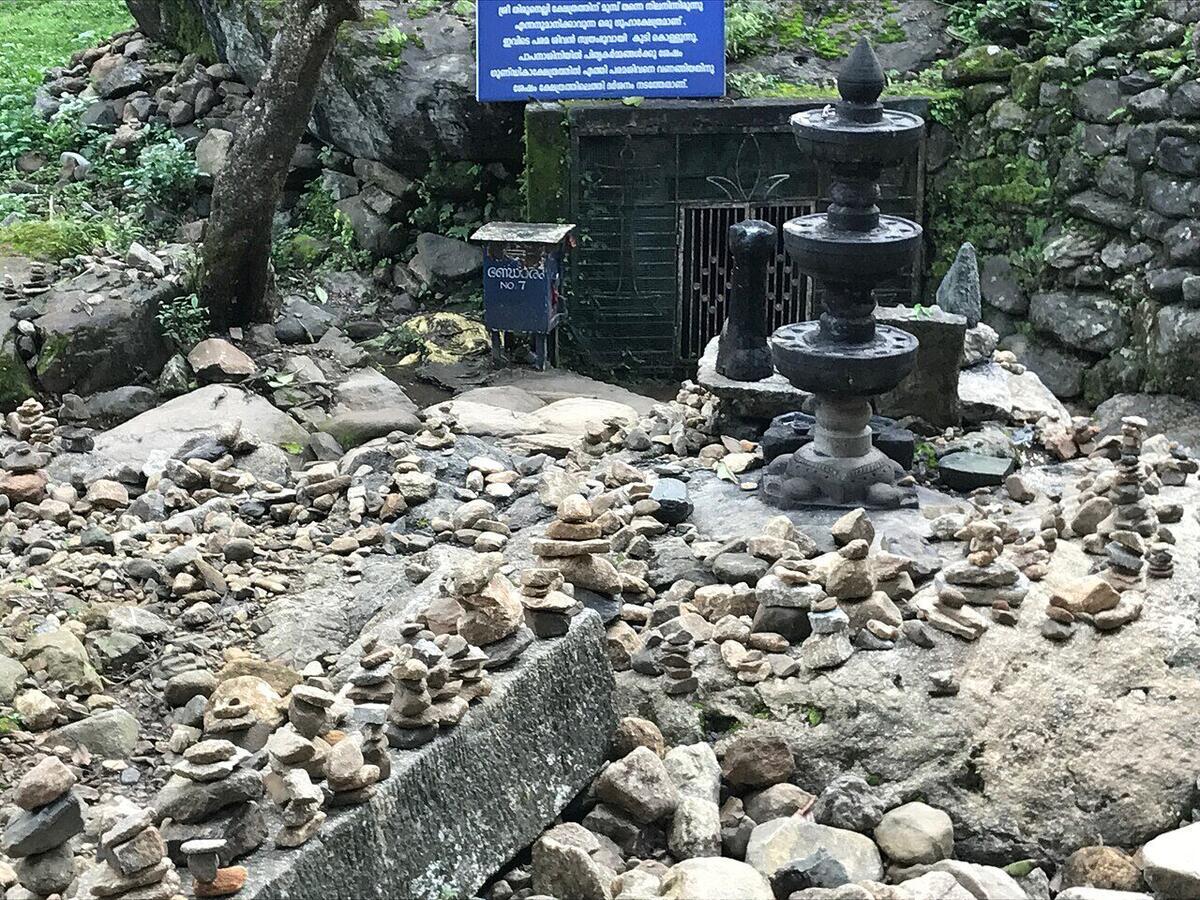
In Kashi every linga is understood as one face of the single Vishweshwara. Vridhakal is approached as the ancient face — Shiva as Vriddha Kaleshwar, the Lord whose worship in this city is itself old. The Kashi tradition that names the city Avimukta Kshetra, never abandoned by Shiva, finds in this shrine one of its quieter expressions: a place where the antiquity of Kashi's Shaiva worship is felt in the form itself.
Devotees hold that darshan here carries a particular grace of Vriddha-anugraha, the elder's blessing. This grace is sought for the concerns that come naturally with the longer arc of life — the welfare of aged parents, gratitude for years already given, clarity in life-stage decisions, the easing of fears around the body's natural ageing, and the inward preparation that Hindu tradition recognises as fitting in the later years. Younger devotees come for the same Shiva, with their own sankalpas; the shrine does not turn anyone away.
The Maha Mrityunjaya mantra is the heart of practice at Vridhakal. Tradition holds the mantra to be the great verse of Shiva's healing and liberating grace, and the elder form of Kaleshwar is felt by devotees to receive it with particular nearness. Many take a sankalpa of recitation across a number of Pradoshas — eleven, twenty-one, or one hundred and eight — and return through the months to complete it at this lingam.
The elder-grace katha
An old Banarasi katha, still told by the priests, recounts a king of late life who came to Kashi seeking moksha but feared his age had left him unable to undertake the long austerities of the Vishwanath path. His acharya brought him first to Vridhakal, sat him before the linga, and said only — "Place your years here. He has already kept them." Devotees hold that the king received deep darshan that evening. The story is told to remind elderly pilgrims that at Vridhakal, the years themselves become the offering: where ritual capacity has thinned, devotion and presence are enough.
History
Vridhakal's antiquity is woven into the wider Shaiva memory of Kashi rather than tied to a single founder. The shrine is referenced in the older devotional enumerations of Kashi's Shiva lingas, where its origin is placed within the puranic horizon of the city itself. Continuous worship at the present location is part of the long Banarasi tradition of small old-city shrines that have survived through the unbroken care of local pandit families.
The present structure belongs to the broader 18th-century Maratha-era rebuilding of Kashi — the same wave of restoration that gave the city its present Vishwanath form under Maharani Ahilyabai Holkar of Indore. Smaller shrines across the old city were similarly rebuilt or maintained during that period through the patronage of local Banarasi families and the priestly lineages who served them. Vridhakal was held by such families, and its priestly succession has continued through them into the present.
Through the 19th and 20th centuries the temple has been maintained without major architectural change. Recent decades have seen the corridor expansion reshape the immediate neighbourhood around Vishwanath, but the inner sanctum and the daily rhythm of worship at Vridhakal remain intact. The shrine continues to be cared for by the same lineage of families who have served it for generations.
Architecture
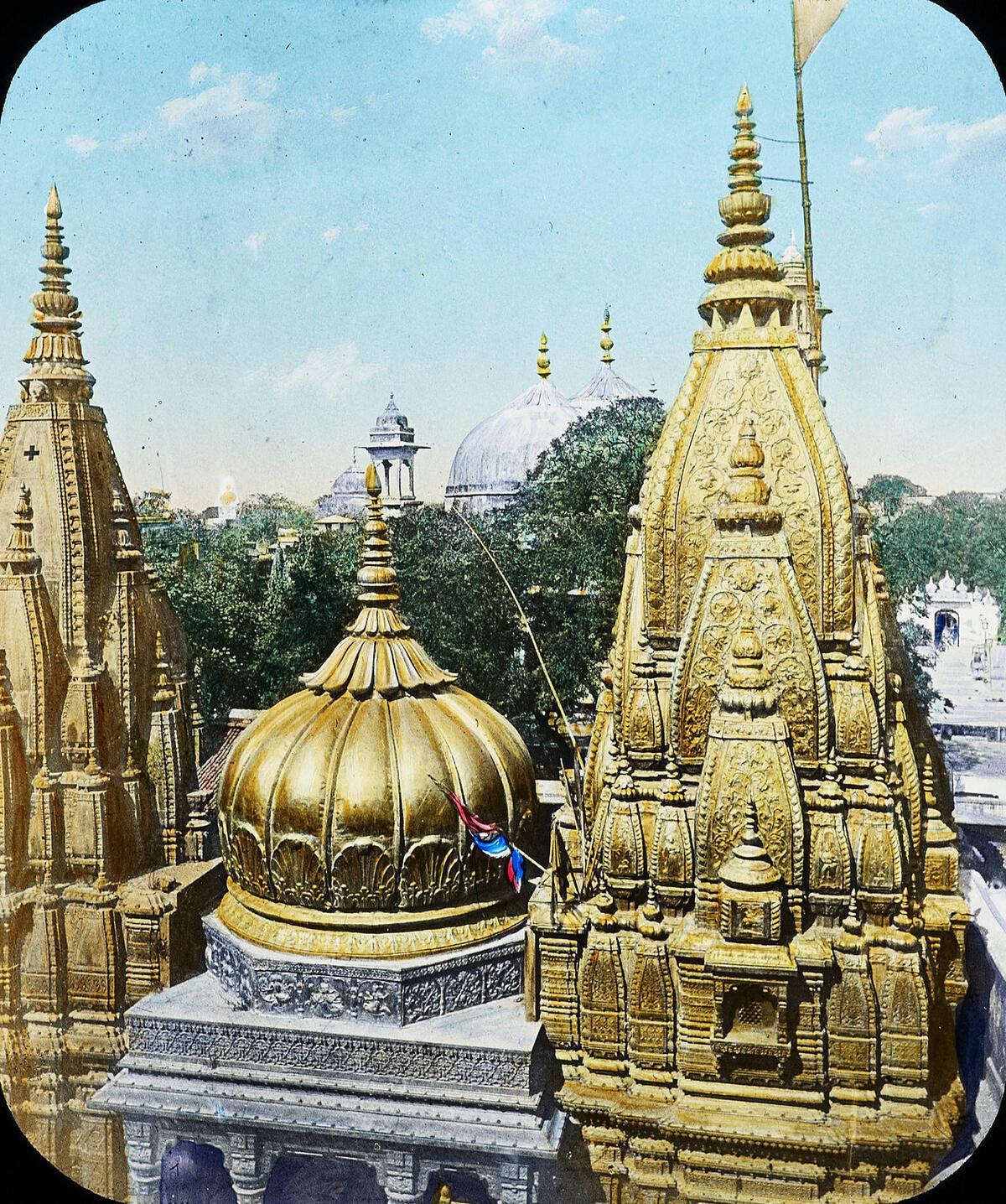
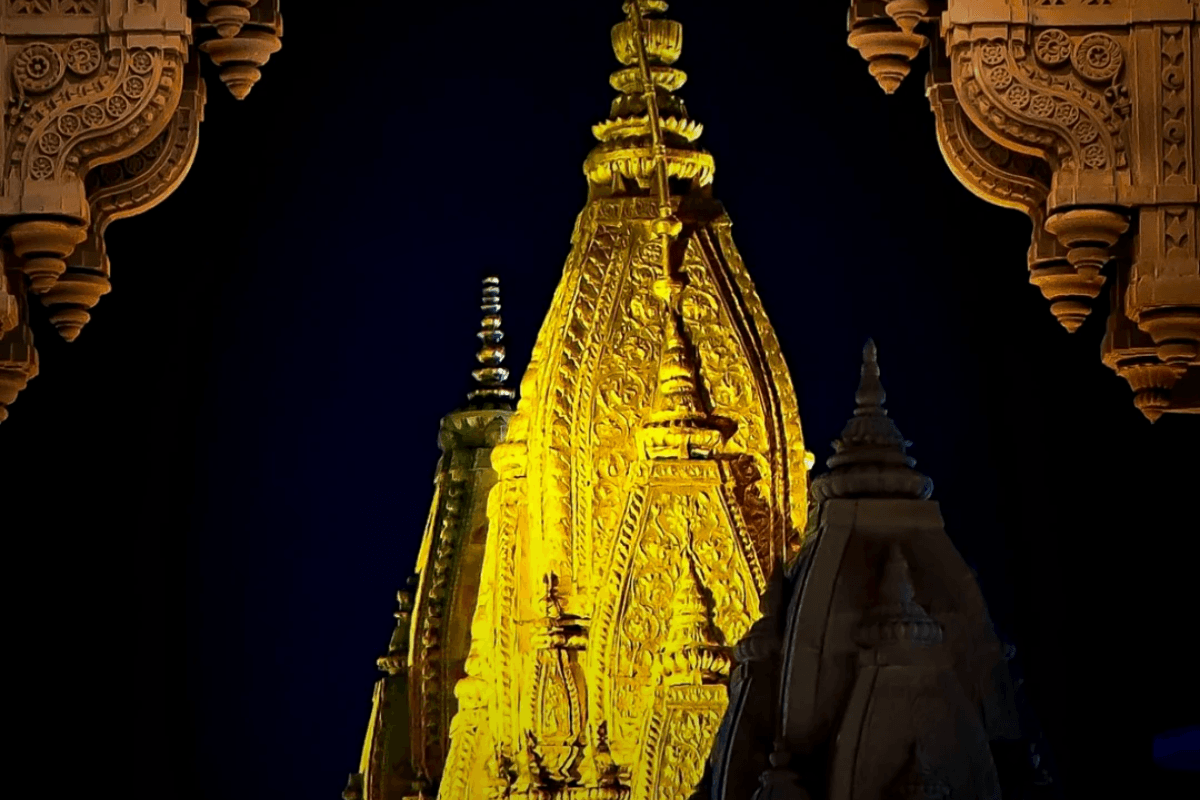
Vridhakal is a compact Banarasi Shaiva shrine in the old-city idiom — a small footprint, a low garbhagriha, a single sanctum holding the linga, and an outer mandapa for recitation and waiting. Nandi faces the linga at the threshold, in the standard manner. The linga itself rests on a stone yoni-pitha, dark and polished by centuries of abhishek, with a small adjoining niche for Devi Parvati.
Ceiling carving is restrained — a stylised Banaras lotus and a band of Nagara-tradition motifs. A bell-rope hangs at the threshold; verses of the Maha Mrityunjaya mantra are inscribed near the lintel. There is no architectural drama; the shrine does not claim attention from a distance. Its devotional weight is felt only on entering.
The intimacy of the space is part of the form's meaning. Where the larger Jyotirlinga sanctum at Vishwanath holds the city's collective worship, Vridhakal holds a single devotee at a time at the linga — slow, often silent, without the press of a crowd. Devotees read this compactness as fitting: the elder form of Kaleshwar does not seek a throng. He sits quietly with whoever has come.
Rituals & Practices
Daily worship at Vridhakal follows the standard Shaiva pattern — abhishek with Ganga-jal, offering of bilva patra, a small dhupa-deepa, and the Maha Mrityunjaya mantra recited softly. The shrine's rhythm is unhurried, and the priests are accustomed to long, slow sankalpas. Pilgrims should verify timings of priest-led pujas with the temple authorities, as exact schedules vary.
Beloved practices associated with this shrine:
- Maha Mrityunjaya sankalpa. Devotees take a Pradosha sankalpa — most often eleven, twenty-one, or one hundred and eight Pradoshas — and recite the mantra at this linga at every Pradosh sandhya for the duration. The shrine's elder-grace tradition makes this sankalpa especially loved for ageing-related concerns and for the wellbeing of elderly parents.
- Rudrabhishek. Booked through the temple priests and commonly performed on Mondays and on Pradosh tithis. The bath is given with milk, curd, ghee, honey, sugar, and Ganga-jal in succession (panchamrita-abhishek), with the Sri Rudram chanted by an acharya.
- Bilva patra and offerings. Bilva leaves may be brought from home; flowers, dhatura in season, and a small lota of Ganga-jal are the natural offerings. Pilgrims often add tulsi patra and chandan according to family tradition.
- Mahashivratri. All four prahars of the night are observed with jagaran and extended Rudrabhishek at each prahar.
Mantra recitation by individual devotees is welcome at any standard darshan time. For elder pilgrims or those undertaking long sankalpas, it helps to introduce yourself and your sankalpa to the priest on the first visit, so the shrine can hold the linkage across return visits.
Festivals & Celebrations
| Festival | When | Crowd |
|---|---|---|
| Mahashivratri | — | High |
| Shravan | — | High |
| Pradosh | — | Moderate to High |
| Mahalaya Amavasya | — | Moderate to High |
| Kartik Purnima / Dev Deepawali | — | Moderate |
Mahashivratri: The supreme night of Shiva. The elder form of Kaleshwar is held in particular reverence at the third and fourth prahars, when the contemplative aspect of Shiva is felt especially close.
Shravan: Shravan is Shiva's most sacred month. Devotees hold that long sankalpas undertaken here ripen with the elder grace of Vriddha Kaleshwar.
Pradosh: The Pradosh sandhya is held in tradition to be especially dear to Shiva, and the contemplative form of Vriddha Kaleshwar is sought at this hour.
Mahalaya Amavasya: Many families recite the Maha Mrityunjaya mantra here for departed elders during Pitru Paksha, holding the elder form to receive these prayers with particular grace.
Kartik Purnima / Dev Deepawali: The full moon of Kartik is held auspicious for darshan, and the city-wide festival of lamps is observed gently at this shrine as well.
Prepare for Your Visit
Practical guidance to help you plan your pilgrimage
| Pilgrim Guidance | How to reachVridhakal Temple sits in Daranagar, within the precinct of the Mrityunjay Mahadev temple, a short walk from the Maidagin crossing. From the Vishwanath Dham side, it is roughly a twelve to fifteen minute walk through Vishwanath Gali and across the Maidagin chowk — ask for "Vridhakal Mandir" or "Vriddhakaleshwar," and locals will guide you the last few hundred metres through the gali network. Cycle-rickshaws can come up to the gali entrance but not into the lane itself. Elderly pilgrims may prefer to come by car or auto up to the nearest gali mouth and walk gently from there. Preparation for pilgrims
Best time to visitPradosh tithis (twice a month, on the thirteenth day of each lunar fortnight) and Mondays bring the heaviest devotion, with extended evening worship. The month of Shravan (July-August) sees Rudrabhisheks running through the day, and many devotees take a Shravan-long sankalpa here. Mahashivratri (February-March) is the peak — book Rudrabhishek slots in advance. October to March is the most comfortable season; the old-city galis are cooler and less humid then. Early morning hours and the Pradosh sandhya around sunset are the most contemplative. |
Location
Varanasi, UP
Pilgrim photos
No pilgrim photos yet.
Community corrections
No corrections yet.
Edit history
No revisions yet.
Plan Your Visit to Vridhakal Temple
Get a custom itinerary and pricing for your trip.
Recommended
Packages for this destination
Pilgrim Notes
On-ground observations from fellow pilgrims
No pilgrim notes yet. Be the first to share on-ground observations!
Sign in to share a note.
Pilgrim Reviews
Be the first to share your experience at Vridhakal Temple.
Sign in to write a review.
Nearby sacred places
Discover other sacred places near Vridhakal Temple
Explore temples, tirthas, and pilgrimage sites in UP
Explore nearbyPart of these circuits
Walk the traditional pilgrimage routes this destination belongs to.