Just 10 kilometres north of Varanasi, tucked away from the chaos of the ghats and the narrow galis, lies one of the most spiritually significant places on Earth. Sarnath is where Siddhartha Gautama, having attained enlightenment at Bodh Gaya, walked over 200 kilometres to deliver his first sermon to five ascetics in a deer park. That sermon, known as the Dhammacakkappavattana Sutta -- the "Turning of the Wheel of Dharma" -- set Buddhism into motion as a world religion. Today, Sarnath is a quiet, tree-lined sanctuary that offers a striking contrast to Varanasi's intensity, and it makes for one of the most rewarding day trips you can take from the holy city.
What Is Sarnath and Why Does It Matter?
Sarnath -- known in ancient texts as Isipatana (where sages landed) and Rishipattana in Pali -- is one of the four most sacred Buddhist pilgrimage sites in the world, alongside Lumbini (where the Buddha was born), Bodh Gaya (where he attained enlightenment), and Kushinagar (where he passed away). The site has been a place of worship, learning, and monastic life for over 2,500 years.
What makes Sarnath particularly compelling for visitors to Varanasi is the layered history. Emperor Ashoka built stupas and monasteries here in the 3rd century BCE. Chinese travellers Faxian and Xuanzang documented a thriving monastic university with over 1,500 monks during their visits in the 5th and 7th centuries CE. The site was eventually destroyed during Turkic invasions in the 12th century and lay buried for centuries before British archaeologists rediscovered it in the 1830s. Walking through Sarnath today is walking through geological layers of devotion, destruction, and rediscovery.
The Historical Significance of the First Sermon
Around 528 BCE, the newly enlightened Buddha chose Sarnath specifically because his five former companions in asceticism -- Kaundinya, Vappa, Bhaddiya, Mahanama, and Assaji -- were practising austerities in the deer park here. They had previously abandoned him when he gave up extreme fasting, believing he had lost his resolve. When they saw him approaching, they initially agreed to ignore him. But as he drew closer, something about his presence compelled them to rise, offer him a seat, and listen.
What followed was the Middle Way teaching: a path between self-indulgence and self-mortification. He laid out the Four Noble Truths and the Eightfold Path. Kaundinya became the first person to fully understand the teaching, and the first Buddhist monastic order -- the Sangha -- was established right here. For anyone interested in the history of ideas, standing at this spot carries a weight similar to standing in the Agora of Athens or the Church of the Nativity in Bethlehem.
What to See at Sarnath
Dhamek Stupa
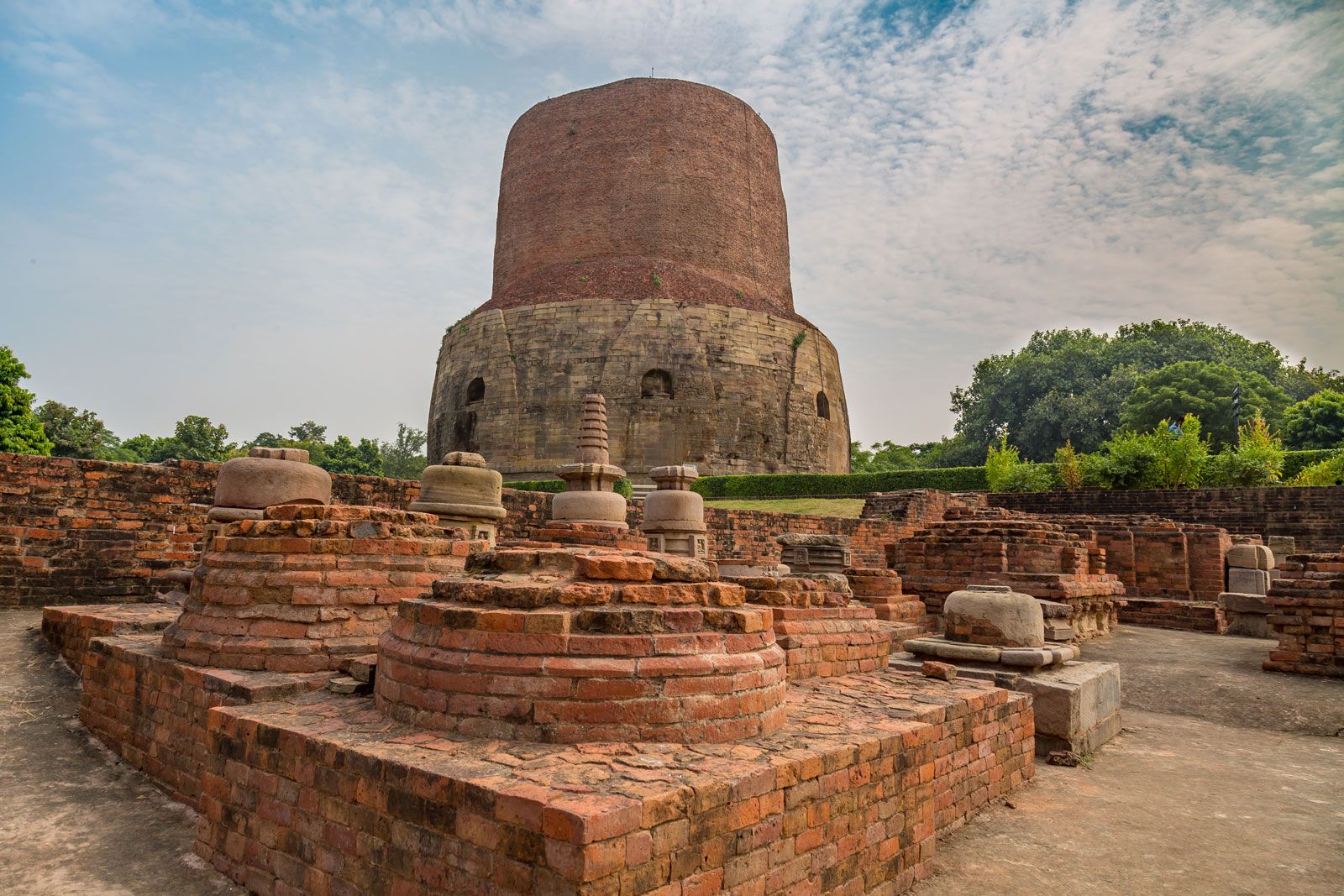
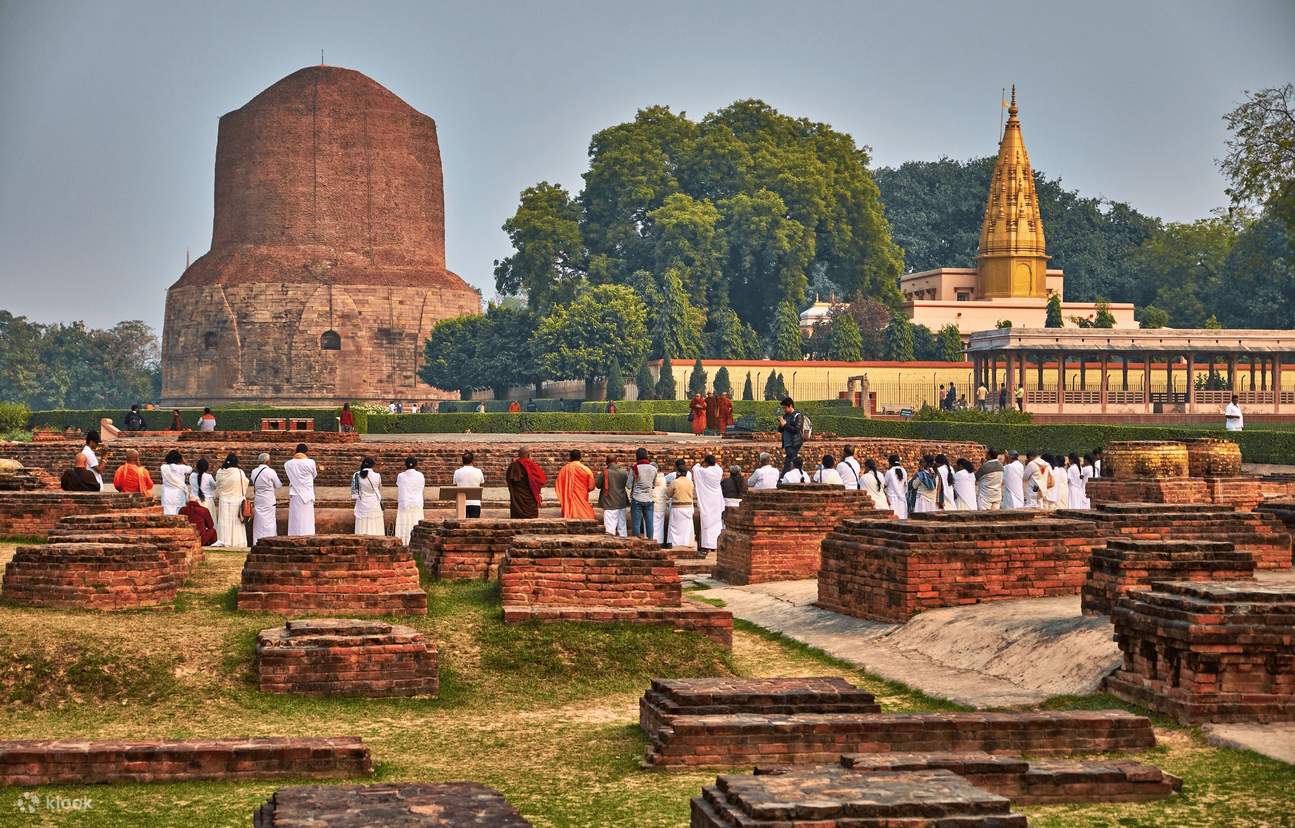
The centrepiece of Sarnath is the massive Dhamek Stupa, a solid cylindrical structure standing 43.6 metres tall and 28 metres in diameter at the base. Originally built by Emperor Ashoka in 249 BCE and enlarged in the Gupta period (5th century CE), the stupa marks the exact spot where the Buddha is believed to have given his first sermon. The lower portion is covered in beautifully carved geometric and floral patterns in stone -- some of the finest examples of Gupta-era stonework surviving anywhere in India. You cannot enter the stupa, but walking around its circumference (a practice called pradakshina or parikrama) is a meditative experience, especially in the early morning when the grounds are quiet and dew still clings to the grass.
Ashoka Pillar (Lion Capital)
Emperor Ashoka erected a polished sandstone pillar at Sarnath, topped with four back-to-back Asiatic lions. That lion capital is now India's national emblem, and the 24-spoke Ashoka Chakra from the pillar's base appears on the Indian flag. The original capital is housed in the Sarnath Archaeological Museum (more on that below). The pillar stump, still standing at the archaeological site, originally rose to about 15 metres. The mirror-like polish that Mauryan craftsmen achieved on this sandstone -- without modern tools -- remains one of the great unsolved questions of ancient Indian engineering.
Sarnath Archaeological Museum
This is, without exaggeration, one of the finest small museums in India. Operated by the Archaeological Survey of India, it houses the original Lion Capital of Ashoka -- the single most recognisable symbol of the Indian Republic. The museum also contains an extraordinary collection of Buddhist sculptures from the Maurya, Kushana, and Gupta periods, including a stunning 5th-century seated Buddha in the dharmachakra pravartana mudra (the gesture of turning the wheel of dharma). The museum is open from 9:00 AM to 5:00 PM, closed on Fridays. Entry costs Rs 25 for Indian nationals and Rs 300 for foreign visitors. Photography is not permitted inside. Budget at least 45 minutes here.
Mulagandha Kuti Vihar
Built in 1931 by the Mahabodhi Society, this modern Buddhist temple is worth visiting for its interior murals by the Japanese artist Kosetsu Nosu, which depict key events from the Buddha's life in vivid colour. The temple also houses relics of the Buddha recovered from Taxila. A bodhi tree in the garden was grown from a sapling of the Sri Maha Bodhi tree in Anuradhapura, Sri Lanka, which itself was grown from the original Bodhi Tree at Bodh Gaya. On the full moon of the Hindu month of Kartik (usually October-November), a major ceremony is held here when relics are displayed to the public. Entry is free. Open daily from 6:00 AM to 6:00 PM (winter) or 6:00 AM to 7:00 PM (summer).
Deer Park (Isipatana)
The sprawling green park surrounding the archaeological zone is home to a herd of spotted deer, a living reminder that this area was once a royal deer reserve. It is one of the most peaceful green spaces in the Varanasi region, and a welcome respite from the dust and heat. Children especially enjoy watching the deer, and the shaded walking paths make for a pleasant stroll. The park is included in the Rs 25 / Rs 300 archaeological site ticket.
Chaukhandi Stupa
About a kilometre before the main Sarnath site, you will pass the Chaukhandi Stupa, an ancient brick structure marking the spot where the Buddha is said to have first met his five disciples upon arriving from Bodh Gaya. The octagonal Mughal tower on top was added by Emperor Humayun in the 16th century. It is worth a brief stop on the way in, though it is less well-maintained than the main site.
Pro Tip: Start your Sarnath visit at the Archaeological Museum to understand the context and see the artefacts, then walk through the ruins and park. This order makes the ruins far more meaningful because you will recognise the styles and periods you just saw in the museum displays.
How to Get to Sarnath from Varanasi
Sarnath is remarkably easy to reach from Varanasi, and the journey itself passes through interesting semi-urban landscapes on the outskirts of the city.
- Auto-rickshaw: The most common option. From Varanasi Cantonment (Cantt) railway station, an auto costs Rs 150-200 one way and takes about 30-40 minutes. From the ghats area (Dashashwamedh or Assi), expect to pay Rs 200-300. Negotiate before boarding and agree on a return arrangement if needed.
- Taxi / Cab: An AC cab (Ola, Uber, or a local taxi) costs Rs 400-600 for a round trip with a couple of hours of waiting time. This is the most comfortable option, especially in summer.
- Local Bus: Buses run from Varanasi Junction (Cantt) to Sarnath regularly. The fare is just Rs 15-20, but the buses are crowded and slow. Suitable for budget travellers comfortable with local transport.
- Cycle Rickshaw: From the northern parts of Varanasi, some visitors take cycle rickshaws, but this is only practical if you are already close to the Sarnath road.
If you are booking a guided tour through a travel platform, most Varanasi packages include Sarnath as a half-day add-on. The drive is straightforward, and Google Maps navigation works reliably on this route.
Best Time to Visit Sarnath
Sarnath is an outdoor site, so the season matters considerably for comfort.
- October to March (Best): The winter months are ideal. Daytime temperatures range from 15 to 25 degrees Celsius, the air is clear, and the grounds are green and pleasant. December and January mornings can be foggy and cold (5-8 degrees), so carry a jacket if you plan an early start.
- April to June (Challenging): Varanasi summers are brutal, with temperatures crossing 45 degrees Celsius in May-June. If you must visit in summer, go early in the morning (arrive by 8:00 AM) and finish before noon. Carry water and sunscreen.
- July to September (Monsoon): The rains make the grounds lush and beautiful, but the humidity is intense and occasional flooding of low-lying roads can delay travel. The site remains open, and you will have fewer crowds.
For the best experience, plan to arrive at Sarnath by 8:30 or 9:00 AM. The site is significantly less crowded before 10:00 AM, and the morning light on the Dhamek Stupa is beautiful for photography. A thorough visit takes 3 to 4 hours, leaving you time to return to Varanasi for a late lunch and the evening Ganga Aarti.
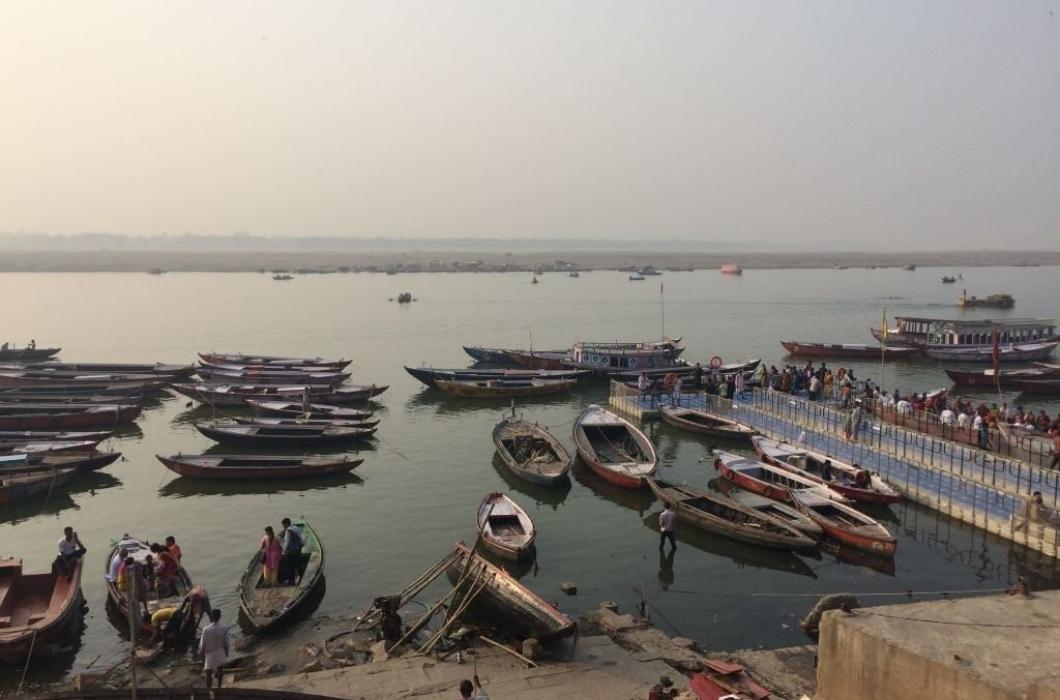
Pro Tip: Combine your Sarnath visit with the sunrise boat ride on the Ganges. Start with a 5:30 AM boat ride at the ghats, return by 7:30, have breakfast, and head to Sarnath by 8:30. This makes for a full and memorable morning that covers both the Hindu and Buddhist sides of Varanasi's spiritual heritage.
Practical Tips for Your Sarnath Visit
- Tickets: The archaeological site and Deer Park require a ticket -- Rs 25 for Indians, Rs 300 for foreigners. The museum has a separate ticket at the same price. Keep both tickets handy as they may be checked at multiple points.
- Footwear: Wear comfortable walking shoes. The site involves walking on uneven ground, grass, and stone paths. You will need to remove shoes inside the Mulagandha Kuti Vihar temple.
- Guides: Licensed ASI guides are available at the entrance for Rs 500-800 for a 2-hour tour. They add significant value, especially if you are interested in the history and iconography. Agree on the price and language before starting.
- Food: There are a few basic restaurants and chai stalls near the main entrance, but nothing exceptional. Consider eating before you come or packing snacks. The Varanasi restaurant scene is far better for a proper meal.
- Photography: Photography is allowed freely throughout the outdoor site and Deer Park. It is strictly prohibited inside the museum. Drone flying is not permitted.
- Souvenirs: Small shops near the entrance sell Buddhist artefacts, miniature stupas, prayer beads, and Tibetan handicrafts. Prices are reasonable but bargaining is expected.
- Accessibility: The main paths through the archaeological site are relatively flat, but some areas have uneven terrain. Wheelchair access is limited but manageable for the main stupa area.
Nearby Attractions Worth Combining
If you have extra time on your Sarnath day trip, consider these additions within a short distance:
- Thai Temple and Monastery: A striking Thai-style Buddhist temple located 500 metres from the main site, with a tall gilded Buddha image and traditional Thai architecture. Free entry and a peaceful compound.
- Tibetan Temple: The Central University of Tibetan Studies campus includes a temple with impressive murals and a large prayer wheel. The campus bookshop has an excellent collection of Buddhist texts in English.
- Japanese Temple: A serene Nichiren Buddhist temple with a distinctive Japanese architectural style, located near the main Sarnath road. The minimalist garden is a peaceful spot for reflection.
- Ramnagar Fort: On the way back to Varanasi (slightly off the route), this 18th-century fort of the Maharaja of Varanasi sits on the eastern bank of the Ganges. It houses a museum with vintage cars, royal armoury, and astronomical clocks. Open 10:00 AM to 5:00 PM, entry Rs 25.
For pilgrims visiting Varanasi's great temples -- Kashi Vishwanath, Sankat Mochan Hanuman, Durga Temple, Tulsi Manas Mandir -- a morning at Sarnath complements the Hindu pilgrimage circuit beautifully. The two traditions have coexisted in this region for millennia, and experiencing both gives you a far richer understanding of Varanasi's layered spiritual geography. Whether you are a history enthusiast, a spiritual seeker, or simply a curious traveller, the short journey from the banks of the Ganges to the deer park at Sarnath is one you will not forget.
Related articles
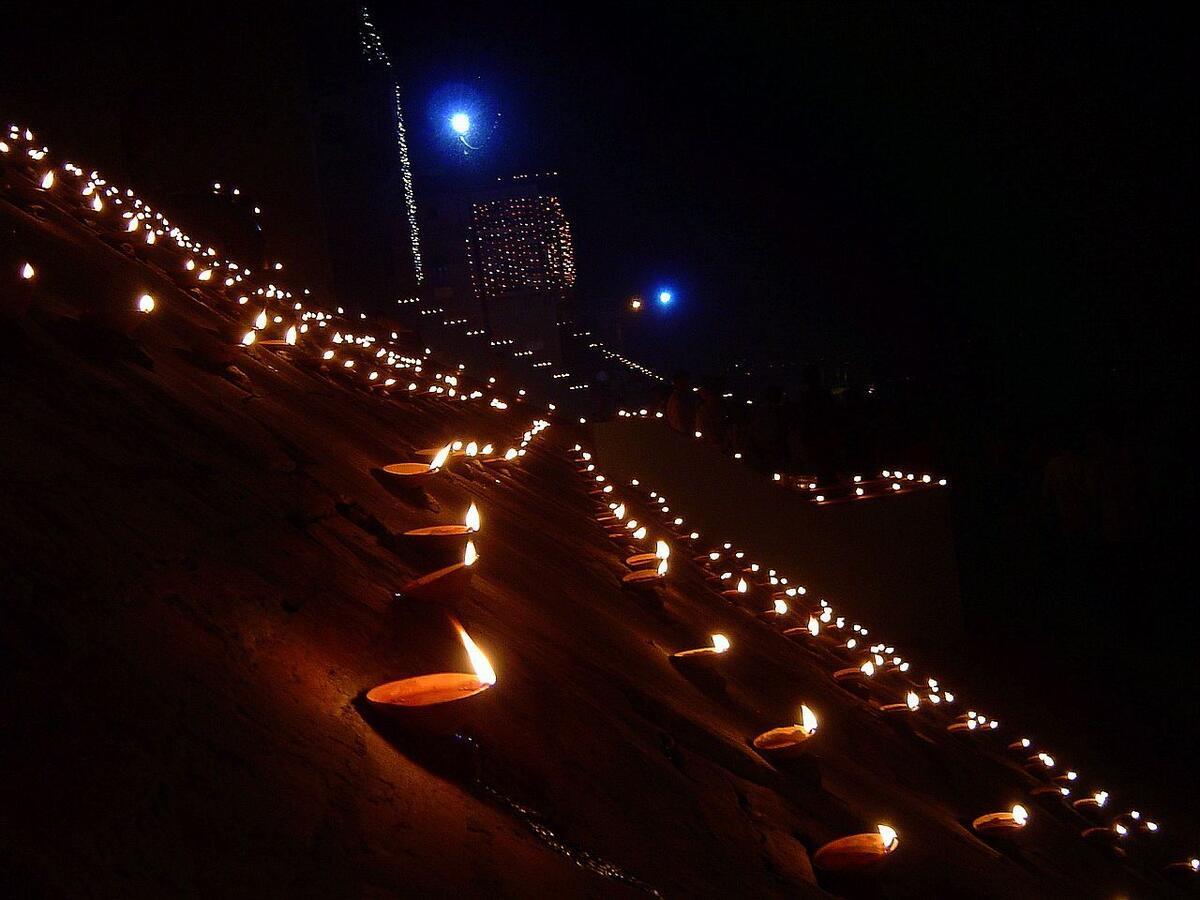
Varanasi in Winter: Dev Deepawali, Fog on the Ganga, and the Season of Malaiyo
November to February is Kashi at its kindest and most crowded — Dev Deepawali's lakhs of lamps, fog-wrapped dawn boat rides, the dawn-only dessert called malaiyo, what to pack, and why winter yatras must be booked months ahead.
Tulsi Manas Mandir: The Temple Built Where the Ramcharitmanas Was Born
On the ground where Goswami Tulsidas composed the Ramcharitmanas stands a white marble temple whose walls carry his verses end to end. The story of the people's Ramayana, the moving tableaux upstairs, the Durga Mandir pairing, and a perfect evening plan.
Durga Mandir and Durga Kund: The Red Temple Where the Devi Chose to Stay
The 18th-century red temple of Durga Kund — built by Rani Bhabani of Natore around a murti tradition holds no sculptor ever made, beside a sacred tank older than memory. History, legends, Navratri in Kashi, and a pilgrim's visit plan.