Varanasi does not ease you in. It grabs you by the collar the moment you step out of the station and doesn't let go until you leave -- changed, confused, and strangely at peace. If you're planning your first trip to one of the oldest continuously inhabited cities on Earth, here are twelve things the guidebooks gloss over and the travel influencers skip past.
1. The Sensory Overload Is Real -- And It's the Point
No amount of YouTube videos can prepare you for arriving in Varanasi. The noise, the crowds, the smells, the colours -- they hit you all at once. Diesel fumes mix with incense. Temple bells clash with car horns. A funeral procession passes a wedding band on the same street.
Here's what nobody tells you: the overwhelm usually peaks in the first three to four hours. If you can ride it out without retreating to your hotel room, something shifts. Your senses recalibrate. What felt like chaos starts to reveal a pattern -- the city has its own internal logic, and once you start sensing it, Varanasi becomes deeply compelling rather than merely loud.
Give yourself at least three full days. Day one is survival. Day two is understanding. Day three is when Varanasi actually opens up to you.
2. Understand the Ghat Geography Before You Arrive
The ghats are not a single location -- they are a chain of roughly 88 stone staircases descending to the Ganges along a crescent-shaped riverfront stretching over six kilometres. Knowing which ghat is where saves you enormous confusion.
The key ghats to orient yourself around:
- Dashashwamedh Ghat -- the main ghat, where the famous Ganga Aarti happens every evening. The most crowded, the most photographed, the centre of gravity.
- Manikarnika Ghat -- the primary cremation ghat. Fires burn here 24 hours a day. Approach with respect (more on this below).
- Assi Ghat -- the southernmost major ghat, quieter, popular with long-stay visitors and students. Good cafes nearby.
- Kedar Ghat -- less touristy, beautiful for morning walks, close to the Kedareshwar temple.
Pro tip: Walking along the ghats from Assi to Manikarnika takes roughly 90 minutes at a leisurely pace. Do this walk at least once during your trip -- preferably in the early morning. It is the single best way to experience the city.
3. A Boat Ride Is Non-Negotiable
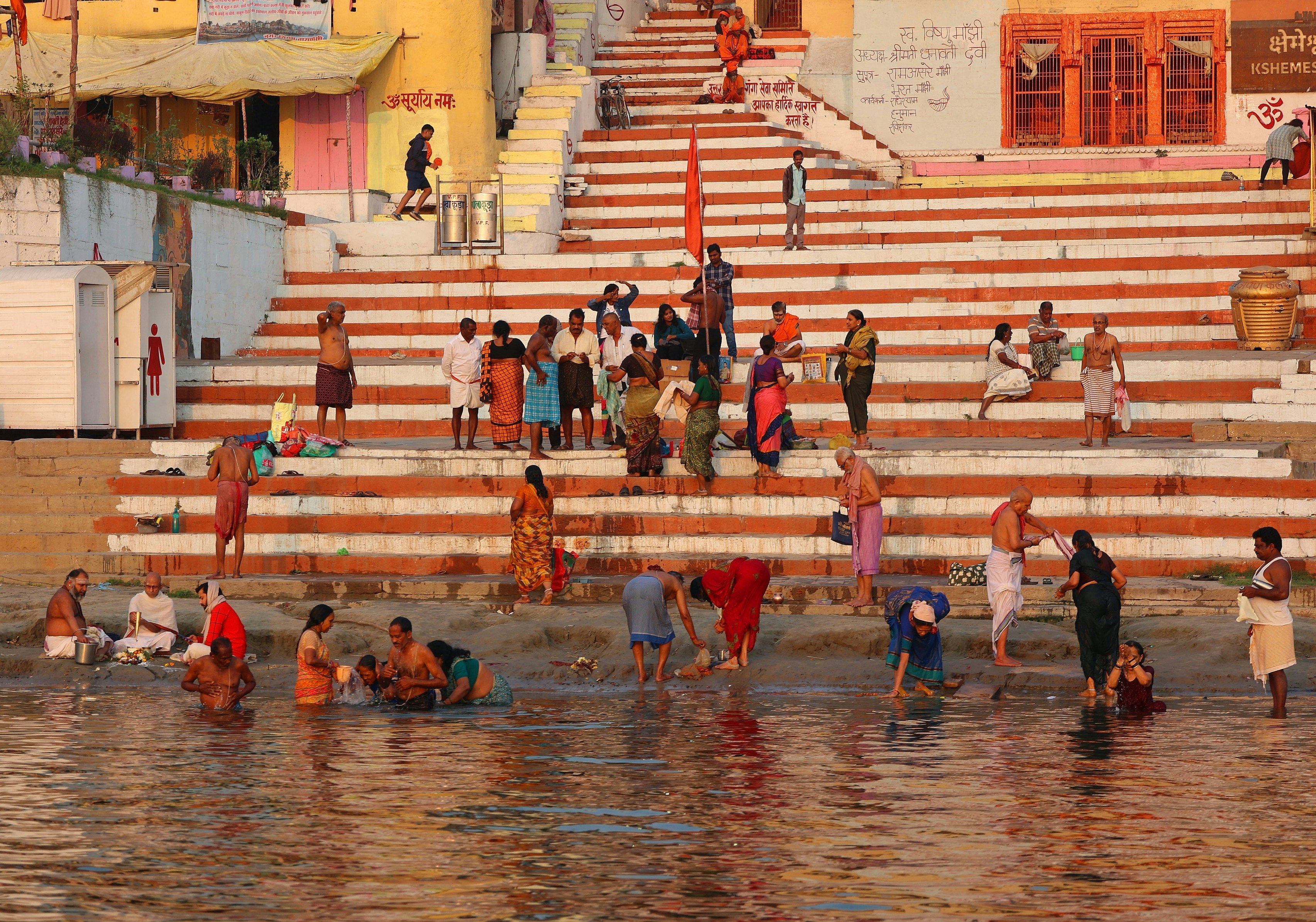
You can visit Varanasi without a boat ride on the Ganges, but you shouldn't. Seeing the ghats from the water transforms your understanding of the city entirely. From the river, the whole riverfront unfolds like a living painting -- temples stacked behind ghats, smoke rising from Manikarnika, sadhus meditating at the water's edge.
Practical details that matter:
- Hire a boat at dawn, ideally between 5:30 and 6:00 AM (timing shifts by season). The light is extraordinary and the ghats are at their most active.
- Negotiate the price before boarding. As of 2025-2026, a reasonable rate for a private wooden rowboat for one to two hours is Rs 300-500. Motorboats cost more. Tourist-facing touts at Dashashwamedh will quote Rs 1,500 or higher -- walk 50 metres in either direction for better rates.
- Ask to drift past Manikarnika Ghat from a respectful distance. Your boatman will know the appropriate distance to maintain.
"The best boat ride in Varanasi is a simple wooden rowboat at sunrise with no itinerary and no commentary -- just you, the boatman, and the river. Skip the packaged 'heritage tours' unless you genuinely want narration. The silence on the water is half the experience."
4. Dawn Is the Golden Hour -- Set Your Alarm
Varanasi is a morning city. The most important rituals, the best light, and the most authentic atmosphere all happen between 5:00 AM and 8:00 AM. This is when devotees perform their morning ablutions in the Ganges, priests conduct sunrise pujas, and yoga practitioners gather on the ghat steps.
If you are only in Varanasi for two days, make both mornings count. Sleep early the night before. The city's evening energy is compelling, but the mornings are sacred in a way that evenings aren't.
After 10:00 AM, the ghats get hot, the crowds get thick, and much of the ritual activity winds down. Use midday for exploring temples, eating, or resting before the evening Aarti.
5. Ganga Aarti Timing and Strategy
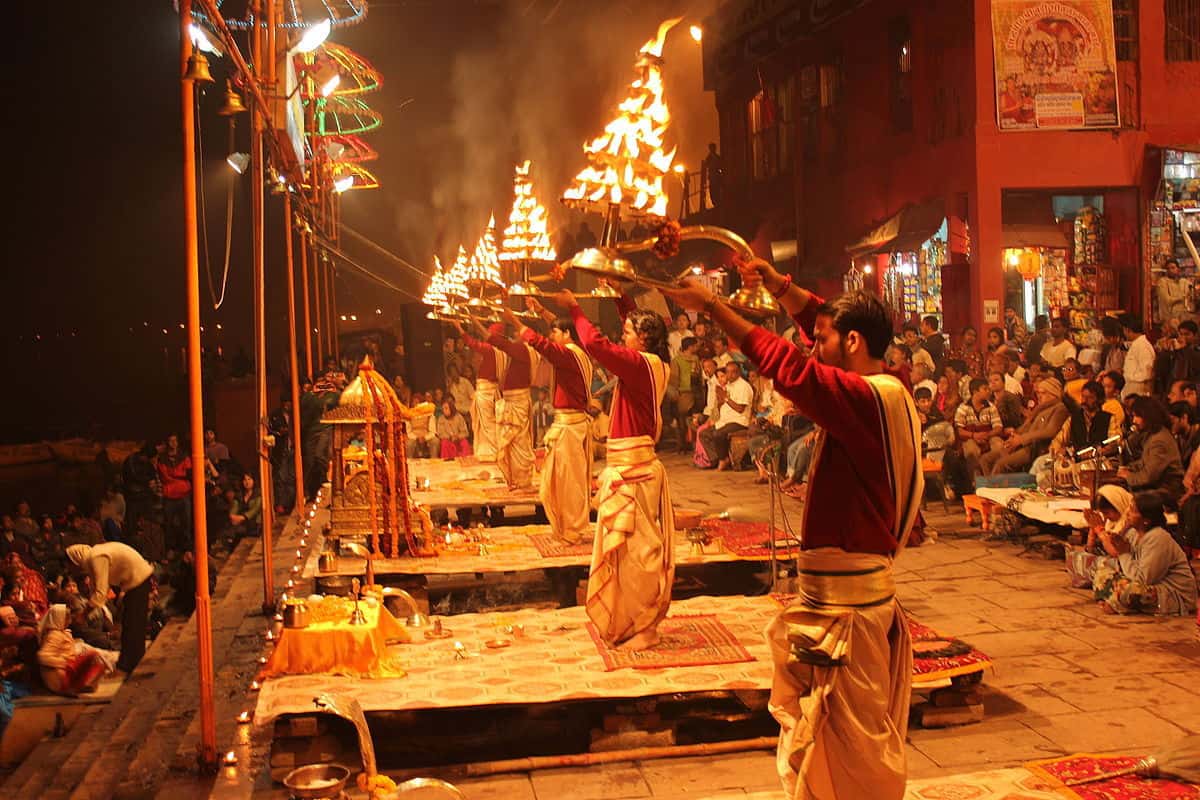
The Ganga Aarti at Dashashwamedh Ghat happens every single evening without exception -- it has not been cancelled in decades, rain or shine. It typically begins at 6:45 PM in winter and 7:00 PM in summer, lasting around 45 minutes.
What nobody tells you about getting a good spot:
- Arrive at least 45 minutes early if you want a front-row seat on the ghat steps. An hour early on weekends and during festival season.
- The best view is actually from a boat on the river, facing the ghat. You can hire one specifically for the Aarti -- again, negotiate beforehand.
- The upper levels of the ghat give a panoramic view but you lose the intimacy. The steps closest to the priests are where you feel the fire, hear the bells, and sense the collective energy of the crowd.
- There is a smaller, more intimate aarti at Assi Ghat that happens at the same time. If the Dashashwamedh crowds intimidate you, Assi is a perfectly valid alternative with a fraction of the people.
6. The Narrow Lanes Will Disorient You -- Embrace It
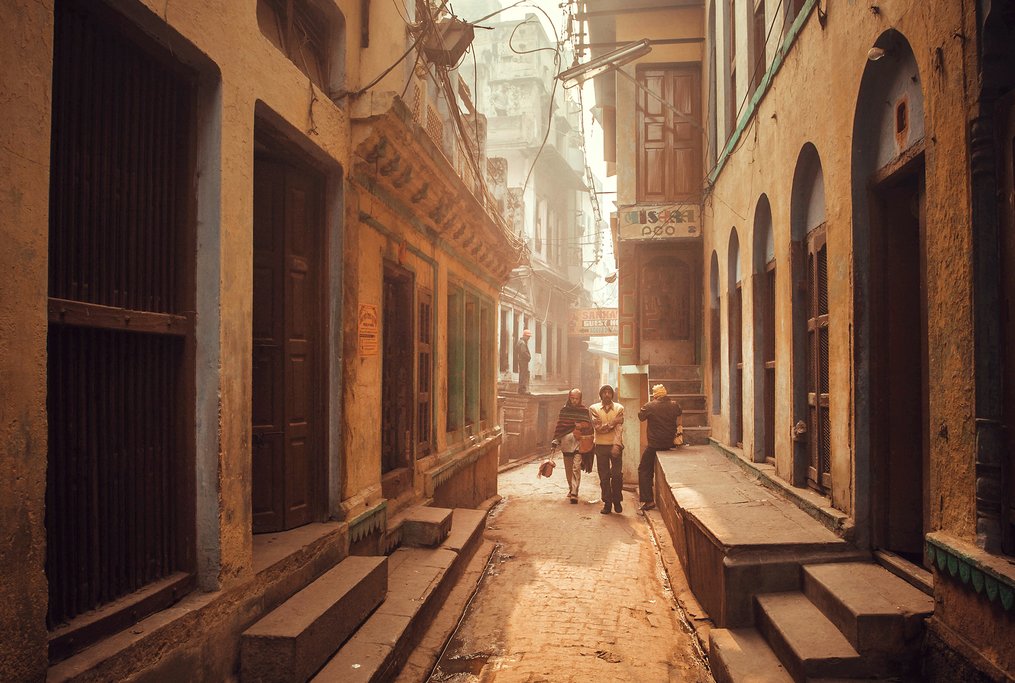
Behind the ghats lies a labyrinth of narrow lanes (galis) that are the true circulatory system of old Varanasi. Some are barely shoulder-width. Motorcycles squeeze through spaces that seem impossible. Cows have absolute right of way.
Google Maps is unreliable in the galis. GPS signals bounce off the tightly packed buildings, and many lanes simply aren't mapped. Accept that you will get lost. This is not a failure -- it's how you find the tiny Shiva temples, the 400-year-old sweet shops, and the silk weavers that no tour guide takes you to.
Two practical notes: always remember which ghat you started from (you can always navigate back to the river and walk along the ghats to reorient). And wear shoes you can slip on and off easily -- you'll be entering and exiting temples constantly.
7. Food Safety: What to Eat and What to Skip
Varanasi's street food is legendary, and avoiding it entirely means missing a fundamental part of the city. But a stomach infection can ruin your pilgrimage. Here's the honest breakdown:
Generally safe and highly recommended:
- Kachori-sabzi for breakfast from established shops (look for long queues of locals)
- Lassi from the famous Blue Lassi or similar long-standing shops -- the thick, curd-based kind served in clay cups
- Tamatar chaat -- a Varanasi specialty you won't find elsewhere
- Any freshly fried item (the oil temperature kills bacteria)
Be cautious with:
- Pre-cut fruit from street vendors (wash and cut your own from the market)
- Any cold drink with ice from an unknown source
- Tap water -- strictly avoid. Use sealed bottled water for everything including brushing teeth
- Pani puri from random stalls (the water is the risk factor)
Carry oral rehydration salts (ORS) and a basic antacid. Even careful eaters sometimes react to the change in water and spice levels.
8. Dress Code: Respect Without Overthinking
Varanasi is a deeply religious city, but it's also a living, working city -- not a museum. The dress code is straightforward:
- At temples and ghats: Cover your shoulders and knees. This applies equally to men and women. Removing shoes before entering temples is mandatory.
- In the general city: Modest clothing is appreciated but Varanasi is used to tourists. You won't be turned away from restaurants in a t-shirt.
- For the boat ride and ghat walks: Comfortable, light clothing. You will likely get splashed. Avoid wearing leather to the ghats out of respect -- many Hindus consider leather inauspicious near the river.
Cotton and linen are your best friends. Varanasi is humid much of the year, and you'll be walking extensively. Synthetic fabrics trap heat and make the narrow lanes feel even more stifling.
9. Photography Etiquette That Actually Matters
This is where many first-time visitors cause genuine offence without realising it.
The non-negotiable rule: do not photograph cremation ceremonies at Manikarnika or Harishchandra Ghat. This is not a guideline -- it's a serious boundary. The dom (attendants who manage the cremation fires) will confront you, and they are well within their rights. Phones and cameras have been confiscated. Even pointing your camera in the general direction can cause a confrontation.
Beyond the cremation ghats:
- Ask before photographing sadhus. Some will happily pose (and expect Rs 10-20, which is fair). Others are in genuine meditation and will be disturbed.
- Ask before photographing people bathing in the Ganges. This is a religious act, not a spectacle.
- Morning rituals at the ghats are generally fine to photograph from a respectful distance. Use a zoom lens rather than getting in someone's face.
"Put your camera down for at least one full morning at the ghats. Watch with your eyes. The most important things you'll experience in Varanasi are things no photograph can capture -- the sound of water, the warmth of the first light, the hum of a thousand small prayers happening simultaneously."
10. Scam Awareness: Stay Alert Without Becoming Cynical
Varanasi has its share of tourist-facing scams. Being aware of them doesn't mean assuming everyone is out to cheat you -- the vast majority of people you meet will be genuinely helpful and kind. But know these common patterns:
- "The ghat is closed" -- Nobody has the authority to close a public ghat. If someone tells you a ghat is closed and offers to take you somewhere else, politely decline and walk on.
- Flower offering pressure -- People will hand you a flower plate or diya (lamp) near the river and then demand payment. If you don't want to buy one, don't accept anything placed in your hands.
- Silk shop detours -- Friendly locals who strike up conversation and eventually guide you to a "family silk shop" are commission agents. The silk may be genuine, but the price will be inflated. If you want silk, visit the Banaras Handloom cluster or government-certified shops.
- Overpriced boat rides -- As mentioned above, negotiate before boarding. Fix the duration, the route, and the total price.
- Unsolicited guides -- If someone starts "guiding" you without being asked, clarify immediately that you didn't request a guide. Otherwise you'll be asked to pay at the end.
A firm, polite "no, thank you" repeated calmly is your best tool. Don't engage in arguments. Just keep walking.
11. Best Areas to Stay for First-Time Visitors
Where you stay in Varanasi dramatically affects your experience. Here are the three main zones, honestly assessed:
Near Assi Ghat (Recommended for most first-timers):
- Quieter, wider streets, easier auto-rickshaw access
- Good cafes and restaurants within walking distance
- 10-15 minute walk along the ghats to reach the main action at Dashashwamedh
- Best balance of convenience and sanity
Near Dashashwamedh Ghat:
- Right in the thick of things -- walkable to the evening Aarti in two minutes
- Extremely noisy, very crowded, narrow access lanes
- Auto-rickshaws and taxis cannot reach most hotels here -- you'll carry your luggage through galis
- Best for travellers who want total immersion and don't mind noise
Cantonment area / Lanka:
- Modern hotels, wider roads, chain restaurants
- 30-40 minutes from the ghats by auto-rickshaw (longer in traffic)
- Feels like any other Indian city -- you lose the Varanasi atmosphere entirely
- Only worth it if you specifically need the amenities of a large hotel
Book accommodation with a ghat view if your budget allows. Waking up to the sound of temple bells and the sight of the sun rising over the Ganges is worth every rupee of the premium.
12. The Spiritual Experience: Let It Come to You
Here is perhaps the most important thing nobody tells first-time visitors: you cannot force a spiritual experience in Varanasi. If you arrive with a rigid checklist of "spiritual moments" to tick off, you'll leave frustrated. The city doesn't perform on command.
The moments that stay with you tend to be unplanned. Sitting on a ghat step at 5:30 AM watching an elderly woman offer flowers to the river. Hearing a Sanskrit shloka echo through a lane you wandered into by accident. The sudden quiet that descends over the ghats during the few minutes between sunset and the start of the Aarti.
Varanasi is, at its core, a city about the relationship between life and death. Cremation pyres burn within sight of children playing cricket. New babies are brought to the river for blessings steps away from where ashes are immersed. This juxtaposition is not morbid -- it is the whole point. Hindus have come to Varanasi for thousands of years to confront the cycle of existence directly, without euphemism.
If you are visiting for spiritual reasons -- whether you're a practising Hindu or simply someone seeking something beyond the everyday -- the best thing you can do is create space. Leave gaps in your itinerary. Sit still. Watch the river. Varanasi has been transforming visitors for over 3,000 years. It knows what it's doing. Trust the process.
Planning Your Varanasi Pilgrimage
If this is your first visit to Varanasi and you'd like guidance on temple itineraries, accommodation, or connecting your trip with other pilgrimage destinations like Prayagraj, Ayodhya, or Gaya, we're here to help. At Satmarg, we specialise in thoughtful pilgrimage travel across India's sacred geography -- designed for devotees, not just tourists.
Best time to visit: October to March for comfortable weather. Avoid May-June (extreme heat) unless you're visiting for a specific occasion. The monsoon months (July-September) have a raw beauty but flooding can restrict ghat access.
Ideal trip duration: Three nights minimum. Five nights if you want to include day trips to Sarnath (where the Buddha gave his first sermon, just 10 km away) or explore the weaving traditions of Banaras silk.
Related articles
Varanasi in Winter: Dev Deepawali, Fog on the Ganga, and the Season of Malaiyo
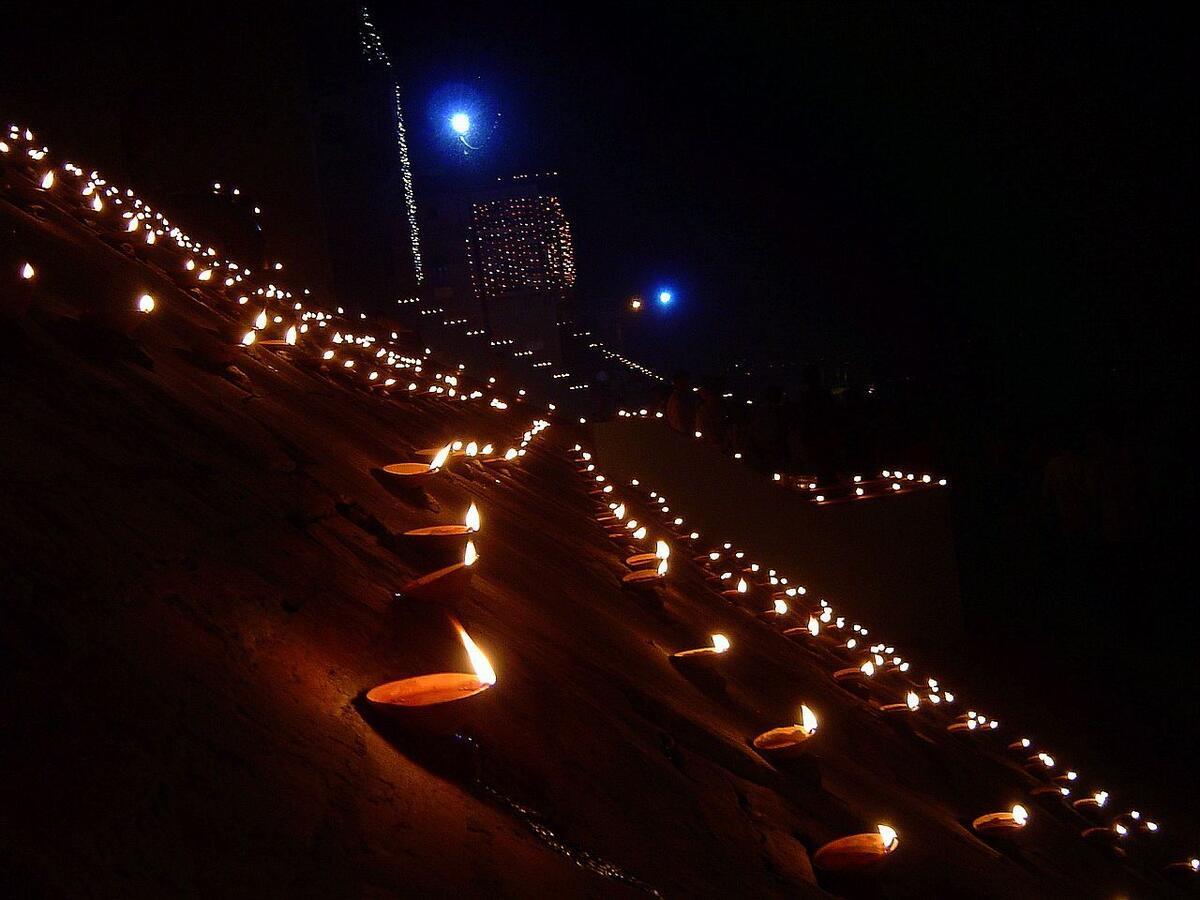
November to February is Kashi at its kindest and most crowded — Dev Deepawali's lakhs of lamps, fog-wrapped dawn boat rides, the dawn-only dessert called malaiyo, what to pack, and why winter yatras must be booked months ahead.
Tulsi Manas Mandir: The Temple Built Where the Ramcharitmanas Was Born
On the ground where Goswami Tulsidas composed the Ramcharitmanas stands a white marble temple whose walls carry his verses end to end. The story of the people's Ramayana, the moving tableaux upstairs, the Durga Mandir pairing, and a perfect evening plan.
Durga Mandir and Durga Kund: The Red Temple Where the Devi Chose to Stay
The 18th-century red temple of Durga Kund — built by Rani Bhabani of Natore around a murti tradition holds no sculptor ever made, beside a sacred tank older than memory. History, legends, Navratri in Kashi, and a pilgrim's visit plan.