Varanasi with Kids — A Family-Friendly Pilgrimage Guide
Can you take children to Varanasi? The short answer is absolutely yes — and you should. Varanasi is one of those rare places that can leave a lasting impression on children just as powerfully as on adults. The fire ceremonies, the boat rides at sunrise, the river, the colours, the sounds — for a child, Varanasi is a sensory wonderland unlike anything they have experienced before.
That said, travelling to Varanasi with kids requires thoughtful planning. The city is crowded, the lanes are narrow, the heat can be intense, and the ghats present their own safety considerations. This guide helps you navigate all of it so your family pilgrimage is joyful, safe, and deeply memorable.
Can You Really Take Kids to Varanasi?
Yes — families with children of all ages visit Varanasi every day. Indian families have been bringing children on pilgrimage to Kashi for thousands of years. However, your experience will depend on the ages of your children and your level of preparation.
Infants and toddlers (0-3 years): Manageable with the right gear (carrier, stroller for flat areas only). The main challenge is heat and crowd management. You will need a baby carrier rather than a stroller for the ghat areas, as the steps and narrow lanes make strollers impractical.
Young children (4-7 years): This is actually a wonderful age for Varanasi. Children are old enough to walk, understand basic explanations about the temples and rituals, and are thoroughly captivated by the boat rides and the Ganga Aarti. They will need frequent rest breaks and snacks.
Older children (8-12 years): The ideal age for a Varanasi pilgrimage. Children can walk for longer stretches, appreciate the history and spirituality, take photographs, and remember the experience vividly. This is when a pilgrimage can become a formative life experience.
Teenagers (13+): Teenagers who are interested in spirituality, history, photography, or culture will find Varanasi fascinating. Those who are not interested may find it overwhelming. Manage expectations in advance and involve them in planning the itinerary.
Age-Appropriate Activities in Varanasi
Not everything in Varanasi is suitable for every age group. Here are the best activities organized by what works for families:
Boat Rides (All Ages — The Number One Family Activity)
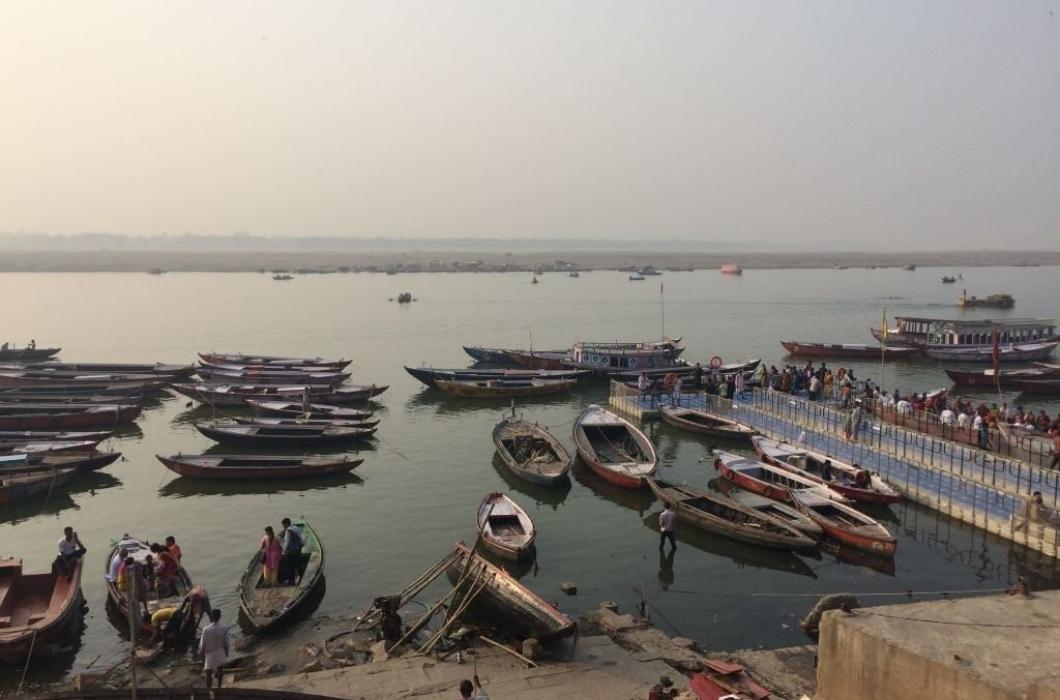
A boat ride on the Ganges is the single best activity for families in Varanasi. Children love boats, and the experience of gliding past 84 ghats while watching the city come alive at dawn is magical for every age group.
Best time: Sunrise (5:30-7:00 AM). Yes, it is early, but the soft light, the cool temperature, and the quiet of early morning make this infinitely more pleasant than a midday ride. Children who are grumpy about waking early will forget their complaints the moment the boat pushes off.
Duration: Book a 1-1.5 hour ride for families. Longer rides may test younger children's patience.
Tip: Request a private boat rather than a shared one when travelling with children. It costs more (Rs 1,500-2,500 vs Rs 200-300 per person for shared) but allows you to move at your own pace, stop when you want, and avoid being squeezed into a crowded boat with your kids.
Ganga Aarti (Ages 5+ Recommended)
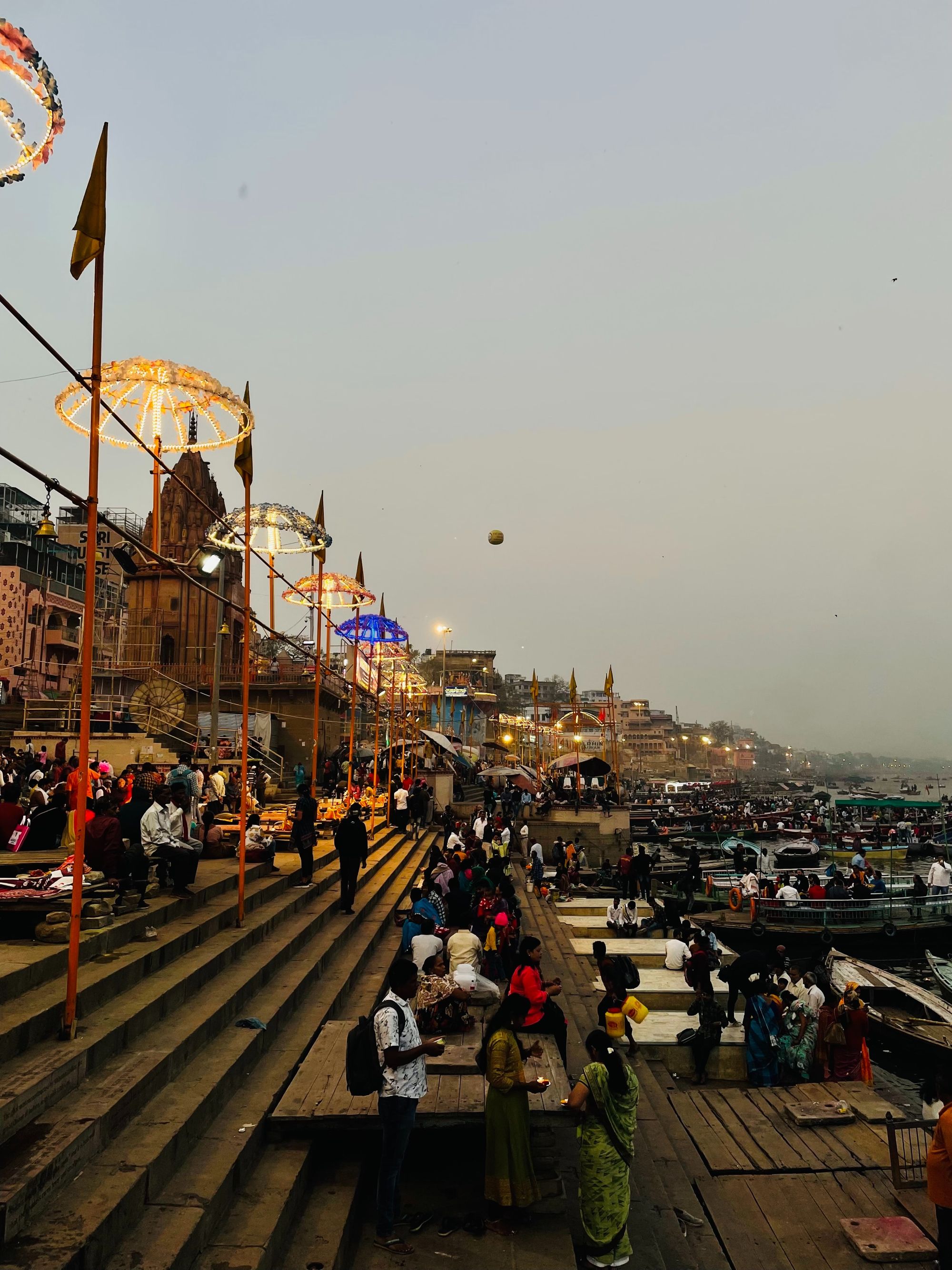
The evening Ganga Aarti at Dashashwamedh Ghat is spectacular, but it is also extremely crowded, loud, and long (about 45 minutes). For children under 5, the noise and crush of the crowd can be overwhelming and frightening.
Best approach for families: Watch the aarti from a boat rather than from the ghat. You get an excellent panoramic view without the crowd pressure, and if your child gets restless, the boatman can simply move you to a quieter spot. The fire reflected on the water is also more visually striking from the river.
Alternative: The Assi Ghat aarti is smaller, quieter, and far less crowded — an excellent family-friendly alternative to the Dashashwamedh spectacle.
Temple Visits (All Ages, with Caveats)
Visiting temples with children is a core part of the pilgrimage experience. The key is to choose the right temples and time your visits wisely.
Kashi Vishwanath Temple: This is a must-visit, but the security queues are long and the crowds inside are dense. Visit early in the morning (before 8:00 AM) when queues are shortest. Note that no bags, phones, or cameras are allowed — you will need to leave everything at the lockers outside.
Sankat Mochan Hanuman Temple: A gentler, more child-friendly experience. The temple is set in a leafy compound with resident monkeys that children find endlessly entertaining (keep food hidden and maintain a safe distance).
Durga Temple (Monkey Temple): The name alone appeals to children. The red-painted temple dedicated to Goddess Durga is visually striking, and the resident langur monkeys are a highlight. Keep children close and secure any dangling items — the monkeys are bold.
Tulsi Manas Temple: A marble temple with the entire Ramcharitmanas (the Hindi Ramayana) inscribed on its walls. Older children who know the story of Lord Rama will find this particularly engaging.
Best Ghats for Families
Not all ghats are equally suitable for families with children. Here are the best options:
Assi Ghat
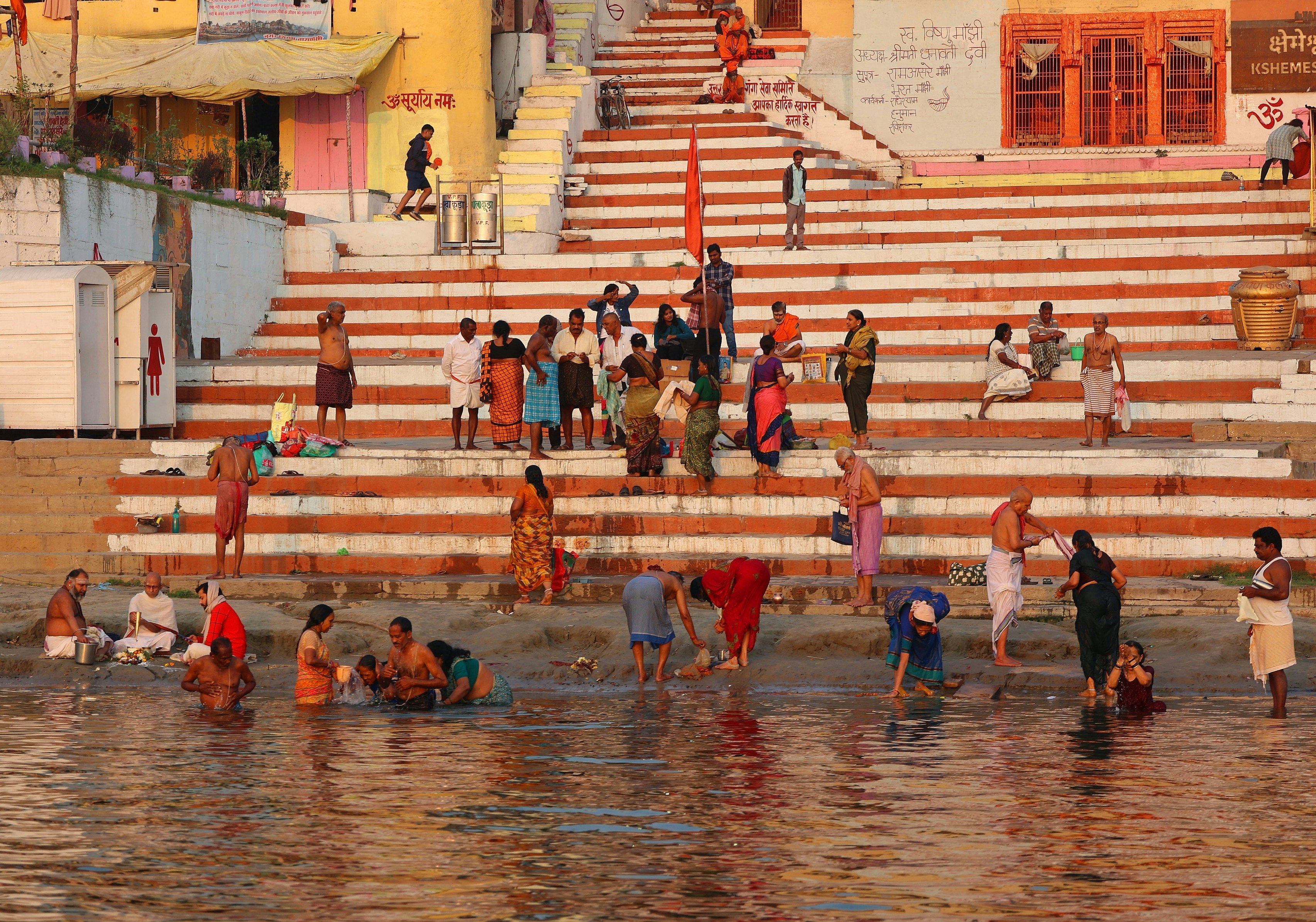
The best ghat for families. Located at the southern end of the ghat stretch, Assi Ghat is less crowded, cleaner, and more spacious than the central ghats. The steps are broad and in good condition. There are cafes and restaurants nearby, clean restrooms available at some hotels along the ghat, and the morning aarti here is family-friendly. Many family-oriented hotels are located in this area.
Dashashwamedh Ghat
The central and most famous ghat. It is exciting but very crowded. Visit in the early morning when it is calmer. During the evening aarti, it is best experienced from a boat with children.
Man Mandir Ghat
Adjacent to Dashashwamedh but slightly quieter, with interesting astronomical observatory ruins (Jantar Mantar) that older children may find fascinating. The steps are well-maintained.
Ghats to Approach with Caution
Manikarnika Ghat and Harishchandra Ghat are the main cremation ghats. Funeral pyres burn here 24 hours a day. Whether to take children here is a personal decision. Many Indian families do — death is not hidden in Hindu culture, and children grow up with a matter-of-fact understanding of cremation. However, for children not accustomed to seeing open cremation, it can be distressing or confusing. Use your judgement based on your child's age and temperament. If you do visit, explain what they will see beforehand in age-appropriate terms.
Food Safety for Children
Varanasi's street food is extraordinary, but children's stomachs are more sensitive than adults'. Follow these guidelines:
Water: Only sealed bottled water. No tap water, no ice from unknown sources. Carry bottles in your bag at all times.
Ease into street food gradually. On the first day, stick to cooked, hot foods — kachori-sabzi, parathas, and chai are generally safe because they are freshly cooked at high temperatures. Introduce yoghurt-based preparations (lassi, dahi vada) only once you are confident your child's stomach has adjusted.
Safe bets for children:
- Lassi from Blue Lassi Shop — fresh, made-to-order, and adored by children
- Jalebi — hot, freshly fried, and sweet enough to make any child happy
- Plain paratha with dahi (yoghurt) — simple and gentle on the stomach
- Banana or mango lassi — familiar flavours for picky eaters
- Malaiyo (winter only) — the cloud-like texture fascinates children
Carry emergency snacks. Familiar snacks from home — crackers, dry fruit, granola bars — are essential for moments when your child is hungry but nothing suitable is immediately available.
Tip: If your child has a sensitive stomach or food allergies, inform your hotel in advance. Many hotels in Varanasi have kitchens that can prepare plain, mild food on request — dal-rice, roti-sabzi, khichdi — that is safe and satisfying.
Where to Stay with Kids
Location and facilities matter more when travelling with children. Here are the key considerations:
Stay near Assi Ghat. This area offers the best combination of proximity to the ghats, relatively calm surroundings, wider streets, and family-friendly restaurants. Hotels here tend to be newer and better maintained than those deep in the old city lanes.
Avoid the deep old city lanes. While atmospheric, the extremely narrow lanes near Dashashwamedh and Manikarnika Ghats are difficult to navigate with children, especially with a stroller or during crowded periods. Getting lost in these lanes is easy even for adults.
Choose a hotel with reliable hot water and AC. These sound basic, but not every Varanasi guesthouse delivers consistently. Check recent reviews that specifically mention families or children.
Consider a hotel with a restaurant. Having a reliable in-house dining option means you always have a fallback if your child is tired or unwell and cannot do a food expedition in the city.
Medical Preparedness
Travelling with children anywhere in India requires a basic medical kit and some advance preparation:
Carry a first-aid kit that includes: paracetamol/ibuprofen (child dosage), oral rehydration salts (ORS), anti-diarrheal medication, antihistamines, antiseptic cream, band-aids, insect repellent, and sunscreen.
Know the nearest hospital. Banaras Hindu University Hospital (Sir Sunderlal Hospital) is the best-equipped public hospital in Varanasi. For private care, Heritage Hospital and Medwin Hospital are reliable options. Save their addresses and phone numbers in your phone before arriving.
Stay hydrated. Dehydration is the most common health issue for children in Varanasi, especially in summer. Ensure your child drinks water consistently throughout the day, not just when thirsty.
Protect against mosquitoes. Apply insect repellent in the evening, especially near the river. Consider lightweight long-sleeved clothing for evening activities.
Tip: If your child takes any prescription medication, bring more than enough for the entire trip plus a few extra days' supply. Specific medications may not be readily available in Varanasi, and brand names may differ.
Sample 3-Day Family Itinerary
Day 1: Arrival and Gentle Introduction
Morning/Afternoon: Arrive and check into your hotel near Assi Ghat. Rest and acclimatize. Let the children explore the hotel and the immediate neighbourhood. Have a relaxed lunch at the hotel or a nearby restaurant.
Late Afternoon: Walk along Assi Ghat. Let the children watch the boats, dip their feet in the river (at a clean section), and absorb the atmosphere without any schedule pressure.
Evening: Attend the Assi Ghat Aarti — smaller, calmer, and perfect as a gentle first introduction to the aarti tradition. Dinner at a family-friendly restaurant near the ghat.
Day 2: The Big Varanasi Day
Early Morning (5:30 AM): Sunrise boat ride from Assi Ghat towards Dashashwamedh Ghat and back. This is the highlight of the trip — plan for 1-1.5 hours on the water. Bring snacks and water for the children.
Morning (8:00-10:00 AM): Kashi Vishwanath Temple visit (arrive early to beat queues). Deposit bags and phones at lockers. Keep hold of children's hands inside — it is crowded. Afterwards, walk through Vishwanath Gali for kachori-sabzi breakfast.
Late Morning: Visit Sankat Mochan Hanuman Temple or Durga Temple (children love the monkeys). Return to hotel for rest during the hottest part of the day.
Afternoon (3:00-5:00 PM): Visit the BHU campus (Banaras Hindu University) — the leafy, spacious campus is a welcome contrast to the old city. Visit the Bharat Kala Bhavan museum if children are interested, or simply enjoy the space. The New Vishwanath Temple on campus is impressive and far less crowded than the main one.
Evening: Watch the Dashashwamedh Ganga Aarti from a boat. This is the spectacular, full-scale ceremony. Viewing from the boat keeps children safe and comfortable. Dinner afterwards at a restaurant away from the ghat crowds.
Day 3: Culture, Shopping, and Departure
Morning: Revisit the ghats for a morning walk — at your own pace, with no agenda. Let children photograph whatever catches their eye. Stop for lassi at Blue Lassi Shop and jalebi from a fresh stall.
Late Morning: Visit Ramnagar Fort and Museum across the river — the old Maharaja's palace has vintage cars, palanquins, and weapons that children find fascinating. The boat ride across the river to reach it is an adventure in itself.
Afternoon: Shopping for souvenirs in the old city — wooden toys, Banarasi silk scarves, brassware, and gulabi minakari (pink enamel) jewellery boxes make excellent family keepsakes. Depart Varanasi.
Essential Tips for Varanasi with Children
Pace yourself. Do not try to see everything. Children need downtime, and Varanasi is an intense city. Two or three focused activities per day is plenty.
Carry wet wipes and hand sanitiser. You will use them constantly — before eating, after temple visits, after touching railings and walls.
Hold children's hands on the ghats. The stone steps can be steep and slippery, especially near the water. There are no railings or barriers.
Teach basic temple etiquette before you go. Explain to children why shoes come off, why we speak quietly, why we do not point our feet at the deity. Children who understand the "why" are far more cooperative than those who are simply told "don't."
Let the experience unfold naturally. The best moments in Varanasi are often unplanned — a conversation with a sadhu, a kitten at the ghat, a flower garland from a stranger, the sound of temple bells across the water at dawn. Give your children space to discover these moments.
Plan Your Family Pilgrimage with Satmarg
Varanasi can be overwhelming on your own, but with the right planning, it becomes one of the most enriching family experiences imaginable. Children who visit Varanasi carry its impressions for life — the colours, the rituals, the river, the kindness of strangers in a city that has been welcoming pilgrims for five thousand years.
At Satmarg, we design family-friendly pilgrimage packages that account for children's needs — comfortable accommodation, private boat rides, manageable itineraries with built-in rest time, and experienced local guides who know how to engage young minds. Let us help your family experience Varanasi the way it should be — with wonder, safety, and devotion.
Related articles
Varanasi in Winter: Dev Deepawali, Fog on the Ganga, and the Season of Malaiyo
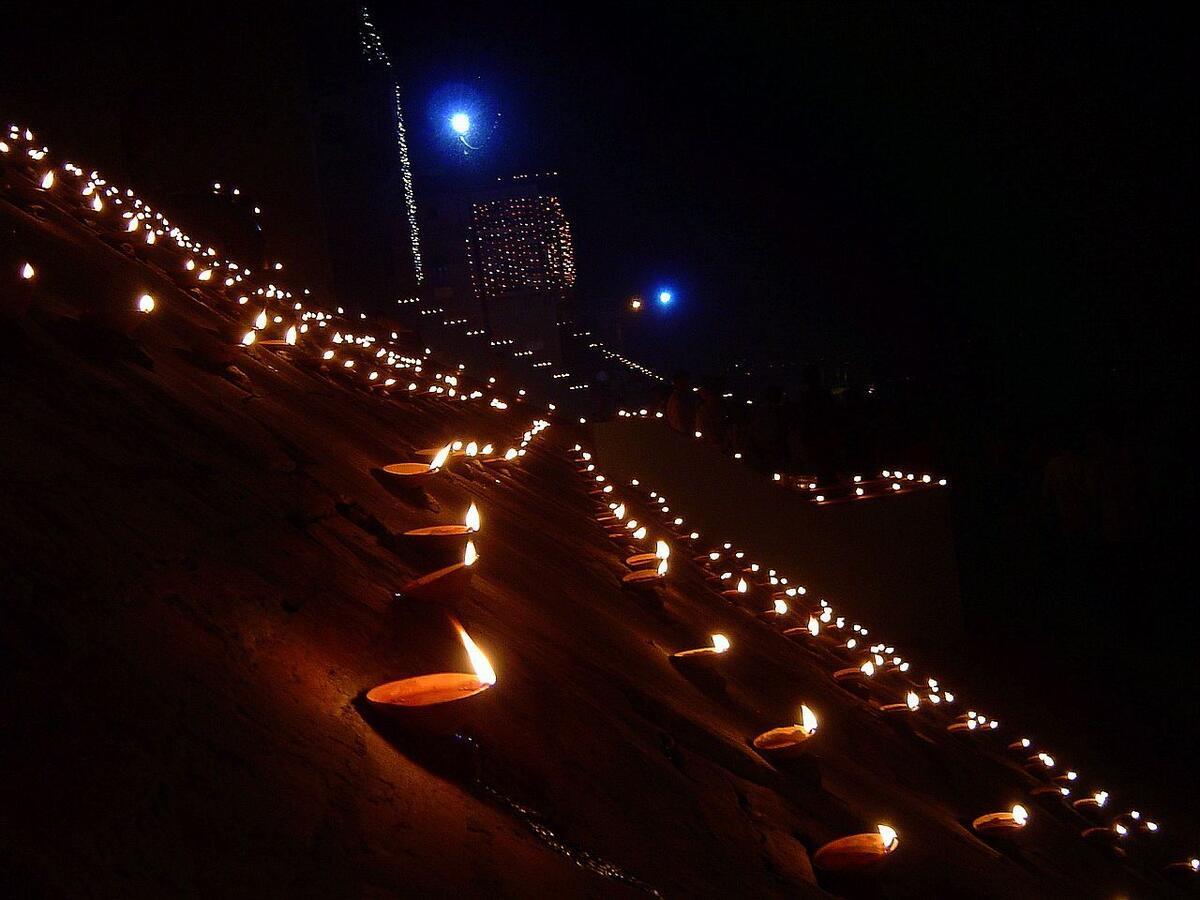
November to February is Kashi at its kindest and most crowded — Dev Deepawali's lakhs of lamps, fog-wrapped dawn boat rides, the dawn-only dessert called malaiyo, what to pack, and why winter yatras must be booked months ahead.
Tulsi Manas Mandir: The Temple Built Where the Ramcharitmanas Was Born
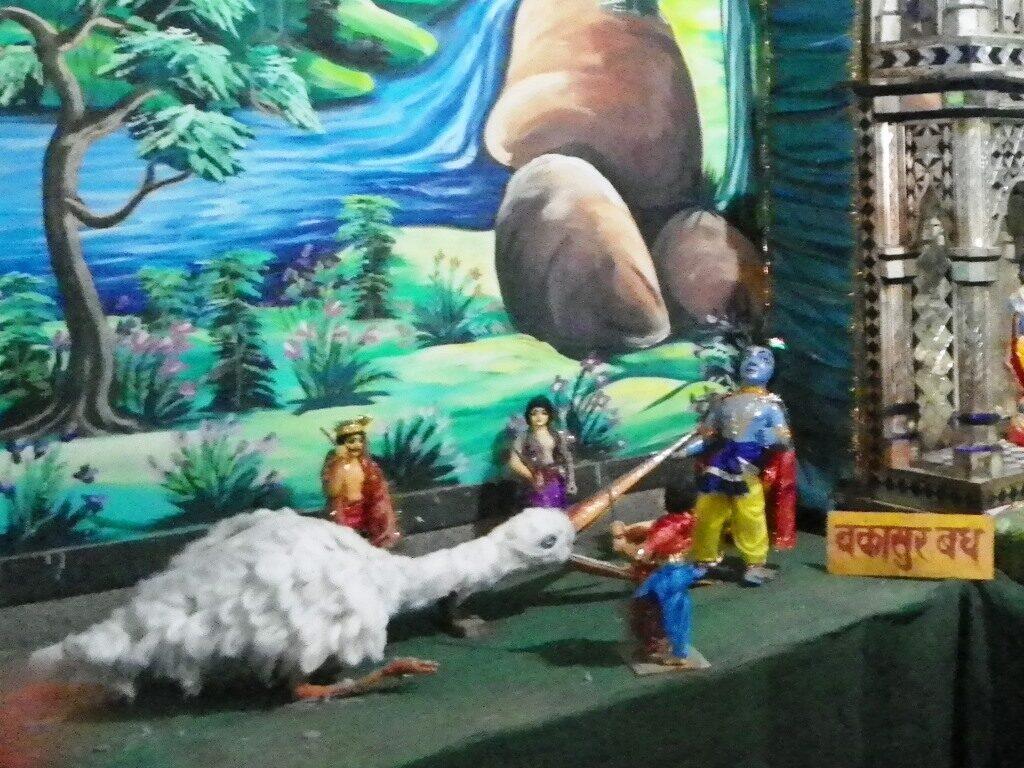
On the ground where Goswami Tulsidas composed the Ramcharitmanas stands a white marble temple whose walls carry his verses end to end. The story of the people's Ramayana, the moving tableaux upstairs, the Durga Mandir pairing, and a perfect evening plan.
Durga Mandir and Durga Kund: The Red Temple Where the Devi Chose to Stay
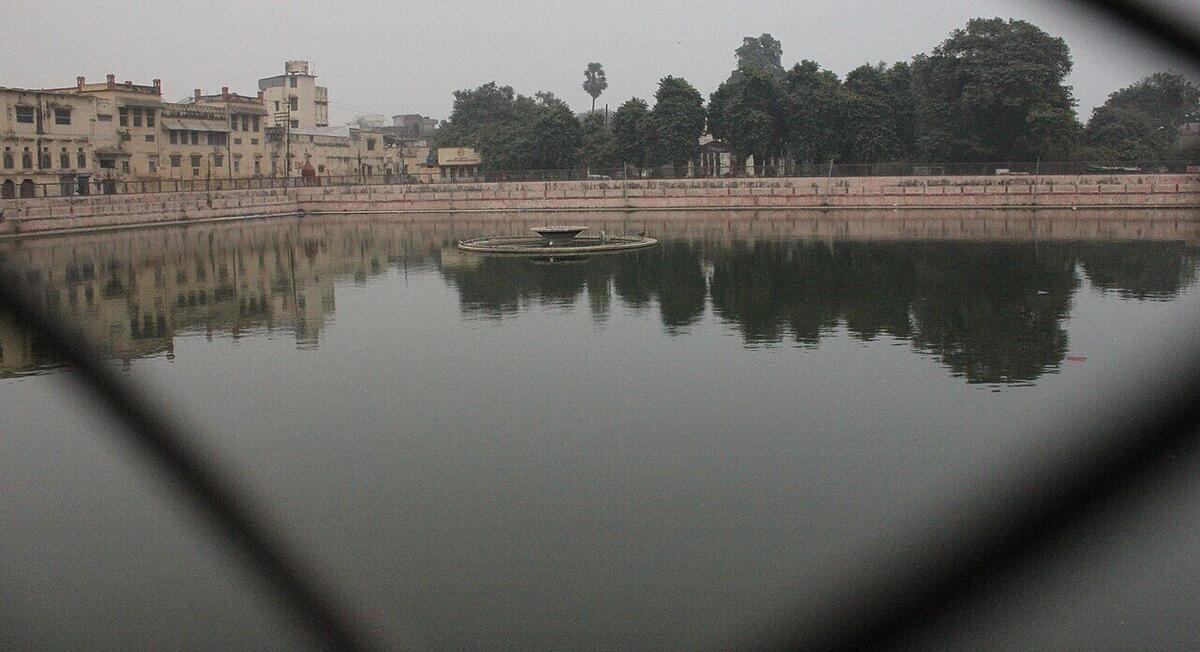
The 18th-century red temple of Durga Kund — built by Rani Bhabani of Natore around a murti tradition holds no sculptor ever made, beside a sacred tank older than memory. History, legends, Navratri in Kashi, and a pilgrim's visit plan.