Akshay Vat is among the most ancient living sacred trees of India. The banyan stands within the Patalpuri Mandir — the underground temple complex inside Allahabad Fort, near the Triveni Sangam. Hindu tradition holds Akshay Vat to be akshaya (imperishable, unending) — one of a small number of trees that survives the great cosmic dissolution and persists through the cycle of yugas. The Padma Purana, the Skanda Purana, and the Matsya Purana all mention the eternal banyan at Prayag.
The Chinese Buddhist pilgrim Xuanzang, who visited Prayag in 643 CE, recorded his observations of Akshay Vat in his Da Tang Xiyu Ji travelogue — noting the tree, the pilgrims who circumambulated it, and the deep-rooted belief in its eternal nature. The testimony establishes the tree's recorded sanctity at over thirteen hundred years. Many later sources — including the Mughal-period accounts — also describe Akshay Vat as the sacred core of Prayagraj.
The Patalpuri Mandir
Akshay Vat sits within the Patalpuri Mandir — "the underground temple" — a subterranean shrine complex within the Allahabad Fort. The complex was constructed in successive periods; the fort itself was built by Emperor Akbar in 1583, and the Patalpuri Mandir within was incorporated to allow Hindu pilgrim worship of the eternal banyan to continue. The fort houses Indian Army installations today, and Patalpuri Mandir access requires special permits arranged through the temple authority.
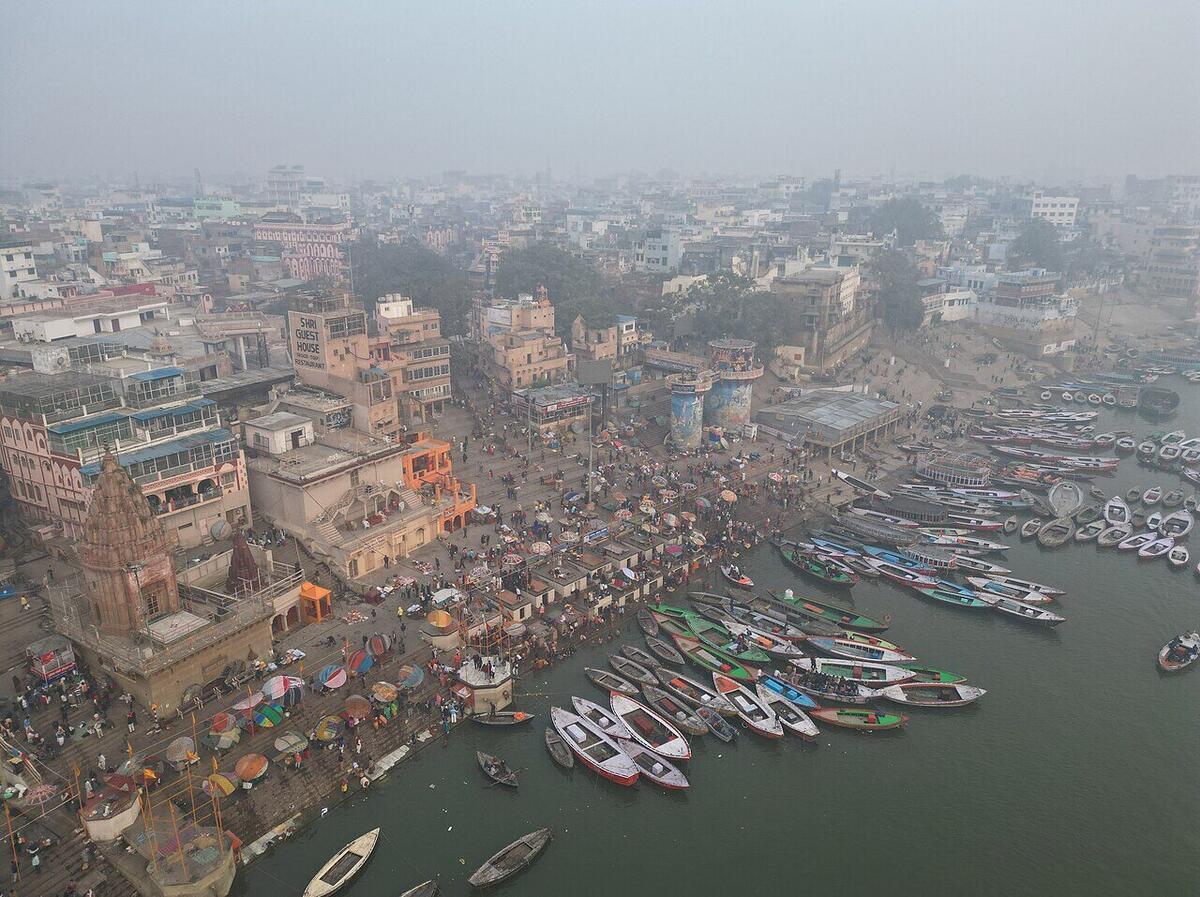
Akshay Vat is held to be the cosmic axis-tree of Prayag — the meeting-point where heaven, earth, and underworld are connected through the banyan's vertical reach. Tradition holds that doing parikrama of the tree grants the merit of long life, and tying a small thread to its trunk fulfils a sankalpa. Many pilgrims also bring small Akshay Vat leaves home as sacred mementos; the tree's leaves (collected only after they have naturally fallen) are revered as akshaya blessings.
History
Akshay Vat's history is established in literature reaching back to the Puranas. Xuanzang's 643 CE record is the most cited Buddhist testimony. The Allahabad Fort built by Akbar in 1583 was constructed around the tree; some accounts suggest Akbar himself ordered that the Patalpuri Mandir be preserved within the fort's walls so that Hindu worship could continue undisturbed. The tree itself has been replanted and reseeded over the centuries through aerial-root regeneration; the present tree is held by tradition to be the same eternal tree, regenerated through its own roots.
Architecture
Patalpuri Mandir is an underground stone complex within the Allahabad Fort. The temple is reached by descending a stone staircase into the underground chamber; the Akshay Vat banyan stands within. The atmosphere is dim and the chamber is small. Other smaller shrines to Saraswati and to local Vaishnava deities surround Akshay Vat. The Fort itself is a massive Mughal-period structure — red sandstone walls, three large gates, and substantial inner courtyards now serving the Indian Army.
Rituals & Practices
Akshay Vat darshan requires special permits arranged in advance — the area is within the Allahabad Fort which houses Indian Army units. The Akshay Vat Trust and the Allahabad Fort administration coordinate entry on specified days; during the Kumbh Mela and Magh Mela the access is more open. Pilgrims circumambulate the tree clockwise three times, tie a small thread, and offer flowers and a small lamp.
Festivals & Celebrations
| Festival | When | Crowd |
|---|---|---|
| Mauni Amavasya | — | very_high |
| Vat Savitri | — | high |
| Kumbh Mela | — | very_high |
| Magh Mela | — | very_high |
Mauni Amavasya: The supreme day of the Magh Mela cycle.
Vat Savitri: The wife-bhakti vrat to the sacred banyan.
Kumbh Mela: The supreme darshan-window.
Magh Mela: The principal Akshay Vat darshan season.
Prepare for Your Visit
Practical guidance to help you plan your pilgrimage
| Pilgrim Guidance | How to reachAkshay Vat is within Allahabad Fort, on the Sangam side of central Prayagraj. The Fort entrance is about 1 km from Sangam-ghat. Permits are required; verify the day's access status with the Akshay Vat Trust before going. PreparationModest dress. Bring photo ID. Phones permitted in the underground chamber but no flash photography. The descent involves a flight of stairs — assist elders. Best time to visitKumbh and Magh Mela seasons (January-February) have the most accessible window. Outside these, weekdays in October-March are recommended. Verify access in advance — the Army administration controls daily entry. |
Location
Prayagraj, UP
Pilgrim photos
No pilgrim photos yet.
Community corrections
No corrections yet.
Edit history
No revisions yet.
Plan Your Visit to Akshay Vat
Get a custom itinerary and pricing for your trip.
Recommended
Packages for this destination

Pilgrim Notes
On-ground observations from fellow pilgrims
No pilgrim notes yet. Be the first to share on-ground observations!
Sign in to share a note.
Pilgrim Reviews
Be the first to share your experience at Akshay Vat.
Sign in to write a review.
Nearby sacred places
Discover other sacred places near Akshay Vat
Explore temples, tirthas, and pilgrimage sites in UP
Explore nearbyPart of these circuits
Walk the traditional pilgrimage routes this destination belongs to.