A circuit Package
Saket-Kashi-Prayag Yatra from Delhi — 4 Days
From ₹11,999 pp twin-share | 4-day Compact Combo | Ex-Delhi
Traditional order
Priority bookings
Gentle pacing
Briefing included
A compact four-day Saket-Kashi-Prayag combo from Delhi — Ayodhya, Prayagraj, and Varanasi in three nights, train-inclusive, budget 3-star and dharamshala stays, Hindi-first ground ops.
Day-by-day
Itinerary
4 days · click to expand
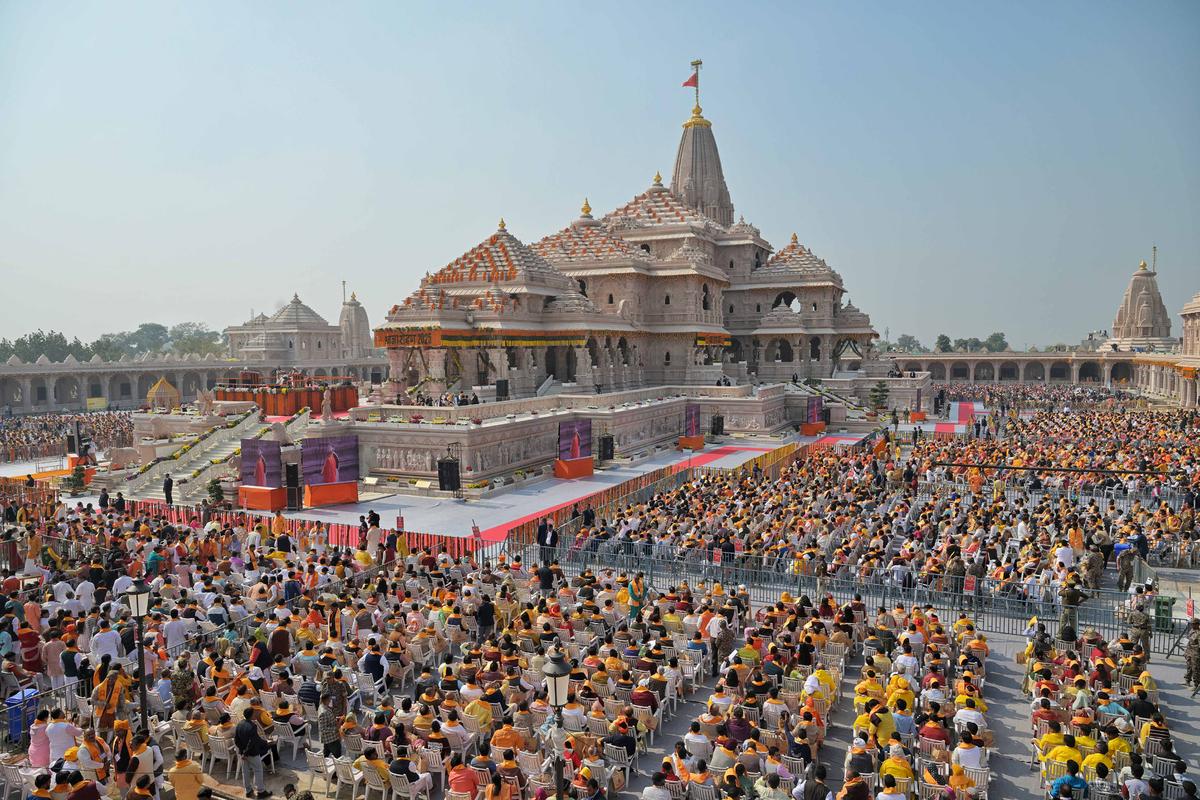
The yatra begins at New Delhi or Anand Vihar station with the early-morning or overnight train to Lucknow — sleeper or 3AC as you choose. Our coordinator meets you at Lucknow Charbagh by late morning, and the reserved cab takes you the 135 km to Ayodhya, arriving by mid-afternoon. Check in at the dharamshala or budget hotel near Naya Ghat. After a short rest we walk to the Ram Janmabhoomi for the evening darshan — entry is free and unslotted — the new mandir, the garbhagriha, the prasad. From there to Naya Ghat for the Saryu Aarti at sunset — Ayodhya's daily rite at the river that carries Saket's prayer. Dinner at the dharamshala and rest.
Note Train: Delhi to Lucknow is well-served by Tejas, Shatabdi, and Lucknow Mail — we book what suits your dates. Ram Janmabhoomi darshan is free and unslotted — no pass to book; the temple stays open 6:30 AM to 9:30 PM and the security check takes 30–45 minutes. Mobile, leather, and tobacco not allowed inside — lockers available at the entrance. Saryu Aarti starts 15 minutes before sunset; arrive early for a good spot.
Early breakfast at the dharamshala, then the morning train from Ayodhya Dham to Prayagraj — 4 to 5 hours, sleeper or 3AC. We reach Prayagraj by early afternoon, check in at a 3-star near Civil Lines, and head straight for the Sangam. A small wooden boat from Saraswati Ghat takes you to the confluence — the meeting of the Ganga, Yamuna, and the unseen Saraswati — for the snan and tarpan. From the Sangam to Patalpuri at the Allahabad Fort for the darshan of the Akshayavat, the undying banyan held to have sheltered Rama on his vanvas. Then to Bade Hanuman Mandir for the darshan of the reclining 20-foot Hanuman — the only such murti in India. Back at the hotel for dinner.
Note Sangam-snan: boat charges are paid directly to the boatman at rates fixed by the Mela/district administration (₹200–400 per person depending on group size). Carry a change of clothes and a small steel kalash for Gangajal. Akshayavat is inside the Allahabad Fort — entry through the Patalpuri gate, free, ID required. Bade Hanuman closes for darshan 2:00–5:00 PM; we time the visit for the evening slot.
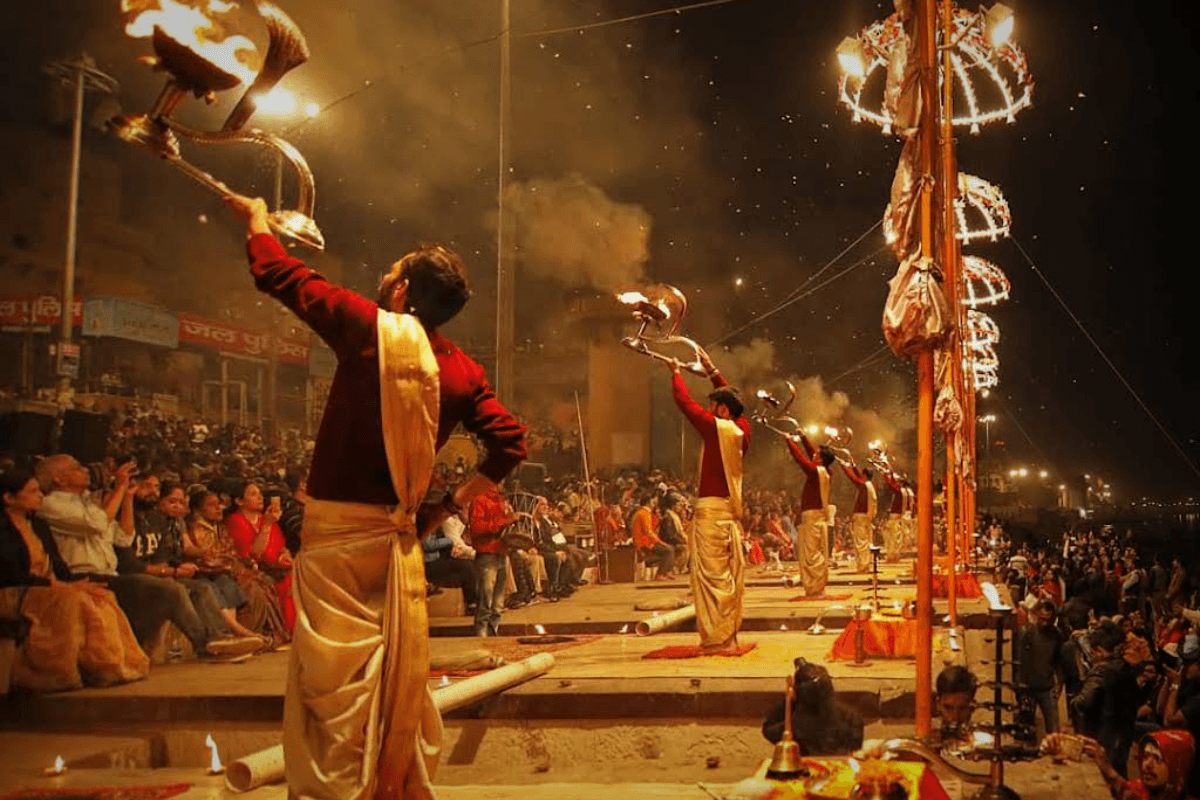
Breakfast at the hotel, then the morning train from Prayagraj to Varanasi — 3 hours, sleeper or 3AC, the Vande Bharat where the dates allow. We reach Varanasi by midday and check in at a 3-star within walking distance of the ghats — Assi or Godowlia depending on availability. Afternoon for rest, a slow tea on the rooftop, the body adjusting to the city. As the sun lowers we walk through the gullies to Dashashwamedh Ghat for the evening Ganga Aarti — seven pujaris, seven lamps, the conch-shell, the bell, the chanted Ganga-stuti — about 5:45 PM from October to March, about 6:45–7:00 PM from April to September. Stay for the full forty-five minutes; the closing arti-prasad is small but it is the prasad of Kashi. Dinner at the hotel.
Note The Ganga Aarti is free and open — no booking, no fee. Best view from a boat on the river (₹150–200 per person, our coordinator arranges) or from the ghat steps (arrive 45–60 minutes early). Photography permitted. Carry a light shawl — the river breeze cools after sunset. The aarti runs every evening regardless of weather; cancelled only during flood-week.
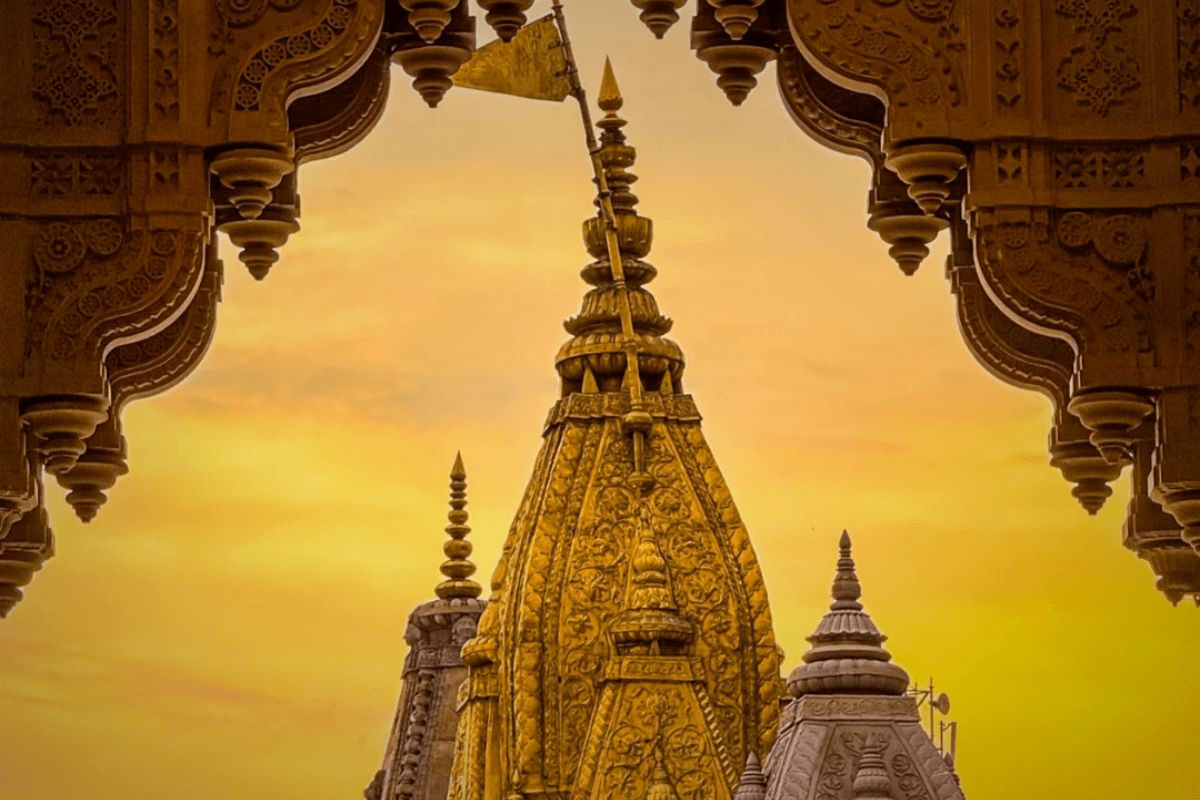
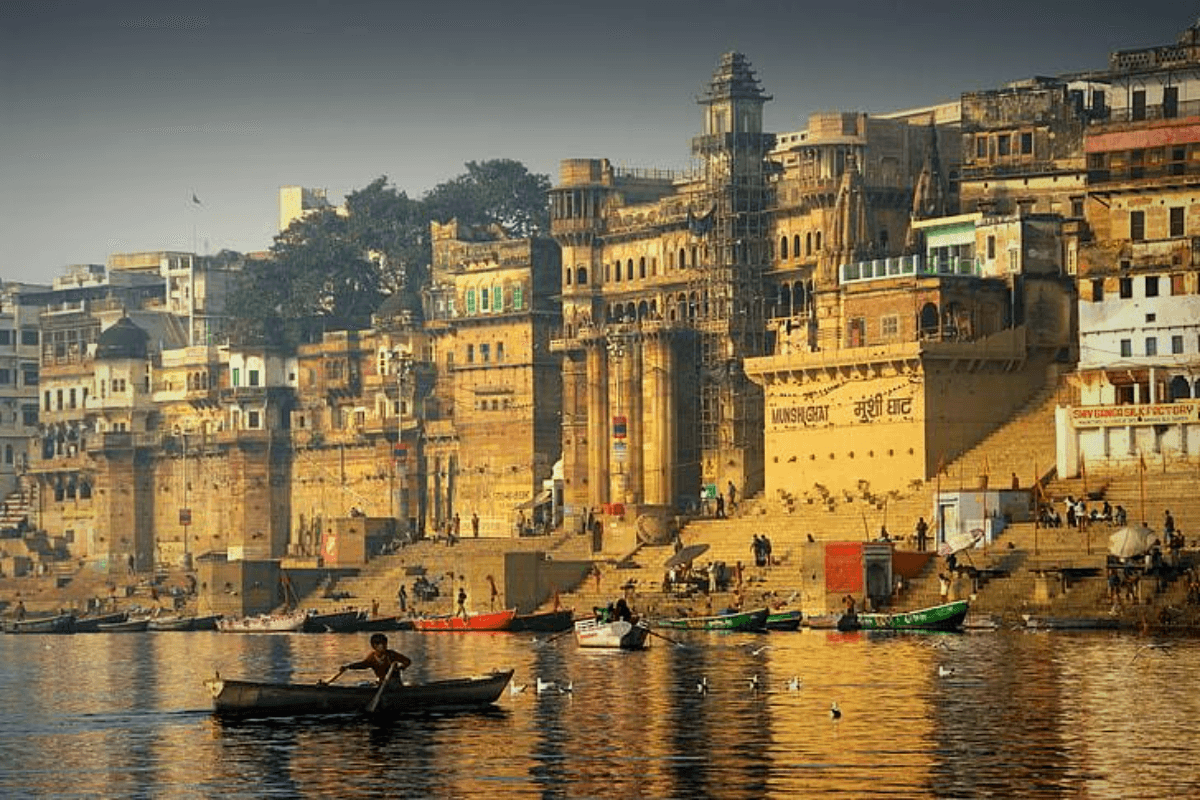
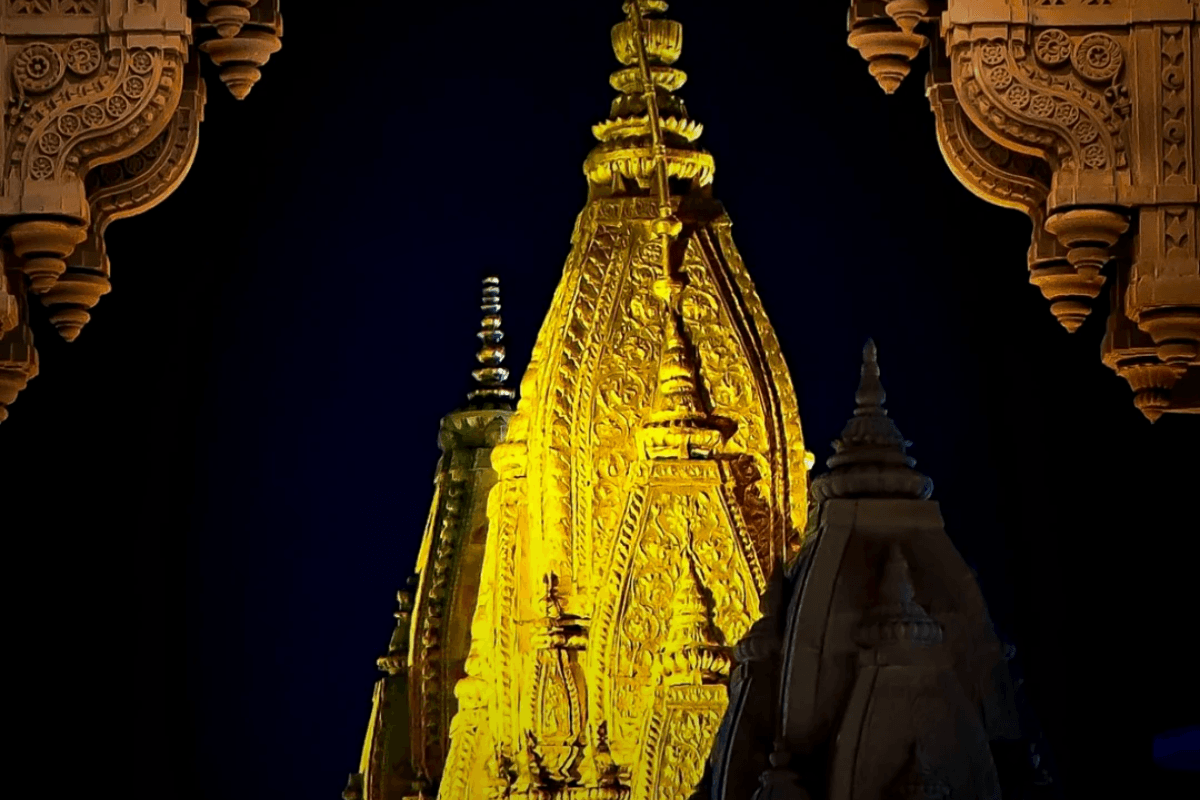
Pre-dawn we walk down to Dashashwamedh for the boat ride — a slow row past Manikarnika, Harishchandra, Tulsi, and back up to Assi as the sun rises over the river. This is the hour Kashi is best seen from the water. Back to the hotel for breakfast, then the walk to the Kashi Vishwanath corridor — security check at gate 4, the corridor walk, the darshan of the Jyotirlinga, the prasad. Allow 90 minutes end-to-end. After Vishwanath we go to Sankat Mochan Mandir — Tulsidas's temple to Hanuman, founded where he is held to have had darshan of Rama; the kirtans run all afternoon. We check out from the hotel, the cab takes you to Varanasi Junction or Banaras station, and the evening train carries you back to Delhi overnight. The four days are done.
Note Dawn boat: 5:30 AM start in winter, 5:00 AM in summer — we wake you by 4:45 AM. Boat charges ₹150–300 per person depending on group size, paid to the boatman. Kashi Vishwanath: phone, leather, tobacco not allowed; lockers at gate. Sugam Darshan is ₹250–300 and is booked online at shrikashivishwanath.org, not at the gate (festival pricing may vary). Sankat Mochan: phone not allowed; the mandir is open about 5 AM–12 noon and 3–10 PM. We confirm the return train time at booking — 12559 Shiv Ganga Express (Banaras 10:15 PM → New Delhi 8:30 AM) or the Varanasi-Delhi Vande Bharat 22435/22436 depending on date.
The story
About this package
The three-tirth combo in four working days. Ayodhya for Ram Janmabhoomi, Prayagraj for the Triveni Sangam, Varanasi for the Ganga Aarti and Kashi Vishwanath — done ex-Delhi, train-inclusive, on a budget that keeps the train fare inside the price without cutting the actual darshans short.
This is the package for the family that has four days and not eleven, that wants Saket-Kashi-Prayag in one go rather than three separate trips, and that would rather travel by train than fly. The whole route runs on the Lucknow Mail and the Varanasi Vande Bharat lines that the Indian Railways works hard. We book the tickets, you ride.
What this package is
- Budget tier. 3-star hotels in Prayagraj and Varanasi, a well-rated dharamshala or budget hotel in Ayodhya. Twin-share. Clean rooms, attached bathrooms, hot water. No frills.
- Ex-Delhi, train-inclusive. Sleeper or 3AC return train tickets between Delhi and Lucknow (onward) and Varanasi to Delhi (return). Local transport between cities by reserved train or shared cab as the schedule allows.
- From ₹11,999 per person on twin-share. Quoted on enquiry — final price depends on train class (sleeper vs 3AC) and dates. We keep it there because the route runs lean and we pay no aggregator commission.
- Hindi-first ops. Local coordinator at each city, station pickups by Hindi-speaking driver, dharamshala staff who speak the pilgrim's language. The yatra is run in Hindi end to end.
How the four days unfold
Day 1 you board the overnight or early-morning train from Delhi, reach Lucknow by late morning, and drive to Ayodhya for the evening. Ram Janmabhoomi darshan in the evening — free and unslotted — and the Saryu Aarti at the ghats. Night at a dharamshala or budget hotel near Naya Ghat. Day 2 morning train to Prayagraj — Triveni Sangam-snan with a boatman to the confluence, Akshayavat at the Patalpuri shrine, Bade Hanuman darshan. Night at a 3-star near Civil Lines.
Day 3 morning train to Varanasi — check in, rest, and the evening Ganga Aarti at Dashashwamedh Ghat. Night at a 3-star within walking distance of the ghats. Day 4 dawn boat ride along the ghats, Kashi Vishwanath corridor darshan, Sankat Mochan in the afternoon, and the evening train back to Delhi. The yatra ends as Saket, Kashi, and Prayag should — with the body tired, the prayer carried.
Who this is for
Book this if:
- You have four working days and want all three of Ayodhya, Prayagraj, and Varanasi in one trip
- You are travelling from Delhi and prefer train to flight
- Your budget is in the ₹8,000–12,000 per person range and you want value, not luxury
- You can manage a compressed pace — three cities in four days means moving most mornings
- You want clean, simple stays close to the temples and ghats, not a beachfront resort experience
When to go
October to March is the clean window — cool mornings at Sangam-snan, comfortable Ganga Aarti evenings. Avoid May and June (40°C+ at Prayagraj and Varanasi) and the July-September monsoon (Saryu and Ganga ghats partly under water; Sangam-snan suspended in flood weeks). Kartik Purnima, Magh Mela, Dev Deepawali, and Ram Navami are the high-darshan windows — book six weeks ahead.
What you get
Highlights
Logistics
What's included
Inclusions
- Round-trip train tickets ex-Delhi (Delhi → Lucknow on Day 1, Varanasi → Delhi on Day 4; sleeper class default, 3AC on request at supplement)
- Inter-city train tickets (Ayodhya → Prayagraj on Day 2, Prayagraj → Varanasi on Day 3)
- All hotel/dharamshala stays on twin-share (Ayodhya 1N, Prayagraj 1N, Varanasi 1N)
- Daily breakfast at the hotel
- Station pickups and drops at Lucknow, Ayodhya, Prayagraj, and Varanasi by Hindi-speaking driver
- Local transport between hotel and darshan points within each city
- Boatman charges at Triveni Sangam (Prayagraj) and dawn boat ride at the Varanasi ghats
- Kashi Vishwanath corridor entry assistance
- Hindi-speaking ground coordinator at each city, on call 24×7
Not included
- Lunch and dinner on all days (we recommend local prasad-bhoj at Ayodhya, kachori-sabzi at Prayagraj, and Banarasi thali at Varanasi; ₹150–300 per meal)
- Any darshan-acceleration tickets (Sugam Darshan at Kashi Vishwanath ₹250–300 if you choose, booked online at shrikashivishwanath.org)
- Personal expenses, prasad, donations, telephone calls, laundry
- Train class upgrade from sleeper to 3AC (approx ₹800 supplement per person round-trip)
- Travel insurance — recommended
- Any travel before Day 1 train boarding at Delhi or after Day 4 train arrival at Delhi
- Anything not specifically listed in the inclusions
Before you book
Questions pilgrims ask
How do we travel from Delhi to Ayodhya, and how long does the journey take?
You take a train from Delhi to Lucknow, then a road transfer of about 135 km to Ayodhya by private cab. Between the overnight or early train and the drive, plan on the better part of a day to reach Ayodhya from Delhi. Darshan and the evening Saryu Aarti follow on arrival, so you land already in the flow of the yatra.
Is 3 nights and 4 days really enough to cover Ayodhya, Prayagraj and Varanasi?
It is a compact itinerary, and honestly, each city gets less than a full day — an evening in Ayodhya, a single day in Prayagraj, and an evening plus a dawn in Varanasi before you head back. You will complete the core darshans and the Sangam boat ride, but there is no slack for extra temples or a slow morning at any one ghat. If you want a fuller day in each city, our 4-night/5-day version of this route from Delhi builds in that extra time.
What class of train do we travel in, and can we upgrade?
The package includes sleeper class by default on the Delhi-Lucknow and Varanasi-Delhi legs. You can upgrade to 3AC for a supplement of about ₹800 per person, arranged at the time of booking subject to seat availability. The shorter Ayodhya-Prayagraj-Varanasi hops are also by train.
What does the ₹11,999 price actually include?
It covers sleeper-class trains between Delhi and Lucknow and Varanasi and Delhi, the intercity trains linking Ayodhya, Prayagraj and Varanasi, three nights of stay (a budget hotel or dharamshala in Ayodhya, 3-star hotels in Prayagraj and Varanasi), daily breakfast, station transfers with a Hindi-speaking driver, and the boatman charges at Sangam and for the Varanasi dawn ride. Lunch, dinner, personal expenses, donations and any train-class upgrade are extra.
What are the Kashi Vishwanath darshan timings, and can we carry phones inside?
The temple is open from 2:30 AM to 11:00 PM through the day. Mobile phones and cameras are generally not allowed inside the temple complex, and you should plan to leave yours at a locker near the entrance — we confirm the current rule and locker arrangement with you before you go, since this can tighten around festivals.
What time is the Ganga Aarti at Dashashwamedh Ghat, and does it move with the season?
The Aarti starts around 6 PM in winter and closer to 7 PM in summer, since it always begins just after sunset, and runs for about 45 minutes. Your evening on Day 3 is built around this timing, but we confirm the exact slot closer to your travel date.
How does the Sangam boat ride and snan at Prayagraj work?
You reach the actual confluence point only by boat, so a short row out from the Sangam ghat is part of the visit, with the boatman charge already covered in your package. Many pilgrims take a ritual dip near the confluence; if you plan to bathe, carry a change of clothes and be ready for a working pilgrim ghat rather than a private beach.
Is a Ram Janmabhoomi aarti pass guaranteed, or can the queue be long?
We help you plan around calmer windows, but we cannot guarantee a specific aarti slot or a short queue — that depends on the temple trust and the day's crowd, not on us. Weekday afternoons are usually easier than weekends or festival days, and we brief you on the queue pattern before you leave.
Will this trip clash with Magh Mela or Kumbh crowds at Prayagraj?
The last Maha Kumbh at Prayagraj ran January–February 2025, and Maha Kumbh returns only about every 12 years there, with Ardh Kumbh around the 6-year mark — so this route is well outside Kumbh season for years to come. Prayagraj's smaller annual Magh Mela still returns every January–February; we don't have confirmed 2027 dates yet, so tell us your travel dates and we'll flag any overlap, since it changes crowds and boat access at Sangam.
Send an Enquiry
Leave your name and number — our team will call you.
Starting price
₹11,999
per person
Replies in minutes on WhatsApp · 7 AM–10 PM
Trusted by Pilgrims
“We came for my mother's 75th birthday darshan. Satmarg arranged wheelchair access, a pandit who spoke her dialect, and a private boat for her Ganga aarti.”
“Third time using Satmarg. The cab service is top-notch — AC Innova, polite driver, no surprise charges.”
Udyam-registered MSME · UDYAM-UP-75-0177698
Varanasi-based operator · local guides & pandits
Hindi & English support · 7 AM–10 PM