Dadhichi Kund lies in the heart of the Naimisharanya tirtha-kshetra in Sitapur district of Uttar Pradesh — the sacred forest where Suta Ji narrated the eighteen Puranas to the eighty-eight thousand sages led by Maharishi Shaunaka. Among the many holy spots that ring this ancient van, Dadhichi Kund holds a place of singular reverence: it is the site where, in Hindu memory, Maharishi Dadhichi sat in deep tapasya, gave up his body, and left his bones for the welfare of the three worlds.
The kund itself is a stepped sacred pond, its waters held to be charged with the punya of Dadhichi's asthi-dan. Pilgrims approaching the kund speak in soft tones — there is a particular bhav at this spot that draws devotees inward, toward the contemplation of tyaga (renunciation), seva (selfless service), and the ideal of giving one's own body for the good of others. A small shrine to Maharishi Dadhichi stands on the bank, where the sage is worshipped with flowers, deepa, and the offering of water from the kund itself.
The katha of Dadhichi and the Vajra
The story is told in the Bhagavata Purana, the Mahabharata, and the Devi Bhagavata. Once the asura Vritrasura — a being of immense tapasya and immense darkness — grew so powerful that he conquered the heavens and drove Indra and the devatas from Svarga. The devatas, defeated and afraid, approached Bhagavan Vishnu for refuge. Vishnu spoke: no ordinary weapon can slay Vritrasura. Only a weapon forged from the bones of a rishi whose tapasya has made his body more adamantine than thunderbolt itself can break the asura's power. And of all the rishis on earth, only one possesses such bones — Maharishi Dadhichi, son of Atharvan, whose lifelong austerity has rendered his very asthi as hard as vajra.
Indra and the devatas came to Naimisharanya, where Dadhichi sat in tapasya on the bank of this very kund. They bowed before the sage and made their request: Maharishi, the three worlds are in peril. We have come for your bones. Dadhichi did not hesitate. He smiled with the smile of one who has long understood that the body is not the self. He sat in padmasana, withdrew his prana through yoga, and gave up his body — leaving his bones intact and luminous for the devatas to receive. From these bones the divine architect Tvashta forged the Vajra, the thunderbolt weapon. With it Indra slew Vritrasura, and Svarga was restored.
The kund here is held to be the very spot of this asthi-dan. The waters are said to have been sanctified by the sage's last breath. To stand at Dadhichi Kund is to stand at the seat of one of Hinduism's most beloved teachings: that the highest dharma is the giving of oneself for the welfare of all.
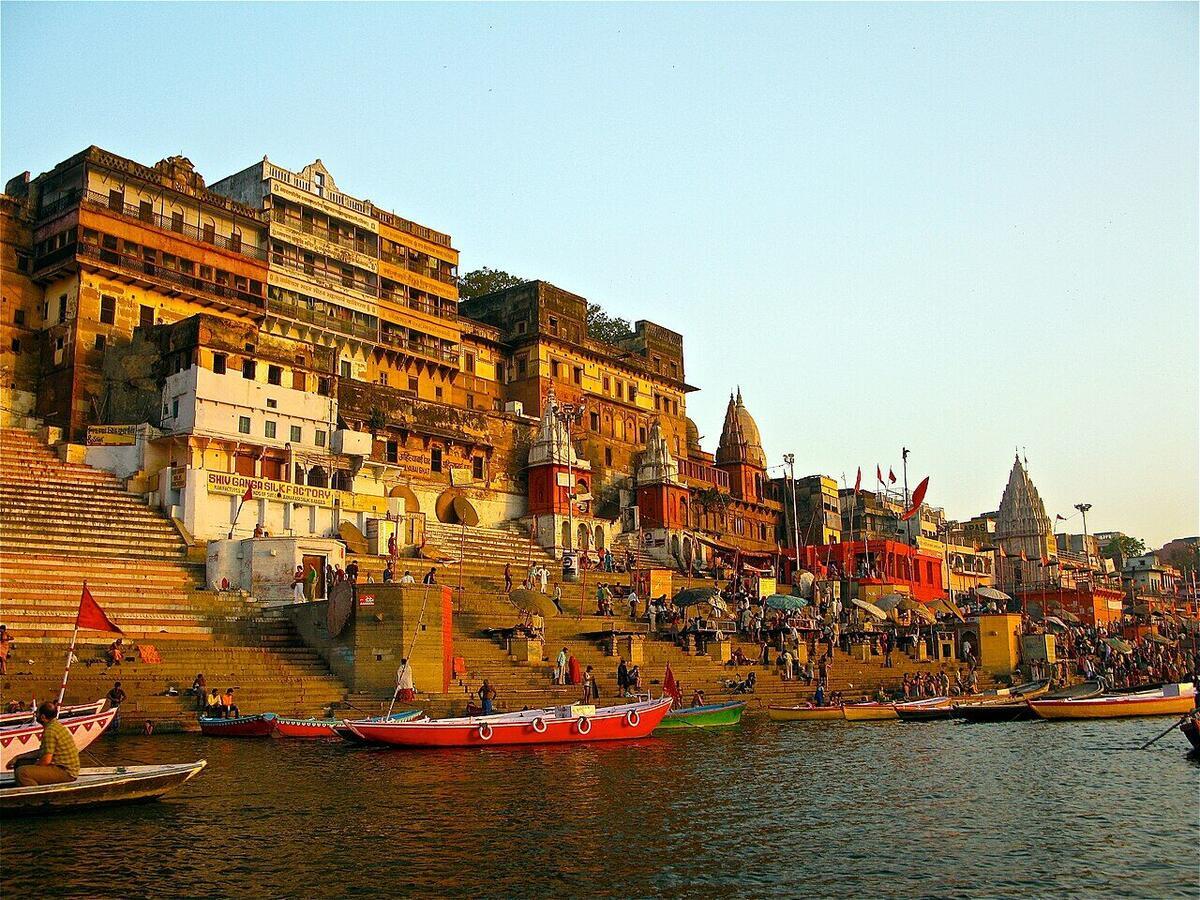
Dadhichi Kund is revered as the seat of parama tyaga — supreme renunciation — in Sanatan Dharma. The sage Dadhichi's asthi-dan is held in Hindu memory as the foremost example of dana, the giving without holding back, the offering of even the body itself for the welfare of others. Pilgrims come to this kund seeking the bhav of selfless service, the strength to give without counting cost, and the inner courage that comes from contemplating Dadhichi's example.
The kund waters are held to carry the punya of the sage's tapasya. Devotees take achaman from the kund, sprinkle the water on the head, and many take a small quantity home for use in family puja. A circumambulation of the kund and a brief darshan at the Dadhichi shrine are part of the traditional Naimisharanya parikrama — no parikrama of the sacred forest is held complete without paying respects at the place of asthi-dan.
The tirtha is also revered as a place of healing and strength. Many pilgrims with bone-ailments, joint pain, or those undertaking organ-donation pledges come here to seek Dadhichi's blessings; the modern Indian organ-donation movement has often invoked Maharishi Dadhichi as its spiritual patron — the very first rishi in our tradition who gave his body for the welfare of others.
History
The Dadhichi Kund tradition at Naimisharanya is recorded across the deepest scriptures of Sanatan Dharma. The Bhagavata Purana (Sixth Canto) narrates the Vritrasura-Vajra katha in detail. The Mahabharata (Shanti Parva, Vana Parva) recounts the same story with additional teachings on tyaga. The Devi Bhagavata and the Skanda Purana both name Dadhichi Kund among the principal tirthas of Naimisharanya. The kund has been continuously revered through every era of Hindu pilgrimage — references appear in medieval Naimisharanya-mahatmya texts and in the parikrama-paddhatis used by traditional purohits to guide pilgrims through the sacred forest.
The present stepped kund and adjoining Dadhichi shrine reflect successive layers of restoration. Local tradition credits Awadhi-period landholders and later devotee communities with maintaining the kund through the centuries. The shrine on the bank is modest stone-and-mortar construction in regional Awadhi style; the kund itself is the older sacred element, its waters and stepped ghats forming the heart of the tirtha. The Naimisharanya area as a whole has seen renewed development in recent decades under government and trust patronage, and Dadhichi Kund is now a regularly maintained stop on the Naimisharanya parikrama route.
Architecture
Dadhichi Kund is a stepped sacred pond in classic Awadhi tirtha-kund style — rectangular in plan, with descending stone ghats on multiple sides allowing pilgrims to reach the water for achaman and offering. The kund is surrounded by a low parikrama path. On the western bank stands the small shrine of Maharishi Dadhichi, a modest stone-and-mortar structure with a simple shikhara, housing a murti of the sage in tapasya-asana. The compound is plain and quiet — there is no ornamental flourish here. The architectural bhav is one of austerity, fitting the spirit of the rishi whose name the kund bears. Old trees line the kund banks; the Gomati flows nearby. Pilgrims often describe the place as shanti-pradayak — peace-giving — its modest scale and inward atmosphere drawing the mind toward contemplation of Dadhichi's tyaga.
Rituals & Practices
The shrine and kund are open through daylight hours; there is no fixed ticketed schedule, and worship here is informal and pilgrim-led. Devotees arrive at the kund, take achaman from the waters, perform a brief circumambulation, and offer flowers, deepa, and a small quantity of water or milk at the Dadhichi shrine. Some pilgrims chant verses from the Bhagavata's sixth canto recalling Dadhichi's asthi-dan; others recite the Dadhichi Stotra or simple naam-japa of the sage. Many devotees take a small quantity of kund water home in a clean vessel for use in family puja.
The traditional Naimisharanya parikrama sequence brings pilgrims to Dadhichi Kund as one of the principal stops: arrive at Naimisharanya, do darshan of Chakra Tirtha (the cosmic-wheel central tirtha), bathe in the Gomati, do darshan of Lalita Devi at her heart-seat, visit Dadhichi Kund for darshan and achaman, proceed to Hanuman Garhi, and complete the parikrama with a final circumambulation. Local purohits at Naimisharanya guide pilgrims through this full sequence; the visit to Dadhichi Kund is held to be especially auspicious for those undertaking the parikrama with a sankalpa of seva or charitable purpose.
Festivals & Celebrations
| Festival | When | Crowd |
|---|---|---|
| Kartik Purnima | — | very_high |
| Maha Shivaratri | — | high |
| Phalguna Amavasya | — | medium |
| Guru Purnima | — | medium |
Kartik Purnima: The annual peak of the Naimisharanya pilgrimage.
Maha Shivaratri: The rishi Dadhichi was a devotee of Bhagavan Shiva; the day carries special bhav at the kund.
Phalguna Amavasya: Asthi-dan memory makes this day especially auspicious for pitra-tarpana at Dadhichi Kund.
Guru Purnima: A day of rishi-vandana across the Naimisharanya tirtha.
Prepare for Your Visit
Practical guidance to help you plan your pilgrimage
| Pilgrim Guidance | How to reachDadhichi Kund is in Naimisharanya, Sitapur district, 95 km northwest of Lucknow (2.5 hours by road) and 42 km from Sitapur town. The nearest railway station is Naimisharanya itself (small station) and Sitapur Junction (well-connected to Lucknow, Lakhimpur, Hardoi). Lucknow airport is the nearest major airport. From the main Naimisharanya tirtha-area, Dadhichi Kund is a short walk or auto-ride from Chakra Tirtha along the established parikrama route; local guides and purohits help pilgrims find the spot. PreparationModest dress; carry a small clean vessel if you wish to take kund water home. Flowers, a small deepa, and incense are the traditional offerings at the Dadhichi shrine — available at small stalls near Chakra Tirtha. Phones and photography are generally permitted in the outer area. Carry drinking water and simple food; small stalls operate near the main parikrama route but the Dadhichi Kund area itself is quiet. Best time to visitOctober to March most pleasant. Kartik Purnima (November) is the supreme tirtha-day of Naimisharanya — Gomati snan, Chakra Tirtha darshan, and full parikrama including Dadhichi Kund. Maha Shivaratri draws additional pilgrims. The Phalguna Amavasya period is also considered especially auspicious for asthi-related tarpana and ancestral rites at the kund. |
Location
Sitapur, UP
Pilgrim photos
No pilgrim photos yet.
Community corrections
No corrections yet.
Edit history
No revisions yet.
Plan Your Visit to Dadhichi Kund, Naimisharanya
Get a custom itinerary and pricing for your trip.
Recommended
Packages for this destination
Pilgrim Notes
On-ground observations from fellow pilgrims
No pilgrim notes yet. Be the first to share on-ground observations!
Sign in to share a note.
Pilgrim Reviews
Be the first to share your experience at Dadhichi Kund, Naimisharanya.
Sign in to write a review.
Nearby sacred places
Discover other sacred places near Dadhichi Kund, Naimisharanya
Explore temples, tirthas, and pilgrimage sites in UP
Explore nearbyPart of these circuits
Walk the traditional pilgrimage routes this destination belongs to.