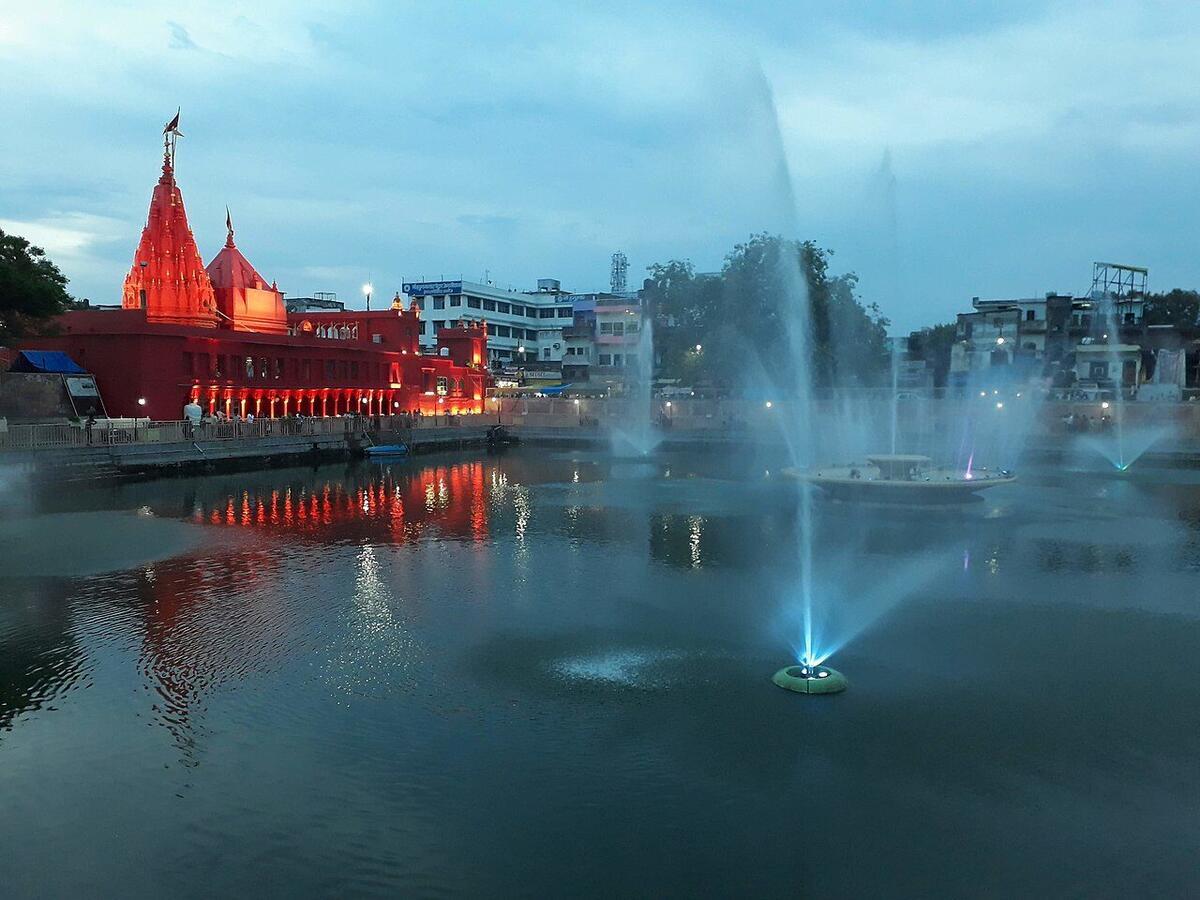
The Durga Temple at Durga Kund is among the most venerated Shakti shrines of Kashi. Built entirely of red Chunar sandstone and set beside a large sacred tank, it is recognised from a distance by the deep sindoor-ochre of its shikhara — the colour of the stone itself, deepened over centuries by the sindoor offered at its doors.
The murti of Durga Devi is worshipped here as swayambhu — self-manifest rather than fashioned by a sculptor — which in the Shakta tradition is held to be the highest category of sacred image. The Devi is adorned daily in sindoor and red garments, and the sanctum carries the warmth of a shrine in continuous worship since the 18th century.
The temple is part of the southern devotional circuit of Kashi, close to Tulsi Manas Temple and Sankat Mochan, and within a short walk of Banaras Hindu University's New Vishwanath Temple. Many pilgrims complete this cluster in a single morning.
The worship of Durga at this shrine belongs to the wider Shakta tradition of Hinduism, which holds the Divine Feminine to be the animating power behind all forms of the divine. The Devi Mahatmya of the Markandeya Purana names Durga as the Devi who carries the weapons of all the devas and who vanquishes the asuras who cannot be defeated by male deities alone. The nine forms (nava-durga) worshipped through the nine nights of Navratri — Shailaputri, Brahmacharini, Chandraghanta, Kushmanda, Skandamata, Katyayani, Kalaratri, Mahagauri, and Siddhidatri — are held to constitute a complete devotional circuit at this temple.
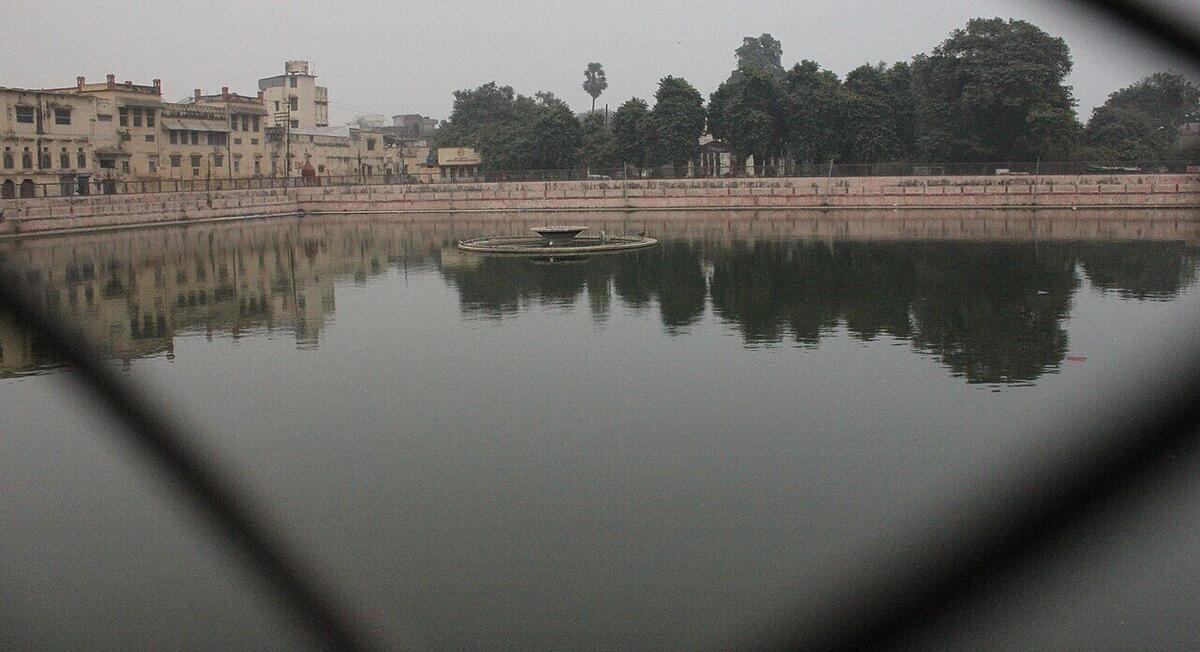
Kashi is primarily a Shaiva kshetra, but within its devotional geography the Shakti shrines hold an inseparable place. Vishalakshi at Meer Ghat, the sixty-four Yoginis, and Durga Kund are the principal Devi-sthanas of the city — approached in tradition as the Shakti whose presence sustains Shiva's own. The Durga Kund pond beside the temple is held to be a sacred bathing place; pilgrims take a ritual dip before entering for darshan, especially on Navratri days.
Katha and local belief
A devotional katha carried in Banaras holds that the Devi's own presence is what protects Durga Kund from disturbance: the temple's many monkeys, often pointed out as a distinctive feature, are regarded by local tradition as her own army, and are fed and respected accordingly. Pilgrims are counselled to treat the monkeys with the care due to beings of the Devi's household — secure your belongings, do not tease them, do not attempt to feed or touch.
A widely held local tradition is that the Durga Kund pond connects underground to the Ganga, and that its waters are therefore to be received as a form of Ganga-jal. Whether this is hydrological fact or devotional conviction, the pond is treated in practice as holy water, and the traditional order of darshan here is kund-snana first, then entry to the sanctum.
History
The present Durga Temple was established in 1760 CE by Rani Bhavani of Natore, the celebrated eighteenth-century Bengali queen whose patronage built temples, ghats, and rest houses across Kashi. Rani Bhavani was herself a devoted worshipper of Durga, and the shrine was raised in the form of a classical Nagara temple, using red Chunar sandstone quarried from the hills near Varanasi.
The Durga Kund — the tank beside the temple — is considerably older than the present structure and has been a place of Devi worship for long before the 18th century. Rani Bhavani's contribution was to enclose the existing sacred site with a structurally coherent temple in the classical style, and to establish the patterns of daily worship that continue to this day.
The rise of Banaras Hindu University in the early twentieth century transformed the neighbourhood around Durga Kund, bringing new residents, new temples, and a broader cultural life to this southern quarter of the city. The Durga Temple, Tulsi Manas Temple, Sankat Mochan Hanuman Temple, and the BHU New Vishwanath Temple together form the southern devotional circuit of modern Kashi.
Architecture
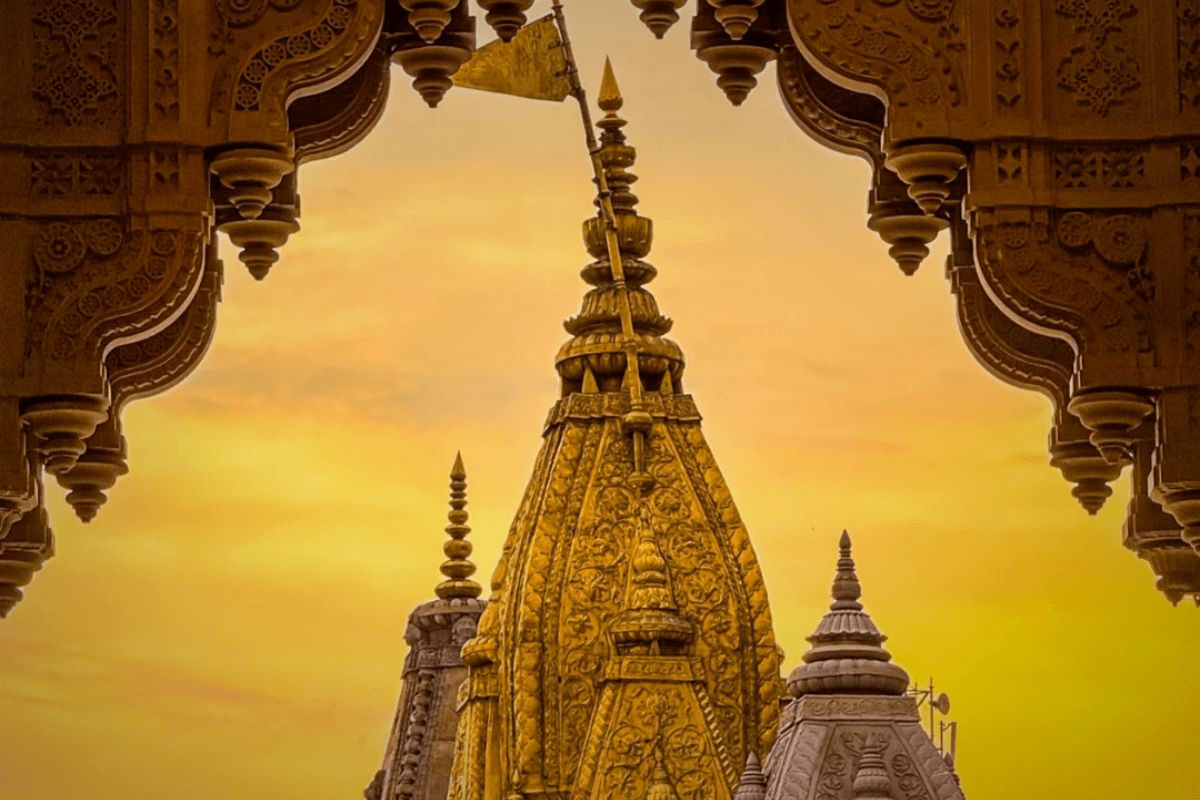
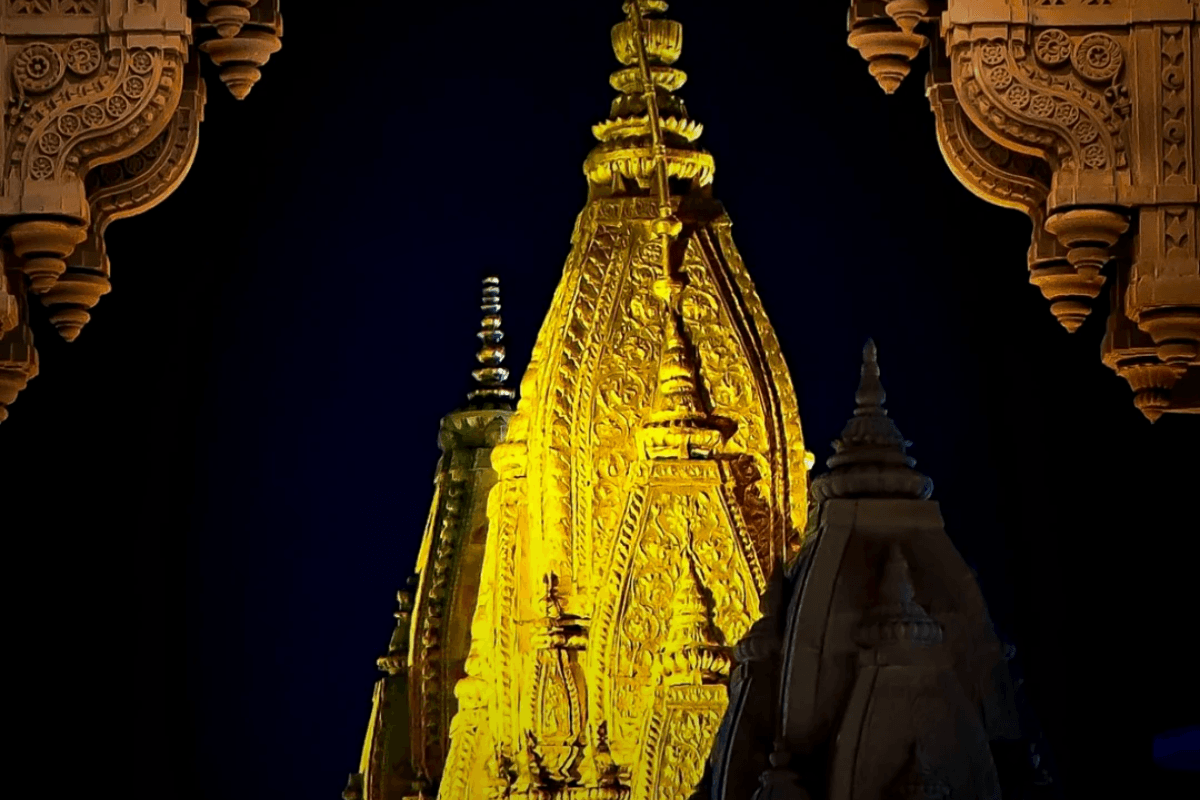
The Durga Temple is a textbook example of the Nagara style of North Indian temple architecture, built entirely in red Chunar sandstone. The shikhara rises in receding tiers, each carrying carved niches of deities and scenes from the Devi Mahatmya. The crowning amalaka and kalasha rest at the apex in the classical fashion.
The mandapa is small and dense with ornament; its pillars and ceiling panels depict scenes from the Devi Saptashati. The garbhagriha is intimate, holding the ancient swayambhu murti in its sindoor-coated form.
The Durga Kund — the large rectangular sacred tank — lies beside the temple, with its own stone ghats. The tank's scale and calm water provide a counterpoint to the vertical energy of the shikhara, and the combination of red temple and reflective pond is a distinctive element of Kashi's sacred landscape.
Rituals & Practices
The worship at Durga Kund follows the classical Shakta rhythm.
- Morning aarti. The Devi is awakened, bathed, dressed in fresh red garments, and adorned with sindoor, kumkum, and flowers — primarily red hibiscus and marigold.
- Arpanas. Red flowers (especially hibiscus and rose), kumkum, a red chunari, laddoos, and coconut. Many devotees bring a complete shringar samagri packet available from shops near the temple.
- Durga Saptashati path. Priests and devotee groups recite the Durga Saptashati, especially during Navratri and on Fridays and Tuesdays.
- Chandi Havan. A fire ritual invoking the Devi's fierce, protective form, performed on important days and by devotee families on request.
- Kund snana. A ritual dip in the Durga Kund pond before darshan; traditional but not mandatory.
Specific timings may vary by season; pilgrims are encouraged to verify on the day of visit.
Festivals & Celebrations
| Festival | When | Crowd |
|---|---|---|
| Sharad Navratri | — | Extremely high â expect 2-3 hour queues on Ashtami and Navami |
| Chaitra Navratri | — | Very high |
| Durga Puja | — | Extremely high |
| Kajali Teej | — | High |
Sharad Navratri: Commemorates Durga's nine-night battle against Mahishasura. The most important festival of the Shakta devotional calendar.
Chaitra Navratri: Marks the beginning of the Hindu new year and the spring renewal of Shakti. Associated with the Devi as the energy that renews creation.
Durga Puja: The foremost festival of Bengali Hindu tradition, held in particular closeness here because of the temple's eighteenth-century Bengali patronage.
Kajali Teej: Celebrates the monsoon season and the bond of marriage. Women seek Durga's blessing for marital harmony and household welfare.
Temple Details
| Timings | note: The temple publishes no official timetable of its own and guide listings vary â confirm locally, especially around Navratri daily: 5:00 AM â 12:00 noon and 4:00 â 9:00 PM (per Incredible India, Govt. of India) |
| Darshan Types | General Darshan (free) No tickets; during Shardiya and Basantik Navratri the temple sees huge gatherings of devotees (per UP Tourism), with long queues. |
| Entry Fee | Free entry · Entry is usually free (per published guides); no ticketed darshan. |
Prepare for Your Visit
Practical guidance to help you plan your pilgrimage
| Rules & Restrictions |
|
| Best Time to Visit | Shardiya (autumn) and Basantik (spring) Navratri are the temple's biggest occasions, with huge gatherings of devotees per UP Tourism — visit outside these festivals for a calmer darshan. |
| How to Reach | landmark: About 250 metres north of Tulsi Manas Mandir (per Wikipedia) location: At Durga Kund in the Bhelupur area of south Varanasi, on the Sankat Mochan road from varanasi junction: A 20â45 minute ride by auto/cab depending on traffic and Old City congestion (per published guides) |
| Pilgrim Guidance | How to reachThe Durga Temple is in the Durgakund area of Varanasi, about 3 km from Godowlia. Auto-rickshaws are readily available. The temple is close to Tulsi Manas Temple (3-minute walk) and Sankat Mochan (5-minute auto); many pilgrims combine all three in a single morning. Suggested southern circuit
Preparation for Pilgrims
Best Time to VisitSharad Navratri (September–October) and Chaitra Navratri (March–April) are the two most important windows of the year. Kajali Teej in August and Durga Puja (overlapping with Sharad Navratri) bring particular Bengali community celebrations, in keeping with the temple's Rani Bhavani origin. For a quieter darshan, early morning on ordinary weekdays is best. October to March is the most comfortable season for pilgrimage. |
| Pilgrim Tips |
|
Location
Varanasi, UP
Pilgrim photos
No pilgrim photos yet.
Community corrections
No corrections yet.
Edit history
No revisions yet.
Plan Your Visit to Durga Temple (Durga Kund)
Get a custom itinerary and pricing for your trip.
Recommended
Packages for this destination
Pilgrim Notes
On-ground observations from fellow pilgrims
No pilgrim notes yet. Be the first to share on-ground observations!
Sign in to share a note.
Pilgrim Reviews
980 reviews
Be the first to share your experience at Durga Temple (Durga Kund).
Sign in to write a review.
Nearby sacred places
Discover other sacred places near Durga Temple (Durga Kund)
Explore temples, tirthas, and pilgrimage sites in UP
Explore nearbyPart of these circuits
Walk the traditional pilgrimage routes this destination belongs to.