Maa Chandika Devi is one of Kashi's significant Shakta shrines, dedicated to the Mother in her Chandika aspect — the fierce, victory-bestowing form of Durga who, in the Devi Mahatmya (also known as the Chandi Path or Durga Saptashati), slays the asura generals Chand and Mund. Tradition understands the Chandika form as the Mother turned to when a difficulty has grown beyond the reach of ordinary worship: a fear that does not lift, an illness too deep, a long-running adversary, a karmic burden carried across years.
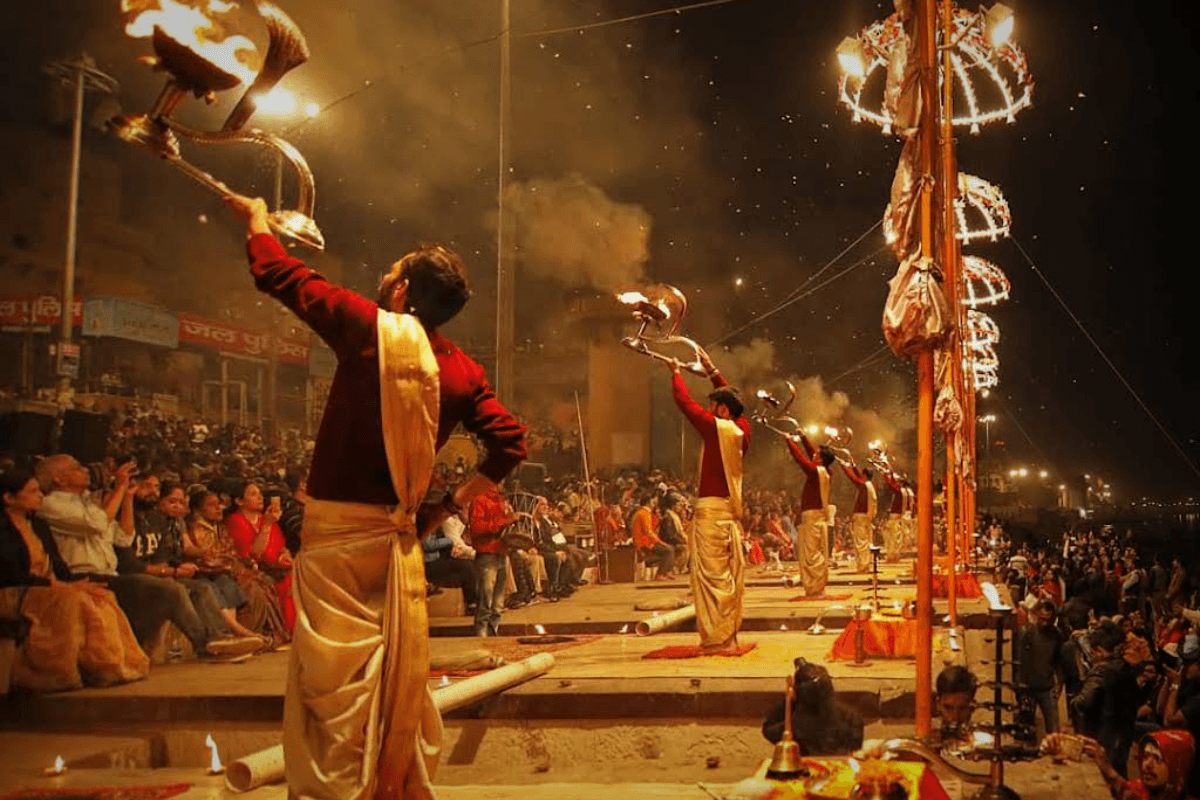
The shrine sits in the older central stretch of Kashi and draws two streams of devotion — the Shakta tradition for whom Chandika is itself a supreme form of the Devi, and the wider Devi-bhakti community that comes here when a specific sankalpa calls for the fierce-form's grace. Daily worship is steady; on Tuesdays, Fridays, and through both Navratris the shrine is fully alive with the Durga Saptashati paath, extended pujas, and the long evening aarti.
Katha and local belief
The Devi Mahatmya tells that when the asura kings Shumbha and Nishumbha sent their generals Chand and Mund to seize the Goddess, she manifested from her own brow a fierce dark form whose laughter shook the mountains. This form fell upon the two generals, slew them, and presented their heads to Kalika. From that moment the Goddess carried the additional name Chamunda — slayer of Chand and Mund — and was worshipped as Chandika, the form whose intervention is held to be decisive.
Devotees in Banaras hold that this Kashi shrine is one of the seats where Chandika continues to dwell, available for petition by any devotee whose situation has gone beyond what ordinary upaya can address. The katha is recited at the shrine especially on Mahalaya — the new moon at the close of Pitru Paksha — which begins the fortnight leading into Sharad Navratri. Tradition holds that the Mother's fierce form is never separate from her tender form: the same hand that holds the bilva-bowl of Annapurna also lifts the chopper of Chandika.
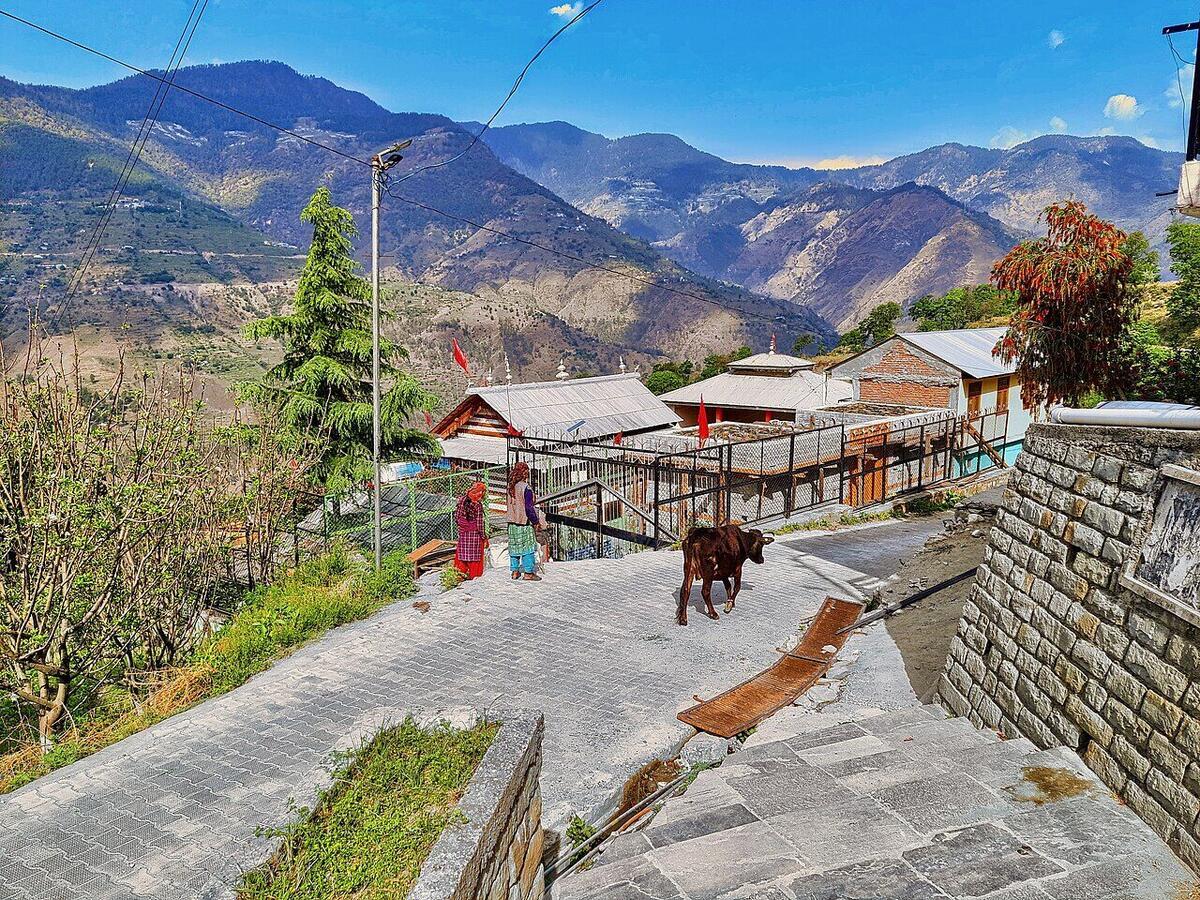
Chandika's significance in Kashi rests on the Devi Mahatmya tradition, which Banaras has preserved as one of its core devotional texts. Tradition holds that the Mother takes whichever form the devotee's situation requires — Annapurna when the kitchen is empty, Vishalakshi when the heart is dim, Saraswati when the mind seeks learning, and Chandika when an obstacle has grown beyond what other forms of upaya can dissolve. Devotees come to this shrine for sankalpas that fall in the Chandika range: recovery from severe illness, freedom from a long-running adversary or legal trouble, lifting of a kashta-yoga, and the protection of vulnerable family members.
The Shakta tradition reads Chandika as one of the principal forms of the supreme Devi (Mahadevi), the form in which the Goddess's complete sovereignty over adharma is most clearly held. Where Durga is the Mother presiding over righteous victory in known struggle, Chandika is the Mother whose grace turns even an unknown or unnamed adversity. The shrine receives both readings — Shakta-leaning regulars come daily; the wider Devi-bhakti community comes when the situation calls.
Mahatmya: the petition that need not be spoken
An older Banarasi tradition describes a particular grace of this shrine — that a petition placed silently before Chandika, without articulating the calamity that has brought the devotee to her, is received in full. The Mother's fierce form is held to perceive every adversity directly, without requiring the devotee to relive it in words. Banaras devotees especially recommend this practice for grief that cannot be spoken, for shame around a circumstance, or for a situation involving another whose dignity the devotee does not wish to compromise even in prayer. Kneel, place the forehead at the threshold, and let the silent sankalpa rise. The shrine's regulars hold this as the most powerful upaya the Mother offers here.
History
The Chandika shrine's antiquity is woven into Kashi's broader Shakta tradition. The site is referenced in the older mahatmyas of the city's Devi-shrines and in Banarasi pandit-family records. Continuous worship at the present location is documented across the medieval and early modern periods, and the shrine's specific Chandika dedication places it in the older Shakta layer of the city's worship.
The present structure, like much of Kashi's smaller shrine architecture, dates from the late Maratha-period rebuilding of the 18th century and was consolidated through the 19th century by Banarasi Shakta families who supported the shrine. The 20th century brought the standard renovations the city's Devi-shrines have undergone — an outer mandapa for Saptashati paath, arrangements for Durga Navami, and modernised lamps and bell-ropes. The priestly lineage continues through a Banarasi family of the Shakta tradition; the Saptashati and the Chandika-related stotras are recited by the lineage's acharyas through both Navratris and on Mahalaya.
The shrine has been sustained across generations by Banarasi devotees, Shakta families, and visiting pilgrims who turn to Chandika in the situations she is held to receive.
Architecture
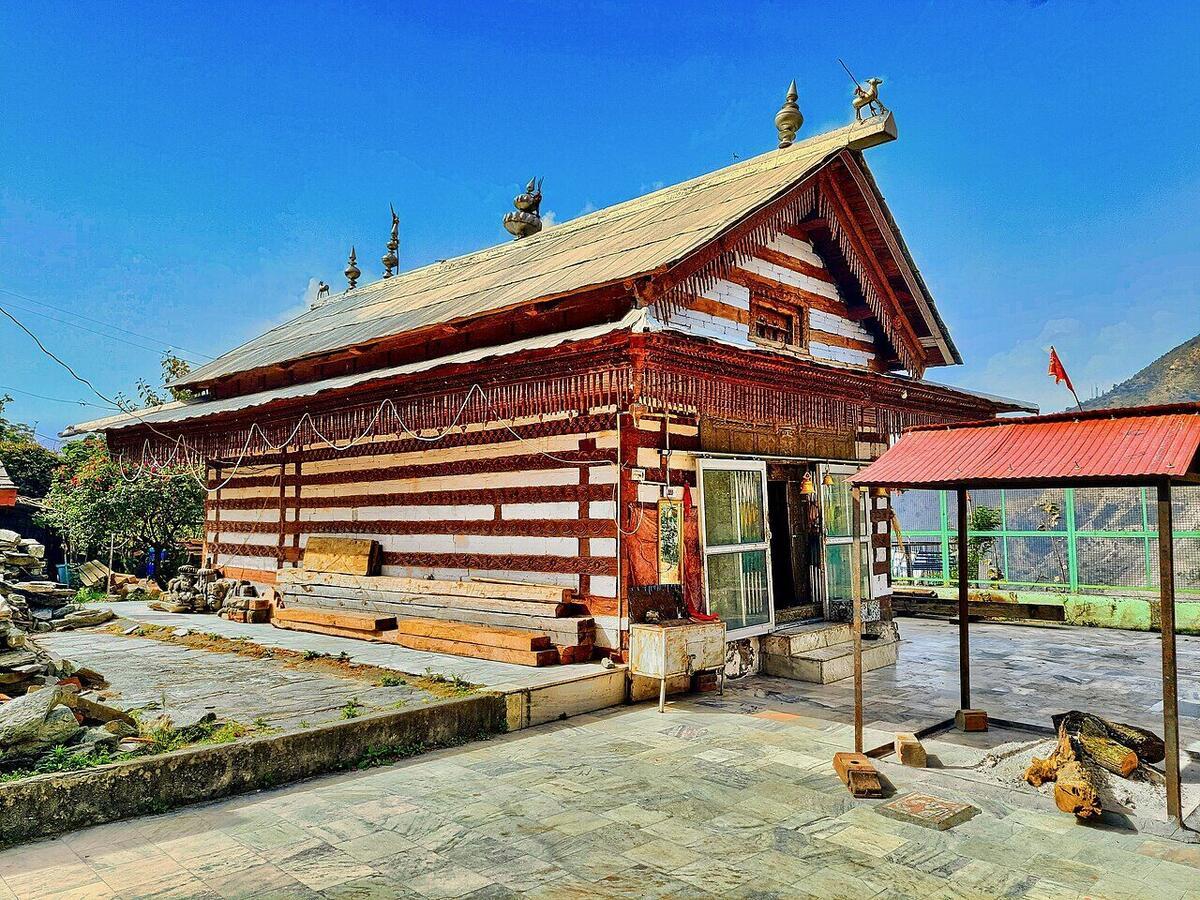
The shrine follows the configuration of a Banarasi Devi-temple: a compact garbhagriha holding the Devi-vigraha, an outer mandapa where devotees gather for Saptashati paath, and a small adjoining shrine for Bhairava — the kshetra-pala who attends every significant Devi-shrine in Kashi. The vigraha is in the Chandika iconographic tradition: a fierce stance, eyes wide and red-edged, multiple arms holding sword, chopper, trishul, and the severed head of an asura, with the lolling tongue characteristic of the Chamunda form. The vigraha is dressed daily in red — the colour of the fierce-form — with red-flower garlands at the throat.
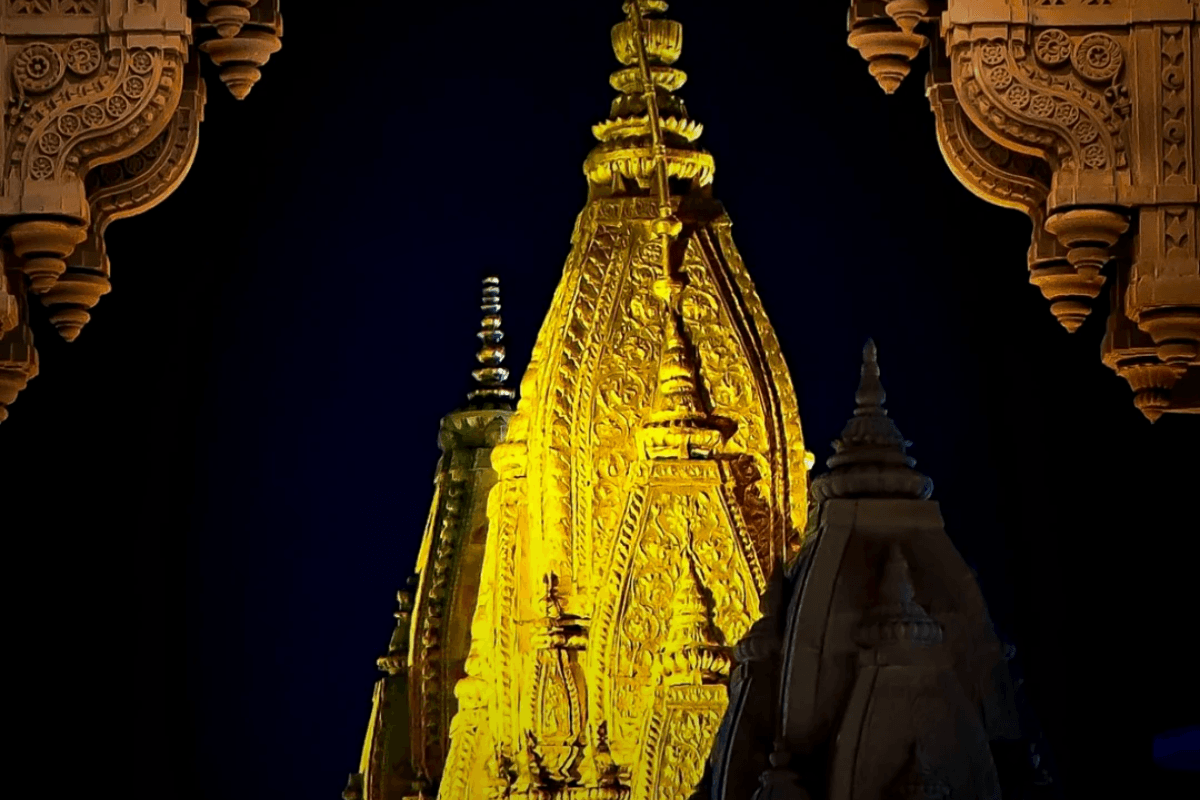
The architectural detail is restrained but devotionally pointed. The doorway lintel carries a stylised Chamunda motif — the lolling tongue, the chopper and skull-bowl, the snake-coil — alerting the devotee to the form within. Floor-stone is polished by centuries of devotee feet; the threshold carries the wear of ages. Lighting in the sanctum is deliberately low — fierce-form Devi shrines keep the inner space lit only by lamps so that the form's intensity is held in shadow. The character of worship here is one of intimacy and gravity rather than scale.
Rituals & Practices
Daily worship follows the standard Devi-puja pattern with Chandika-specific intensifications:
- Durga Saptashati paath. The seven hundred verses of the Devi Mahatmya are recited at this shrine through both Navratris (Chaitra and Sharad) — the full text distributed across nine days of morning and evening sessions. Regulars often sponsor a single chapter or a full paath as a sankalpa.
- Chandika-stuti recitation. The specific Chandika-stutis from the Devi Mahatmya — the slaying of Chand and Mund and the closing victory-stuti — are recited with added intensity on Tuesdays, Fridays, and on Ashtami and Navami of each fortnight.
- Red-flower offering. Hibiscus, red rose, and red lotus are the principal flowers offered. White and yellow flowers are received, but the red-flower bhog is most aligned with the form.
- Madhu-arpana. The honey-offering practised at some fierce-form Devi shrines. The Banarasi practice here uses unadulterated wild honey in small clay cups, placed at the Devi's feet for the duration of aarti.
- Mahalaya recitation. The Mahalaya morning is a particular occasion at this shrine — Saptashati paath from before dawn, the closing verses timed to the moment of the formal Devi-paksha invocation.
Please verify timings of priest-led pujas and Saptashati paath schedules with the temple authorities, particularly around the Navratris when slot booking is recommended.
Festivals & Celebrations
| Festival | When | Crowd |
|---|---|---|
| Sharad Navratri | — | Very high |
| Durga Ashtami (Maha Ashtami) | — | Very high |
| Chaitra Navratri | — | High |
| Mahalaya Amavasya | — | High |
| Ashtami and Navami | — | Moderate to high |
| Diwali and Kali Chaudas | — | Moderate |
Sharad Navratri: The principal Navratri for the Chandika form. The slaying of Chand and Mund is recited on Saptami and Ashtami.
Durga Ashtami (Maha Ashtami): The shrine's annual peak, observed with the full Saptashati and extended fierce-form puja.
Chaitra Navratri: The other principal Navratri for the Devi; tradition holds both with equal regard at this Shakta shrine.
Mahalaya Amavasya: The threshold between Pitru Paksha and Devi Paksha; foundational for the Devi-bhakti calendar.
Ashtami and Navami: The fortnightly Devi-tithis on which tradition holds the form's grace to be particularly close.
Diwali and Kali Chaudas: Linked to the wider Devi-bhakti calendar's recognition of the autumn intensity of the fierce-form.
Prepare for Your Visit
Practical guidance to help you plan your pilgrimage
| Pilgrim Guidance | How to reachMaa Chandika Devi is in the older central stretch of Kashi, reached by auto-rickshaw to the gali entrance and a short walk through the lanes. From the Vishwanath Dham it is about a 10-12 minute walk through the Vishwanath gali network; from Dashashwamedh Ghat, about 12-15 minutes on foot. Ask for "Maa Chandika Devi" — locals know the shrine and will direct you. Cycle-rickshaws can come to the gali entrance. Preparation for Pilgrims
Best Time to VisitTuesdays and Fridays are the principal weekly Devi-days. Ashtami and Navami of each fortnight are charged. The peak periods are Chaitra Navratri (March-April) and Sharad Navratri (September-October), when the shrine performs the full Saptashati paath across all nine days; if you wish to sponsor a chapter or a full paath, book the slot through the temple priests in advance. Mahalaya (the new moon at the close of Pitru Paksha) is a particular occasion. October to March is the most comfortable season for pilgrimage overall. |
Location
Varanasi, UP
Pilgrim photos
No pilgrim photos yet.
Community corrections
No corrections yet.
Edit history
No revisions yet.
Plan Your Visit to Maa Chandika Devi Temple
Get a custom itinerary and pricing for your trip.
Recommended
Packages for this destination
Pilgrim Notes
On-ground observations from fellow pilgrims
No pilgrim notes yet. Be the first to share on-ground observations!
Sign in to share a note.
Pilgrim Reviews
Be the first to share your experience at Maa Chandika Devi Temple.
Sign in to write a review.
Nearby sacred places
Discover other sacred places near Maa Chandika Devi Temple
Explore temples, tirthas, and pilgrimage sites in UP
Explore nearbyPart of these circuits
Walk the traditional pilgrimage routes this destination belongs to.