Nageshwarnath stands on the bank of the Saryu in old Ayodhya, just below the bluff that holds the city. Tradition tells that Kush, the elder son of Shri Ram and Sita, lost his armlet (kanjana) while bathing in the Saryu. A Nag-kanya (serpent maiden) of the underworld picked it up; when Kush sought its return, she — a devoted worshipper of Shiva — returned the armlet to him. To honour her devotion and to secure protection for the city, Kush installed this Shiva-linga in the name of the Nagas — Nageshwarnath, "Lord of the Naga." Tradition holds that the original shrine has remained continuously through the yugas.
The temple is the principal Shaiva shrine of Ayodhya and is held by local tradition to be the kshetrapala of the city — the boundary-deity who guards the Ram-bhumi from harm. Pilgrims completing the inner Ayodhya parikrama on Akshaya Navami in Kartik traditionally take darshan at Nageshwarnath before any other temple of the day. The shrine is intimate, ancient in feel, and quieter than the Janmabhoomi or Hanuman Garhi — many devotees consider it the most peaceful darshan in Ayodhya.
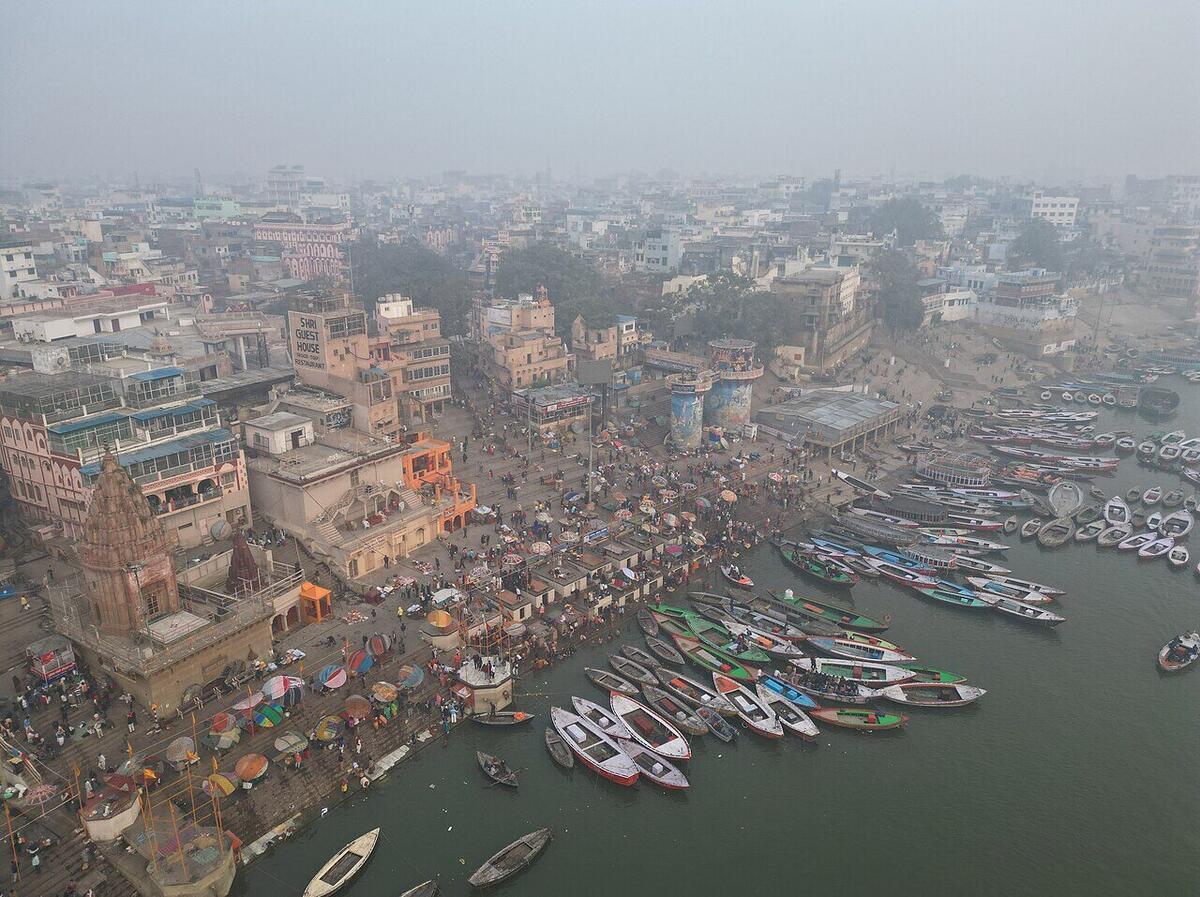
Nageshwarnath is held by the Awadh tradition to be the only Shiva-linga continuously worshipped in Ayodhya through the medieval period, when the larger Ram temples faced repeated upheaval. The continuity of Shaiva worship at this shrine — through every period of Ayodhya's history — is treasured by Vaishnava and Shaiva alike, since the temple is held to have been installed by Ram's own son. Tradition holds that without darshan at Nageshwarnath, the Ayodhya yatra is incomplete.
History
Nageshwarnath's tradition reaches back to the Ramayana itself in the Kush katha. The temple as the present structure was rebuilt several times in the medieval period — the most significant rebuilding was by Raja Vikramaditya of Ujjain in his rediscovery of Ayodhya in the first century BCE (per local tradition), and later, in 1750, by Naval Rai, minister of Nawab Safdar Jang of Awadh. This mid-eighteenth-century structure is the basis of the present temple, with additional renovations through the twentieth century. The temple is managed by the Nageshwarnath Trust.
Architecture
The temple is built in a simple Awadhi style — a stone shrine with a small Nagara shikhara, courtyard around, and steps leading down to the Saryu directly behind. The sanctum holds the self-manifest Shiva-linga in a stone yoni; the linga is described in tradition as having been installed by Kush himself with bilva-patra and Ganga-jal. Side chambers hold subsidiary shrines to Hanuman (the standard Ayodhya dwarpal), Ram-Sita-Lakshman, and Ganesha.
Rituals & Practices
The temple opens around 4:30 AM with Mangala Arati and closes around 10:30 PM after Shayan Arati. Five daily aratis are conducted. Mondays — sacred to Shiva — see large crowds. Pilgrims offer bilva-patra, milk, Gangajal (or Saryu-jal), and white flowers. Rudrabhishek with eleven-fold Rudri recitation is the principal special puja, and pilgrims can book it ahead.
The traditional sequence is: Saryu Ghat snan (the ghat is directly below), darshan at Nageshwarnath, then proceed to Hanuman Garhi for the main Ayodhya circuit. Many pilgrims doing the inner parikrama also stop at Nageshwarnath as the kshetrapala-darshan that opens the parikrama.
Festivals & Celebrations
| Festival | When | Crowd |
|---|---|---|
| Mahashivratri | — | very_high |
| Shravan Mondays | — | very_high |
| Akshaya Navami | — | very_high |
| Pradosh Vrat | — | high |
Mahashivratri: The supreme Shaiva night at any Shiva-linga.
Shravan Mondays: Mondays are sacred to Shiva.
Akshaya Navami: The day of complete inner-parikrama merit.
Pradosh Vrat: The monthly Shaiva fast and darshan day.
Prepare for Your Visit
Practical guidance to help you plan your pilgrimage
| Pilgrim Guidance | How to reachNageshwarnath is in central old Ayodhya, on the Saryu bank just below the main town. Walking distance from Hanuman Garhi (10 minutes downhill) and Saryu Ghat. From Ayodhya Dham railway station, cycle-rickshaws drop pilgrims at the lane above the temple. PreparationModest clothes; full-sleeved kurtas. Mobile phones permitted in the outer courtyard; not in the sanctum. The descent to the Saryu via the temple is steep — wear shoes with grip. Best time to visitOctober to March for pleasant weather. Mahashivratri in Phalguna (February-March) is the spiritual peak — night-long Rudrabhishek and continuous bilva-patra offering. Mondays in Shravan (July-August) are also major. Akshaya Navami in Kartik draws the inner-parikrama crowd through Nageshwarnath. |
Location
Ayodhya, UP
Pilgrim photos
No pilgrim photos yet.
Community corrections
No corrections yet.
Edit history
No revisions yet.
Plan Your Visit to Nageshwarnath Temple, Ayodhya
Get a custom itinerary and pricing for your trip.
Recommended
Packages for this destination
Pilgrim Notes
On-ground observations from fellow pilgrims
No pilgrim notes yet. Be the first to share on-ground observations!
Sign in to share a note.
Pilgrim Reviews
Be the first to share your experience at Nageshwarnath Temple, Ayodhya.
Sign in to write a review.
Nearby sacred places
Discover other sacred places near Nageshwarnath Temple, Ayodhya
Explore temples, tirthas, and pilgrimage sites in UP
Explore nearbyPart of these circuits
Walk the traditional pilgrimage routes this destination belongs to.